Forwarded from Middle East Spectator — MES
🤣6😁1
Middle East Spectator — MES
— 🇮🇷/🇮🇶 NEW: Iran bombs the Kurds in Erbil with suicide drones @Middle_East_Spectator
Iran attacking Erbil after anything for no reason
🤣13😁3
Islamogram
https://youtu.be/6SQnX9QRu9o
Has Iran Moved Beyond the Stage of Survival?
🔹️In this interview, Professor Robert Pape of the University of Chicago presents a thought-provoking analysis of Iran and the Axis of Resistance, portraying Iran not as a retreating actor, but as a power expanding its regional influence.
🔹️1- According to Pape, Iran has moved from the stage of "survival" to one of "strategic ambition." In other words, it is no longer focused solely on defending itself, but is now seeking to shape a new security order in the region.
🔹️2- He speaks of the emergence of a "security belt of resistance," stretching from the Strait of Hormuz to Bab al-Mandab and the Red Sea. In his view, this is not merely a series of isolated reactions, but the beginning of a new regional security architecture.
🔹️3- From this perspective, the Axis of Resistance is no longer simply a defensive instrument for Iran, but part of its sphere of influence and regional deterrence. Tehran seeks to ensure that attacks on its allies carry strategic consequences.
🔹️4- Regarding the United States, Pape argues that President Trump still speaks as though Washington controls the board, while the behavior of various actors suggests that America's strategic position in the region has weakened.
🔹️5- His more significant claim is that Iran is on the path toward becoming the "fourth center of world power"—not as an equal to the United States, China, or Russia, but as the dominant power in the Persian Gulf and West Asia.
🔹️6- Pape emphasizes that Iran's power cannot be measured solely through economic indicators. Its geopolitical location, missile and drone capabilities, and network of regional allies together have created a unique and influential form of power.
🔹️7- He believes that Israel's freedom of action will gradually become more constrained, as its strategic position is closely tied to that of the United States, while the capabilities and coordination of the Axis of Resistance continue to grow.
🔹️8- Pape's conclusion is that the war has not ended and has entered what he calls the "middle game." In this phase, Iran is seeking to transform itself from a power under pressure into a state capable of shaping the future order of West Asia.
🔹️Whether or not all of these predictions ultimately prove correct, the very fact that such arguments are being made by a prominent American scholar reflects a changing perception in the West regarding the Islamic Republic of Iran. It is the same Iran that Ayatollah Khamenei has long described as an influential and decisive force in regional and global affairs—an assessment that even some Western academic and strategic circles are increasingly compelled to acknowledge.
🔹️In this interview, Professor Robert Pape of the University of Chicago presents a thought-provoking analysis of Iran and the Axis of Resistance, portraying Iran not as a retreating actor, but as a power expanding its regional influence.
🔹️1- According to Pape, Iran has moved from the stage of "survival" to one of "strategic ambition." In other words, it is no longer focused solely on defending itself, but is now seeking to shape a new security order in the region.
🔹️2- He speaks of the emergence of a "security belt of resistance," stretching from the Strait of Hormuz to Bab al-Mandab and the Red Sea. In his view, this is not merely a series of isolated reactions, but the beginning of a new regional security architecture.
🔹️3- From this perspective, the Axis of Resistance is no longer simply a defensive instrument for Iran, but part of its sphere of influence and regional deterrence. Tehran seeks to ensure that attacks on its allies carry strategic consequences.
🔹️4- Regarding the United States, Pape argues that President Trump still speaks as though Washington controls the board, while the behavior of various actors suggests that America's strategic position in the region has weakened.
🔹️5- His more significant claim is that Iran is on the path toward becoming the "fourth center of world power"—not as an equal to the United States, China, or Russia, but as the dominant power in the Persian Gulf and West Asia.
🔹️6- Pape emphasizes that Iran's power cannot be measured solely through economic indicators. Its geopolitical location, missile and drone capabilities, and network of regional allies together have created a unique and influential form of power.
🔹️7- He believes that Israel's freedom of action will gradually become more constrained, as its strategic position is closely tied to that of the United States, while the capabilities and coordination of the Axis of Resistance continue to grow.
🔹️8- Pape's conclusion is that the war has not ended and has entered what he calls the "middle game." In this phase, Iran is seeking to transform itself from a power under pressure into a state capable of shaping the future order of West Asia.
🔹️Whether or not all of these predictions ultimately prove correct, the very fact that such arguments are being made by a prominent American scholar reflects a changing perception in the West regarding the Islamic Republic of Iran. It is the same Iran that Ayatollah Khamenei has long described as an influential and decisive force in regional and global affairs—an assessment that even some Western academic and strategic circles are increasingly compelled to acknowledge.
✍3👏2
This media is not supported in your browser
VIEW IN TELEGRAM
I am not racist I have black Friends.
My black Friends :
My black Friends :
😁18❤4
Islamogram
Why was every man who stood against the central bank suspiciously eliminated?
This media is not supported in your browser
VIEW IN TELEGRAM
The dangerous price of saying NO to the central banking system
💯6✍1
This media is not supported in your browser
VIEW IN TELEGRAM
Destruction of a refinery in Kuwait by an Iranian missile, 40-day
😍9🔥3
This media is not supported in your browser
VIEW IN TELEGRAM
The Namba for Palestinian Christians
😭6😡1
This media is not supported in your browser
VIEW IN TELEGRAM
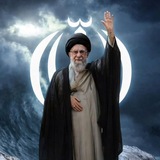
امام خامنهای ثانی
Imam KHAMENEI the Second
Imam KHAMENEI the Second
❤🔥8🫡3
This media is not supported in your browser
VIEW IN TELEGRAM
Iran is fighting for the whole world and humanity
💯13👏2
This media is not supported in your browser
VIEW IN TELEGRAM
The true meaning of "Death to America" explained by Shaheed IMAM KHAMENEI
❤🔥11❤1
Islamogram
Shahed-136: The drone that changed everything. Why billion-dollar defenses are struggling against this low-cost drone (Note: Official price is not public; estimates vary from $5k to $10k, significantly lower than the $20k cited.
This media is not supported in your browser
VIEW IN TELEGRAM
The Shahed-149 Gaza completely humiliates America’s $30M Reaper drone by flying longer and carrying 13 precision bombs at a fraction of the cost.
🔥11⚡4
One year ago, the Twelve-Day War changed many lives and left behind stories that deserve to be remembered. To mark its anniversary, we will spend the next twelve days honoring twelve individuals whose courage and sacrifice became part of that history. Beyond the headlines and the battles, this series is about the people, their stories, and the legacy they left behind.
❤🔥12❤6
Islamogram
One year ago, the Twelve-Day War changed many lives and left behind stories that deserve to be remembered. To mark its anniversary, we will spend the next twelve days honoring twelve individuals whose courage and sacrifice became part of that history. Beyond…
Twelve Days, Twelve Stories
Day One: Martyr Major General Mohammad Bagheri
At his martyrdom in the Twelve-Day War, Mohammad Bagheri was Iran’s Chief of Staff of the Armed Forces, the country’s highest military post.
Born Mohammad-Hossein Afshordi in 1960 in Tehran, he was the brother of Martyr Hassan Bagheri, a founder of IRGC intelligence/operations in the Iran–Iraq War.
He served in the Revolutionary Committees, joined the IRGC in 1980, and during the Sacred Defense worked in intelligence and operations in the IRGC Ground Forces, Karbala HQ, and Khatam al-Anbiya HQ: enemy analysis, terrain, planning, and reducing miscalculation.
After the war, he held General Staff roles in intelligence, operations, joint affairs, and coordination. On June 28, 2016, by Leader’s decree, he became Chief of Staff.
He held a PhD in political geography/geopolitics, taught at defense universities, and received three Fath Orders and one Nasr Order.
He linked Sacred Defense to hybrid warfare, and intelligence to high command
❤🔥7❤2