.
.
.
.
.
.
.
.
.
.
.
.
.
.
.
.
.
.
.
.
.
.
.
.
.
Forwarded from 🔊 @SpontaneousCosmology • Bridge This Emergent Intuitive Strength • Intuitive Public Radio • Spontaneous Cosmology • IPR ••• (Max (Meg Morris))
Deck: The Druid Oracles
Spread: One Card
Date: Tue Jan 29 11:52:34 EST 2019
Your Card
Plantain
Slan-lus
Plantago sp.
upright
Assertiveness • Calm • Resilience
reversed
Healing • Strength • The secret source of power
leaf
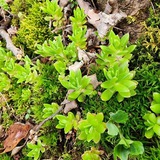
Plantains are small inconspicuous perennials found in about two hundred species all over the world. Greater Plantain (Plantago major) has survived three ice ages in Britain, but only really began to flourish in the wake of human settlement. In long grass it grows directly upwards reaching as high as 30 cm (1 ft) above ground, but on grazed land it hugs the ground to avoid being eaten and becomes a menace on lawns, cannily avoiding the lowest mower blades.
The card shows Greater Plantain in the Summer, with its flowering spike reminding us of one of its popular names, Rat’s Tails. In the distance an old track leads beside the stones of Callanish on the Isle of Lewis in Scotland.
Upright Meaning Plantains are extraordinarily resilient. If you have chosen this card, it may indicate that you are being called upon to display a similar characteristic. Although Plantains may drive gardeners mad, they can’t help admiring its tenacity – the way it hugs low to the ground and refuses to budge. Maybe that’s what you need to do. You just need to be aware of the difference between being a ‘doormat’ and a Plantain. If you let people ‘walk all over you’, you need to look at becoming more assertive and defending your boundaries more robustly. If, however, you just know you must stand your ground, even if it means putting up with difficulties and criticism and perhaps keeping a low profile, then you are acting like the Plantain.
Remember that, however many times the Plantain is trodden on, within its leaves lie soothing ingredients. Regardless of how tough life is, in the end the real healing comes from within.
Reversed Meaning When life gets difficult, it’s easy to fall into the trap of thinking like a victim or martyr. We all have spells when we just seem to suffer one problem after another, and it feels impossible to break out of the cycle. If you have drawn this card reversed, it may suggest that you need to understand your situation in a different way. Imagine that what you need is way down beneath you – in the earth – and deep down inside you. Instead of reaching out to be ‘saved’, by looking for someone or something that can rescue you, try reaching in. ‘Hunkering down’ then becomes not resignation and fatalism, but the act of drawing on your secret source of power. Weakness turns into strength and the wheel will turn.
leaf
Plant of Healing
One of the Gaelic names for Plantain is ‘Slan-Lus’, which means ‘Plant of Healing’, and shows how much it was revered for its considerable healing powers. The Maoris and Native Americans have called it ‘Englishman’s Foot’ because of its propensity to spring up wherever the white man travelled, and, in Britain, as well as being called Rat’s Tails, it was known as Angel’s Harps, since when the leaves are pulled apart the fibres can be seen in a harp-like formation.
The Ancient Greeks and Romans wrote of its medicinal properties, having such faith in its healing powers that they believed it could cure mad dogs. Similar hopes were pinned on the plant by Native Americans who called it Snakeweed, believing it could counteract rattlesnake poisoning. Modern research shows that Plantain contains compounds that are anti-inflammatory and antibacterial, and which stimulate the immune system. The plant contains mucilage, which is soothing to the intestines, and the seed husks of Sand Plantain (Plantago psyllium) have recently become popular in detoxing regimes.
Plantain leaves contain tannins, which are astringent and antiviral – making them ideal for applying directly to wounds. These properties can be released simply by chewing the fresh or dried leaf, which can then be put straight onto the affected area. It is no wonder that the plant was quickly adopted into Maori and Native American herb lore.
By the time herbals were being written by the Greeks and Romans during
Spread: One Card
Date: Tue Jan 29 11:52:34 EST 2019
Your Card
Plantain
Slan-lus
Plantago sp.
upright
Assertiveness • Calm • Resilience
reversed
Healing • Strength • The secret source of power
leaf
Plantains are small inconspicuous perennials found in about two hundred species all over the world. Greater Plantain (Plantago major) has survived three ice ages in Britain, but only really began to flourish in the wake of human settlement. In long grass it grows directly upwards reaching as high as 30 cm (1 ft) above ground, but on grazed land it hugs the ground to avoid being eaten and becomes a menace on lawns, cannily avoiding the lowest mower blades.
The card shows Greater Plantain in the Summer, with its flowering spike reminding us of one of its popular names, Rat’s Tails. In the distance an old track leads beside the stones of Callanish on the Isle of Lewis in Scotland.
Upright Meaning Plantains are extraordinarily resilient. If you have chosen this card, it may indicate that you are being called upon to display a similar characteristic. Although Plantains may drive gardeners mad, they can’t help admiring its tenacity – the way it hugs low to the ground and refuses to budge. Maybe that’s what you need to do. You just need to be aware of the difference between being a ‘doormat’ and a Plantain. If you let people ‘walk all over you’, you need to look at becoming more assertive and defending your boundaries more robustly. If, however, you just know you must stand your ground, even if it means putting up with difficulties and criticism and perhaps keeping a low profile, then you are acting like the Plantain.
Remember that, however many times the Plantain is trodden on, within its leaves lie soothing ingredients. Regardless of how tough life is, in the end the real healing comes from within.
Reversed Meaning When life gets difficult, it’s easy to fall into the trap of thinking like a victim or martyr. We all have spells when we just seem to suffer one problem after another, and it feels impossible to break out of the cycle. If you have drawn this card reversed, it may suggest that you need to understand your situation in a different way. Imagine that what you need is way down beneath you – in the earth – and deep down inside you. Instead of reaching out to be ‘saved’, by looking for someone or something that can rescue you, try reaching in. ‘Hunkering down’ then becomes not resignation and fatalism, but the act of drawing on your secret source of power. Weakness turns into strength and the wheel will turn.
leaf
Plant of Healing
One of the Gaelic names for Plantain is ‘Slan-Lus’, which means ‘Plant of Healing’, and shows how much it was revered for its considerable healing powers. The Maoris and Native Americans have called it ‘Englishman’s Foot’ because of its propensity to spring up wherever the white man travelled, and, in Britain, as well as being called Rat’s Tails, it was known as Angel’s Harps, since when the leaves are pulled apart the fibres can be seen in a harp-like formation.
The Ancient Greeks and Romans wrote of its medicinal properties, having such faith in its healing powers that they believed it could cure mad dogs. Similar hopes were pinned on the plant by Native Americans who called it Snakeweed, believing it could counteract rattlesnake poisoning. Modern research shows that Plantain contains compounds that are anti-inflammatory and antibacterial, and which stimulate the immune system. The plant contains mucilage, which is soothing to the intestines, and the seed husks of Sand Plantain (Plantago psyllium) have recently become popular in detoxing regimes.
Plantain leaves contain tannins, which are astringent and antiviral – making them ideal for applying directly to wounds. These properties can be released simply by chewing the fresh or dried leaf, which can then be put straight onto the affected area. It is no wonder that the plant was quickly adopted into Maori and Native American herb lore.
By the time herbals were being written by the Greeks and Romans during
Forwarded from 🔊 @SpontaneousCosmology • Bridge This Emergent Intuitive Strength • Intuitive Public Radio • Spontaneous Cosmology • IPR ••• (Max (Meg Morris))
the time of the Ancient Druids, Plantain’s healing properties were well known. The Anglo-Saxons, who merged with the earlier peoples in Britain, recognized the plant’s power and called it Weybroed (Waybread) and included it in their Nine Herbs Charm, along with Mugwort, Lamb’s Cress, Cockspur Grass, Chamomile, Nettle, Crabapple, Chervil and Fennel.
The Physicians of Myddvai used Plantain to draw out splinters, and in plasters for bruises, and made a lotion of it with Honeysuckle, white Rose and camphor to soothe inflammations.
Ripe seed-rich Plantain spikes were once picked commercially as food for caged birds around London, and herbalists recommended the seeds as a substitute for linseed. Today, extracts of the plant are used to treat bronchitis and coughs, as it is antispasmodic and has been found to dilate the bronchi. The combination of its astringency and its soothing mucilage also makes it ideal for treating ulcers, Irritable Bowel Syndrome and haemorrhoids. The renowned herbalist Mrs Grieve said, ‘Decoctions of Plantain entered into almost every old remedy.’ Now we understand why.
Presented by The Druid Oracles app from The Fool's Dog.
The Physicians of Myddvai used Plantain to draw out splinters, and in plasters for bruises, and made a lotion of it with Honeysuckle, white Rose and camphor to soothe inflammations.
Ripe seed-rich Plantain spikes were once picked commercially as food for caged birds around London, and herbalists recommended the seeds as a substitute for linseed. Today, extracts of the plant are used to treat bronchitis and coughs, as it is antispasmodic and has been found to dilate the bronchi. The combination of its astringency and its soothing mucilage also makes it ideal for treating ulcers, Irritable Bowel Syndrome and haemorrhoids. The renowned herbalist Mrs Grieve said, ‘Decoctions of Plantain entered into almost every old remedy.’ Now we understand why.
Presented by The Druid Oracles app from The Fool's Dog.
Forwarded from 🔊 @SpontaneousCosmology • Bridge This Emergent Intuitive Strength • Intuitive Public Radio • Spontaneous Cosmology • IPR ••• (Max (Meg Morris))
.
.
.
.
.
.
.
.
.
.
.
.
.
.
.
.
.
.
.
.
.
.
.
.
.
.
.
.
.
.
.
.
.
.
.
.
.
.
.
.
.
.
.
.
.
.
.
.
.
.
I love this talk so much
.
.
.
.
.
.
.
.
.
.
.
.
.
.
.
.
.
.
.
.
.
.
.
.
.
.
.
.
.
.
.
.
.
.
.
.
.
.
.
.
.
.
.
.
.
.
.
.
.
.
😯😯😯🙏🏼🙏🏼🙏🏼🙏🏼🌼🌼🌼🌼🌼🌼
.
.
.
.
.
.
.
.
.
.
.
.
.
.
.
.
.
.
.
.
.
.
.
.
.
Forwarded from 🔊 @IntuitiveEarth • Live Collaborative Media • Intuitive Public Radio Earth • IPR ••• (Max (Meg Morris))
Forwarded from 🔊 @IntuitiveEarth • Live Collaborative Media • Intuitive Public Radio Earth • IPR ••• (Max (Meg Morris))
.
.
.
.
.
.
.
.
.
.
.
.
.
.
.
.
.
.
.
.
.
.
.
.
.