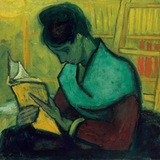
Excessive concern with religion seems to me a last resort for people who have been exhausted by life.
👍2
Art is a criticism of society and life, and I believe that if life became perfect, art would be meaningless and cease to exist.
👍4
Mishima Yukio (Japanese author)
_________
Born : January 14, 1925
Died : November 25, 1970
_________
prolific writer who is regarded by many critics as the most important Japanese novelist of the 20th century.
He followed up his initial success with several novels whose main characters are tormented by various physical or psychological problems or who are obsessed with unattainable ideals that make everyday happiness impossible for them.
Mishima’s novels are typically Japanese in their sensuous and imaginative appreciation of natural detail, but their solid and competent plots, their probing psychological analysis, and a certain understated humour helped make them widely read in other countries.
_________
Born : January 14, 1925
Died : November 25, 1970
_________
prolific writer who is regarded by many critics as the most important Japanese novelist of the 20th century.
He followed up his initial success with several novels whose main characters are tormented by various physical or psychological problems or who are obsessed with unattainable ideals that make everyday happiness impossible for them.
Mishima’s novels are typically Japanese in their sensuous and imaginative appreciation of natural detail, but their solid and competent plots, their probing psychological analysis, and a certain understated humour helped make them widely read in other countries.
"What transforms this world is knowledge. Do you see what I mean? Nothing else can change anything in this world. Knowledge alone is capable of transforming the world, while at the same time leaving it exactly as it is. When you look at the world with knowledge, you realize that things are unchangeable and at the same time are constantly being transformed."
— The Temple of the Golden Pavilion
— The Temple of the Golden Pavilion
“True beauty is something that attacks, overpowers, robs, and finally destroys.”
❤3
“Dreams, memories, the sacred--they are all alike in that they are beyond our grasp. Once we are even marginally separated from what we can touch, the object is sanctified; it acquires the beauty of the unattainable, the quality of the miraculous. Everything, really, has this quality of sacredness, but we can desecrate it at a touch. How strange man is! His touch defiles and yet he contains the source of miracles.”
― Spring Snow
― Spring Snow
“Young people get the foolish idea that what is new for them must be new for everybody else too. No matter how unconventional they get, they're just repeating what others before them have done.”
― After the Banquet
― After the Banquet
❤4
"When silence is prolonged over a certain period of time, it takes on new meaning."
— Thirst for love
— Thirst for love
"For an artist to do creative work, he needs at once physical health and some physio mental ill health. He needs both serenity and gloom."
👍1
"Possessing by letting go of things was a secret of ownership unknown to youth."
❤2
Fernando Pessoa (Portuguese poet)
___________
Born : June 13, 1888
Died : November 30, 1935
___________
one of the greatest Portuguese poets, whose Modernist work gave Portuguese literature European significance.
With the hope of becoming a great poet in that language, Pessoa wrote his early verse in English. In 1905 he returned to Lisbon, where he remained, working as a commercial translator while contributing to avant-garde reviews, especially Orpheu (1915), the organ of the Modernist movement. Meanwhile he read widely not only in poetry but in philosophy and aesthetics. He published his first book of poetry in English, Antinous, in 1918 and subsequently published two others. Yet it was not until 1934 that his first book in Portuguese, Mensagem (Message), appeared. It attracted little attention, and Pessoa died the next year a virtual unknown.
___________
Born : June 13, 1888
Died : November 30, 1935
___________
one of the greatest Portuguese poets, whose Modernist work gave Portuguese literature European significance.
With the hope of becoming a great poet in that language, Pessoa wrote his early verse in English. In 1905 he returned to Lisbon, where he remained, working as a commercial translator while contributing to avant-garde reviews, especially Orpheu (1915), the organ of the Modernist movement. Meanwhile he read widely not only in poetry but in philosophy and aesthetics. He published his first book of poetry in English, Antinous, in 1918 and subsequently published two others. Yet it was not until 1934 that his first book in Portuguese, Mensagem (Message), appeared. It attracted little attention, and Pessoa died the next year a virtual unknown.
"The words of others are mistakes of our hearing, shipwrecks of our understanding. How confidently we believe our meanings of other people’s words."
“Literature is the most agreeable way of ignoring life.”
― The Book of Disquiet
― The Book of Disquiet
“The feelings that hurt most, the emotions that sting most, are those that are absurd - The longing for impossible things, precisely because they are impossible; nostalgia for what never was; the desire for what could have been; regret over not being someone else; dissatisfaction with the world’s existence. All these half-tones of the soul’s consciousness create in us a painful landscape, an eternal sunset of what we are.”
❤3
“My soul is impatient with itself, as with a bothersome child; its restlessness keeps growing and is forever the same. Everything interests me, but nothing holds me. I attend to everything, dreaming all the while. […]. I'm two, and both keep their distance — Siamese twins that aren't attached.”
― The Book of Disquiet
― The Book of Disquiet
❤2
“No intelligent idea can gain general acceptance unless some stupidity is mixed in with it”
👍1
“I'd woken up early, and I took a long time getting ready to exist.”
― The Book of Disquiet
― The Book of Disquiet
👍3