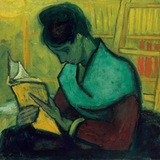
“I learn a great deal by merely observing you, and letting you talk as long as you please, and taking note of what you do not say.”
❤3
Naguib Mahfouz (Egyptian writer)
_________
Born : December 11, 1911
Died : August 30, 2006
_________
Egyptian novelist and screenplay writer, who was awarded the Nobel Prize for Literature in 1988, the first Arabic writer to be so honoured.
In subsequent works, Mahfouz offered critical views of the old Egyptian monarchy, British colonialism, and contemporary Egypt. Several of his more notable novels deal with social issues involving women and political prisoners. His novel Awlād ḥāratinā (1959; Children of the Alley) was banned in Egypt for a time because of its controversial treatment of religion and its use of characters based on Muhammad, Moses, and other figures. Islamic militants, partly because of their outrage over the work, later called for his death, and in 1994 Mahfouz was stabbed in the neck.
_________
Born : December 11, 1911
Died : August 30, 2006
_________
Egyptian novelist and screenplay writer, who was awarded the Nobel Prize for Literature in 1988, the first Arabic writer to be so honoured.
In subsequent works, Mahfouz offered critical views of the old Egyptian monarchy, British colonialism, and contemporary Egypt. Several of his more notable novels deal with social issues involving women and political prisoners. His novel Awlād ḥāratinā (1959; Children of the Alley) was banned in Egypt for a time because of its controversial treatment of religion and its use of characters based on Muhammad, Moses, and other figures. Islamic militants, partly because of their outrage over the work, later called for his death, and in 1994 Mahfouz was stabbed in the neck.
You can tell whether a man is clever by his answers. You can tell whether a man is wise by his questions.
❤2
I defend both the freedom of expression and society's right to counter it. I must pay the price for differing. It is the natural way of things.
❤3
I reject any path which rejects life, but I can't help loving Sufism because it sounds so beautiful. It gives relief in the midst of battle.
There are no heroes in most of my stories. I look at our society with a critical eye and find nothing extraordinary in the people I see.
❤2
Home is not where you were born; home is where all your attempts to escape cease.
❤5
Today's interpretations of religion are often backward and contradict the needs of civilization.
❤1
Silence is the last try to tell them everything they didn’t understand when we were speaking.
❤2👍2
It's a most distressing affliction to have a sentimental heart and a skeptical mind.
❤4
I found myself in a sea in which the waves of joy and sorrow were clashing against each other.
❤2
Excessive concern with religion seems to me a last resort for people who have been exhausted by life.
👍2
Art is a criticism of society and life, and I believe that if life became perfect, art would be meaningless and cease to exist.
👍4
Mishima Yukio (Japanese author)
_________
Born : January 14, 1925
Died : November 25, 1970
_________
prolific writer who is regarded by many critics as the most important Japanese novelist of the 20th century.
He followed up his initial success with several novels whose main characters are tormented by various physical or psychological problems or who are obsessed with unattainable ideals that make everyday happiness impossible for them.
Mishima’s novels are typically Japanese in their sensuous and imaginative appreciation of natural detail, but their solid and competent plots, their probing psychological analysis, and a certain understated humour helped make them widely read in other countries.
_________
Born : January 14, 1925
Died : November 25, 1970
_________
prolific writer who is regarded by many critics as the most important Japanese novelist of the 20th century.
He followed up his initial success with several novels whose main characters are tormented by various physical or psychological problems or who are obsessed with unattainable ideals that make everyday happiness impossible for them.
Mishima’s novels are typically Japanese in their sensuous and imaginative appreciation of natural detail, but their solid and competent plots, their probing psychological analysis, and a certain understated humour helped make them widely read in other countries.
"What transforms this world is knowledge. Do you see what I mean? Nothing else can change anything in this world. Knowledge alone is capable of transforming the world, while at the same time leaving it exactly as it is. When you look at the world with knowledge, you realize that things are unchangeable and at the same time are constantly being transformed."
— The Temple of the Golden Pavilion
— The Temple of the Golden Pavilion
“True beauty is something that attacks, overpowers, robs, and finally destroys.”
❤3
“Dreams, memories, the sacred--they are all alike in that they are beyond our grasp. Once we are even marginally separated from what we can touch, the object is sanctified; it acquires the beauty of the unattainable, the quality of the miraculous. Everything, really, has this quality of sacredness, but we can desecrate it at a touch. How strange man is! His touch defiles and yet he contains the source of miracles.”
― Spring Snow
― Spring Snow