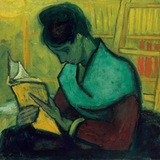
Sylvia Plath
__________
Born : October 27, 1932
Died : February 11, 1963
__________
pseudonym Victoria Lucas, American poet whose best-known works, starkly express a sense of alienation and self-destruction closely tied to her personal experiences.
Plath published her first poem at age eight. She suffered from severe depression, attempted suicide, and underwent a period of psychiatric hospitalization.
During her last three years Plath abandoned the restraints and conventions that had bound much of her early work. She wrote with great speed, producing poems of stark self-revelation and confession. The anxiety, confusion, and doubt that haunted her were transmuted into verses of great power and pathos borne on flashes of incisive wit. Her poem “Daddy” and several others explore her conflicted relationship with her father, after this burst of productivity, she took her own life.
__________
Born : October 27, 1932
Died : February 11, 1963
__________
pseudonym Victoria Lucas, American poet whose best-known works, starkly express a sense of alienation and self-destruction closely tied to her personal experiences.
Plath published her first poem at age eight. She suffered from severe depression, attempted suicide, and underwent a period of psychiatric hospitalization.
During her last three years Plath abandoned the restraints and conventions that had bound much of her early work. She wrote with great speed, producing poems of stark self-revelation and confession. The anxiety, confusion, and doubt that haunted her were transmuted into verses of great power and pathos borne on flashes of incisive wit. Her poem “Daddy” and several others explore her conflicted relationship with her father, after this burst of productivity, she took her own life.
❤2👍1
“I can never read all the books I want; I can never be all the people I want and live all the lives I want. I can never train myself in all the skills I want. And why do I want? I want to live and feel all the shades, tones and variations of mental and physical experience possible in my life. And I am horribly limited.”
― The Unabridged Journals of Sylvia Plath
― The Unabridged Journals of Sylvia Plath
❤3
“If you expect nothing from somebody you are never disappointed.”
― The Bell Jar
― The Bell Jar
❤4
“Kiss me, and you will see how important I am.”
― The Unabridged Journals of Sylvia Plath
― The Unabridged Journals of Sylvia Plath
“Perhaps when we find ourselves wanting everything, it is because we are dangerously close to wanting nothing.”
❤2
“The silence depressed me. It wasn't the silence of silence. It was my own silence.”
― The Bell Jar
― The Bell Jar
❤1
“Remember, remember, this is now, and now, and now. Live it, feel it, cling to it. I want to become acutely aware of all I’ve taken for granted.”
“I desire the things that will destroy me in the end.”
― The Unabridged Journals of Sylvia Plath
― The Unabridged Journals of Sylvia Plath
❤3
“Can you understand? Someone, somewhere, can you understand me a little, love me a little? For all my despair, for all my ideals, for all that - I love life. But it is hard, and I have so much - so very much to learn.”
― The Journals of Sylvia Plath
― The Journals of Sylvia Plath
“I must get my soul back from you; I am killing my flesh without it.”
― The Unabridged Journals of Sylvia Plath
― The Unabridged Journals of Sylvia Plath
“I didn’t want my picture taken because I was going to cry. I didn’t know why I was going to cry, but I knew that if anybody spoke to me or looked at me too closely the tears would fly out of my eyes and the sobs would fly out of my throat and I’d cry for a week. I could feel the tears brimming and sloshing in me like water in a glass that is unsteady and too full.”
❤1
“I don’t care about anyone, and the feeling is quite obviously mutual.”
― The Unabridged Journals of Sylvia Plath
― The Unabridged Journals of Sylvia Plath
❤3
“I want to be important. By being different. And these girls are all the same.”
“How we need another soul to cling to, another body to keep us warm. To rest and trust; to give your soul in confidence: I need this, I need someone to pour myself into.”
― The Unabridged Journals of Sylvia Plath
― The Unabridged Journals of Sylvia Plath
“The floor seemed wonderfully solid. It was comforting to know I had fallen and could fall no farther.”
― The Bell Jar
― The Bell Jar
❤1👍1
“I do not love; I do not love anybody except myself. That is a rather shocking thing to admit. I have none of the selfless love of my mother. I have none of the plodding, practical love. . . . . I am, to be blunt and concise, in love only with myself, my puny being with its small inadequate breasts and meager, thin talents. I am capable of affection for those who reflect my own world.”
― The Unabridged Journals of Sylvia Plath
― The Unabridged Journals of Sylvia Plath
❤1
“Ever since I was small I loved feeling somebody comb my hair. It made me go all sleepy and peaceful.”
― The Bell Jar
― The Bell Jar
❤3
T.S. Eliot
_________
Born : September 26, 1888
Died : January 4, 1965
_________
American-English poet, playwright, literary critic, and editor, a leader of the Modernist movement in poetry in such works as The Waste Land (1922) and Four Quartets (1943). Eliot exercised a strong influence on Anglo-American culture from the 1920s until late in the century. His experiments in diction, style, and versification revitalized English poetry, and in a series of critical essays he shattered old orthodoxies and erected new ones. The publication of Four Quartets led to his recognition as the greatest living English poet and man of letters, and in 1948 he was awarded both the Order of Merit and the Nobel Prize for Literature.
[Know More...]
_________
Born : September 26, 1888
Died : January 4, 1965
_________
American-English poet, playwright, literary critic, and editor, a leader of the Modernist movement in poetry in such works as The Waste Land (1922) and Four Quartets (1943). Eliot exercised a strong influence on Anglo-American culture from the 1920s until late in the century. His experiments in diction, style, and versification revitalized English poetry, and in a series of critical essays he shattered old orthodoxies and erected new ones. The publication of Four Quartets led to his recognition as the greatest living English poet and man of letters, and in 1948 he was awarded both the Order of Merit and the Nobel Prize for Literature.
[Know More...]
"Most of the trouble with the world is caused by people wanting to be important."
👍1
"The progress of an artist is a continual self-sacrifice, a continual extinction of personality."
👍1