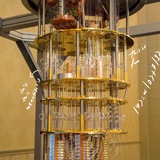
this is by far my favorite newsletter for quantum software or the only one tbh and they made a really great site where we could find every issues so far
https://qse-newsletter.com/
https://qse-newsletter.com/
Reinforcement learning control of quantum error correction
https://www.nature.com/articles/s41586-026-10759-2
https://www.nature.com/articles/s41586-026-10759-2
Nature
Reinforcement learning control of quantum error correction
Nature - By integrating reinforcement learning with quantum error correction, a quantum computer continuously self-calibrates during computation, achieving record logical error rates and enhanced...
Note on Pennylane and "Train Classical, Deploy Quantum" method
https://colab.research.google.com/drive/1iouwEmx3GY6M6imBd87Sx65XW9b7en-Z?usp=sharing
#Wiser2026
https://colab.research.google.com/drive/1iouwEmx3GY6M6imBd87Sx65XW9b7en-Z?usp=sharing
#Wiser2026
Google
Pennylane and
Colab notebook
Quantum error correction and fault tolerance: A comprehensive tutorial
https://arxiv.org/abs/2605.29137
#paper
https://arxiv.org/abs/2605.29137
#paper
arXiv.org
Quantum error correction and fault tolerance: A comprehensive tutorial
Noise is one of the central obstacles to building useful quantum computers, and quantum error correction (QEC) provides the framework for protecting quantum information against it. Unlike...
Qubit connectivity on the actual hardware matter a lot when designing the circuit. being aware of which qubits are directly connected helps us reduce additional depth that would have been added to make those qubit interact if they weren't next to each other.
The image is the connectivity map of the two IBM devices( Heron and Nighthawk)
#Note
The image is the connectivity map of the two IBM devices( Heron and Nighthawk)
The importance of layout lies in its direct impact on the quality and feasibility of quantum circuit execution. A poor layout occurs when logical qubits that need to interact in the circuit are mapped to physical qubits that are not directly connected in the hardware. In these cases, the compiler must insert additional SWAP operations to move quantum states between qubits, allowing the desired interaction to finally occur. These SWAP operations have multiple negative consequences: they increase circuit depth (the number of sequential gate layers), increase the total number of gates that must be executed, accumulate more error due to the imperfections of each additional gate, and reduce the fidelity of the final result due to quantum decoherence that occurs during the extra execution time.
Conversely, a good layout minimizes or eliminates the need for SWAP operations by intelligently assigning logical qubits that interact frequently to physical qubits that are directly connected in the hardware topology. This optimal mapping preserves the structure of the original circuit as much as possible, reducing transpilation overhead and maximizing the probability of obtaining accurate results. In variational algorithms such as QAOA, where circuit depth and gate fidelity are critical to performance, the difference between an optimal layout and a suboptimal one can determine the success or failure of the entire quantum experiment.
#Note
Efficient Long-Range Entanglement Using Dynamic Circuits
https://journals.aps.org/prxquantum/pdf/10.1103/PRXQuantum.5.030339
#paper
https://journals.aps.org/prxquantum/pdf/10.1103/PRXQuantum.5.030339
#paper