Shaykh Mukhtar eventually decided to write an encyclopedia of Mauritania discussing the political, cultural and social life of the country. It took him 50 years to complete!
The shaykh also has a poem about Qabd and Sadl according to the Maliki madhab.
After his stay in Senegal, he returned back to Mauritania were he took a position of teaching as a professor of Arabic and history. He became very well known to the scholars and people of his country until he eventually became an advisor for the prime minister. After Mauritania got self-governing rule in 1958, Shaykh Mukhtar participated in writing the new constitution.
After a long period of teaching and serving his country, he decided to retire and spend his last days in the city of Madina, Saudi Arabia where he was granted Saudi citizenship by King Khalid ibn ‘Abdul Aziz.
Due to the shaykhs efforts in writing his encyclopedia, teaching history for many years and having a strong passion for history, he was called the “ibn Khaldun” of Mauritania. Similar to how ibn Khaldun wrote his big book of history and his passion for history.
Shaykh Mukhtar passed away in Madina in 1993 and is buried in al-Baqi’.
May Allah have mercy on him.
The shaykh also has a poem about Qabd and Sadl according to the Maliki madhab.
After his stay in Senegal, he returned back to Mauritania were he took a position of teaching as a professor of Arabic and history. He became very well known to the scholars and people of his country until he eventually became an advisor for the prime minister. After Mauritania got self-governing rule in 1958, Shaykh Mukhtar participated in writing the new constitution.
After a long period of teaching and serving his country, he decided to retire and spend his last days in the city of Madina, Saudi Arabia where he was granted Saudi citizenship by King Khalid ibn ‘Abdul Aziz.
Due to the shaykhs efforts in writing his encyclopedia, teaching history for many years and having a strong passion for history, he was called the “ibn Khaldun” of Mauritania. Similar to how ibn Khaldun wrote his big book of history and his passion for history.
Shaykh Mukhtar passed away in Madina in 1993 and is buried in al-Baqi’.
May Allah have mercy on him.
❤12
The brothers from Hajj on horseback came and visited us in my university Sabahattin Zaim in Istanbul.
They came all the way from Spain though Europe until they reached Istanbul!
They are now on their way towards Mecca to preform Hajj In’shaa’Allah.
They came all the way from Spain though Europe until they reached Istanbul!
They are now on their way towards Mecca to preform Hajj In’shaa’Allah.
❤26
Nafh At-Tib by Imam Ahmad Al-Maqqari (D. 1041 H)
A special thanks to my wife on buying this amazing gift for me which is considered one of the most important books on Andalusian history.
This book considered as an encyclopedia on the history, literature and geography of al-Andalus. You will find almost every single research book on al-Andalus that came after the author quoting this book due to its benefits.
It is an absolute must have for every lover of the history of al-Andalus. No bookshelf of the lover of Andalusian history will be complete without it!
The publisher Dar al-Sadr so far the best version of this book and comes in 8 volumes.
The author, Imam Ahmad Al-Maqqari who was from the city of Telemcen in North Algeria during Ottoman rule. He had close relations with Sultans of his time such as Sultan Zidan Abu Maali of Morocco. He spent his life seeking and teaching Islamic knowledge. He wrote a number of books which are still being studied until this day.
A special thanks to my wife on buying this amazing gift for me which is considered one of the most important books on Andalusian history.
This book considered as an encyclopedia on the history, literature and geography of al-Andalus. You will find almost every single research book on al-Andalus that came after the author quoting this book due to its benefits.
It is an absolute must have for every lover of the history of al-Andalus. No bookshelf of the lover of Andalusian history will be complete without it!
The publisher Dar al-Sadr so far the best version of this book and comes in 8 volumes.
The author, Imam Ahmad Al-Maqqari who was from the city of Telemcen in North Algeria during Ottoman rule. He had close relations with Sultans of his time such as Sultan Zidan Abu Maali of Morocco. He spent his life seeking and teaching Islamic knowledge. He wrote a number of books which are still being studied until this day.
❤19
Ramadan in al-Andalus
In the great mosque (Jami al-Kabir) of the city of Cordoba, it was known during the month of Ramadan that it remained open all night and the amount of oil to light the lanterns cost half the annual amount just in the month of Ramadan alone. During Layla al-Qadr, large amounts of perfume were burned on this special occasion.
Imam al-Maqari mentioned in his book Nafh al-Tib that in the great mosque there were 280 chandeliers. The number of lanterns was 8,425 and some have said it could have been 10,805!
In the great mosque (Jami al-Kabir) of the city of Cordoba, it was known during the month of Ramadan that it remained open all night and the amount of oil to light the lanterns cost half the annual amount just in the month of Ramadan alone. During Layla al-Qadr, large amounts of perfume were burned on this special occasion.
Imam al-Maqari mentioned in his book Nafh al-Tib that in the great mosque there were 280 chandeliers. The number of lanterns was 8,425 and some have said it could have been 10,805!
❤16🤯4
This media is not supported in your browser
VIEW IN TELEGRAM
This Ramadan please donate to his beautiful project, a university in the land of Spain/al-Andalus!
The Islamic University of Spain has been teaching Islam both in Arabic and Spanish and they want to continue to revive the Andalusian legacy of Dawah.
They are planning to secure and renovate a historic 115-year-old Andalusian Alquería/Cortijo in Seville and transform it into The Islamic University of Spain.
Every little helps and they are trying to reach their goal of 2 million in funds. If 8,000 people each donate €250 this goal can be reached, in shaa Allah.
Just imagine the rewards one can get for helping people come into Islam, every letter being reciting from the Qur'an, and more.
Join us in reviving the Andalusian Legacy that once lit the world, ready to shine again through knowledge, unity and faith.” Sh. Mohammad Idrissi - Founder and President.
The Islamic University of Spain has been teaching Islam both in Arabic and Spanish and they want to continue to revive the Andalusian legacy of Dawah.
They are planning to secure and renovate a historic 115-year-old Andalusian Alquería/Cortijo in Seville and transform it into The Islamic University of Spain.
Every little helps and they are trying to reach their goal of 2 million in funds. If 8,000 people each donate €250 this goal can be reached, in shaa Allah.
Just imagine the rewards one can get for helping people come into Islam, every letter being reciting from the Qur'an, and more.
Join us in reviving the Andalusian Legacy that once lit the world, ready to shine again through knowledge, unity and faith.” Sh. Mohammad Idrissi - Founder and President.
❤11
Links for donation below:
https://www.launchgood.com/v4/campaign/campus_of_the_islamic_university_of_spain_alandalusia
https://donate.alandalusia.org/en/?fbclid=PAZXh0bgNhZW0CMTEAAaa0QoOQwUQ4F2M_k2w4TlRx9xuxg2naMKpakxkLjspaK4_nb3jNz3mum7k_aem_KWz0wwb6ZWsRipZroI_alg
https://www.launchgood.com/v4/campaign/campus_of_the_islamic_university_of_spain_alandalusia
https://donate.alandalusia.org/en/?fbclid=PAZXh0bgNhZW0CMTEAAaa0QoOQwUQ4F2M_k2w4TlRx9xuxg2naMKpakxkLjspaK4_nb3jNz3mum7k_aem_KWz0wwb6ZWsRipZroI_alg
Launchgood
Campus of the Islamic University of Spain Al-Andalusia | LaunchGood
Join us in reviving the Andalusian Legacy that once lit the world, ready to shine again through knowledge, unity, and faith.
❤6
Forwarded from In the Shade of the Minaret (Abu Ayyub Marulanda)
Media is too big
VIEW IN TELEGRAM
🤷🏻♂ Did you ever want to study Islamic History, but didn't know where to start?
Join Introduction to Islamic History Pt I and start learning today!
💁🏻♂ Covering the first six centuries of Islamic History, this pre-recorded course covers the period from the Khulafa al-Rashidun to the Ayyubids!
💁🏻♂ Learn about sources for Islamic History covering the Umayyads, Abbasids, The Caliphate of Cordoba, Ghaznavids, Saljuqs, Murabitun, Ayyubids & more!
💁🏻♂ Build your understanding of Islamic History, it's different dynasties, territories, great leaders and important events!
Enroll Today!
https://www.intheshadeoftheminaret.com/
#intheshadeoftheminaret #islamichistory #muslimhistory #islamicstudies #onlineclasses #umayyads #abbasids #alandalus
Join Introduction to Islamic History Pt I and start learning today!
💁🏻♂ Covering the first six centuries of Islamic History, this pre-recorded course covers the period from the Khulafa al-Rashidun to the Ayyubids!
💁🏻♂ Learn about sources for Islamic History covering the Umayyads, Abbasids, The Caliphate of Cordoba, Ghaznavids, Saljuqs, Murabitun, Ayyubids & more!
💁🏻♂ Build your understanding of Islamic History, it's different dynasties, territories, great leaders and important events!
Enroll Today!
https://www.intheshadeoftheminaret.com/
#intheshadeoftheminaret #islamichistory #muslimhistory #islamicstudies #onlineclasses #umayyads #abbasids #alandalus
❤9
Very nice book to start with before you get into Tafsir. It is a simple explanation of words from the Qur’an in alphabetical order.
The author, Abu Hayyan was an Andalusian scholar who wrote the famous Tafsir al Bahr al-Muhit that is 22 volumes. He was very strong in Arabic grammar and his explanation of the Qur’an is a go-to for grammar and eloquence.
The author, Abu Hayyan was an Andalusian scholar who wrote the famous Tafsir al Bahr al-Muhit that is 22 volumes. He was very strong in Arabic grammar and his explanation of the Qur’an is a go-to for grammar and eloquence.
❤23⚡1
Due to the recent tariff meltdown there has been talk about the origin of the word ‘tariff’ . Some say it might have passed on to Italians from Sicily. Check out the post from brother Tariq Patanam about it.
Another possibility is that it came from Al Andalus from the city of Tarifa, Spain.
The word "tariff" is often linked to the Spanish town of Tarifa in Andalusia, named after Tarif ibn Malik, a commander during the Islamic conquest of Spain in 711. One theory suggests that "tariff" derives from the Arabic *taʿrīf* (meaning "notification" or "list of prices"), which entered European languages through trade and maritime activities in the Mediterranean.
In Tarifa, located near the Strait of Gibraltar, levies were reportedly imposed on ships passing through, and these charges became known as "tariffs." This idea is supported by historical accounts describing Tarifa as a hub where fees were collected from merchants.
Another possibility is that it came from Al Andalus from the city of Tarifa, Spain.
The word "tariff" is often linked to the Spanish town of Tarifa in Andalusia, named after Tarif ibn Malik, a commander during the Islamic conquest of Spain in 711. One theory suggests that "tariff" derives from the Arabic *taʿrīf* (meaning "notification" or "list of prices"), which entered European languages through trade and maritime activities in the Mediterranean.
In Tarifa, located near the Strait of Gibraltar, levies were reportedly imposed on ships passing through, and these charges became known as "tariffs." This idea is supported by historical accounts describing Tarifa as a hub where fees were collected from merchants.
❤8🤯7⚡2
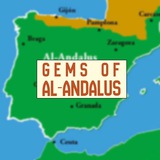
Gems of al-Andalus
Due to the recent tariff meltdown there has been talk about the origin of the word ‘tariff’ . Some say it might have passed on to Italians from Sicily. Check out the post from brother Tariq Patanam about it. Another possibility is that it came from Al Andalus…
I decided to re-edit this post in my own words and research.
❤9
Forwarded from Usul.Ai
📢 We’re live.
We’ve just launched a new project: a curated digital database for classical texts—organized, searchable, and built for researchers, students, and readers of the Islamic tradition.
Check out our website at https://usul.ai to explore the project
We’ve just launched a new project: a curated digital database for classical texts—organized, searchable, and built for researchers, students, and readers of the Islamic tradition.
Check out our website at https://usul.ai to explore the project
❤12⚡1
Usul.Ai
📢 We’re live. We’ve just launched a new project: a curated digital database for classical texts—organized, searchable, and built for researchers, students, and readers of the Islamic tradition. Check out our website at https://usul.ai to explore the project
If you're interested in exploring Islamic works, this website will be a valuable resource for you.
After nearly a year of working this project, I’m excited to present this project to a wider audience.
Follow their Telegram channel: https://t.me/usul_AI
After nearly a year of working this project, I’m excited to present this project to a wider audience.
Follow their Telegram channel: https://t.me/usul_AI
Telegram
Usul.Ai
Usul is a new project aiming to evolve the way Islamic Research is conducted today.
AI-powered access to over 15,000 texts including all of Shamela.
AI-powered access to over 15,000 texts including all of Shamela.
❤8⚡2
The historian Lisan al-Din ibn al-Khatib al-Andalusi once described his city, saying:
“Granada—a city located in the district of al-Ilbira, a province of al-Andalus was once known as the camel’s hump of al-Andalus.
It is renowned for its prominence and for the eminent great minds it has produced.”
📚Source: al-Lahma al-Badriyyah fī ad-Dawla an-Nasiryyah.
“Granada—a city located in the district of al-Ilbira, a province of al-Andalus was once known as the camel’s hump of al-Andalus.
It is renowned for its prominence and for the eminent great minds it has produced.”
📚Source: al-Lahma al-Badriyyah fī ad-Dawla an-Nasiryyah.
❤16
Nudar bint Abi Hayyan Muhammad ibn Yusuf al-Nafziya al-Gharnatiya
She was born in the year 702 AH. Her father, Muhammad ibn Yusuf al-Nafzi, was from the Nafza Berber tribe.
She studied grammar, hadith, and grammatical analysis (iʿrāb) under her father who was a notable scholar in Arabic grammar and hadith. She later continued her hadith studies with the renowned Granadan scholar Abu Jaʿfar ibn al-Zubayr, who granted her authorization (ijazah) to transmit hadith.
She attained proficiency in Arabic grammar and composed poetry with great skill. Her father would speak highly of her knowledge and say:
“If only her brother Ḥayyān had been like her.”
She was born in the year 702 AH. Her father, Muhammad ibn Yusuf al-Nafzi, was from the Nafza Berber tribe.
She studied grammar, hadith, and grammatical analysis (iʿrāb) under her father who was a notable scholar in Arabic grammar and hadith. She later continued her hadith studies with the renowned Granadan scholar Abu Jaʿfar ibn al-Zubayr, who granted her authorization (ijazah) to transmit hadith.
She attained proficiency in Arabic grammar and composed poetry with great skill. Her father would speak highly of her knowledge and say:
“If only her brother Ḥayyān had been like her.”
❤20