
Star Trails Seen From Low Earth Orbit
Astronauts on the International Space Station captured a series of incredible star trail images on Oct. 3, 2016, as they orbited at 17,500 miles per hour. The station orbits the Earth every 90 minutes, and astronauts aboard see an average of 16 sunrises and sunsets every 24 hours.
Source
@EverythingScience
Astronauts on the International Space Station captured a series of incredible star trail images on Oct. 3, 2016, as they orbited at 17,500 miles per hour. The station orbits the Earth every 90 minutes, and astronauts aboard see an average of 16 sunrises and sunsets every 24 hours.
Source
@EverythingScience
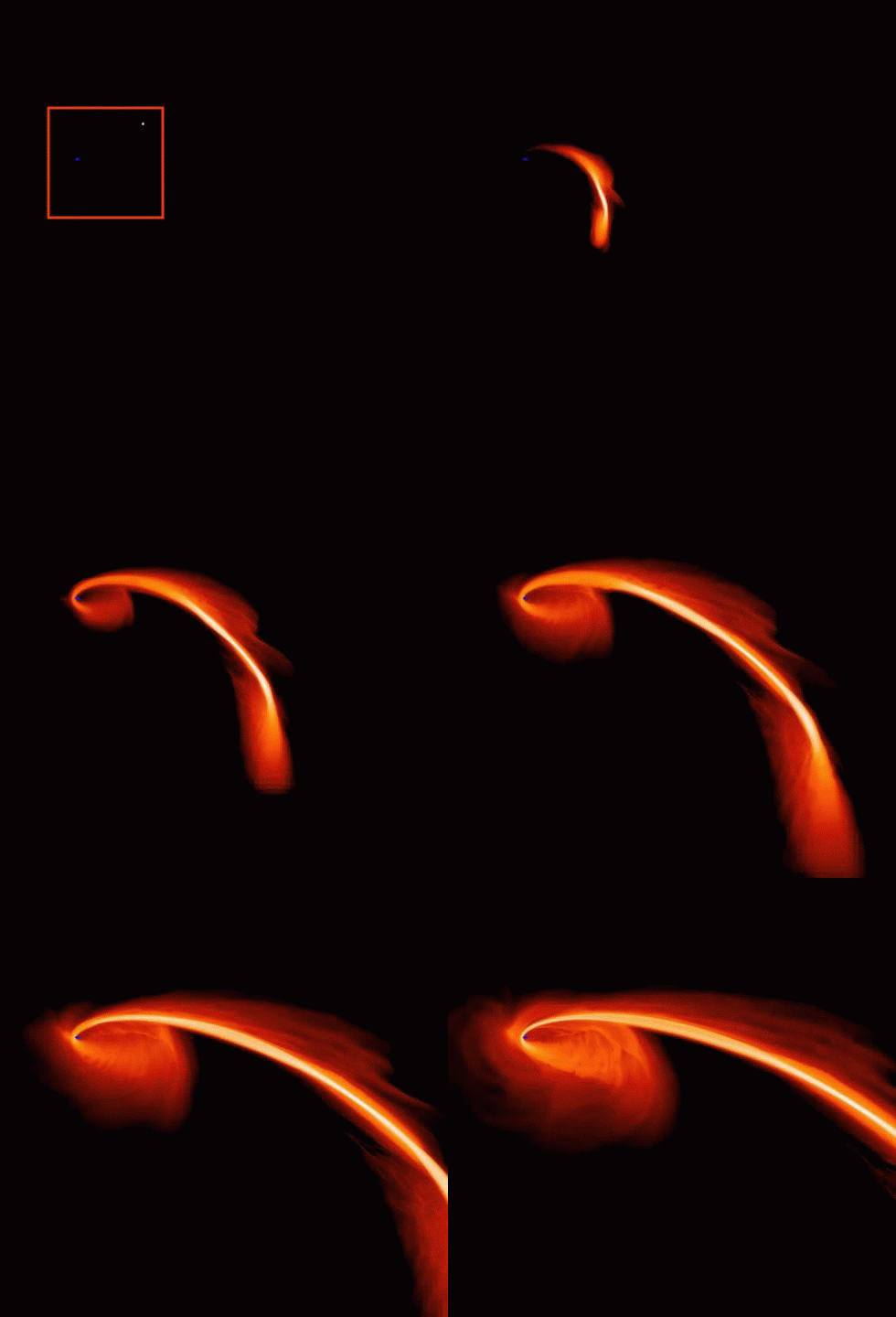
This is what happens when a black hole swallows a star
As the star gets sucked up into the black hole, a huge jet of plasma is burped out, spanning hundreds of light-years. "When the star is ripped apart by the gravitational forces of the black hole, some part of the star's remains falls into the black hole, while the rest is ejected at high speeds," explains Johns Hopkins University researcher, Suvi Gezari.
@EverythingScience
As the star gets sucked up into the black hole, a huge jet of plasma is burped out, spanning hundreds of light-years. "When the star is ripped apart by the gravitational forces of the black hole, some part of the star's remains falls into the black hole, while the rest is ejected at high speeds," explains Johns Hopkins University researcher, Suvi Gezari.
@EverythingScience
The chance events that led to human existence
(The Human history)
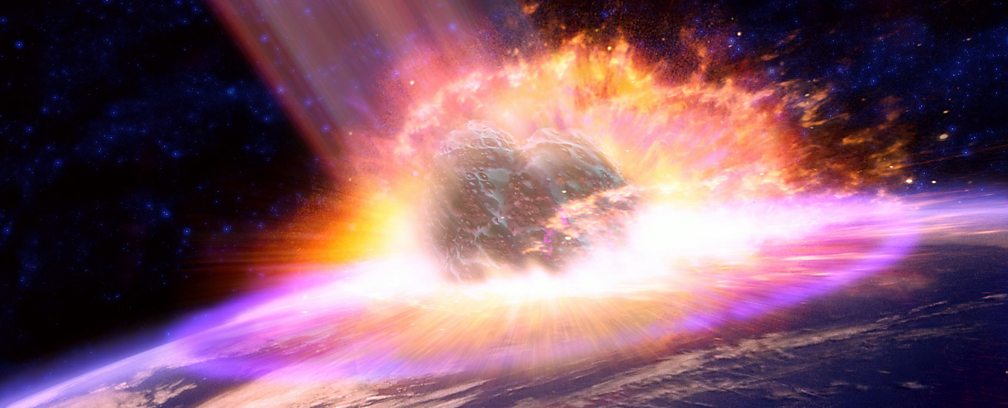
How have we ended up as the most advanced species on a small blue-green planet, orbiting a seemingly insignificant star, in one of the hundred billion galaxies in the Universe?
Science has found some extraordinary answers to this question. Looking back through time, it appears that our existence depends on an apparently unlikely sequence of cosmic moments.
Image
Source
@EverythingScience
(The Human history)
How have we ended up as the most advanced species on a small blue-green planet, orbiting a seemingly insignificant star, in one of the hundred billion galaxies in the Universe?
Science has found some extraordinary answers to this question. Looking back through time, it appears that our existence depends on an apparently unlikely sequence of cosmic moments.
Image
Source
@EverythingScience
Robot surgeons and artificial life: the promise of tiny machines
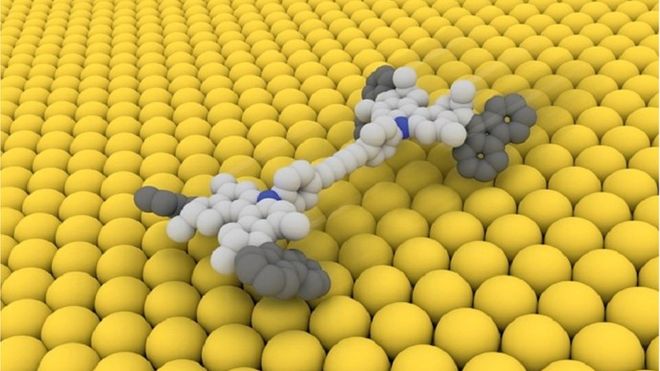
The 2016 Nobel Prize in chemistry has been awarded for the design and synthesis of the world's smallest machines. The work has overtones of science fiction, but holds huge promise in fields as diverse as medicine, materials and energy.
All grand endeavours start small.
This is especially true of efforts to develop nano-scale machines (1,000 times smaller than the width of a human hair), which are always destined to remain tiny however big our ambitions for them grow.
It's difficult to trace the development of molecular machines to one person or scientific step.
Image
Source
@EverythingScience
The 2016 Nobel Prize in chemistry has been awarded for the design and synthesis of the world's smallest machines. The work has overtones of science fiction, but holds huge promise in fields as diverse as medicine, materials and energy.
All grand endeavours start small.
This is especially true of efforts to develop nano-scale machines (1,000 times smaller than the width of a human hair), which are always destined to remain tiny however big our ambitions for them grow.
It's difficult to trace the development of molecular machines to one person or scientific step.
Image
Source
@EverythingScience
Hubble study estimates trillions of galaxies in the observable universe over the previously thought hundreds of billions | Video
@EverythingScience
@EverythingScience
Space.com
Our Universe Has Trillions of Galaxies, Hubble Study | Video
A new study using the Hubble Space Telescope and other telescopes has increased estimates of galaxies in the Universe ten fold. It was previously estimated that there was 100 billion galaxies in the observable Universe.
Brain chips let a paralyzed man feel touch through a robotic arm
The brain chips zap the patient's brain to let him feel when robotic fingers are touched
Nathan Copeland hasn’t been able to move his legs or hands since he broke his neck in a car accident more than a decade ago. But now that scientists have implanted four chips in his brain, Copeland can control a robotic arm with his mind and feel when someone touches its fingers. This is the first time that a neural implant has allowed a person to feel touch through a prosthetic by directly stimulating his brain.
"IT FELT LIKE I WAS GETTING MY FINGERS TOUCHED OR PUSHED."
Image
Source
@EverythingScience
The brain chips zap the patient's brain to let him feel when robotic fingers are touched
Nathan Copeland hasn’t been able to move his legs or hands since he broke his neck in a car accident more than a decade ago. But now that scientists have implanted four chips in his brain, Copeland can control a robotic arm with his mind and feel when someone touches its fingers. This is the first time that a neural implant has allowed a person to feel touch through a prosthetic by directly stimulating his brain.
"IT FELT LIKE I WAS GETTING MY FINGERS TOUCHED OR PUSHED."
Image
Source
@EverythingScience



Asgardia, Proposed Space-Based Nation Accepting Citizenship Applications
A proposed space nation called Asgardia is now accepting applications for future citizens.
Leaders of the Asgardia project discussed the prospective space nation at a news conference in Paris Wednesday (Oct. 12). The leaders aim to launch Asgardia's first satellite in 2017 and say they would like to eventually have a space station where some, but not all, of its planned 150 million (mostly Earth-dwelling) nationals would live and work.
Asgardia, named after the Norse gods' home of Asgard, will be a democracy with an emphasis on the freedom of the individual to develop space technologies, according to Igor Ashurbeyli, Asgardia project team leader and founder. People can now apply to be selected as one of the first 100,000 citizens through the nation’s website, asgardia.space. At the time of publication, the number of applicants has reached more than 84,000, according to the website. While Asgardia is not officially a nation (yet), prospective citizens must fulfil the legal requirements for Asgardia's United Nations application — for example, they must be from nations that allow multiple citizenships.
Asgardia would be a nation in space, in low-Earth orbit, or beyond, the project leaders said. The Asgardia project team said they think they need at least tens of thousands of citizens before they formally apply to the U.N. for recognition (although there are 14 countries in the world with fewer than 100,000 citizens).
@EverythingScience
Image
Source
A proposed space nation called Asgardia is now accepting applications for future citizens.
Leaders of the Asgardia project discussed the prospective space nation at a news conference in Paris Wednesday (Oct. 12). The leaders aim to launch Asgardia's first satellite in 2017 and say they would like to eventually have a space station where some, but not all, of its planned 150 million (mostly Earth-dwelling) nationals would live and work.
Asgardia, named after the Norse gods' home of Asgard, will be a democracy with an emphasis on the freedom of the individual to develop space technologies, according to Igor Ashurbeyli, Asgardia project team leader and founder. People can now apply to be selected as one of the first 100,000 citizens through the nation’s website, asgardia.space. At the time of publication, the number of applicants has reached more than 84,000, according to the website. While Asgardia is not officially a nation (yet), prospective citizens must fulfil the legal requirements for Asgardia's United Nations application — for example, they must be from nations that allow multiple citizenships.
Asgardia would be a nation in space, in low-Earth orbit, or beyond, the project leaders said. The Asgardia project team said they think they need at least tens of thousands of citizens before they formally apply to the U.N. for recognition (although there are 14 countries in the world with fewer than 100,000 citizens).
@EverythingScience
Image
Source
How to follow Europe's Mars arrival and landing online
The European-led ExoMars mission is scheduled to drop a probe onto the surface of the Red Planet this Wednesday (Oct. 19), and you can watch the action live.
The ExoMars mission is co-led by European Space Agency (ESA) and Russia, and is a precursor to a Mars rover mission (with possible sample return) that is scheduled to launch in 2020. The current mission consists of both an orbiting satellite, and a lander that will help test technologies for the future rover mission.
ESA will provide live-stream coverage of three separate ExoMars events over the next week. The first will be the lander's separation from the orbiter on Sunday (Oct. 16); the second will the lander's touchdown on Wednesday (Oct. 19), and the third will be a mission status update on Thursday (Oct. 20).
The agency will broadcast live coverage of the lander's separation from the orbiting spacecraft on Sunday, starting at 10:30 a.m. EDT (1430 GMT/16:30 CEST). You can watch that webcast via ESA's livestream player.
On Wednesday, the agency will webcast coverage of the lander touching down on Mars in two parts: The first will begin at 11:44 p.m. EDT (15:44 GMT/17:44 CEST) and continue until about 1 p.m. EDT (1700 GMT/19:00 CEST). The second half of that broadcast will begin at 2:25 p.m. EDT (1825 GMT / 20:25 CEST) and end at about 4:00 p.m. EDT (200 GMT/22:0 CEST).
And finally on Thursday, the agency will live webcast a press conference to deliver a mission status update, beginning at 4 a.m. EDT (0800 GMT/10:00 CEST).
@EverythingScience will provide updates on this event as it unfolds.
Source
The European-led ExoMars mission is scheduled to drop a probe onto the surface of the Red Planet this Wednesday (Oct. 19), and you can watch the action live.
The ExoMars mission is co-led by European Space Agency (ESA) and Russia, and is a precursor to a Mars rover mission (with possible sample return) that is scheduled to launch in 2020. The current mission consists of both an orbiting satellite, and a lander that will help test technologies for the future rover mission.
ESA will provide live-stream coverage of three separate ExoMars events over the next week. The first will be the lander's separation from the orbiter on Sunday (Oct. 16); the second will the lander's touchdown on Wednesday (Oct. 19), and the third will be a mission status update on Thursday (Oct. 20).
The agency will broadcast live coverage of the lander's separation from the orbiting spacecraft on Sunday, starting at 10:30 a.m. EDT (1430 GMT/16:30 CEST). You can watch that webcast via ESA's livestream player.
On Wednesday, the agency will webcast coverage of the lander touching down on Mars in two parts: The first will begin at 11:44 p.m. EDT (15:44 GMT/17:44 CEST) and continue until about 1 p.m. EDT (1700 GMT/19:00 CEST). The second half of that broadcast will begin at 2:25 p.m. EDT (1825 GMT / 20:25 CEST) and end at about 4:00 p.m. EDT (200 GMT/22:0 CEST).
And finally on Thursday, the agency will live webcast a press conference to deliver a mission status update, beginning at 4 a.m. EDT (0800 GMT/10:00 CEST).
@EverythingScience will provide updates on this event as it unfolds.
Source
Livestream
European Space Agency
News, launches, science, Earth, astronauts, space exploration: Programming from the European Space Agency.
Google creates AI program that uses reasoning to navigate the London tube
Google scientists have created a computer program that uses basic reasoning to learn to navigate the London Underground system by itself.
The same Artificial Intelligence (AI) agent could also answer questions about the content of snippets of stories and work out family relationships by looking at a family tree. Scientists predict that in future a similar approach could pave the way for virtual assistants that would be able to instantaneously scour the internet to answer questions and carry out instructions with precision.
Image
Source
@EverythingScience
Google scientists have created a computer program that uses basic reasoning to learn to navigate the London Underground system by itself.
The same Artificial Intelligence (AI) agent could also answer questions about the content of snippets of stories and work out family relationships by looking at a family tree. Scientists predict that in future a similar approach could pave the way for virtual assistants that would be able to instantaneously scour the internet to answer questions and carry out instructions with precision.
Image
Source
@EverythingScience

European Mars Lander Separates From Mothership, Takes Aim at Red Planet
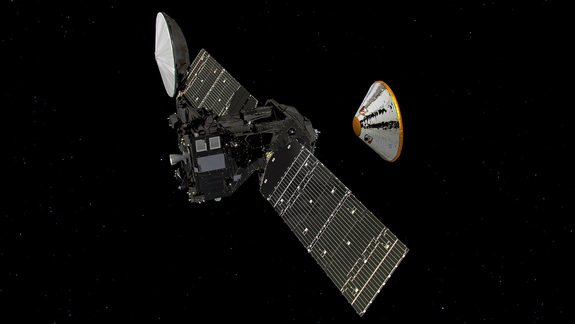
A European spacecraft destined to land on Mars detached from its mothership on Sunday (Oct. 16), setting the stage for a daring descent to the Red Planet's surface later this week.
The European Space Agency's Mars-bound Schiaparelli module separated from its carrier craft — the Trace Gas Orbiter — at about 10:42 a.m. EDT (1442 GMT) as both spacecraft were in the home stretch of their 308 million-mile trek (496 million kilometers) to Mars. If all goes well, the two probes (which make up the ESA-Russian ExoMars 2016 mission) will arrive at the Red Planet on Wednesday (Oct. 19), with Schiaparelli dropping down to the Martian surface as its mothership enters orbit around Mars.
"We can confirm good separation from the Schiaparelli module," ExoMars flight director Michel Denis said during a live ESA webcast from the agency's mission control center in Darmstadt, Germany. Flight controllers applauded as confirmation of the separation was received at the center.
Image
Source
@EverythingScience
A European spacecraft destined to land on Mars detached from its mothership on Sunday (Oct. 16), setting the stage for a daring descent to the Red Planet's surface later this week.
The European Space Agency's Mars-bound Schiaparelli module separated from its carrier craft — the Trace Gas Orbiter — at about 10:42 a.m. EDT (1442 GMT) as both spacecraft were in the home stretch of their 308 million-mile trek (496 million kilometers) to Mars. If all goes well, the two probes (which make up the ESA-Russian ExoMars 2016 mission) will arrive at the Red Planet on Wednesday (Oct. 19), with Schiaparelli dropping down to the Martian surface as its mothership enters orbit around Mars.
"We can confirm good separation from the Schiaparelli module," ExoMars flight director Michel Denis said during a live ESA webcast from the agency's mission control center in Darmstadt, Germany. Flight controllers applauded as confirmation of the separation was received at the center.
Image
Source
@EverythingScience
Play Video Games, Advance Science
Computer gaming is now a regular part of life for many people. Beyond just being entertaining, though, it can be a very useful tool in education and in science.
If people spent just a fraction of their play time solving real-life scientific puzzles – by playing science-based video games – what new knowledge might we uncover? Many games aim to take academic advantage of the countless hours people spend gaming each day. In the field of biochemistry alone, there are several, including the popular game Foldit.
In Foldit, players attempt to figure out the detailed three-dimensional structure of proteins by manipulating a simulated protein displayed on their computer screen. They must observe various constraints based in the real world, such as the order of amino acids and how close to each other their biochemical properties permit them to get. In academic research, these tasks are typically performed by trained experts.
Thousands of people – with and without scientific training – play Foldit regularly. Sure, they’re having fun, but are they really contributing to science in ways experts don’t already? To answer this question – to find out how much we can learn by having nonexperts play scientific games – we recently set up a Foldit competition between gamers, undergraduate students and professional scientists. The amateur gamers did better than the professional scientists managed using their usual software.
Image
Source
@EverythingScience
Computer gaming is now a regular part of life for many people. Beyond just being entertaining, though, it can be a very useful tool in education and in science.
If people spent just a fraction of their play time solving real-life scientific puzzles – by playing science-based video games – what new knowledge might we uncover? Many games aim to take academic advantage of the countless hours people spend gaming each day. In the field of biochemistry alone, there are several, including the popular game Foldit.
In Foldit, players attempt to figure out the detailed three-dimensional structure of proteins by manipulating a simulated protein displayed on their computer screen. They must observe various constraints based in the real world, such as the order of amino acids and how close to each other their biochemical properties permit them to get. In academic research, these tasks are typically performed by trained experts.
Thousands of people – with and without scientific training – play Foldit regularly. Sure, they’re having fun, but are they really contributing to science in ways experts don’t already? To answer this question – to find out how much we can learn by having nonexperts play scientific games – we recently set up a Foldit competition between gamers, undergraduate students and professional scientists. The amateur gamers did better than the professional scientists managed using their usual software.
Image
Source
@EverythingScience

ExoMars Lander's Descent Trajectory Visualized by ESA | Video
On October 19, 2016, the Schiaparelli entry, descent, and landing demonstrator will attempt to touch down on Mars' Meridiani Planum. If all goes according to plan, it should take the module about 6 minutes to land from the time it enters the Martian atmosphere.
Source
@EverythingScience
On October 19, 2016, the Schiaparelli entry, descent, and landing demonstrator will attempt to touch down on Mars' Meridiani Planum. If all goes according to plan, it should take the module about 6 minutes to land from the time it enters the Martian atmosphere.
Source
@EverythingScience
Space.com
ExoMars Lander's Descent Trajectory Visualized by ESA | Video
On October 19, 2016, the Schiaparelli entry, descent, and landing demonstrator will attempt to touch down on Mars' Meridiani Planum. If all goes according to plan, it should take the module about 6 minutes to land from the time it enters the Martian
Scientists Accidentally Discover Efficient Process to Turn CO2 Into Ethanol
Scientists at the Oak Ridge National Laboratory in Tennessee have discovered a chemical reaction to turn CO2 into ethanol, potentially creating a new technology to help avert climate change. Their findings were published in the journal ChemistrySelect.
The researchers were attempting to find a series of chemical reactions that could turn CO2 into a useful fuel, when they realized the first step in their process managed to do it all by itself. The reaction turns CO2 into ethanol, which could in turn be used to power generators and vehicles.
The tech involves a new combination of copper and carbon arranged into nanospikes on a silicon surface. The nanotechnology allows the reactions to be very precise, with very few contaminants.
Image
Source
@EverythingScience
Scientists at the Oak Ridge National Laboratory in Tennessee have discovered a chemical reaction to turn CO2 into ethanol, potentially creating a new technology to help avert climate change. Their findings were published in the journal ChemistrySelect.
The researchers were attempting to find a series of chemical reactions that could turn CO2 into a useful fuel, when they realized the first step in their process managed to do it all by itself. The reaction turns CO2 into ethanol, which could in turn be used to power generators and vehicles.
The tech involves a new combination of copper and carbon arranged into nanospikes on a silicon surface. The nanotechnology allows the reactions to be very precise, with very few contaminants.
Image
Source
@EverythingScience

Europe's Mars Landing on Wednesday May Be Visible to NASA Rover
Call it the Schiaparelli sky show — and if you happen to be NASA's Opportunity Mars rover, it's coming to a sky near you.
"We will attempt to image Schiaparelli as it arrives in our neck of the woods on Oct. 19," Rice told Inside Outer Space. "But if the entry and descent of the Schiaparelli EDM is nominal, the Opportunity rover will not see anything because its path will be blocked by the topography of the western rim of Endeavour crater," he said.
"However, there is a remote chance we could see it above the crater rim if the descent trajectory is long toward the east," Rice added. "Bottom line is that we will be giving it our best effort and, hopefully, we get lucky."
Image
Source
@EverythingScience
(Pictured Below) Approximate region in box where Schiaparelli lander may be visible above horizon by Opportunity if incoming vehicle goes long.
Call it the Schiaparelli sky show — and if you happen to be NASA's Opportunity Mars rover, it's coming to a sky near you.
"We will attempt to image Schiaparelli as it arrives in our neck of the woods on Oct. 19," Rice told Inside Outer Space. "But if the entry and descent of the Schiaparelli EDM is nominal, the Opportunity rover will not see anything because its path will be blocked by the topography of the western rim of Endeavour crater," he said.
"However, there is a remote chance we could see it above the crater rim if the descent trajectory is long toward the east," Rice added. "Bottom line is that we will be giving it our best effort and, hopefully, we get lucky."
Image
Source
@EverythingScience
(Pictured Below) Approximate region in box where Schiaparelli lander may be visible above horizon by Opportunity if incoming vehicle goes long.

The ESA livestream of the Schiaparelli lander touching down on Mars will start in about 45 minutes
You will be able to watch it on: livestream.com/ESA
@EverythingScience will provide updates as the event unfolds.
#SchiaperelliLanding
You will be able to watch it on: livestream.com/ESA
@EverythingScience will provide updates as the event unfolds.
#SchiaperelliLanding
Livestream
European Space Agency
News, launches, science, Earth, astronauts, space exploration: Programming from the European Space Agency.
The Schiaparelli lander will land on Mars using a crushable structure instead of legs. The aluminium structure can withstand a deceleration of 40Gs. Here it is being tested.
GIF
Source
@EverythingScience
#SchiaparelliLanding
GIF
Source
@EverythingScience
#SchiaparelliLanding
Imgur
Imgur GIF
Imgur: The most awesome images on the Internet.
The live stream has begun!
Watch here: livestream.com/ESA/marsarrival
@EverythingScience
#SchiaparelliLanding
Watch here: livestream.com/ESA/marsarrival
@EverythingScience
#SchiaparelliLanding
The New Livestream
ExoMars briefing
Watch a series of live ESA TV webcasts from the ESOC mission control centre, Darmstadt, Germany. (1) 16 October
14:30-15:20 GMT / 16:30-17:20 CEST -- Separation of Schiaparelli lander from the TGO orbiter (2) 19 October Part 1 15:44-16:59 GMT / 17:44-18:59…
14:30-15:20 GMT / 16:30-17:20 CEST -- Separation of Schiaparelli lander from the TGO orbiter (2) 19 October Part 1 15:44-16:59 GMT / 17:44-18:59…
In about 10 minutes ESA should be recieving information from the lander about the descent course down to mars.
Then in about an hour we will recieve data from the lander on the surface after it lands.
Watch here: livestream.com/ESA/marsarrival
@EverythingScience
#SchiaparelliLanding
Then in about an hour we will recieve data from the lander on the surface after it lands.
Watch here: livestream.com/ESA/marsarrival
@EverythingScience
#SchiaparelliLanding
The New Livestream
ExoMars briefing
Watch a series of live ESA TV webcasts from the ESOC mission control centre, Darmstadt, Germany. (1) 16 October
14:30-15:20 GMT / 16:30-17:20 CEST -- Separation of Schiaparelli lander from the TGO orbiter (2) 19 October Part 1 15:44-16:59 GMT / 17:44-18:59…
14:30-15:20 GMT / 16:30-17:20 CEST -- Separation of Schiaparelli lander from the TGO orbiter (2) 19 October Part 1 15:44-16:59 GMT / 17:44-18:59…