
Genetic Engineering Will Change Everything Forever – CRISPR
Kurzgesagt – In a Nutshell
Kurzgesagt – In a Nutshell
YouTube
Genetic Engineering Will Change Everything Forever – CRISPR
Designer babies, the end of diseases, genetically modified humans that never age. Outrageous things that used to be science fiction are suddenly becoming reality. The only thing we know for sure is that things will change irreversibly.
OUR CHANNELS
▀▀…
OUR CHANNELS
▀▀…
Horses can use symbols to talk to us
There will never be a horse like Mr. Ed, the talking equine TV star. But scientists have discovered that the animals can learn to use another human tool for communicating: pointing to symbols. They join a short list of other species, including some primates, dolphins, and pigeons, with this talent.
Scientists taught 23 riding horses of various breeds to look at a display board with three icons, representing wearing or not wearing a blanket. Horses could choose between a “no change” symbol or symbols for “blanket on” or “blanket off.” Previously, their owners made this decision for them. Horses are adept at learning and following signals people give them, and it took these equines an average of 10 days to learn to approach and touch the board and to understand the meaning of the symbols. All 23 horses learned the entire task within 14 days. They were then tested in various weather conditions to see whether they could use the board to tell their trainers about their blanket preferences.
The scientists report online in Applied Animal Behaviour Science that the horses did not touch the symbols randomly, but made their choices based on the weather. If it was wet, cold, and windy, they touched the "blanket on" icon; horses that were already wearing a blanket nosed the “no change” image. But when the weather was sunny, the animals touched the "blanket off" symbol; those that weren’t blanketed pressed the “no change” icon. The study’s strong results show that the horses understood the consequences of their choices, say the scientists, who hope that other researchers will use their method to ask horses more questions.
Source
@EverythingScience
There will never be a horse like Mr. Ed, the talking equine TV star. But scientists have discovered that the animals can learn to use another human tool for communicating: pointing to symbols. They join a short list of other species, including some primates, dolphins, and pigeons, with this talent.
Scientists taught 23 riding horses of various breeds to look at a display board with three icons, representing wearing or not wearing a blanket. Horses could choose between a “no change” symbol or symbols for “blanket on” or “blanket off.” Previously, their owners made this decision for them. Horses are adept at learning and following signals people give them, and it took these equines an average of 10 days to learn to approach and touch the board and to understand the meaning of the symbols. All 23 horses learned the entire task within 14 days. They were then tested in various weather conditions to see whether they could use the board to tell their trainers about their blanket preferences.
The scientists report online in Applied Animal Behaviour Science that the horses did not touch the symbols randomly, but made their choices based on the weather. If it was wet, cold, and windy, they touched the "blanket on" icon; horses that were already wearing a blanket nosed the “no change” image. But when the weather was sunny, the animals touched the "blanket off" symbol; those that weren’t blanketed pressed the “no change” icon. The study’s strong results show that the horses understood the consequences of their choices, say the scientists, who hope that other researchers will use their method to ask horses more questions.
Source
@EverythingScience
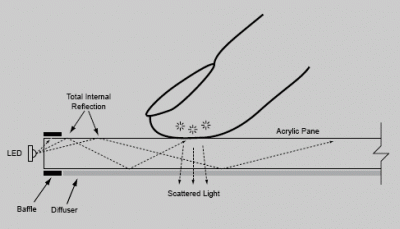
Okay, but how do touch screens actually work?
I recently overheard a woman on the subway telling her friend that her toddler “swipes” everything in their house – the coffee table, books, plates and even her own mother, trying to make her disappear like an image on a touch screen. The story got me thinking that for many of us, our knowledge of what’s going on behind that glossy display isn’t much more than a toddler’s.
Before I started researching how touch screens worked, I figured there was one universal technology behind the “swipable” phenomenon. Instead it turns out there are half a dozen, and more being researched every day. The two most commonly used systems are resistive and capacitive touch screens. For the sake of simplicity, I will focus here on these two systems and finish with where experts think touch screen technology is headed...
Source
@EverythingScience
I recently overheard a woman on the subway telling her friend that her toddler “swipes” everything in their house – the coffee table, books, plates and even her own mother, trying to make her disappear like an image on a touch screen. The story got me thinking that for many of us, our knowledge of what’s going on behind that glossy display isn’t much more than a toddler’s.
Before I started researching how touch screens worked, I figured there was one universal technology behind the “swipable” phenomenon. Instead it turns out there are half a dozen, and more being researched every day. The two most commonly used systems are resistive and capacitive touch screens. For the sake of simplicity, I will focus here on these two systems and finish with where experts think touch screen technology is headed...
Source
@EverythingScience
'Alien Megastructure' Star Keeps Getting Stranger
The more scientists learn about "Tabby's Star," the more mysterious the bizarre object gets.
Newly analyzed observations by NASA's planet-hunting Kepler space telescope show that the star KIC 8462852 — whose occasional, dramatic dips in brightness still have astronomers scratching their heads — has also dimmed overall during the last few years.
"The steady brightness change in KIC 8462852 is pretty astounding," study lead authorBen Montet, of the California Institute of Technology in Pasadena, said in a statement.
Source
@EverythingScience
The more scientists learn about "Tabby's Star," the more mysterious the bizarre object gets.
Newly analyzed observations by NASA's planet-hunting Kepler space telescope show that the star KIC 8462852 — whose occasional, dramatic dips in brightness still have astronomers scratching their heads — has also dimmed overall during the last few years.
"The steady brightness change in KIC 8462852 is pretty astounding," study lead authorBen Montet, of the California Institute of Technology in Pasadena, said in a statement.
Source
@EverythingScience
The Fermi Paradox
Some people stick with the traditional, feeling struck by the epic beauty or blown away by the insane scale of the universe. Personally, I go for the old “existential meltdown followed by acting weird for the next half hour.” But everyone feels something.
Physicist Enrico Fermi felt something too—”Where is everybody?”
On the very best nights, we can see up to about 2,500 stars (roughly one hundred-millionth of the stars in our galaxy), and almost all of them are less than 1,000 light years away from us (or 1% of the diameter of the Milky Way).
When confronted with the topic of stars and galaxies, a question that tantalises most humans is, “Is there other intelligent life out there?” Let’s put some numbers to it—
Source
@EverythingScience
Some people stick with the traditional, feeling struck by the epic beauty or blown away by the insane scale of the universe. Personally, I go for the old “existential meltdown followed by acting weird for the next half hour.” But everyone feels something.
Physicist Enrico Fermi felt something too—”Where is everybody?”
On the very best nights, we can see up to about 2,500 stars (roughly one hundred-millionth of the stars in our galaxy), and almost all of them are less than 1,000 light years away from us (or 1% of the diameter of the Milky Way).
When confronted with the topic of stars and galaxies, a question that tantalises most humans is, “Is there other intelligent life out there?” Let’s put some numbers to it—
Source
@EverythingScience
Great, Mysterious Balls of Fire Speed by Dying Star
NASA's Hubble Space Telescope has seen planet-size cannonballs of hot gas whipping through the space near a dying star, but the origin of these plasma balls remains a mystery.
The high-speed blobs, each double the mass of Mars and twice as hot as the surface of the sun, are moving so fast in space that they would take only half an hour to go between the Earth and the moon (238,900 miles, or 384,472 kilometers), according to a statement from NASA's Jet Propulsion Laboratory. The observations suggest that these balls of fire have been appearing every 8.5 years for at least the last four centuries, the statement said.
Source
@EverythingScience
NASA's Hubble Space Telescope has seen planet-size cannonballs of hot gas whipping through the space near a dying star, but the origin of these plasma balls remains a mystery.
The high-speed blobs, each double the mass of Mars and twice as hot as the surface of the sun, are moving so fast in space that they would take only half an hour to go between the Earth and the moon (238,900 miles, or 384,472 kilometers), according to a statement from NASA's Jet Propulsion Laboratory. The observations suggest that these balls of fire have been appearing every 8.5 years for at least the last four centuries, the statement said.
Source
@EverythingScience
The Universe in 4 Minutes
Want to know the basics of the universe but only have 4 minutes to spare? Well this is the video for you!
Want to know the basics of the universe but only have 4 minutes to spare? Well this is the video for you!
YouTube
The Universe in 4 Minutes
Books what I wrote, yo ► https://tinyurl.com/ycnl5bo3
Fantastic Exurb1a painting briefly featured towards the end by Mia Kaleidoscope ► https://twitter.com/mia_kale/status/721724904056295424
Discord server ► https://discord.gg/76ybBSR (just in case…
Fantastic Exurb1a painting briefly featured towards the end by Mia Kaleidoscope ► https://twitter.com/mia_kale/status/721724904056295424
Discord server ► https://discord.gg/76ybBSR (just in case…
Interesting fact:
If you shrunk the Milky Way (100,000 Lightyears) to span from NY to LA (2,789mi), the Voyager 1 has only traveled 3.84 inches since 1977.
Image
Source
@EverythingScience
If you shrunk the Milky Way (100,000 Lightyears) to span from NY to LA (2,789mi), the Voyager 1 has only traveled 3.84 inches since 1977.
Image
Source
@EverythingScience
Alien life could feed on cosmic rays
A bizarre microbe found deep in a gold mine in South Africa could provide a model for how life might survive in seemingly uninhabitable environments through the cosmos. Known as Desulforudis audaxviator, the rod-shaped bacterium thrives 2.8 kilometers underground in a habitat devoid of the things that power the vast majority of life on Earth—light, oxygen, and carbon. Instead, this “gold mine bug” gets energy from radioactive uranium in the depths of the mine. Now, scientists predict that life elsewhere in the universe might also feed off of radiation, especially radiation raining down from space.
Image
Source
@EverythingScience
A bizarre microbe found deep in a gold mine in South Africa could provide a model for how life might survive in seemingly uninhabitable environments through the cosmos. Known as Desulforudis audaxviator, the rod-shaped bacterium thrives 2.8 kilometers underground in a habitat devoid of the things that power the vast majority of life on Earth—light, oxygen, and carbon. Instead, this “gold mine bug” gets energy from radioactive uranium in the depths of the mine. Now, scientists predict that life elsewhere in the universe might also feed off of radiation, especially radiation raining down from space.
Image
Source
@EverythingScience
If Betelgeuse would explode transiting from the red super giant stage to supernova then our sky would light continuously for two months. It can happen anytime, within a couple of thousand years, tomorrow or even now
Betelgeuse lies some 430 light-years from Earth. Yet it’s already one of the brightest stars in Earth’s sky. The reason is that Betelgeuse is a supergiant star – the largest kind of stars in the Universe. Betelgeuse has a luminosity about 10,000 times that of the Sun and its radius is calculated to be about 370 times that of the sun. If it were positioned at the center of our sun, its radius would extend out past the orbit of Mars. Because it’s near the end of its lifetime, Betelgeuse is likely to explode into a supernova.
Image
Source
@EverythingScience
Betelgeuse lies some 430 light-years from Earth. Yet it’s already one of the brightest stars in Earth’s sky. The reason is that Betelgeuse is a supergiant star – the largest kind of stars in the Universe. Betelgeuse has a luminosity about 10,000 times that of the Sun and its radius is calculated to be about 370 times that of the sun. If it were positioned at the center of our sun, its radius would extend out past the orbit of Mars. Because it’s near the end of its lifetime, Betelgeuse is likely to explode into a supernova.
Image
Source
@EverythingScience
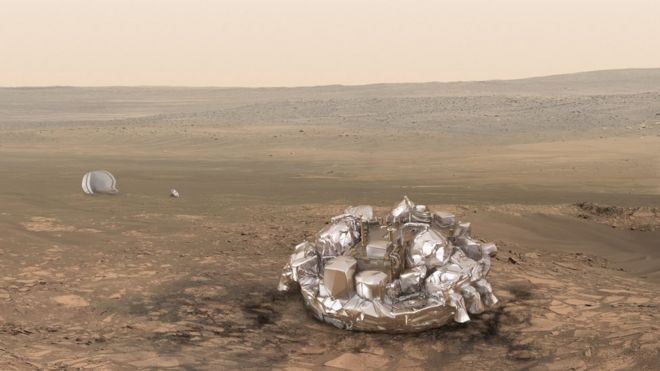
Schiaparelli Mars probe 'ready for all eventualities'
The European Schiaparelli probe may have to contend with relatively dusty conditions when it arrives at Mars.
The spacecraft is aiming to make a dump-down on the planet’s Meridiani Plain a week on Wednesday.
US researchers have suggested sand particles could soon start lifting into the atmosphere - something they do on a regular, seasonal basis.
But the European Space Agency says it is unconcerned. Indeed, some scientists are even excited at the prospect.
“We always knew we could arrive in a dust storm and Schiaparelli was designed with that possibility in mind,” said Esa project scientist, Jorge Vago.
Image
Source
@EverythingScience
The European Schiaparelli probe may have to contend with relatively dusty conditions when it arrives at Mars.
The spacecraft is aiming to make a dump-down on the planet’s Meridiani Plain a week on Wednesday.
US researchers have suggested sand particles could soon start lifting into the atmosphere - something they do on a regular, seasonal basis.
But the European Space Agency says it is unconcerned. Indeed, some scientists are even excited at the prospect.
“We always knew we could arrive in a dust storm and Schiaparelli was designed with that possibility in mind,” said Esa project scientist, Jorge Vago.
Image
Source
@EverythingScience
The Loneliest Frog On Earth Dies, Marking The End Of Yet Another Species
The loneliest frog on Earth is dead, taking with him the hope of an entire species.
Toughie was a famed Rabbs’ fringe-limbed tree frog and the last known member of his species. He had mottled brown skin and a strange bird-like call. He was described as “handsome,” had his own Wikipedia page and won the hearts of race car drivers and movie directors.
The United Nations projected Toughie’s image onto its headquarters in New York City in 2014, as part of a campaign to raise awareness about the world’s sixth mass extinction ― a period scientists warn we’re about to enter.
Toughie was “a symbol of the extinction crisis,” National Geographic said Friday. The frog was found dead on Sept. 26 in his home at the Atlanta Botanical Garden, where he’d lived since 2005.
Image
Source
@EverythingScience
The loneliest frog on Earth is dead, taking with him the hope of an entire species.
Toughie was a famed Rabbs’ fringe-limbed tree frog and the last known member of his species. He had mottled brown skin and a strange bird-like call. He was described as “handsome,” had his own Wikipedia page and won the hearts of race car drivers and movie directors.
The United Nations projected Toughie’s image onto its headquarters in New York City in 2014, as part of a campaign to raise awareness about the world’s sixth mass extinction ― a period scientists warn we’re about to enter.
Toughie was “a symbol of the extinction crisis,” National Geographic said Friday. The frog was found dead on Sept. 26 in his home at the Atlanta Botanical Garden, where he’d lived since 2005.
Image
Source
@EverythingScience
Star Trails Seen From Low Earth Orbit
Astronauts on the International Space Station captured a series of incredible star trail images on Oct. 3, 2016, as they orbited at 17,500 miles per hour. The station orbits the Earth every 90 minutes, and astronauts aboard see an average of 16 sunrises and sunsets every 24 hours.
Source
@EverythingScience
Astronauts on the International Space Station captured a series of incredible star trail images on Oct. 3, 2016, as they orbited at 17,500 miles per hour. The station orbits the Earth every 90 minutes, and astronauts aboard see an average of 16 sunrises and sunsets every 24 hours.
Source
@EverythingScience
This is what happens when a black hole swallows a star
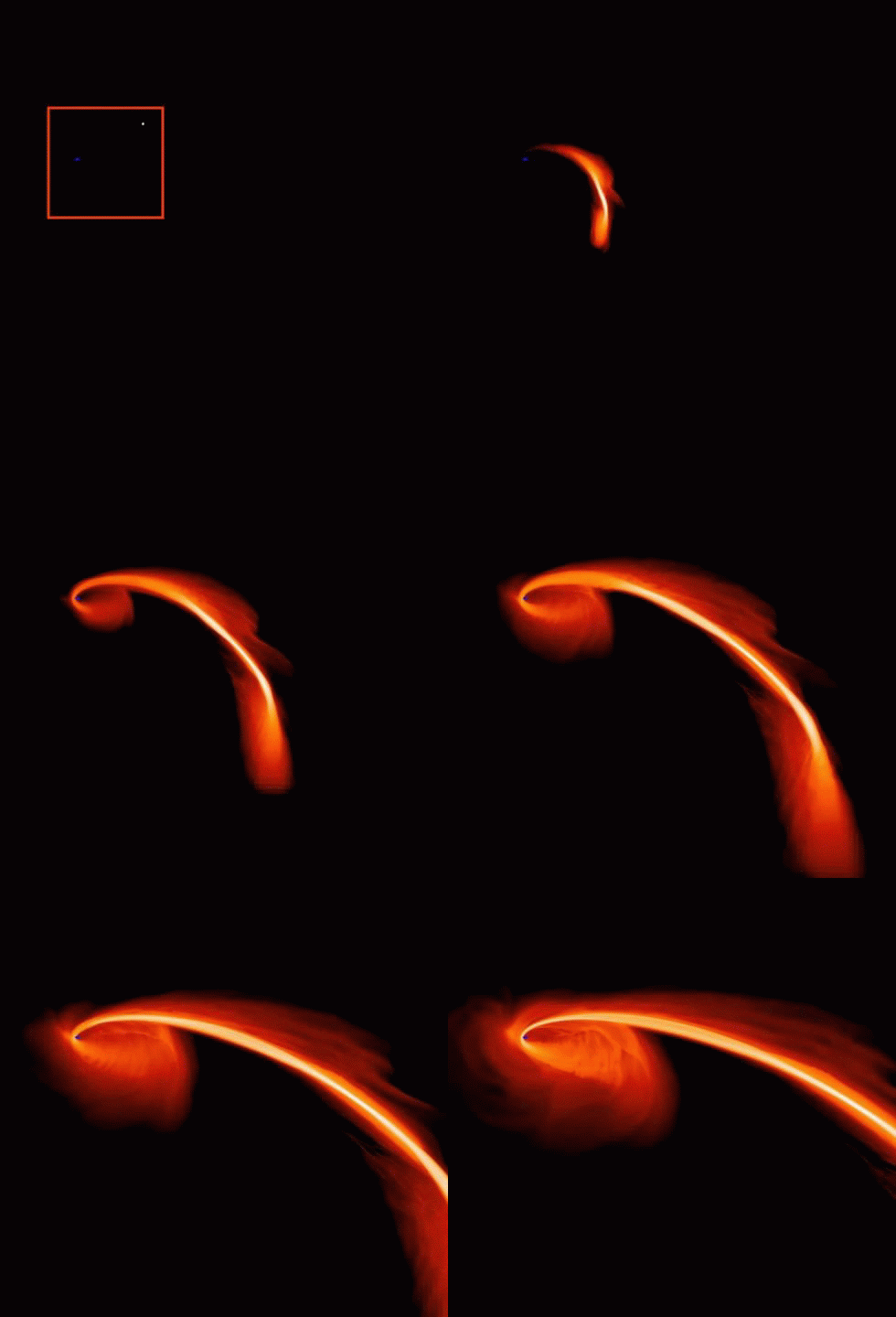
As the star gets sucked up into the black hole, a huge jet of plasma is burped out, spanning hundreds of light-years. "When the star is ripped apart by the gravitational forces of the black hole, some part of the star's remains falls into the black hole, while the rest is ejected at high speeds," explains Johns Hopkins University researcher, Suvi Gezari.
@EverythingScience
As the star gets sucked up into the black hole, a huge jet of plasma is burped out, spanning hundreds of light-years. "When the star is ripped apart by the gravitational forces of the black hole, some part of the star's remains falls into the black hole, while the rest is ejected at high speeds," explains Johns Hopkins University researcher, Suvi Gezari.
@EverythingScience
The chance events that led to human existence
(The Human history)
How have we ended up as the most advanced species on a small blue-green planet, orbiting a seemingly insignificant star, in one of the hundred billion galaxies in the Universe?
Science has found some extraordinary answers to this question. Looking back through time, it appears that our existence depends on an apparently unlikely sequence of cosmic moments.
Image
Source
@EverythingScience
(The Human history)
How have we ended up as the most advanced species on a small blue-green planet, orbiting a seemingly insignificant star, in one of the hundred billion galaxies in the Universe?
Science has found some extraordinary answers to this question. Looking back through time, it appears that our existence depends on an apparently unlikely sequence of cosmic moments.
Image
Source
@EverythingScience
Robot surgeons and artificial life: the promise of tiny machines
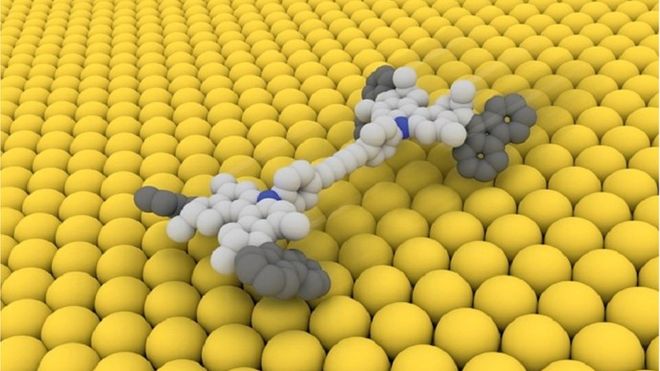
The 2016 Nobel Prize in chemistry has been awarded for the design and synthesis of the world's smallest machines. The work has overtones of science fiction, but holds huge promise in fields as diverse as medicine, materials and energy.
All grand endeavours start small.
This is especially true of efforts to develop nano-scale machines (1,000 times smaller than the width of a human hair), which are always destined to remain tiny however big our ambitions for them grow.
It's difficult to trace the development of molecular machines to one person or scientific step.
Image
Source
@EverythingScience
The 2016 Nobel Prize in chemistry has been awarded for the design and synthesis of the world's smallest machines. The work has overtones of science fiction, but holds huge promise in fields as diverse as medicine, materials and energy.
All grand endeavours start small.
This is especially true of efforts to develop nano-scale machines (1,000 times smaller than the width of a human hair), which are always destined to remain tiny however big our ambitions for them grow.
It's difficult to trace the development of molecular machines to one person or scientific step.
Image
Source
@EverythingScience
Hubble study estimates trillions of galaxies in the observable universe over the previously thought hundreds of billions | Video
@EverythingScience
@EverythingScience
Space.com
Our Universe Has Trillions of Galaxies, Hubble Study | Video
A new study using the Hubble Space Telescope and other telescopes has increased estimates of galaxies in the Universe ten fold. It was previously estimated that there was 100 billion galaxies in the observable Universe.
Brain chips let a paralyzed man feel touch through a robotic arm
The brain chips zap the patient's brain to let him feel when robotic fingers are touched
Nathan Copeland hasn’t been able to move his legs or hands since he broke his neck in a car accident more than a decade ago. But now that scientists have implanted four chips in his brain, Copeland can control a robotic arm with his mind and feel when someone touches its fingers. This is the first time that a neural implant has allowed a person to feel touch through a prosthetic by directly stimulating his brain.
"IT FELT LIKE I WAS GETTING MY FINGERS TOUCHED OR PUSHED."
Image
Source
@EverythingScience
The brain chips zap the patient's brain to let him feel when robotic fingers are touched
Nathan Copeland hasn’t been able to move his legs or hands since he broke his neck in a car accident more than a decade ago. But now that scientists have implanted four chips in his brain, Copeland can control a robotic arm with his mind and feel when someone touches its fingers. This is the first time that a neural implant has allowed a person to feel touch through a prosthetic by directly stimulating his brain.
"IT FELT LIKE I WAS GETTING MY FINGERS TOUCHED OR PUSHED."
Image
Source
@EverythingScience







Asgardia, Proposed Space-Based Nation Accepting Citizenship Applications
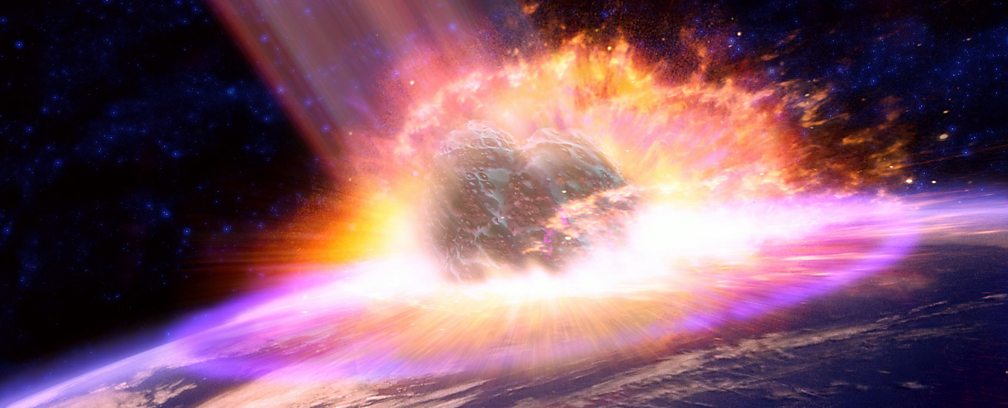
A proposed space nation called Asgardia is now accepting applications for future citizens.
Leaders of the Asgardia project discussed the prospective space nation at a news conference in Paris Wednesday (Oct. 12). The leaders aim to launch Asgardia's first satellite in 2017 and say they would like to eventually have a space station where some, but not all, of its planned 150 million (mostly Earth-dwelling) nationals would live and work.
Asgardia, named after the Norse gods' home of Asgard, will be a democracy with an emphasis on the freedom of the individual to develop space technologies, according to Igor Ashurbeyli, Asgardia project team leader and founder. People can now apply to be selected as one of the first 100,000 citizens through the nation’s website, asgardia.space. At the time of publication, the number of applicants has reached more than 84,000, according to the website. While Asgardia is not officially a nation (yet), prospective citizens must fulfil the legal requirements for Asgardia's United Nations application — for example, they must be from nations that allow multiple citizenships.
Asgardia would be a nation in space, in low-Earth orbit, or beyond, the project leaders said. The Asgardia project team said they think they need at least tens of thousands of citizens before they formally apply to the U.N. for recognition (although there are 14 countries in the world with fewer than 100,000 citizens).
@EverythingScience
Image
Source
A proposed space nation called Asgardia is now accepting applications for future citizens.
Leaders of the Asgardia project discussed the prospective space nation at a news conference in Paris Wednesday (Oct. 12). The leaders aim to launch Asgardia's first satellite in 2017 and say they would like to eventually have a space station where some, but not all, of its planned 150 million (mostly Earth-dwelling) nationals would live and work.
Asgardia, named after the Norse gods' home of Asgard, will be a democracy with an emphasis on the freedom of the individual to develop space technologies, according to Igor Ashurbeyli, Asgardia project team leader and founder. People can now apply to be selected as one of the first 100,000 citizens through the nation’s website, asgardia.space. At the time of publication, the number of applicants has reached more than 84,000, according to the website. While Asgardia is not officially a nation (yet), prospective citizens must fulfil the legal requirements for Asgardia's United Nations application — for example, they must be from nations that allow multiple citizenships.
Asgardia would be a nation in space, in low-Earth orbit, or beyond, the project leaders said. The Asgardia project team said they think they need at least tens of thousands of citizens before they formally apply to the U.N. for recognition (although there are 14 countries in the world with fewer than 100,000 citizens).
@EverythingScience
Image
Source