
How to Watch Europe's Rosetta Comet Mission Finale on Thursday, Friday
'Europe's history-making Rosetta comet mission is coming to an end, and you can watch the grand finale live Thursday and Friday (Sept. 29 and Sept. 30).'
'Europe's history-making Rosetta comet mission is coming to an end, and you can watch the grand finale live Thursday and Friday (Sept. 29 and Sept. 30).'
Space.com
How to Watch Europe's Rosetta Comet Mission Finale on Thursday, Friday
Europe's history-making Rosetta comet mission is coming to an end, and you can watch the grand finale live Thursday and Friday (Sept. 29 and Sept. 30).
SpaceX's plan to colonize Mars, explained
Elon Musk gave the biggest talk of his life in Guadalajara, Mexico, where he detailed his plans to set up a self-sustaining colony of 1 million people on Mars.
Elon Musk gave the biggest talk of his life in Guadalajara, Mexico, where he detailed his plans to set up a self-sustaining colony of 1 million people on Mars.
YouTube
SpaceX's plan to colonize Mars, explained
Elon Musk gave the biggest talk of his life in Guadalajara, Mexico, where he detailed his plans to set up a self-sustaining colony of 1 million people on Mars. He knows the rockets and spaceships he wants to build, but many questions still need to be answered…
Elon Musk's ideas aren't enough to turn humanity into an multi-planet species
'A train doesn't work very well if its passengers arrive at their destibation dead'
'A train doesn't work very well if its passengers arrive at their destibation dead'
The Verge
Elon Musk's ideas aren't enough to turn humanity into a multi-planet species
I admit it: I'm an optimist. I wanted Elon Musk to show me a strong Mars plan with real finances and real life-support design. I was hoping he'd talked some of his billionaire friends into...
Cancer therapy that engineers patient white blood cells to recognize and destroy tumours
47% of the patients experienced a complete remission, 5x better than the current standard of care.
Image
47% of the patients experienced a complete remission, 5x better than the current standard of care.
Image
reddit
Cancer therapy that engineers patient white blood... • /r/science
Kite Pharma is a biotech company that manufactures [CAR-T cells](https://en.wikipedia.org/wiki/Chimeric_antigen_receptor). Essentially, CAR-T...
Continue to Next Level?
Prepare yourself for this one...
Prepare yourself for this one...
YouTube
Continue to Next Level?
Books what I wrote, yo ► https://tinyurl.com/ycnl5bo3
Discord server ► https://discord.gg/76ybBSR (just in case that doesn’t work: discord.gg/exurb1a)
Like shit music? I make that too ► https://soundcloud.com/exurbia-1
Facebook ► https://www.facebook.com/exurb1a/…
Discord server ► https://discord.gg/76ybBSR (just in case that doesn’t work: discord.gg/exurb1a)
Like shit music? I make that too ► https://soundcloud.com/exurbia-1
Facebook ► https://www.facebook.com/exurb1a/…
Image
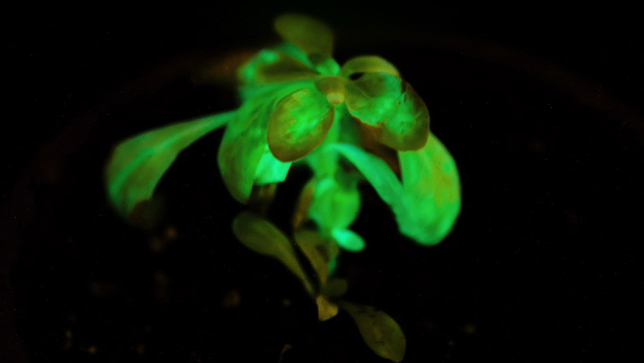
In The Not So Distant Future, Glow-In-The-Dark Trees Could Replace Street Lights
According to Daan Roosegaarde, the future of art and design is awash with spectacular innovation.
From giant vacuum cleaning systems aimed at eradicating smog to “smart” apparel that becomes translucent when the wearer is turned on, the Dutch artist/designer/architect has helped imagine some hair-raising projects that could propel us into a new era of aesthetics.
In The Not So Distant Future, Glow-In-The-Dark Trees Could Replace Street Lights
According to Daan Roosegaarde, the future of art and design is awash with spectacular innovation.
From giant vacuum cleaning systems aimed at eradicating smog to “smart” apparel that becomes translucent when the wearer is turned on, the Dutch artist/designer/architect has helped imagine some hair-raising projects that could propel us into a new era of aesthetics.
Image
NASA can't explain the 'impossible' cloud that's been spotted over Titan
NASA’s Cassini spacecraft just spotted a mysterious ice cloud over Saturn’s largest moon, Titan, and its appearance challenges everything we thought we knew about the moon’s atmosphere.
First spotted decades ago by NASA's Voyager 1 spacecraft, the cloud has reappeared for the second time, and it's somehow made up of compounds that barely exist in Titan’s atmosphere.
So where did it come from? "The appearance of this ice cloud goes against everything we know about the way clouds form on Titan," said lead researcher Carrie Anderson from NASA's Goddard Space Flight Centre.
NASA can't explain the 'impossible' cloud that's been spotted over Titan
NASA’s Cassini spacecraft just spotted a mysterious ice cloud over Saturn’s largest moon, Titan, and its appearance challenges everything we thought we knew about the moon’s atmosphere.
First spotted decades ago by NASA's Voyager 1 spacecraft, the cloud has reappeared for the second time, and it's somehow made up of compounds that barely exist in Titan’s atmosphere.
So where did it come from? "The appearance of this ice cloud goes against everything we know about the way clouds form on Titan," said lead researcher Carrie Anderson from NASA's Goddard Space Flight Centre.

Synthetic blood vessel breakthrough could transform children's heart surgery
A breakthrough in the manufacture of synthetic blood vessels has raised hopes that children born with serious heart defects could be treated in a single operation instead of multiple rounds of open heart surgery.
The landmark work comes from researchers in the US who made synthetic arteries that grow when they are implanted in the body, unlike the standard tissue grafts which are now used to correct faulty blood vessels.
Many children who are born with heart defects face a series of major operations over the course of their lives because the implants - known as conduits - that are used to replace their malformed blood vessels, do not grow in line with their heart and the rest of the body.
Source
@EverythingScience
A breakthrough in the manufacture of synthetic blood vessels has raised hopes that children born with serious heart defects could be treated in a single operation instead of multiple rounds of open heart surgery.
The landmark work comes from researchers in the US who made synthetic arteries that grow when they are implanted in the body, unlike the standard tissue grafts which are now used to correct faulty blood vessels.
Many children who are born with heart defects face a series of major operations over the course of their lives because the implants - known as conduits - that are used to replace their malformed blood vessels, do not grow in line with their heart and the rest of the body.
Source
@EverythingScience

Scientists testing HIV cure report 'remarkable' progress after patient breakthrough
UK scientists and clinicians working on a groundbreaking trial to test a possible cure for HIV infection say they have made remarkable progress after a test patient showed no sign of the virus following treatment.
The research, being carried out by five of Britain’s top universities with NHS support, is combining standard antiretroviral drugs with a drug that reactivates dormant HIV and a vaccine that induces the immune system to destroy the infected cells.
Antiretoviral drugs alone are highly effective at stopping the virus from reproducing but do not eradicate the disease, so must be taken for life.
Fifty patients are taking part in the trial. Early tests on the first person to complete the treatment show no signs of the virus in his blood, the Sunday Times reported.
Source
@EverythingScience
UK scientists and clinicians working on a groundbreaking trial to test a possible cure for HIV infection say they have made remarkable progress after a test patient showed no sign of the virus following treatment.
The research, being carried out by five of Britain’s top universities with NHS support, is combining standard antiretroviral drugs with a drug that reactivates dormant HIV and a vaccine that induces the immune system to destroy the infected cells.
Antiretoviral drugs alone are highly effective at stopping the virus from reproducing but do not eradicate the disease, so must be taken for life.
Fifty patients are taking part in the trial. Early tests on the first person to complete the treatment show no signs of the virus in his blood, the Sunday Times reported.
Source
@EverythingScience

HIV cure close after disease 'vanishes' from blood of British man
A British man could become the first person in the world to be cured of HIV using a new therapy designed by a team of scientists from five UK universities.
The 44-year-old is one of 50 people currently trialling a treatment which targets the disease even in its dormant state.
Scientists told The Sunday Times that presently the virus is completely undetectable in the man’s blood and if it remains that way it will be the first complete cure.
"This is one of the first serious attempts at a full cure for HIV,” said Mark Samuels, managing director of the National Institute for Health Research Office for Clinical Research Infrastructure.
“We are exploring the real possibility of curing HIV. This is a huge challenge and it's still early days but the progress has been remarkable."
Source
@EverythingScience
A British man could become the first person in the world to be cured of HIV using a new therapy designed by a team of scientists from five UK universities.
The 44-year-old is one of 50 people currently trialling a treatment which targets the disease even in its dormant state.
Scientists told The Sunday Times that presently the virus is completely undetectable in the man’s blood and if it remains that way it will be the first complete cure.
"This is one of the first serious attempts at a full cure for HIV,” said Mark Samuels, managing director of the National Institute for Health Research Office for Clinical Research Infrastructure.
“We are exploring the real possibility of curing HIV. This is a huge challenge and it's still early days but the progress has been remarkable."
Source
@EverythingScience

Earth's atmosphere may never drop below 400 ppm CO2 again
The world has crossed a major greenhouse-gas milestone, and it may never turn back.
The Manua Loa Observatory in Hawaii has maintained a continuous record of atmospheric carbon-dioxide levels since 1958.
Right now we're at the low point in that cycle, just at the end of September. And, according to a post from the Scripps Institute of Oceanography (which we first saw covered over at Motherboard), atmospheric CO2 is holding at 401 parts per million. That's the first time in recorded history that the annual carbon cycle has bottomed out at over 400 ppm. And it means the 2016 carbon trough is about 25% higher than the 1958 peak — just under 320 ppm.
Source
@EverythingScience
The world has crossed a major greenhouse-gas milestone, and it may never turn back.
The Manua Loa Observatory in Hawaii has maintained a continuous record of atmospheric carbon-dioxide levels since 1958.
Right now we're at the low point in that cycle, just at the end of September. And, according to a post from the Scripps Institute of Oceanography (which we first saw covered over at Motherboard), atmospheric CO2 is holding at 401 parts per million. That's the first time in recorded history that the annual carbon cycle has bottomed out at over 400 ppm. And it means the 2016 carbon trough is about 25% higher than the 1958 peak — just under 320 ppm.
Source
@EverythingScience

Do black holes die?
There are some things in the universe that you simply can't escape. Death. Taxes. Black holes. If you time it right, you can even experience all three at once.
Black holes are made out to be uncompromising monsters, roaming the galaxies, voraciously consuming anything in their path. And their name is rightly deserved: once you fall in, once you cross the terminator line of the event horizon, you don't come out. Not even light can escape their clutches.
But in movies, the scary monster has a weakness, and if black holes are the galactic monsters, then surely they have a vulnerability. Right?
Source
@EverythingScience
There are some things in the universe that you simply can't escape. Death. Taxes. Black holes. If you time it right, you can even experience all three at once.
Black holes are made out to be uncompromising monsters, roaming the galaxies, voraciously consuming anything in their path. And their name is rightly deserved: once you fall in, once you cross the terminator line of the event horizon, you don't come out. Not even light can escape their clutches.
But in movies, the scary monster has a weakness, and if black holes are the galactic monsters, then surely they have a vulnerability. Right?
Source
@EverythingScience

Quantum Teleportation Enters the Real World
Two separate teams of scientists have taken quantum teleportation from the lab into the real world.
Researchers working in Calgary, Canada and Hefei, China, used existing fiber optics networks to transmit small units of information across cities via quantum entanglement — Einstein’s “spooky action at a distance.”
Stepping Outside the Lab
According to quantum mechanics, some objects, like photons or electrons, can be entangled. This means that no matter how far apart they are, what happens to one will affect the other instantaneously. To Einstein, this seemed ridiculous, because it entailed information moving faster than the speed of light, something he deemed impossible. But, numerous experiments have shown that entanglement does indeed exist. The challenge was putting it to use.
A few experiments in the lab had previously managed to send information using quantum entanglement. But translating their efforts to the real world, where any number of factors could confound the process is a much more difficult challenge. That’s exactly what these two teams of researchers have done. Their breakthrough, published in two separate papers today in Nature Photonics, promises to offer important advancements for communications and encryption technologies.
Both experiments encode a message into a photon and send it to a way station of sorts. There, the message is transferred to a different photon, which is entangled with a photon held by the receiver. This destroys the information held in the first photon, but transmits the information via entanglement to the receiver. When the way station measures the photon, it creates kind of key — a decoder ring of sorts — that can decrypt the entangled photon’s information. That key is then sent over an internet connection, where it is combined with the information contained within the entangled photon to reveal the message.
Source
@EverythingScience
Two separate teams of scientists have taken quantum teleportation from the lab into the real world.
Researchers working in Calgary, Canada and Hefei, China, used existing fiber optics networks to transmit small units of information across cities via quantum entanglement — Einstein’s “spooky action at a distance.”
Stepping Outside the Lab
According to quantum mechanics, some objects, like photons or electrons, can be entangled. This means that no matter how far apart they are, what happens to one will affect the other instantaneously. To Einstein, this seemed ridiculous, because it entailed information moving faster than the speed of light, something he deemed impossible. But, numerous experiments have shown that entanglement does indeed exist. The challenge was putting it to use.
A few experiments in the lab had previously managed to send information using quantum entanglement. But translating their efforts to the real world, where any number of factors could confound the process is a much more difficult challenge. That’s exactly what these two teams of researchers have done. Their breakthrough, published in two separate papers today in Nature Photonics, promises to offer important advancements for communications and encryption technologies.
Both experiments encode a message into a photon and send it to a way station of sorts. There, the message is transferred to a different photon, which is entangled with a photon held by the receiver. This destroys the information held in the first photon, but transmits the information via entanglement to the receiver. When the way station measures the photon, it creates kind of key — a decoder ring of sorts — that can decrypt the entangled photon’s information. That key is then sent over an internet connection, where it is combined with the information contained within the entangled photon to reveal the message.
Source
@EverythingScience

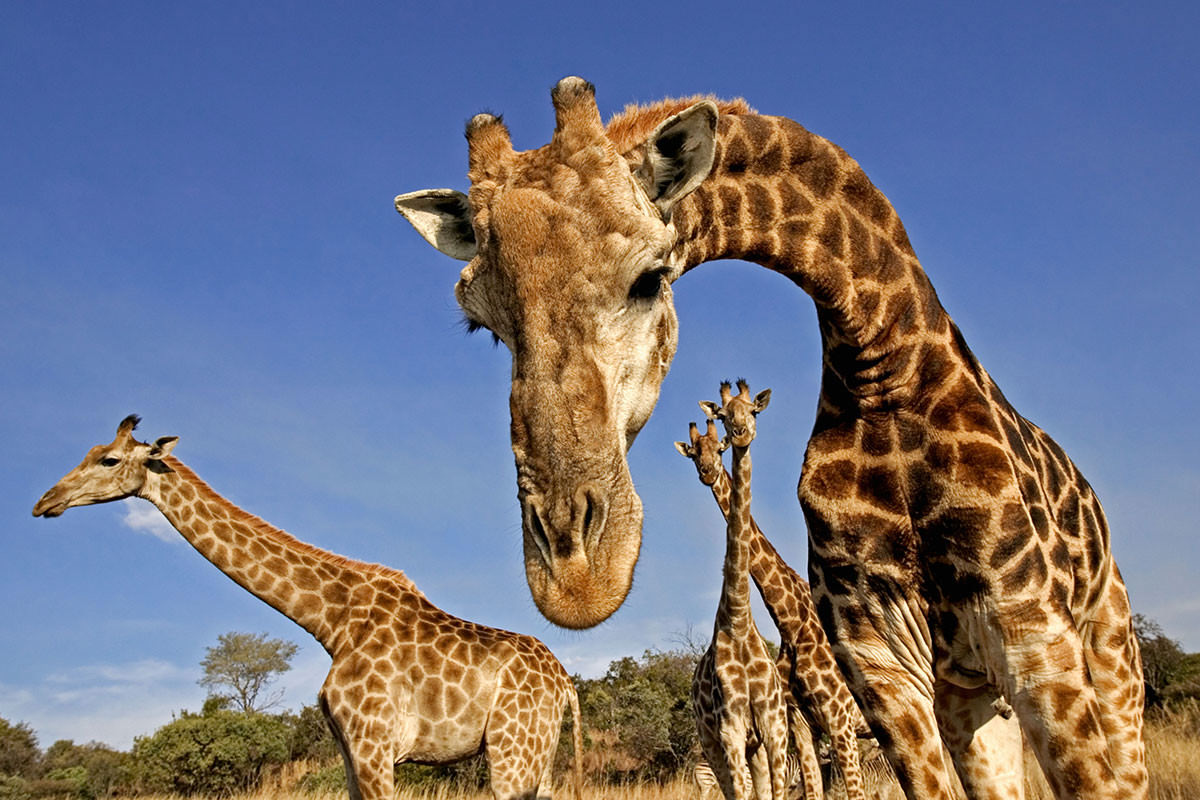
DNA analysis reveals there are four distinct giraffe species, not one as previously thought
Some groups are as genetically different from one another as brown bears are from polar bears.
Researchers have long recognized only a single species of giraffe, thought to be made up of several subspecies. However, a research collaboration has now identified four distinct species. Conservation biologist Julian Fennessy of the Giraffe Conservation Foundation, geneticist Axel Janke of the Senkenberg Research Institute, and their colleagues collected and analyzed samples from giraffes across the African continent. Their results appear in the journal Current Biology.
ResarchGate: When and why did you start genetically testing giraffes across Africa?
Julian Fennessy: When I approached Axel Janke to help with genetic testing on giraffe five years ago, l had been collecting giraffe DNA tissue samples for more than a decade. I was interested to know whether genetics would help answer some critical conservation concerns, including how similar or not giraffe (sub)species are, if past translocations of giraffe had “mixed” different (sub)species and if so, how this knowledge could be used to inform future translocations of giraffe into parks or other protected areas. Additionally, I thought there could possibly be a genetic grade among giraffe along a north-south axis, and that a population of giraffe in Zambia’s Luangwa Valley National Park could represent a link between these. This idea turned out to be incorrect.
Source
@EverythingScience
Some groups are as genetically different from one another as brown bears are from polar bears.
Researchers have long recognized only a single species of giraffe, thought to be made up of several subspecies. However, a research collaboration has now identified four distinct species. Conservation biologist Julian Fennessy of the Giraffe Conservation Foundation, geneticist Axel Janke of the Senkenberg Research Institute, and their colleagues collected and analyzed samples from giraffes across the African continent. Their results appear in the journal Current Biology.
ResarchGate: When and why did you start genetically testing giraffes across Africa?
Julian Fennessy: When I approached Axel Janke to help with genetic testing on giraffe five years ago, l had been collecting giraffe DNA tissue samples for more than a decade. I was interested to know whether genetics would help answer some critical conservation concerns, including how similar or not giraffe (sub)species are, if past translocations of giraffe had “mixed” different (sub)species and if so, how this knowledge could be used to inform future translocations of giraffe into parks or other protected areas. Additionally, I thought there could possibly be a genetic grade among giraffe along a north-south axis, and that a population of giraffe in Zambia’s Luangwa Valley National Park could represent a link between these. This idea turned out to be incorrect.
Source
@EverythingScience
Genetic Engineering Will Change Everything Forever – CRISPR
Kurzgesagt – In a Nutshell
Kurzgesagt – In a Nutshell
YouTube
Genetic Engineering Will Change Everything Forever – CRISPR
Designer babies, the end of diseases, genetically modified humans that never age. Outrageous things that used to be science fiction are suddenly becoming reality. The only thing we know for sure is that things will change irreversibly.
OUR CHANNELS
▀▀…
OUR CHANNELS
▀▀…