
Astronomers have traced the source of the most powerful radio signal ever received from space
Scientists have observed the most powerful fast radio burst (FRB) ever – an intensely brilliant burst of radiation emanating from outside our own Milky Way galaxy.
The signal, which researchers say travelled at least a billion light-years to reach Earth, only lasted for a fraction of a second, but the observation could help us understand more about the epic gaps that exist between galaxies, called the cosmic web.
"FRBs are extremely short but intense pulses of radio waves, each only lasting about a millisecond," says astrophysicist Ryan Shannon from Curtin University in Australia. "Some are discovered by accident and no two bursts look the same."
There's a lot we still don't understand about FRBs and where they come from, partly because we've so far witnessed very few of them.
This new burst – called FRB 150807 – is just the 18th FRB detected to date since they were first discovered in 2001.
But despite this apparent rarity, scientists actually think these intensely powerful but short phenomena are happening all the time – we just don't notice them.
───────────────────────
Image
Full Story
Brought to you by @EverythingScience
Scientists have observed the most powerful fast radio burst (FRB) ever – an intensely brilliant burst of radiation emanating from outside our own Milky Way galaxy.
The signal, which researchers say travelled at least a billion light-years to reach Earth, only lasted for a fraction of a second, but the observation could help us understand more about the epic gaps that exist between galaxies, called the cosmic web.
"FRBs are extremely short but intense pulses of radio waves, each only lasting about a millisecond," says astrophysicist Ryan Shannon from Curtin University in Australia. "Some are discovered by accident and no two bursts look the same."
There's a lot we still don't understand about FRBs and where they come from, partly because we've so far witnessed very few of them.
This new burst – called FRB 150807 – is just the 18th FRB detected to date since they were first discovered in 2001.
But despite this apparent rarity, scientists actually think these intensely powerful but short phenomena are happening all the time – we just don't notice them.
───────────────────────
Image
Full Story
Brought to you by @EverythingScience

Plants ‘see’ underground by channelling light to their roots
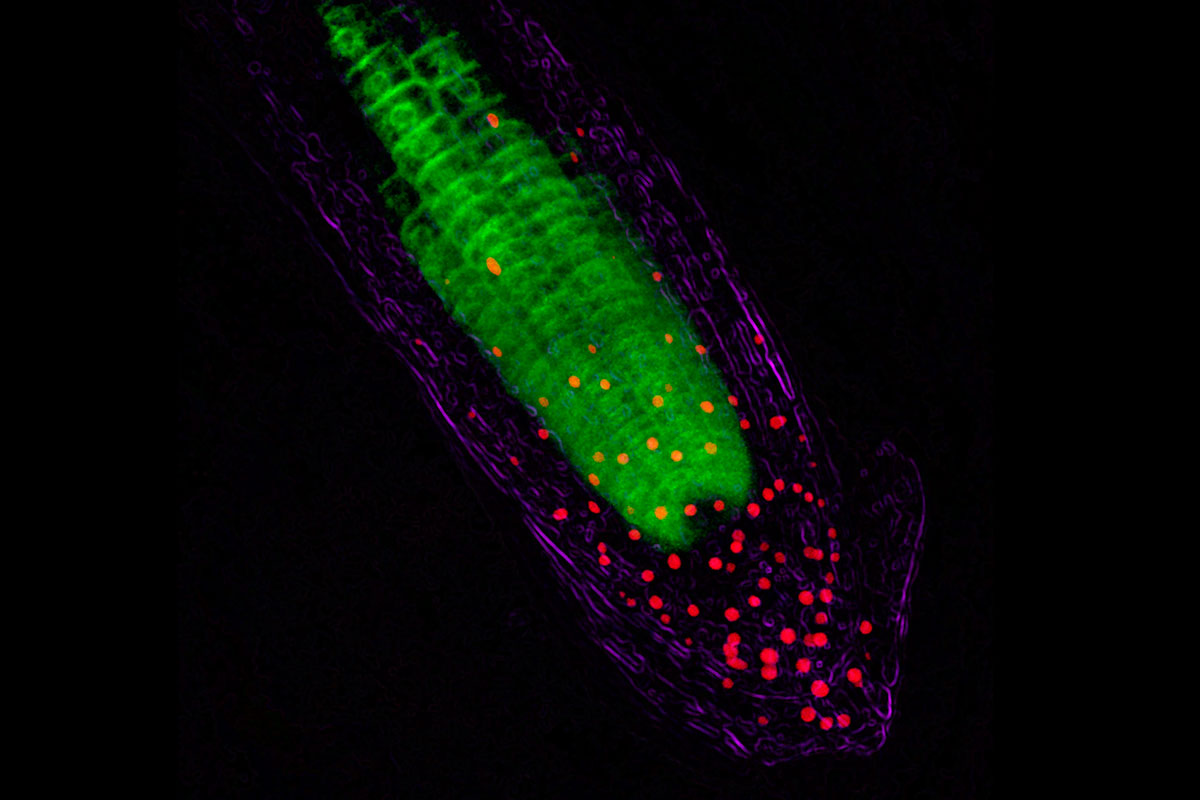
A light-bulb moment? Plants seem to pipe sunlight directly down into underground roots to help them grow.
Light receptors in stems, leaves and flowers have long been known to regulate plant growth. Roots also have these receptors, but it has been unclear how they sense light deep in dark soil.
Hyo-Jun Lee at Seoul National University in South Korea and his colleagues used Arabidopsis thaliana – a small flowering plant from the mustard family – as a model to study this phenomenon.
They found that the plant stem acts like a fibre-optic cable, conducting light down to receptors in the roots known as phytochromes. These trigger the production of a protein called HY5, which promotes healthy root growth.
Image
Full Story
Brought to you by @EverythingScience
A light-bulb moment? Plants seem to pipe sunlight directly down into underground roots to help them grow.
Light receptors in stems, leaves and flowers have long been known to regulate plant growth. Roots also have these receptors, but it has been unclear how they sense light deep in dark soil.
Hyo-Jun Lee at Seoul National University in South Korea and his colleagues used Arabidopsis thaliana – a small flowering plant from the mustard family – as a model to study this phenomenon.
They found that the plant stem acts like a fibre-optic cable, conducting light down to receptors in the roots known as phytochromes. These trigger the production of a protein called HY5, which promotes healthy root growth.
Image
Full Story
Brought to you by @EverythingScience
The surgeon behind the first human head transplant is using VR to prepare his patient
In case you haven’t heard the rumblings over the past year or so, Italian neurosurgeon Sergio Canavero is hell-bent on performing the world’s first human head transplant, and says the procedure will take place within the next 12 months.
He’s even got a willing participant - Valery Spiridonov, a 30-year-old Russian man with muscular atrophy - and Canavero has just announced that his patient will spend much of his preparation time inside a virtual reality machine to get him used to his new body.
If all of this is sounding to you like a terrible, horrible dream... we wish.
Last year, when Spiridonov announced his willing participation and progressed the project from 'Crazy surgeon speaking in hypotheticals' to 'Oh crap, this is actually happening' levels of weird.
Image
Full Story
Brought to you by @EverythingScience
In case you haven’t heard the rumblings over the past year or so, Italian neurosurgeon Sergio Canavero is hell-bent on performing the world’s first human head transplant, and says the procedure will take place within the next 12 months.
He’s even got a willing participant - Valery Spiridonov, a 30-year-old Russian man with muscular atrophy - and Canavero has just announced that his patient will spend much of his preparation time inside a virtual reality machine to get him used to his new body.
If all of this is sounding to you like a terrible, horrible dream... we wish.
Last year, when Spiridonov announced his willing participation and progressed the project from 'Crazy surgeon speaking in hypotheticals' to 'Oh crap, this is actually happening' levels of weird.
Image
Full Story
Brought to you by @EverythingScience

Soon, @EverythingScience will start utilising new telegram features: Instant view + telegra.ph
For the best experience, we recommend using telegram 3.14.
Also thank you for almost 1k members!
For the best experience, we recommend using telegram 3.14.
Also thank you for almost 1k members!
European Mars Lander Crash Caused by 1-Second Glitch: ESA
PARIS — The European Space Agency (ESA) on Nov. 23 said its Schiaparelli lander’s crash landing on Mars on Oct. 19 followed an unexplained saturation of its inertial measurement unit (IMU), which delivered bad data to the lander’s computer and forced a premature release of its parachute.
Polluted by the IMU data, the lander’s computer apparently thought it had either already landed or was just about to land. The parachute system was released, the braking thrusters were fired only briefly and the on-ground systems were activated.
Instead of being on the ground, Schiaparelli was still 2.3 miles (3.7 kilometers) above the Mars surface. It crashed, but not before delivering what ESA officials say is a wealth of data on entry into the Mars atmosphere, the functioning and release of the heat shield and the deployment of the parachute — all of which went according to plan.
───────────────────────
Article
Brought to you by @EverthingScience
PARIS — The European Space Agency (ESA) on Nov. 23 said its Schiaparelli lander’s crash landing on Mars on Oct. 19 followed an unexplained saturation of its inertial measurement unit (IMU), which delivered bad data to the lander’s computer and forced a premature release of its parachute.
Polluted by the IMU data, the lander’s computer apparently thought it had either already landed or was just about to land. The parachute system was released, the braking thrusters were fired only briefly and the on-ground systems were activated.
Instead of being on the ground, Schiaparelli was still 2.3 miles (3.7 kilometers) above the Mars surface. It crashed, but not before delivering what ESA officials say is a wealth of data on entry into the Mars atmosphere, the functioning and release of the heat shield and the deployment of the parachute — all of which went according to plan.
───────────────────────
Article
Brought to you by @EverthingScience
Telegraph
European Mars Lander Crash Caused by 1-Second Glitch: ESA
PARIS — The European Space Agency (ESA) on Nov. 23 said its Schiaparelli lander’s crash landing on Mars on Oct. 19 followed an unexplained saturation of its inertial measurement unit (IMU), which delivered bad data to the lander’s computer and forced a premature…
Neuroscientists have successfully removed specific phobias from people's brains
Neuroscientists have figured out how to remove specific fears from patients' brains using a combination of artificial intelligence (AI) and brain scanning technology, and the technique could change the lives of people with crippling phobias.
────────────────
Article
@EverythingScience
Neuroscientists have figured out how to remove specific fears from patients' brains using a combination of artificial intelligence (AI) and brain scanning technology, and the technique could change the lives of people with crippling phobias.
────────────────
Article
@EverythingScience
Telegraph
Neuroscientists have successfully removed specific phobias from people's brains
Neuroscientists have figured out how to remove specific fears from patients' brains using a combination of artificial intelligence (AI) and brain scanning technology, and the technique could change the lives of people with crippling phobias. The process,…
Cancer signalling pathway could illuminate new avenue to therapy
Researchers have better defined a pro-growth signaling pathway common to many cancers that, when blocked, kills cancer cells but leaves healthy cells comparatively unharmed. The study could establish new avenues of therapeutic treatments for many types of solid tumors.
────────────────
Article
@EverythingScience
Researchers have better defined a pro-growth signaling pathway common to many cancers that, when blocked, kills cancer cells but leaves healthy cells comparatively unharmed. The study could establish new avenues of therapeutic treatments for many types of solid tumors.
────────────────
Article
@EverythingScience
Telegraph
Cancer signalling pathway could illuminate new avenue to therapy
Researchers have better defined a pro-growth signaling pathway common to many cancers that, when blocked, kills cancer cells but leaves healthy cells comparatively unharmed. The study could establish new avenues of therapeutic treatments for many types of…
Astronomers have found a whole new type of star at the centre of the Milky Way
Astronomers have discovered a new family of stars in the centre of the Milky Way, which they're calling N-rich stars, because of their unusually high levels of nitrogen.
Not only do these strange new stars deepen our understanding of what lies at the heart of our own galaxy, their discovery could shed light on how globular clusters - strange, spherical groups of stars that orbit the centre of a galaxy - formed during the creation of the Milky Way some 13.2 billion years ago.
────────────────
Article
@EverythingScience
Astronomers have discovered a new family of stars in the centre of the Milky Way, which they're calling N-rich stars, because of their unusually high levels of nitrogen.
Not only do these strange new stars deepen our understanding of what lies at the heart of our own galaxy, their discovery could shed light on how globular clusters - strange, spherical groups of stars that orbit the centre of a galaxy - formed during the creation of the Milky Way some 13.2 billion years ago.
────────────────
Article
@EverythingScience
Telegraph
Astronomers have found a whole new type of star at the centre of the Milky Way
Astronomers have discovered a new family of stars in the centre of the Milky Way, which they're calling N-rich stars, because of their unusually high levels of nitrogen. Not only do these strange new stars deepen our understanding of what lies at the heart…
Quantum Computers Could Crush Today’s Top Encryption in 15 Years
Quantum computers could bring about a quantum leap in processing power, with countless benefits for fields like data science and AI. But there’s also a dark side: this extra power will make it simple to crack the encryption keeping everything from our emails to our online banking secure.
────────────────
Article
@EverythingScience
Quantum computers could bring about a quantum leap in processing power, with countless benefits for fields like data science and AI. But there’s also a dark side: this extra power will make it simple to crack the encryption keeping everything from our emails to our online banking secure.
────────────────
Article
@EverythingScience
Telegraph
Quantum Computers Could Crush Today’s Top Encryption in 15 Years
Quantum computers could bring about a quantum leap in processing power, with countless benefits for fields like data science and AI. But there’s also a dark side: this extra power will make it simple to crack the encryption keeping everything from our emails…
Construction of practical quantum computers radically simplified
Scientists at the University of Sussex have invented a ground-breaking new method that puts the construction of large-scale quantum computers within reach of current technology.
Quantum computers could solve certain problems - that would take the fastest supercomputer millions of years to calculate - in just a few milliseconds.
They have the potential to create new materials and medicines, as well as solve long-standing scientific and financial problems.
Article
@EverythingScience
Scientists at the University of Sussex have invented a ground-breaking new method that puts the construction of large-scale quantum computers within reach of current technology.
Quantum computers could solve certain problems - that would take the fastest supercomputer millions of years to calculate - in just a few milliseconds.
They have the potential to create new materials and medicines, as well as solve long-standing scientific and financial problems.
Article
@EverythingScience
Telegraph
Construction of practical quantum computers radically simplified
Scientists at the University of Sussex have invented a ground-breaking new method that puts the construction of large-scale quantum computers within reach of current technology. Quantum computers could solve certain problems - that would take the fastest…
The world's top biologists have met to discuss whether we should update evolution
Evolutionary biology has helped scientists understand why the world looks the way it does for more than 150 years, since Charles Darwin released On the Origin of Species back in 1859.
But a team of researchers has now proposed an update to our current understanding of evolution - one that could completely shift our understanding of how species evolve.
────────────────
Article
@EverythingScience
Evolutionary biology has helped scientists understand why the world looks the way it does for more than 150 years, since Charles Darwin released On the Origin of Species back in 1859.
But a team of researchers has now proposed an update to our current understanding of evolution - one that could completely shift our understanding of how species evolve.
────────────────
Article
@EverythingScience
Telegraph
The world's top biologists have met to discuss whether we should update evolution
Evolutionary biology has helped scientists understand why the world looks the way it does for more than 150 years, since Charles Darwin released On the Origin of Species back in 1859. But a team of researchers has now proposed an update to our current understanding…