
Scientists have rejuvenated old mice with the blood of human teenagers
The fountain of youth is real, and it's creepy.
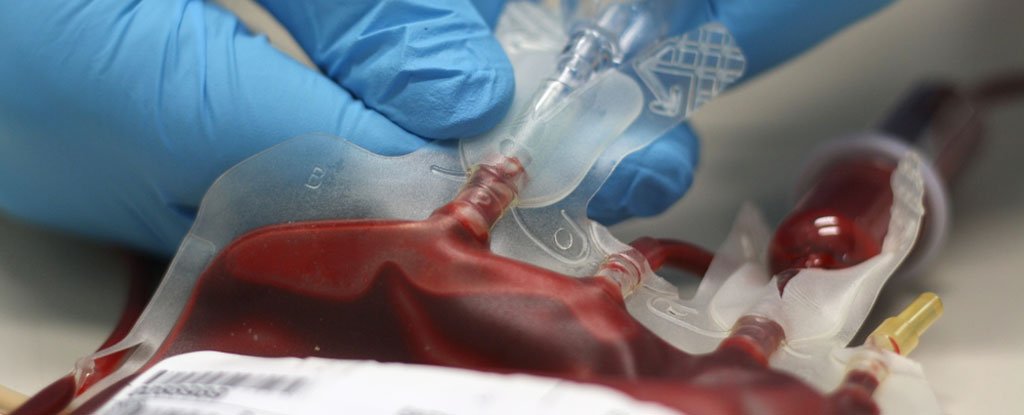
It might sound like something out of a creepy folk tale, but scientists have found evidence that injecting young human blood into older bodies does seem to offer powers of rejuvenation – even if those old bodies aren't human themselves.
In a new study, researchers took blood samples from a group of healthy, young 18-year-old human participants and injected them into 12-month-old mice – late middle age in mice years, or the equivalent of being about 50 years old in human terms.
For three weeks, the mice received twice-weekly injections of human blood plasma – blood's liquid component, which scientists think is responsible for its rejuvenating properties.
After this, scientists from California-based biopharmaceutical company Alkahest compared the injected animals' behaviour to young and old control groups of three-month-old and 12-month-old mice – neither of which had received the plasma injections.
The new blood made the old mice act young again, with the treated animals running around in open spaces much like their younger controls.
But there was also evidence that their powers of memory had improved.
Image
Full Story
Brought to you by @EverythingScience
Join our chat: @EverythingScienceChat
The fountain of youth is real, and it's creepy.
It might sound like something out of a creepy folk tale, but scientists have found evidence that injecting young human blood into older bodies does seem to offer powers of rejuvenation – even if those old bodies aren't human themselves.
In a new study, researchers took blood samples from a group of healthy, young 18-year-old human participants and injected them into 12-month-old mice – late middle age in mice years, or the equivalent of being about 50 years old in human terms.
For three weeks, the mice received twice-weekly injections of human blood plasma – blood's liquid component, which scientists think is responsible for its rejuvenating properties.
After this, scientists from California-based biopharmaceutical company Alkahest compared the injected animals' behaviour to young and old control groups of three-month-old and 12-month-old mice – neither of which had received the plasma injections.
The new blood made the old mice act young again, with the treated animals running around in open spaces much like their younger controls.
But there was also evidence that their powers of memory had improved.
Image
Full Story
Brought to you by @EverythingScience
Join our chat: @EverythingScienceChat
Scientists have identified an antibody that neutralises 98% of HIV strains
We're closer than ever to an HIV vaccine
Scientists have discovered an antibody produced by an HIV-positive patient that neutralises 98 percent of all HIV strains tested - including most of the strains that are resistant to other antibodies of the same class.
Due to HIV’s ability to rapidly respond to the body’s immune defences, an antibody that can block a wide range of strains has been very hard to come by. But now that we’ve found one, it could form the basis of a new vaccine against the virus.
Researchers from the US National Institutes of Health (NIH) found that the antibody, called NG, was able to maintain its ability to recognise the HIV virus, even as the virus morphed and broke away from it.
It’s also up to 10 times more potent than VRC01 - an antibody in the same class as N6, which has progressed to phase II clinical trials in human patients, after protecting monkeys against HIV for nearly six months.
Image
Full Story
Brought to you by @EverythingScience
Join our chat @EverythingScienceChat
We're closer than ever to an HIV vaccine
Scientists have discovered an antibody produced by an HIV-positive patient that neutralises 98 percent of all HIV strains tested - including most of the strains that are resistant to other antibodies of the same class.
Due to HIV’s ability to rapidly respond to the body’s immune defences, an antibody that can block a wide range of strains has been very hard to come by. But now that we’ve found one, it could form the basis of a new vaccine against the virus.
Researchers from the US National Institutes of Health (NIH) found that the antibody, called NG, was able to maintain its ability to recognise the HIV virus, even as the virus morphed and broke away from it.
It’s also up to 10 times more potent than VRC01 - an antibody in the same class as N6, which has progressed to phase II clinical trials in human patients, after protecting monkeys against HIV for nearly six months.
Image
Full Story
Brought to you by @EverythingScience
Join our chat @EverythingScienceChat

Supercomputer simulations help develop new approach to fight antibiotic resistance
Supercomputer simulations have played a key role in discovering a new class of drug candidates that hold promise to combat antibiotic resistance. In a new study, lab experiments were combined with supercomputer modeling to identify molecules that boost antibiotics’ effect on disease-causing bacteria
The researchers found four new chemicals that seek out and disrupt bacterial proteins called "efflux pumps," known to be a major cause of antibiotic resistance. Although some antibiotics can permeate the protective barriers surrounding bacterial cells, many bacteria have evolved efflux pumps that expel antibiotics back out of the cell and render the medications ineffective.
Image
Full Story
Brought to you by @EverythingScience
Join our chat @EverythingScienceChat
Supercomputer simulations have played a key role in discovering a new class of drug candidates that hold promise to combat antibiotic resistance. In a new study, lab experiments were combined with supercomputer modeling to identify molecules that boost antibiotics’ effect on disease-causing bacteria
The researchers found four new chemicals that seek out and disrupt bacterial proteins called "efflux pumps," known to be a major cause of antibiotic resistance. Although some antibiotics can permeate the protective barriers surrounding bacterial cells, many bacteria have evolved efflux pumps that expel antibiotics back out of the cell and render the medications ineffective.
Image
Full Story
Brought to you by @EverythingScience
Join our chat @EverythingScienceChat

Last-line antibiotics are failing
A new report shows that in 2015, antibiotic resistance continued to increase for most bacteria and antibiotics under surveillance. In particular, the EU average percentage of carbapenem resistance in Klebsiella pneumoniae increased from 6.2% in 2012 to 8.1% in 2015, and combined resistance to carbapenems and polymyxins (e.g. colistin) was sometimes reported. These two groups of antibiotics are considered last-line antibiotics as they usually are the last treatment options for patients infected with bacteria resistant to other available antibiotics.
──────
Image
Full Story
Brought to you by @EverythingScience
Join our chat @EverythingScienceChat
A new report shows that in 2015, antibiotic resistance continued to increase for most bacteria and antibiotics under surveillance. In particular, the EU average percentage of carbapenem resistance in Klebsiella pneumoniae increased from 6.2% in 2012 to 8.1% in 2015, and combined resistance to carbapenems and polymyxins (e.g. colistin) was sometimes reported. These two groups of antibiotics are considered last-line antibiotics as they usually are the last treatment options for patients infected with bacteria resistant to other available antibiotics.
──────
Image
Full Story
Brought to you by @EverythingScience
Join our chat @EverythingScienceChat

This video about the scale of black holes will crush your poor, tiny brain
We thought we were prepared...
Black holes are vast, matter-annihilating objects that seem to defy physics by their very existence. They're so weird, that when Albert Einstein's equations first predicted the existence of these beasts, he didn't believe they could actually be real.
And you can't really blame him, because the idea that we have these singularities of space-time intent on sucking up all the matter around them scattered all around our cosmic backyard is pretty hard to wrap your head around.
Video
Full Story
Brought to you by @EverythingScience
Join our chat @EverythingScienceChat
We thought we were prepared...
Black holes are vast, matter-annihilating objects that seem to defy physics by their very existence. They're so weird, that when Albert Einstein's equations first predicted the existence of these beasts, he didn't believe they could actually be real.
And you can't really blame him, because the idea that we have these singularities of space-time intent on sucking up all the matter around them scattered all around our cosmic backyard is pretty hard to wrap your head around.
Video
Full Story
Brought to you by @EverythingScience
Join our chat @EverythingScienceChat
YouTube
Black Hole Comparison
Hello world! Sorry about the long time without any uploads,
but I had to spend some time dealing with life ;)
But good news, I am back with a space themed video similar to my first upload,
which became quite popular.
I hope I was able to convey my fascination.…
but I had to spend some time dealing with life ;)
But good news, I am back with a space themed video similar to my first upload,
which became quite popular.
I hope I was able to convey my fascination.…
The North Pole is 20°C hotter than it should be right now
Temperatures near the North Pole are an unheard of 36°F (20°C) warmer than average right now, researchers have reported.
The Arctic is currently in the midst of polar night, where the Sun hardly ever rises. Usually, it’s the time when things get really cold and vast, thick ice sheets form for the winter.
But this year, temperatures are much warmer than usual – while the weather stations around the North Pole record the biggest difference, even in parts of Arctic Russia, temperatures are up to 12.6°F (7°C) warmer.And even though sea ice is forming again after reaching its annual low in September, it’s doing so much slower than usual.
In fact, so far the amount of ice coverage is even lower than the record-breaking low of 2012.
Scientists have taken to Twitter to express their concern over just how bad the situation is getting.
────────────────────────
Image
Full Story
Brought to you by @EverythingScience
Temperatures near the North Pole are an unheard of 36°F (20°C) warmer than average right now, researchers have reported.
The Arctic is currently in the midst of polar night, where the Sun hardly ever rises. Usually, it’s the time when things get really cold and vast, thick ice sheets form for the winter.
But this year, temperatures are much warmer than usual – while the weather stations around the North Pole record the biggest difference, even in parts of Arctic Russia, temperatures are up to 12.6°F (7°C) warmer.And even though sea ice is forming again after reaching its annual low in September, it’s doing so much slower than usual.
In fact, so far the amount of ice coverage is even lower than the record-breaking low of 2012.
Scientists have taken to Twitter to express their concern over just how bad the situation is getting.
────────────────────────
Image
Full Story
Brought to you by @EverythingScience

Astronomers have traced the source of the most powerful radio signal ever received from space
Scientists have observed the most powerful fast radio burst (FRB) ever – an intensely brilliant burst of radiation emanating from outside our own Milky Way galaxy.
The signal, which researchers say travelled at least a billion light-years to reach Earth, only lasted for a fraction of a second, but the observation could help us understand more about the epic gaps that exist between galaxies, called the cosmic web.
"FRBs are extremely short but intense pulses of radio waves, each only lasting about a millisecond," says astrophysicist Ryan Shannon from Curtin University in Australia. "Some are discovered by accident and no two bursts look the same."
There's a lot we still don't understand about FRBs and where they come from, partly because we've so far witnessed very few of them.
This new burst – called FRB 150807 – is just the 18th FRB detected to date since they were first discovered in 2001.
But despite this apparent rarity, scientists actually think these intensely powerful but short phenomena are happening all the time – we just don't notice them.
───────────────────────
Image
Full Story
Brought to you by @EverythingScience
Scientists have observed the most powerful fast radio burst (FRB) ever – an intensely brilliant burst of radiation emanating from outside our own Milky Way galaxy.
The signal, which researchers say travelled at least a billion light-years to reach Earth, only lasted for a fraction of a second, but the observation could help us understand more about the epic gaps that exist between galaxies, called the cosmic web.
"FRBs are extremely short but intense pulses of radio waves, each only lasting about a millisecond," says astrophysicist Ryan Shannon from Curtin University in Australia. "Some are discovered by accident and no two bursts look the same."
There's a lot we still don't understand about FRBs and where they come from, partly because we've so far witnessed very few of them.
This new burst – called FRB 150807 – is just the 18th FRB detected to date since they were first discovered in 2001.
But despite this apparent rarity, scientists actually think these intensely powerful but short phenomena are happening all the time – we just don't notice them.
───────────────────────
Image
Full Story
Brought to you by @EverythingScience

Plants ‘see’ underground by channelling light to their roots
A light-bulb moment? Plants seem to pipe sunlight directly down into underground roots to help them grow.
Light receptors in stems, leaves and flowers have long been known to regulate plant growth. Roots also have these receptors, but it has been unclear how they sense light deep in dark soil.
Hyo-Jun Lee at Seoul National University in South Korea and his colleagues used Arabidopsis thaliana – a small flowering plant from the mustard family – as a model to study this phenomenon.
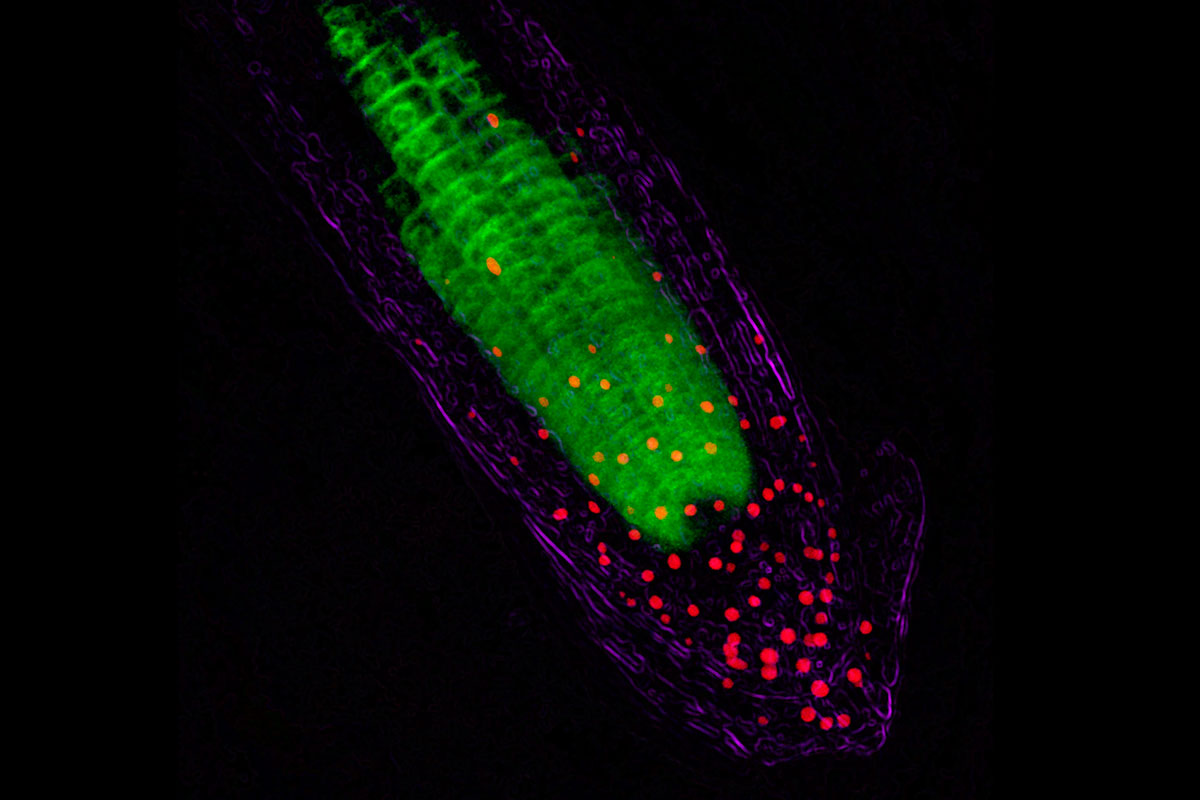
They found that the plant stem acts like a fibre-optic cable, conducting light down to receptors in the roots known as phytochromes. These trigger the production of a protein called HY5, which promotes healthy root growth.
Image
Full Story
Brought to you by @EverythingScience
A light-bulb moment? Plants seem to pipe sunlight directly down into underground roots to help them grow.
Light receptors in stems, leaves and flowers have long been known to regulate plant growth. Roots also have these receptors, but it has been unclear how they sense light deep in dark soil.
Hyo-Jun Lee at Seoul National University in South Korea and his colleagues used Arabidopsis thaliana – a small flowering plant from the mustard family – as a model to study this phenomenon.
They found that the plant stem acts like a fibre-optic cable, conducting light down to receptors in the roots known as phytochromes. These trigger the production of a protein called HY5, which promotes healthy root growth.
Image
Full Story
Brought to you by @EverythingScience
The surgeon behind the first human head transplant is using VR to prepare his patient
In case you haven’t heard the rumblings over the past year or so, Italian neurosurgeon Sergio Canavero is hell-bent on performing the world’s first human head transplant, and says the procedure will take place within the next 12 months.
He’s even got a willing participant - Valery Spiridonov, a 30-year-old Russian man with muscular atrophy - and Canavero has just announced that his patient will spend much of his preparation time inside a virtual reality machine to get him used to his new body.
If all of this is sounding to you like a terrible, horrible dream... we wish.
Last year, when Spiridonov announced his willing participation and progressed the project from 'Crazy surgeon speaking in hypotheticals' to 'Oh crap, this is actually happening' levels of weird.
Image
Full Story
Brought to you by @EverythingScience
In case you haven’t heard the rumblings over the past year or so, Italian neurosurgeon Sergio Canavero is hell-bent on performing the world’s first human head transplant, and says the procedure will take place within the next 12 months.
He’s even got a willing participant - Valery Spiridonov, a 30-year-old Russian man with muscular atrophy - and Canavero has just announced that his patient will spend much of his preparation time inside a virtual reality machine to get him used to his new body.
If all of this is sounding to you like a terrible, horrible dream... we wish.
Last year, when Spiridonov announced his willing participation and progressed the project from 'Crazy surgeon speaking in hypotheticals' to 'Oh crap, this is actually happening' levels of weird.
Image
Full Story
Brought to you by @EverythingScience

Soon, @EverythingScience will start utilising new telegram features: Instant view + telegra.ph
For the best experience, we recommend using telegram 3.14.
Also thank you for almost 1k members!
For the best experience, we recommend using telegram 3.14.
Also thank you for almost 1k members!
European Mars Lander Crash Caused by 1-Second Glitch: ESA
PARIS — The European Space Agency (ESA) on Nov. 23 said its Schiaparelli lander’s crash landing on Mars on Oct. 19 followed an unexplained saturation of its inertial measurement unit (IMU), which delivered bad data to the lander’s computer and forced a premature release of its parachute.
Polluted by the IMU data, the lander’s computer apparently thought it had either already landed or was just about to land. The parachute system was released, the braking thrusters were fired only briefly and the on-ground systems were activated.
Instead of being on the ground, Schiaparelli was still 2.3 miles (3.7 kilometers) above the Mars surface. It crashed, but not before delivering what ESA officials say is a wealth of data on entry into the Mars atmosphere, the functioning and release of the heat shield and the deployment of the parachute — all of which went according to plan.
───────────────────────
Article
Brought to you by @EverthingScience
PARIS — The European Space Agency (ESA) on Nov. 23 said its Schiaparelli lander’s crash landing on Mars on Oct. 19 followed an unexplained saturation of its inertial measurement unit (IMU), which delivered bad data to the lander’s computer and forced a premature release of its parachute.
Polluted by the IMU data, the lander’s computer apparently thought it had either already landed or was just about to land. The parachute system was released, the braking thrusters were fired only briefly and the on-ground systems were activated.
Instead of being on the ground, Schiaparelli was still 2.3 miles (3.7 kilometers) above the Mars surface. It crashed, but not before delivering what ESA officials say is a wealth of data on entry into the Mars atmosphere, the functioning and release of the heat shield and the deployment of the parachute — all of which went according to plan.
───────────────────────
Article
Brought to you by @EverthingScience
Telegraph
European Mars Lander Crash Caused by 1-Second Glitch: ESA
PARIS — The European Space Agency (ESA) on Nov. 23 said its Schiaparelli lander’s crash landing on Mars on Oct. 19 followed an unexplained saturation of its inertial measurement unit (IMU), which delivered bad data to the lander’s computer and forced a premature…
Neuroscientists have successfully removed specific phobias from people's brains
Neuroscientists have figured out how to remove specific fears from patients' brains using a combination of artificial intelligence (AI) and brain scanning technology, and the technique could change the lives of people with crippling phobias.
────────────────
Article
@EverythingScience
Neuroscientists have figured out how to remove specific fears from patients' brains using a combination of artificial intelligence (AI) and brain scanning technology, and the technique could change the lives of people with crippling phobias.
────────────────
Article
@EverythingScience
Telegraph
Neuroscientists have successfully removed specific phobias from people's brains
Neuroscientists have figured out how to remove specific fears from patients' brains using a combination of artificial intelligence (AI) and brain scanning technology, and the technique could change the lives of people with crippling phobias. The process,…