
Early study finds antibody that 'neutralizes' Zika virus
Researchers have isolated a human monoclonal antibody that in a mouse model "markedly reduced" infection by the Zika virus, report scientists. Zika is believed to cause microcephaly, unusually small heads, and other congenital malformations in children born to infected women.
Image
Full Story
Brought to you by @EverythingScience
Researchers have isolated a human monoclonal antibody that in a mouse model "markedly reduced" infection by the Zika virus, report scientists. Zika is believed to cause microcephaly, unusually small heads, and other congenital malformations in children born to infected women.
Image
Full Story
Brought to you by @EverythingScience

A new paper claims our understanding of gravity is totally wrong
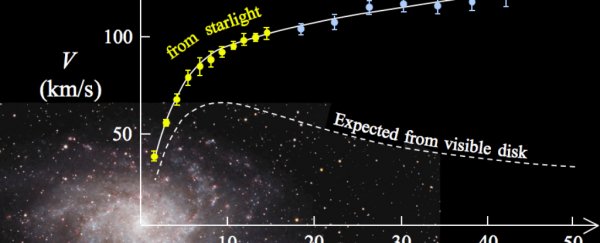
What if gravity is just an illusion?
A theoretical physicist has come up with a new hypothesis that could finally explain the mystery of dark matter - the elusive matter that's predicted to make up around 27 percent of the observable Universe.
According to the new paper, all we have to do to explain the weird effects of dark matter in the Universe is take gravity out of the equation.
"Our current ideas about space, time, and gravity urgently need to be re-thought. We have long known that Einstein's theory of gravity can not work with quantum mechanics", the author the new paper, Erik Verlinde from the University of Amsterdam, told Dutch news site NOS.
"Our findings are drastically changing, and I think that we are on the eve of a scientific revolution."
Image
Full Story
Brought to you by @EverythingScience
What if gravity is just an illusion?
A theoretical physicist has come up with a new hypothesis that could finally explain the mystery of dark matter - the elusive matter that's predicted to make up around 27 percent of the observable Universe.
According to the new paper, all we have to do to explain the weird effects of dark matter in the Universe is take gravity out of the equation.
"Our current ideas about space, time, and gravity urgently need to be re-thought. We have long known that Einstein's theory of gravity can not work with quantum mechanics", the author the new paper, Erik Verlinde from the University of Amsterdam, told Dutch news site NOS.
"Our findings are drastically changing, and I think that we are on the eve of a scientific revolution."
Image
Full Story
Brought to you by @EverythingScience
Forwarded from rex 𓁹𖦹𓁹
YouTube
How to think, not what to think | Jesse Richardson | TEDxBrisbane
This talk was given at a local TEDx event, produced independently of the TED Conferences. Jesse is the founder of https://www.schoolofthought.org an online fully immersive learning environment that will be free for students, teachers and universities all…
Genetically engineering disease-fighting cells
The human body produces T cells to recognize and fight disease. Each T cell has a unique T cell receptor (or TCR) on its surface that surveils small fragments of proteins presented by other cells. Upon detecting evidence of cancer or infection, a subset of T cells binds the diseased cells and orchestrates their elimination. When tumors and infections cannot be eradicated naturally, researchers employ immunotherapies to boost the immune system's effectiveness.
By inserting genes encoding a tumor-specific TCR into a patient's T cells, researchers can engineer a large population of T cells to target tumor cells. This approach, called TCR gene therapy, has yielded clinical successes where conventional cancer treatments have failed. However, TCR gene therapy is not without risk. The introduced receptor can become tangled with the resident receptor in each engineered T cell, causing some of these cells to attack healthy cells. A new technique developed by Caltech researchers prevents this from happening, increasing the safety of TCR gene therapy.
Image
Full Story
Brought to you by @EverythingScience
The human body produces T cells to recognize and fight disease. Each T cell has a unique T cell receptor (or TCR) on its surface that surveils small fragments of proteins presented by other cells. Upon detecting evidence of cancer or infection, a subset of T cells binds the diseased cells and orchestrates their elimination. When tumors and infections cannot be eradicated naturally, researchers employ immunotherapies to boost the immune system's effectiveness.
By inserting genes encoding a tumor-specific TCR into a patient's T cells, researchers can engineer a large population of T cells to target tumor cells. This approach, called TCR gene therapy, has yielded clinical successes where conventional cancer treatments have failed. However, TCR gene therapy is not without risk. The introduced receptor can become tangled with the resident receptor in each engineered T cell, causing some of these cells to attack healthy cells. A new technique developed by Caltech researchers prevents this from happening, increasing the safety of TCR gene therapy.
Image
Full Story
Brought to you by @EverythingScience

The Universe might rip itself apart until there's nothing left, new study suggests
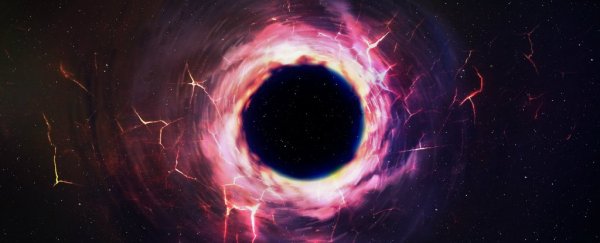
Is this how it ends?
When it comes to the end of the Universe, most physicists think it will gradually get colder and fade out of existence, at the earliest, 2.8 billion years from now.
But it might not be so simple. Calculations have shown that dark energy could cause the Universe to gradually tear itself apart until there's nothing left. And now a new study has provided a closer examination of what that fate might look like.
It's not the first time that this possibility of the Universe ripping itself apart has been put forward. Our current understanding of the Universe is that around 68 percent of its energy is dark energy - a mysterious force that's gradually accelerating the expansion of the Universe.
Image
Full Story
Brought to you by @EverythingScience
Is this how it ends?
When it comes to the end of the Universe, most physicists think it will gradually get colder and fade out of existence, at the earliest, 2.8 billion years from now.
But it might not be so simple. Calculations have shown that dark energy could cause the Universe to gradually tear itself apart until there's nothing left. And now a new study has provided a closer examination of what that fate might look like.
It's not the first time that this possibility of the Universe ripping itself apart has been put forward. Our current understanding of the Universe is that around 68 percent of its energy is dark energy - a mysterious force that's gradually accelerating the expansion of the Universe.
Image
Full Story
Brought to you by @EverythingScience
Kurzgesagt – In a Nutshell (Youtube)
Fusion Energy Explained – Future or Failure
➖ @everythingscience ➖
Fusion Energy Explained – Future or Failure
➖ @everythingscience ➖
YouTube
Fusion Power Explained – Future or Failure
How does Fusion Energy work and is it a good idea?
OUR CHANNELS
▀▀▀▀▀▀▀▀▀▀▀▀▀▀▀▀▀▀▀▀▀▀▀▀▀▀
German Channel: https://kgs.link/youtubeDE
Spanish Channel: https://kgs.link/youtubeES
HOW CAN YOU SUPPORT US?
▀▀▀▀▀▀▀▀▀▀▀▀▀▀▀▀▀▀▀▀▀▀▀▀▀▀
This is how we make…
OUR CHANNELS
▀▀▀▀▀▀▀▀▀▀▀▀▀▀▀▀▀▀▀▀▀▀▀▀▀▀
German Channel: https://kgs.link/youtubeDE
Spanish Channel: https://kgs.link/youtubeES
HOW CAN YOU SUPPORT US?
▀▀▀▀▀▀▀▀▀▀▀▀▀▀▀▀▀▀▀▀▀▀▀▀▀▀
This is how we make…
For the first time, a wireless brain implant has enabled paralysed primates to walk again
Absolutely incredible.
Scientists have used a wireless brain implant to bypass the spinal cord injuries of two paralysed rhesus macaques, giving them the ability to walk again.
The system – which wirelessly transmits decoded brain signals to stimulate the muscles responsible for leg movement – represents the first time a neural prosthetic has restored locomotion in a primate.
While the brain-spinal interface has only been tested on macaques so far, the team behind the research says one day the technology could help restore the ability to walk in humans paralysed by spinal cord injuries.
Image
Full Story
Brought to you by @EverythingScience
Absolutely incredible.
Scientists have used a wireless brain implant to bypass the spinal cord injuries of two paralysed rhesus macaques, giving them the ability to walk again.
The system – which wirelessly transmits decoded brain signals to stimulate the muscles responsible for leg movement – represents the first time a neural prosthetic has restored locomotion in a primate.
While the brain-spinal interface has only been tested on macaques so far, the team behind the research says one day the technology could help restore the ability to walk in humans paralysed by spinal cord injuries.
Image
Full Story
Brought to you by @EverythingScience
Telescope pointed at newly discovered planet Proxima b in search for aliens
A giant dish telescope in Australia has been pointed towards a red dwarf star 4.2 light years away as part of a major new search for intelligent alien life.
The Parkes radio telescope, in New South Wales, was aimed towards Proxima Centauri which was recently shown to have an Earth-sized planet in an orbit suitable for life.
Scientists will use the 210ft telescope to scan a host of radio frequencies looking for signals from an extraterrestrial civilisation.
Image
Full Story
Brought to you by @EverythingScience
A giant dish telescope in Australia has been pointed towards a red dwarf star 4.2 light years away as part of a major new search for intelligent alien life.
The Parkes radio telescope, in New South Wales, was aimed towards Proxima Centauri which was recently shown to have an Earth-sized planet in an orbit suitable for life.
Scientists will use the 210ft telescope to scan a host of radio frequencies looking for signals from an extraterrestrial civilisation.
Image
Full Story
Brought to you by @EverythingScience

Accelerating cancer research with deep learning
Despite steady progress in detection and treatment in recent decades, cancer remains the second leading cause of death in the United States, cutting short the lives of approximately 500,000 people each year. A research team has focused on creating software that can quickly identify valuable information in cancer reports, an ability that would not only save time and worker hours but also potentially reveal overlooked avenues in cancer research.
Image
Full Story
Brought to you by @EverythingScience
Despite steady progress in detection and treatment in recent decades, cancer remains the second leading cause of death in the United States, cutting short the lives of approximately 500,000 people each year. A research team has focused on creating software that can quickly identify valuable information in cancer reports, an ability that would not only save time and worker hours but also potentially reveal overlooked avenues in cancer research.
Image
Full Story
Brought to you by @EverythingScience

These incredible brothers become paralysed when the Sun sets each day
During the day, 13-year-old Shoaib Ahmed and his 9-year-old brother Abdul Rasheed are like any other kids - they go outside, walk, and play with their friends.
But when the sun sets, the Pakistani brothers become paralysed, and are unable to move or speak again until the sun rises. It's the first known report of these symptoms, and doctors have no idea what's causing them.
Image
Full Story
Brought to you by @EverythingScience
During the day, 13-year-old Shoaib Ahmed and his 9-year-old brother Abdul Rasheed are like any other kids - they go outside, walk, and play with their friends.
But when the sun sets, the Pakistani brothers become paralysed, and are unable to move or speak again until the sun rises. It's the first known report of these symptoms, and doctors have no idea what's causing them.
Image
Full Story
Brought to you by @EverythingScience

The Zoo Hypothesis: Are aliens avoiding Earth?
In 1950, physicist Enrico Fermi asked a very important question over lunch at the Los Alamos National Laboratory. Based on the number of galaxies we know exist, how many stars are inside those galaxies, and how many planets potentially orbit those stars, probability states that there should be alien life.
So, where is everybody?
This question - known as the Fermi Paradox - raised a lot of eyebrows, because it’s a logical thought when considering just how vast our Universe is. While there are many different hypotheses out there that attempt to concoct an answer, one of the best and most thought-provoking is the zoo hypothesis.
The zoo hypothesis was thought up in 1973 by MIT radio astronomer John Ball. He posited that, yes, there might well be intelligent aliens out there, but maybe they are simply ignoring us, forcing us to live in a cosmic 'zoo' or wildlife sanctuary where they can monitor our activity without disturbing it.
In other words, the hypothesis assumes that alien life is out there, but it's so advanced, it either does not want to influence our primitive society, or it knows not to get involved with other intelligent lifeforms.
Image
Full Story
Brought to you by @EverythingScience
In 1950, physicist Enrico Fermi asked a very important question over lunch at the Los Alamos National Laboratory. Based on the number of galaxies we know exist, how many stars are inside those galaxies, and how many planets potentially orbit those stars, probability states that there should be alien life.
So, where is everybody?
This question - known as the Fermi Paradox - raised a lot of eyebrows, because it’s a logical thought when considering just how vast our Universe is. While there are many different hypotheses out there that attempt to concoct an answer, one of the best and most thought-provoking is the zoo hypothesis.
The zoo hypothesis was thought up in 1973 by MIT radio astronomer John Ball. He posited that, yes, there might well be intelligent aliens out there, but maybe they are simply ignoring us, forcing us to live in a cosmic 'zoo' or wildlife sanctuary where they can monitor our activity without disturbing it.
In other words, the hypothesis assumes that alien life is out there, but it's so advanced, it either does not want to influence our primitive society, or it knows not to get involved with other intelligent lifeforms.
Image
Full Story
Brought to you by @EverythingScience

A Mysterious Unidentified Object Crashes in Myanmar
A large, unidentified metal object fell from the sky Thursday (Nov. 10) in the remote mountainous region of Myanmar.
The cylindrical object, which is about 12 feet (3.7 meters) long and 5 feet in diameter, blasted into the village of Lone Khin, near a jade mine. Villagers woke early in the morning to a loud boom and vibrations, when the object fell to the ground. Though no one was injured, the UFO ripped through a jade miner's tent, and afterwards, the smell of burning filled the air, according to The Myanmar Times.
"Initially, we thought it was a battle. The explosion made our houses shake. We saw the smoke from our village," Lone Khin villager Daw Ma Kyi told The Myanmar Times.
At first glance, the object looks like it may have come from an aircraft.
"I think it was an engine because I found a diode and many copper wires at the tail of the body," villager Ko Maung Myo told The Myanmar Times. "It also looks like a jet engine block."
However, government officials say that they haven't identified the object and are sending experts to examine it. One former government official with the Department of Aviation said that the image shown on Facebook of the metal "UFO" looked more like a rocket booster than part of a commercial plane.
Image
Full Story
Brought to you by @EverythingScience
A large, unidentified metal object fell from the sky Thursday (Nov. 10) in the remote mountainous region of Myanmar.
The cylindrical object, which is about 12 feet (3.7 meters) long and 5 feet in diameter, blasted into the village of Lone Khin, near a jade mine. Villagers woke early in the morning to a loud boom and vibrations, when the object fell to the ground. Though no one was injured, the UFO ripped through a jade miner's tent, and afterwards, the smell of burning filled the air, according to The Myanmar Times.
"Initially, we thought it was a battle. The explosion made our houses shake. We saw the smoke from our village," Lone Khin villager Daw Ma Kyi told The Myanmar Times.
At first glance, the object looks like it may have come from an aircraft.
"I think it was an engine because I found a diode and many copper wires at the tail of the body," villager Ko Maung Myo told The Myanmar Times. "It also looks like a jet engine block."
However, government officials say that they haven't identified the object and are sending experts to examine it. One former government official with the Department of Aviation said that the image shown on Facebook of the metal "UFO" looked more like a rocket booster than part of a commercial plane.
Image
Full Story
Brought to you by @EverythingScience

Diver Finds Long-Lost Nuke While Hunting Sea Cucumbers
A man diving off the coast of British Columbia, Canada, may have stumbled upon a nuclear weapon that the United States lost decades ago.
Now, the Royal Canadian Navy is scoping out the strange object to see if it is indeed a Mark IV bomb that was jettisoned by an American pilot in 1950 just before his plane crashed.
The man, Sean Smyrichinsky, was using an underwater scooter to hunt for sea cucumbers near Pitt Island, when he came upon a weird bagel-shaped object. After straying from his boat, he came upon a bizarre object that looked a bit like a half-cut bagel the size of a king-sized bed, he told CBC.
"I came out from the dive and I came up and I started telling my crew, 'My god, I found a UFO. I found the strangest thing I'd ever seen!' Smyrichinsky told CBC. "It resembled, like, a bagel cut in half, and then around the bagel these bowls molded into it."
Image
Full Story
Brought to you by @EverythingScience
A man diving off the coast of British Columbia, Canada, may have stumbled upon a nuclear weapon that the United States lost decades ago.
Now, the Royal Canadian Navy is scoping out the strange object to see if it is indeed a Mark IV bomb that was jettisoned by an American pilot in 1950 just before his plane crashed.
The man, Sean Smyrichinsky, was using an underwater scooter to hunt for sea cucumbers near Pitt Island, when he came upon a weird bagel-shaped object. After straying from his boat, he came upon a bizarre object that looked a bit like a half-cut bagel the size of a king-sized bed, he told CBC.
"I came out from the dive and I came up and I started telling my crew, 'My god, I found a UFO. I found the strangest thing I'd ever seen!' Smyrichinsky told CBC. "It resembled, like, a bagel cut in half, and then around the bagel these bowls molded into it."
Image
Full Story
Brought to you by @EverythingScience

This world-first brain implant is letting a 'locked-in' woman communicate
Paralysis is about to get a whole lot less lonely.
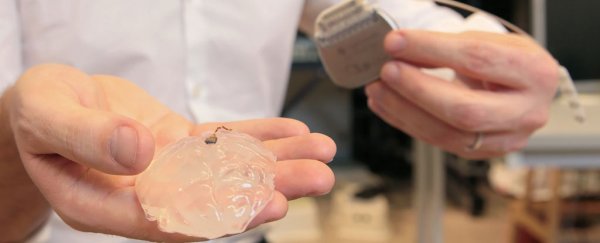
A paralysed woman in the Netherlands is the first to be fitted with a new type of brain implant that allows patients who cannot speak or move to communicate using nothing but their thoughts.
The new implant, which works with a computer interface to help her spell out words and sentences, can be used anywhere, allowing her to communicate with people in the outside world, without medical experts on hand to help.
"This is a world first," neuroscientist and lead researcher Nick Ramsay, from the University Medical School Utrecht, told CNN. "It's a fully implantable system that works at home without need for any experts to make it work."
Image
Full Story
Brought to you by @EverythingScience
Paralysis is about to get a whole lot less lonely.
A paralysed woman in the Netherlands is the first to be fitted with a new type of brain implant that allows patients who cannot speak or move to communicate using nothing but their thoughts.
The new implant, which works with a computer interface to help her spell out words and sentences, can be used anywhere, allowing her to communicate with people in the outside world, without medical experts on hand to help.
"This is a world first," neuroscientist and lead researcher Nick Ramsay, from the University Medical School Utrecht, told CNN. "It's a fully implantable system that works at home without need for any experts to make it work."
Image
Full Story
Brought to you by @EverythingScience
