
Elon Musk unveils Solar Roof and showcases plans for Solar City and Tesla
Elon Musk announces that Tesla will build and sell its own line of solar panels with integrated batteries. Coupled with the also unveiled PowerWall 2, it will allow residential homeowners to replace their entire roof with solar panels, making it much simpler for homes to be entirely powered by solar power.
Check out the full video shared below
REX for @Fizikx and @EverythingScience
Elon Musk announces that Tesla will build and sell its own line of solar panels with integrated batteries. Coupled with the also unveiled PowerWall 2, it will allow residential homeowners to replace their entire roof with solar panels, making it much simpler for homes to be entirely powered by solar power.
Check out the full video shared below
REX for @Fizikx and @EverythingScience
Tesla shows off solar roof tiles
Roof tiles with built-in solar panels have been unveiled by Tesla chief executive Elon Musk.
The tiles, made from glass, are intended to be a more attractive way to add solar panels to homes, compared with currently-used solar technology.
The launch took place in Universal Studios, Los Angeles, on what used to be the set for the television show Desperate Housewives.
It comes with Tesla due to take over struggling energy firm Solar City.
Some of the electric carmaker's investors have expressed concern over the takeover, suggesting it is a Tesla-funded bail-out of a company Mr Musk has a vested interest in as its biggest shareholder.
No price was given for the tiles, which come in a variety of colours and styles, though Mr Musk did say it would be cheaper than fitting a traditional roof and then adding solar on top.
Image
Full Story
Brought to you by @EverythingScience
Roof tiles with built-in solar panels have been unveiled by Tesla chief executive Elon Musk.
The tiles, made from glass, are intended to be a more attractive way to add solar panels to homes, compared with currently-used solar technology.
The launch took place in Universal Studios, Los Angeles, on what used to be the set for the television show Desperate Housewives.
It comes with Tesla due to take over struggling energy firm Solar City.
Some of the electric carmaker's investors have expressed concern over the takeover, suggesting it is a Tesla-funded bail-out of a company Mr Musk has a vested interest in as its biggest shareholder.
No price was given for the tiles, which come in a variety of colours and styles, though Mr Musk did say it would be cheaper than fitting a traditional roof and then adding solar on top.
Image
Full Story
Brought to you by @EverythingScience

What would a parallel universe even look like?
They could be bumping into us right now.
If you consider that the Milky Way galaxy has a radius of 100,000 light-years (1 light-year is 9.5 trillion km), and it’s estimated that there are 100 to 200 billion galaxies in the Universe, we’re living in an unfathomably gigantic place.
But what if this was just a fraction of what’s truly out there? What if our Universe is just one of many, and they’re all bouncing off of each other like mind-numbingly gargantuan marbles, each with their own weird laws of physics?
Welcome to the multiverse, where our Universe could be just one of the infinite numbers of universes that were spawned by the Big Bang.
Video
Full Story
Brought to you by @EverythingScience
They could be bumping into us right now.
If you consider that the Milky Way galaxy has a radius of 100,000 light-years (1 light-year is 9.5 trillion km), and it’s estimated that there are 100 to 200 billion galaxies in the Universe, we’re living in an unfathomably gigantic place.
But what if this was just a fraction of what’s truly out there? What if our Universe is just one of many, and they’re all bouncing off of each other like mind-numbingly gargantuan marbles, each with their own weird laws of physics?
Welcome to the multiverse, where our Universe could be just one of the infinite numbers of universes that were spawned by the Big Bang.
Video
Full Story
Brought to you by @EverythingScience
YouTube
What Would A Parallel Universe Even Be Like?
Our universe might seem huge, but what if this isn't the only universe? Let's explore the idea of a multiverse.
Watch More: Are We Alone In The Universe? ►►►► https://www.youtube.com/watch?v=2mf3d3FhxRo
Support Life Noggin on Patreon: https://www.p…
Watch More: Are We Alone In The Universe? ►►►► https://www.youtube.com/watch?v=2mf3d3FhxRo
Support Life Noggin on Patreon: https://www.p…
We might finally know the weird reason Earth experiences an ice age every 100,000 years
Until now, that is.
Earth is in a pretty unique state of climate change at the moment, but for the past 1 million years, almost like clockwork, our planet has moved in and out of an ice age every 100,000 years.
The only problem is, researchers have never really been able to figure out why. In fact, they've been so puzzled by the mysterious phenomenon, they've labelled it the '100,000 year problem'. But now a new study might finally have the solution.
New research suggests that our oceans might regularly suck more CO2 out of the atmosphere every 100,000 years, allowing the planet to get cold enough to trigger an ice age.
The '100,000 year problem' stems from the fact that around 1 million years ago, Earth started experiencing ice ages - vast ice sheets covering North America, Europe, and Asia - every 100,000 years.
Before this point, which is known the mid-Pleistocene transition, our planet's ice ages used to occur at intervals of every 40,000 years, which made a lot more sense to scientists.
That's because Earth's angular tilt also wobbles in a 40,000 year cycle, which means every 40,000 years, the planet experiences colder than usual summer months because of the way it's tilted towards the Sun.
Image
Full Story
Brought to you by @EverythingScience
Until now, that is.
Earth is in a pretty unique state of climate change at the moment, but for the past 1 million years, almost like clockwork, our planet has moved in and out of an ice age every 100,000 years.
The only problem is, researchers have never really been able to figure out why. In fact, they've been so puzzled by the mysterious phenomenon, they've labelled it the '100,000 year problem'. But now a new study might finally have the solution.
New research suggests that our oceans might regularly suck more CO2 out of the atmosphere every 100,000 years, allowing the planet to get cold enough to trigger an ice age.
The '100,000 year problem' stems from the fact that around 1 million years ago, Earth started experiencing ice ages - vast ice sheets covering North America, Europe, and Asia - every 100,000 years.
Before this point, which is known the mid-Pleistocene transition, our planet's ice ages used to occur at intervals of every 40,000 years, which made a lot more sense to scientists.
That's because Earth's angular tilt also wobbles in a 40,000 year cycle, which means every 40,000 years, the planet experiences colder than usual summer months because of the way it's tilted towards the Sun.
Image
Full Story
Brought to you by @EverythingScience

Most of the Great Barrier Reef above this line is now dead
The worst case scenario has happened.
It's been six months since Australia's Great Barrier Reef experienced its worst coral bleaching event on record in March, when more than 93 percent of the reef turned white due to unseasonably warm ocean temperatures.
Researchers have now gone back to assess the long-term damage to see how well the reefs have bounced back, and it's not good news. The survey has shown that most of the corals above Port Douglas - which is around a third of the Great Barrier Reef - are now dead.
Image
Full Story
Brought to you by @EverythingScience
The worst case scenario has happened.
It's been six months since Australia's Great Barrier Reef experienced its worst coral bleaching event on record in March, when more than 93 percent of the reef turned white due to unseasonably warm ocean temperatures.
Researchers have now gone back to assess the long-term damage to see how well the reefs have bounced back, and it's not good news. The survey has shown that most of the corals above Port Douglas - which is around a third of the Great Barrier Reef - are now dead.
Image
Full Story
Brought to you by @EverythingScience

The oldest mummies in the world are turning into black slime
A collection of mummified human remains found in northern Chile has been turning into black slime due to rising humidity levels, and Chilean researchers are at a loss for how to stop it.
More than 100 of these mummies - which are at least 7,000 years old - have started to turn gelatinous, and local officials have applied to the United Nations' cultural agency, UNESCO, to have them recognised as a world heritage site.
Of course, getting approval won’t save the mummies on its own, but the researchers hope that increased attention from the international community will help them find solutions to the black goo.
The goo is thought to be the result of colonies of bacteria thriving in the mummified skin.
Image
Full Story
Brought to you by @EverythingScience
A collection of mummified human remains found in northern Chile has been turning into black slime due to rising humidity levels, and Chilean researchers are at a loss for how to stop it.
More than 100 of these mummies - which are at least 7,000 years old - have started to turn gelatinous, and local officials have applied to the United Nations' cultural agency, UNESCO, to have them recognised as a world heritage site.
Of course, getting approval won’t save the mummies on its own, but the researchers hope that increased attention from the international community will help them find solutions to the black goo.
The goo is thought to be the result of colonies of bacteria thriving in the mummified skin.
Image
Full Story
Brought to you by @EverythingScience

Americans say they're more afraid of clowns than climate change
Seriously, guys?
The US is in the middle of a so-called 'clown attack' epidemic right now, and a new survey by the good folks at Vox has just revealed that it's not just media hype - people are actually really, really freaked out about it.
In fact, the poll showed that Americans admit to being more scared of clowns than they are of climate change, terrorism, and even death.
That's despite the fact that we currently just lived through the 12th hottest month on record in a row - an entire year of record-breaking temperatures - and our melting glaciers are now ticking time bombs threatening to wash entire villages away.
But, we get it, clowns are creepy. Since August, there have been more than 100 'suspicious' clown sightings reported across the US, with many of those not leading to arrests. But apparently just the sight of these clowns is enough to terrify people.
Image
Full Story
Brought to you by @EverythingScience
Seriously, guys?
The US is in the middle of a so-called 'clown attack' epidemic right now, and a new survey by the good folks at Vox has just revealed that it's not just media hype - people are actually really, really freaked out about it.
In fact, the poll showed that Americans admit to being more scared of clowns than they are of climate change, terrorism, and even death.
That's despite the fact that we currently just lived through the 12th hottest month on record in a row - an entire year of record-breaking temperatures - and our melting glaciers are now ticking time bombs threatening to wash entire villages away.
But, we get it, clowns are creepy. Since August, there have been more than 100 'suspicious' clown sightings reported across the US, with many of those not leading to arrests. But apparently just the sight of these clowns is enough to terrify people.
Image
Full Story
Brought to you by @EverythingScience

Scientists have built a Nightmare Machine to generate the scariest images ever
We’re supposed to be building robots and AI for the good of humankind, but scientists at MIT have pretty much been doing the opposite - they’ve built a new kind of AI with the sole purpose of generating the most frightening images ever.
Just in time for Halloween, the aptly named Nightmare Machine uses an algorithm that 'learns' what humans find scary, sinister, or just downright unnerving, and generates images based on what it thinks will freak us out the most.
"There have been a rising number of intellectuals, including Elon Musk and Stephen Hawking, raising alarms about the potential threat of superintelligent AI on humanity," one of the team, Pinar Yanardag Delul, told Digital Trends.
"In the spirit of Halloween and following the traditional MIT hack culture, we wanted to playfully commemorate humanity’s fear of AI, which is a growing theme in popular culture."
Image
Full Story
Brought to you by @EverythingScience
We’re supposed to be building robots and AI for the good of humankind, but scientists at MIT have pretty much been doing the opposite - they’ve built a new kind of AI with the sole purpose of generating the most frightening images ever.
Just in time for Halloween, the aptly named Nightmare Machine uses an algorithm that 'learns' what humans find scary, sinister, or just downright unnerving, and generates images based on what it thinks will freak us out the most.
"There have been a rising number of intellectuals, including Elon Musk and Stephen Hawking, raising alarms about the potential threat of superintelligent AI on humanity," one of the team, Pinar Yanardag Delul, told Digital Trends.
"In the spirit of Halloween and following the traditional MIT hack culture, we wanted to playfully commemorate humanity’s fear of AI, which is a growing theme in popular culture."
Image
Full Story
Brought to you by @EverythingScience

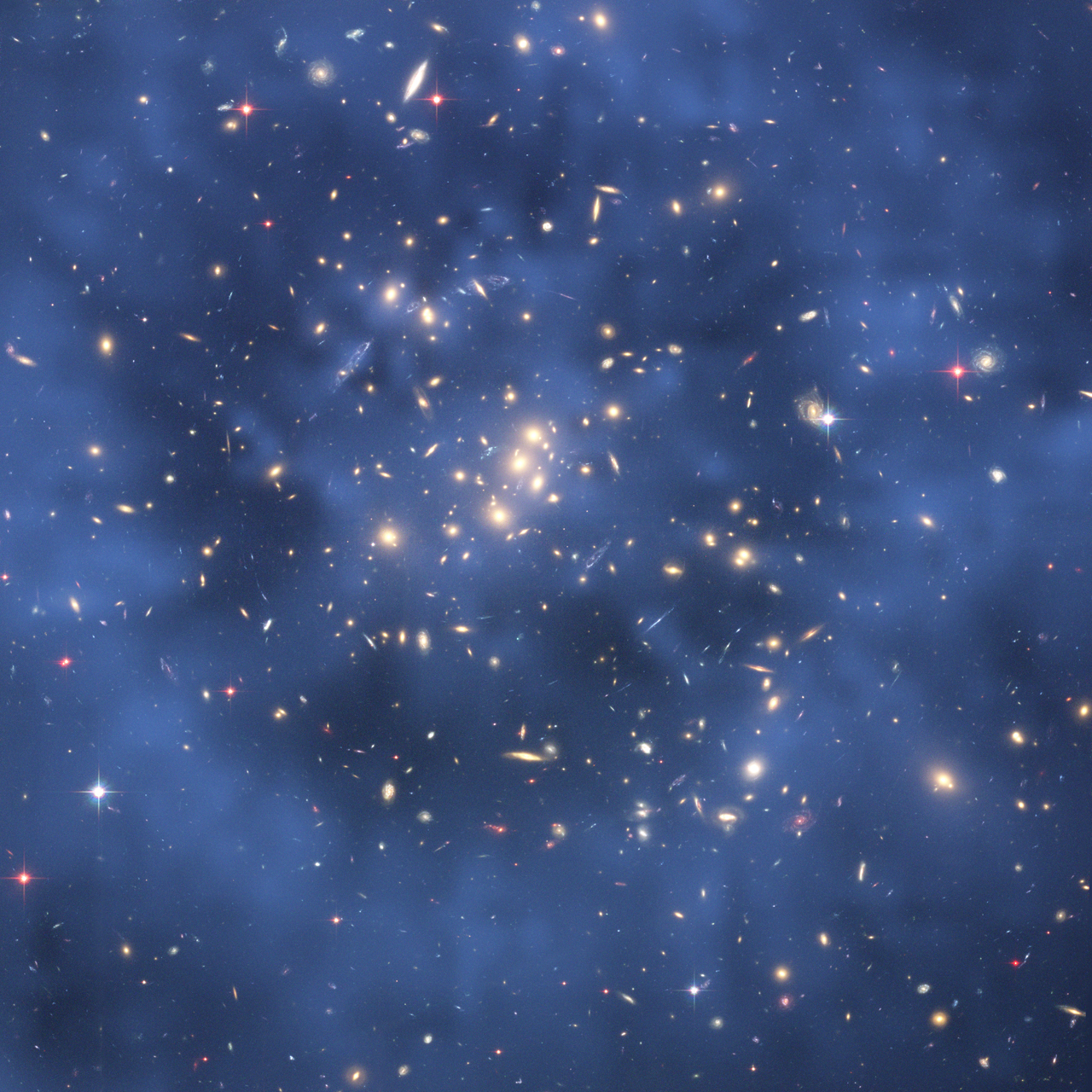
What Is Dark Matter? Prime Candidate Gets Profiled
The search for elusive dark matter may have just gotten a big boost.
Scientists have calculated the predicted mass of the axion, a hypothetical particle that some astronomers think may be the main constituent of dark matter. The new finding should greatly aid the hunt for axions, and could therefore help solve the longstanding dark-matter mystery, study team members said.
"The results we are presenting will probably lead to a race to discover these particles," study co-author Zoltan Fodor, of Eötvös University in Budapest, Hungary, said in a statement.
Dark matter apparently neither absorbs nor emits light, which explains its name. Though astronomers can't observe dark matter directly, they strongly suspect that the stuff exists based on its gravitational effects. For example, there is not nearly enough "normal" matter within galaxies to explain their rapid rotation, astronomers say.
Image
Full Story
Brought to you by @EverythingScience
The search for elusive dark matter may have just gotten a big boost.
Scientists have calculated the predicted mass of the axion, a hypothetical particle that some astronomers think may be the main constituent of dark matter. The new finding should greatly aid the hunt for axions, and could therefore help solve the longstanding dark-matter mystery, study team members said.
"The results we are presenting will probably lead to a race to discover these particles," study co-author Zoltan Fodor, of Eötvös University in Budapest, Hungary, said in a statement.
Dark matter apparently neither absorbs nor emits light, which explains its name. Though astronomers can't observe dark matter directly, they strongly suspect that the stuff exists based on its gravitational effects. For example, there is not nearly enough "normal" matter within galaxies to explain their rapid rotation, astronomers say.
Image
Full Story
Brought to you by @EverythingScience
A new Alzheimer's drug just hit a major milestone in a human clinical trial
This could be the first new treatment in a decade.
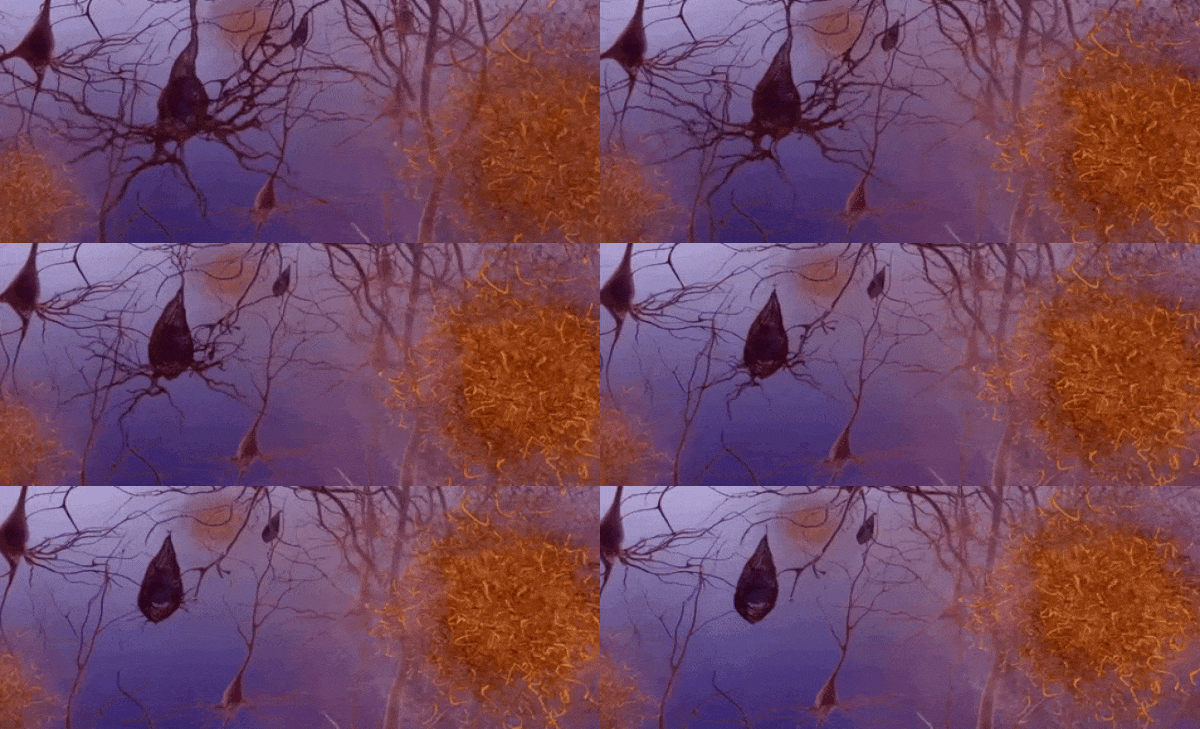
A new drug that targets toxic amyloid proteins in the brain - one of the main hallmarks of Alzheimer’s disease - has produced such promising results in a small clinical trial, it’s now being assessed in two larger trials involving 3,500 patients.
If the drug, which is taken in tablet form, can be proven to slow the devastating mental decline that’s associated with Alzheimer’s, it could be the first treatment to enter the market in more than 10 years.
In the brains of people with Alzheimer’s disease, amyloid proteins accumulate and clump up, sitting between the neurons as dense, toxic clusters called plaques.
Together with neurofibrillary tangles - the other key indicator of the disease - they cause disruptions to the transportation of essential nutrients around the brain, which is thought to bring on the cognitive decline and memory loss associated with Alzheimer’s disease.
So we now have to sit and wait some more to see if the drug can live up to its promise. But, as Hardy told The Guardian, "Conveying some excitement isn't the wrong thing to do in this case."
Image
Full Story
Brought to you by @EverythingScience
This could be the first new treatment in a decade.
A new drug that targets toxic amyloid proteins in the brain - one of the main hallmarks of Alzheimer’s disease - has produced such promising results in a small clinical trial, it’s now being assessed in two larger trials involving 3,500 patients.
If the drug, which is taken in tablet form, can be proven to slow the devastating mental decline that’s associated with Alzheimer’s, it could be the first treatment to enter the market in more than 10 years.
In the brains of people with Alzheimer’s disease, amyloid proteins accumulate and clump up, sitting between the neurons as dense, toxic clusters called plaques.
Together with neurofibrillary tangles - the other key indicator of the disease - they cause disruptions to the transportation of essential nutrients around the brain, which is thought to bring on the cognitive decline and memory loss associated with Alzheimer’s disease.
So we now have to sit and wait some more to see if the drug can live up to its promise. But, as Hardy told The Guardian, "Conveying some excitement isn't the wrong thing to do in this case."
Image
Full Story
Brought to you by @EverythingScience
👍1
A Long-Lost Gas Cloud Will Slam into Our Galaxy in 30 Million Years
A massive cloud of gas will crash into the Milky Way in about 30 million years, but there's no real danger to our home galaxy, NASA says.
New observations by NASA's Hubble Space Telescope suggest that the gas, called Smith's Cloud, was cast from the Milky Way long ago. A new NASA video describes the cloud's discovery in 1963 and what researchers know.
"We don't fully understand the Smith Cloud's origin," Andrew Fox, an astronomer at the Space Telescope Science Institute who led the research, said in a statement from NASA. "There are two leading theories. One is that it was blown out of the Milky Way, perhaps by a cluster of supernova explosions. The other is that the Smith Cloud is an extragalactic object that has been captured by the Milky Way." Fox's team examined the cloud using Hubble's Cosmic Origins Spectrograph, and saw evidence of sulfur, which absorbs ultraviolet light from the cores of three galaxies lying beyond the cloud. The team found that the amount of sulfur in Smith's Cloud is the same as that found in the outer disk of the Milky Way, suggesting that both objects came from the same family.
Image
Source
Brought to you by @EverythingScience
A massive cloud of gas will crash into the Milky Way in about 30 million years, but there's no real danger to our home galaxy, NASA says.
New observations by NASA's Hubble Space Telescope suggest that the gas, called Smith's Cloud, was cast from the Milky Way long ago. A new NASA video describes the cloud's discovery in 1963 and what researchers know.
"We don't fully understand the Smith Cloud's origin," Andrew Fox, an astronomer at the Space Telescope Science Institute who led the research, said in a statement from NASA. "There are two leading theories. One is that it was blown out of the Milky Way, perhaps by a cluster of supernova explosions. The other is that the Smith Cloud is an extragalactic object that has been captured by the Milky Way." Fox's team examined the cloud using Hubble's Cosmic Origins Spectrograph, and saw evidence of sulfur, which absorbs ultraviolet light from the cores of three galaxies lying beyond the cloud. The team found that the amount of sulfur in Smith's Cloud is the same as that found in the outer disk of the Milky Way, suggesting that both objects came from the same family.
Image
Source
Brought to you by @EverythingScience

The Canadian military is investigating a mysterious sound from the bottom of the Arctic
A mysterious noise appears to be coming from the bottom of the sea near Nunavut in Canada, and local hunters are anxious, saying it’s been scaring the wildlife away.
Described as a "ping", "hum", or "beep", the sound has been emanating from the Arctic for months, and the locals have gotten so desperate, they’ve asked the military to get involved. An active investigation is now underway.
If the sound does actually exist - and let’s be clear, researchers have not confirmed that at this stage - the big concern is that it’s harming the wildlife.
Because unlike that strange, low-pitched sound researchers detected from the Caribbean Sea back in June, this doesn't appear to be natural.
Image
Full Story
Brought to you by @EverythingScience
A mysterious noise appears to be coming from the bottom of the sea near Nunavut in Canada, and local hunters are anxious, saying it’s been scaring the wildlife away.
Described as a "ping", "hum", or "beep", the sound has been emanating from the Arctic for months, and the locals have gotten so desperate, they’ve asked the military to get involved. An active investigation is now underway.
If the sound does actually exist - and let’s be clear, researchers have not confirmed that at this stage - the big concern is that it’s harming the wildlife.
Because unlike that strange, low-pitched sound researchers detected from the Caribbean Sea back in June, this doesn't appear to be natural.
Image
Full Story
Brought to you by @EverythingScience

Human CO2 emissions put Arctic on track to be ice-free by 2050
For each metric ton of carbon dioxide released, a queen mattress‒sized chunk of sea ice vanishes
The average American’s carbon dioxide emissions are responsible for shrinking Arctic sea ice by nearly 50 square meters each year.
That’s the implication of a new study that finds that each additional metric ton of CO₂ released into the atmosphere directly results in a 3-square-meter loss of sea ice cover at summer’s end — comparable to losing a chunk of ice with a footprint a bit smaller than a two-seat Smart car.
Globally, humans are responsible for the release of some 36 billion metric tons of CO₂ each year. With another trillion metric tons, the Arctic Ocean will have a completely iceless summer — possibly the first in 125,000 years. That threshold could be crossed before 2050, Notz and Julienne Stroeve of University College London estimate online November 3 in Science. Many previous studies projected that summertime ice would stick around for years longer.
Image
Full Story
Brought to you by @EverythingScience
For each metric ton of carbon dioxide released, a queen mattress‒sized chunk of sea ice vanishes
The average American’s carbon dioxide emissions are responsible for shrinking Arctic sea ice by nearly 50 square meters each year.
That’s the implication of a new study that finds that each additional metric ton of CO₂ released into the atmosphere directly results in a 3-square-meter loss of sea ice cover at summer’s end — comparable to losing a chunk of ice with a footprint a bit smaller than a two-seat Smart car.
Globally, humans are responsible for the release of some 36 billion metric tons of CO₂ each year. With another trillion metric tons, the Arctic Ocean will have a completely iceless summer — possibly the first in 125,000 years. That threshold could be crossed before 2050, Notz and Julienne Stroeve of University College London estimate online November 3 in Science. Many previous studies projected that summertime ice would stick around for years longer.
Image
Full Story
Brought to you by @EverythingScience

Scientists find key protein for spinal cord repair
Healing protein bridges severed tissue in fish
A freshwater zebrafish costs less than two bucks at the pet store, but it can do something priceless: Its spinal cord can heal completely after being severed, a paralyzing and often fatal injury for humans. While watching these fish repair their own spinal cord injuries, scientists have found a particular protein important for the process.
Image
Full Story
Brought to you by @EverythingScience
Healing protein bridges severed tissue in fish
A freshwater zebrafish costs less than two bucks at the pet store, but it can do something priceless: Its spinal cord can heal completely after being severed, a paralyzing and often fatal injury for humans. While watching these fish repair their own spinal cord injuries, scientists have found a particular protein important for the process.
Image
Full Story
Brought to you by @EverythingScience

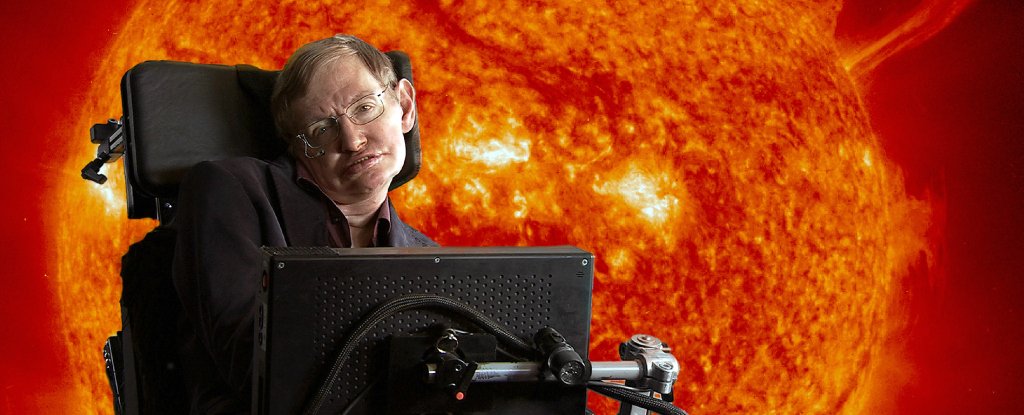
Stephen Hawking warns us to stop reaching out to aliens before it's too late
"I am more convinced than ever that we are not alone."
When the potential of intelligent alien civilisations comes up in conversation, it’s usually about the search. How will we find them? Where are they? Are they there at all? What actions should we take if – or when – we find them, or they find us?
Well, according to physicist Stephen Hawking, we should probably stop trying to contact them at all, because reaching out to advanced civilisations could put humanity and Earth in a pretty risky situation. And the bad news is, we've already been broadcasting our location to the Universe for years.
Hawking’s warning comes in a new online film called Stephen Hawking’s Favourite Places, which shows the famed scientist in a CGI spacecraft called the SS Hawking exploring his favourite places in the Universe.
"As I grow older I am more convinced than ever that we are not alone. After a lifetime of wondering, I am helping to lead a new global effort to find out," Hawking says in the film while exploring Gliese 832c, a planet that lies 16 light-years away and might foster alien life.
"The Breakthrough Listen project will scan the nearest million stars for signs of life, but I know just the place to start looking. One day we might receive a signal from a planet like Gliese 832c, but we should be wary of answering back."
Image
Full Story
Brought to you by @EverythingScience
"I am more convinced than ever that we are not alone."
When the potential of intelligent alien civilisations comes up in conversation, it’s usually about the search. How will we find them? Where are they? Are they there at all? What actions should we take if – or when – we find them, or they find us?
Well, according to physicist Stephen Hawking, we should probably stop trying to contact them at all, because reaching out to advanced civilisations could put humanity and Earth in a pretty risky situation. And the bad news is, we've already been broadcasting our location to the Universe for years.
Hawking’s warning comes in a new online film called Stephen Hawking’s Favourite Places, which shows the famed scientist in a CGI spacecraft called the SS Hawking exploring his favourite places in the Universe.
"As I grow older I am more convinced than ever that we are not alone. After a lifetime of wondering, I am helping to lead a new global effort to find out," Hawking says in the film while exploring Gliese 832c, a planet that lies 16 light-years away and might foster alien life.
"The Breakthrough Listen project will scan the nearest million stars for signs of life, but I know just the place to start looking. One day we might receive a signal from a planet like Gliese 832c, but we should be wary of answering back."
Image
Full Story
Brought to you by @EverythingScience
Physicist demonstrate existence of 'unlikely' new subatomic structure
Researchers have demonstrated the existence of a tetraneutron, a subatomic structure once thought unlikely to exist.
James Vary, a professor of physics and astronomy, and Andrey Shirokov, a visiting scientist, together with an international team, used sophisticated supercomputer simulations to show the quasi-stable existence of a tetraneutron, a structure comprised of four neutrons (subatomic particles with no charge).
For the tetraneutron, this lifetime is only 5×10^(-22) seconds (a tiny fraction of a billionth of a nanosecond). Though this time seems very short, it is long enough to study, and provides a new avenue for exploring the strong forces between neutrons.
"This opens up a whole new line of research," Vary said. "Studying the tetraneutron will help us understand interneutron forces including previously unexplored features of the unstable two-neutron and three-neutron systems."
Image
Full Story
Brought to you by @EverythingScience
Researchers have demonstrated the existence of a tetraneutron, a subatomic structure once thought unlikely to exist.
James Vary, a professor of physics and astronomy, and Andrey Shirokov, a visiting scientist, together with an international team, used sophisticated supercomputer simulations to show the quasi-stable existence of a tetraneutron, a structure comprised of four neutrons (subatomic particles with no charge).
For the tetraneutron, this lifetime is only 5×10^(-22) seconds (a tiny fraction of a billionth of a nanosecond). Though this time seems very short, it is long enough to study, and provides a new avenue for exploring the strong forces between neutrons.
"This opens up a whole new line of research," Vary said. "Studying the tetraneutron will help us understand interneutron forces including previously unexplored features of the unstable two-neutron and three-neutron systems."
Image
Full Story
Brought to you by @EverythingScience

Detour via gravitational lens makes distant galaxy visible
Never before have astrophysicists measured light of such high energy from a celestial object so far away. Around 7 billion years ago, a huge explosion occurred at the black hole in the center of a galaxy. This was followed by a burst of high-intensity gamma rays. A number of telescopes have succeeded in capturing this light. An added bonus: it was thus possible to reconfirm Einstein's General Theory of Relativity, as the light rays encountered a less distant galaxy en route to Earth -- and were deflected by this so-called gravitational lens.
Image
Full Story
Brought to you by @EverythingScience
Never before have astrophysicists measured light of such high energy from a celestial object so far away. Around 7 billion years ago, a huge explosion occurred at the black hole in the center of a galaxy. This was followed by a burst of high-intensity gamma rays. A number of telescopes have succeeded in capturing this light. An added bonus: it was thus possible to reconfirm Einstein's General Theory of Relativity, as the light rays encountered a less distant galaxy en route to Earth -- and were deflected by this so-called gravitational lens.
Image
Full Story
Brought to you by @EverythingScience
