MRSA uses decoys to evade a last-resort antibiotic
The superbug MRSA uses decoys to evade a last-resort antibiotic, reveals new research. The findings suggest potential new ways of tackling the bacteria, such as interfering with the decoys.
The findings, from scientists at Imperial College London, suggest potential new ways of tackling the bacteria, such as interfering with the decoys.
Methicillin-resistant Staphylococcus aureus (MRSA) is responsible for thousands of deaths around the world each year. However, because the bacteria are resistant to many different antibiotics, treatment options are limited, and often ineffective.
One of the few antibiotics that can be used against MRSA is a drug of last resort known as daptomycin. However nearly a third of MRSA infections are not cured by this drug, leaving patients with a poor prognosis.
But until now scientists didn't know how MRSA managed to survive daptomycin treatment.
In the latest findings, published in the journal Nature Microbiology, a team from Imperial discovered that MRSA releases decoy molecules that allow them to escape being killed by the antibiotic.
Brought to you by: @EverythingScience
Image
Full Story
The superbug MRSA uses decoys to evade a last-resort antibiotic, reveals new research. The findings suggest potential new ways of tackling the bacteria, such as interfering with the decoys.
The findings, from scientists at Imperial College London, suggest potential new ways of tackling the bacteria, such as interfering with the decoys.
Methicillin-resistant Staphylococcus aureus (MRSA) is responsible for thousands of deaths around the world each year. However, because the bacteria are resistant to many different antibiotics, treatment options are limited, and often ineffective.
One of the few antibiotics that can be used against MRSA is a drug of last resort known as daptomycin. However nearly a third of MRSA infections are not cured by this drug, leaving patients with a poor prognosis.
But until now scientists didn't know how MRSA managed to survive daptomycin treatment.
In the latest findings, published in the journal Nature Microbiology, a team from Imperial discovered that MRSA releases decoy molecules that allow them to escape being killed by the antibiotic.
Brought to you by: @EverythingScience
Image
Full Story

Vaginal vs Clitoral orgasm: What's the difference?
It's still science 😉
It's still science 😉
YouTube
Vaginal vs. Clitoral Orgasm: What's the Difference?
Scientists have found that women have different types of orgasms, but what makes them different? Are some orgasms better than others?
Could Sex Kill Your Grandpa? - https://youtu.be/RdlBG7z07JQ
Sign Up For The Seeker Newsletter Here - http://bit.ly/1UO1PxI…
Could Sex Kill Your Grandpa? - https://youtu.be/RdlBG7z07JQ
Sign Up For The Seeker Newsletter Here - http://bit.ly/1UO1PxI…
Trip to Mars Could Throw Off Astronauts' Balance
After months in space, your crew has finally made it to Mars, but there's a nasty readjustment awaiting all of them.
Living in zero gravity during the Earth-Mars transit will have some pretty harsh side effects, but most urgently they'll have to readjust to gravity again. And those first few days on Mars will be busy as the first Mars explorers get their bearings, prepare their habitat for the stay and begin thinking about setting up experiments.
You can therefore see why NASA is so intent on figuring out how to help astronauts stay healthy and happy after long stays in space so they can adjust quickly for life on Mars. We already know that a six-month stay on the International Space Station wreaks havoc with bone and muscles, but at least when the space station crew return to Earth they have a team of medical professionals to look after them. The first Mars astronauts will have no such luxury.
Brought to you by @EverythingScience
Image
Full Story
After months in space, your crew has finally made it to Mars, but there's a nasty readjustment awaiting all of them.
Living in zero gravity during the Earth-Mars transit will have some pretty harsh side effects, but most urgently they'll have to readjust to gravity again. And those first few days on Mars will be busy as the first Mars explorers get their bearings, prepare their habitat for the stay and begin thinking about setting up experiments.
You can therefore see why NASA is so intent on figuring out how to help astronauts stay healthy and happy after long stays in space so they can adjust quickly for life on Mars. We already know that a six-month stay on the International Space Station wreaks havoc with bone and muscles, but at least when the space station crew return to Earth they have a team of medical professionals to look after them. The first Mars astronauts will have no such luxury.
Brought to you by @EverythingScience
Image
Full Story
'Alien Megastructure' Star Targeted by $100 Million SETI Search
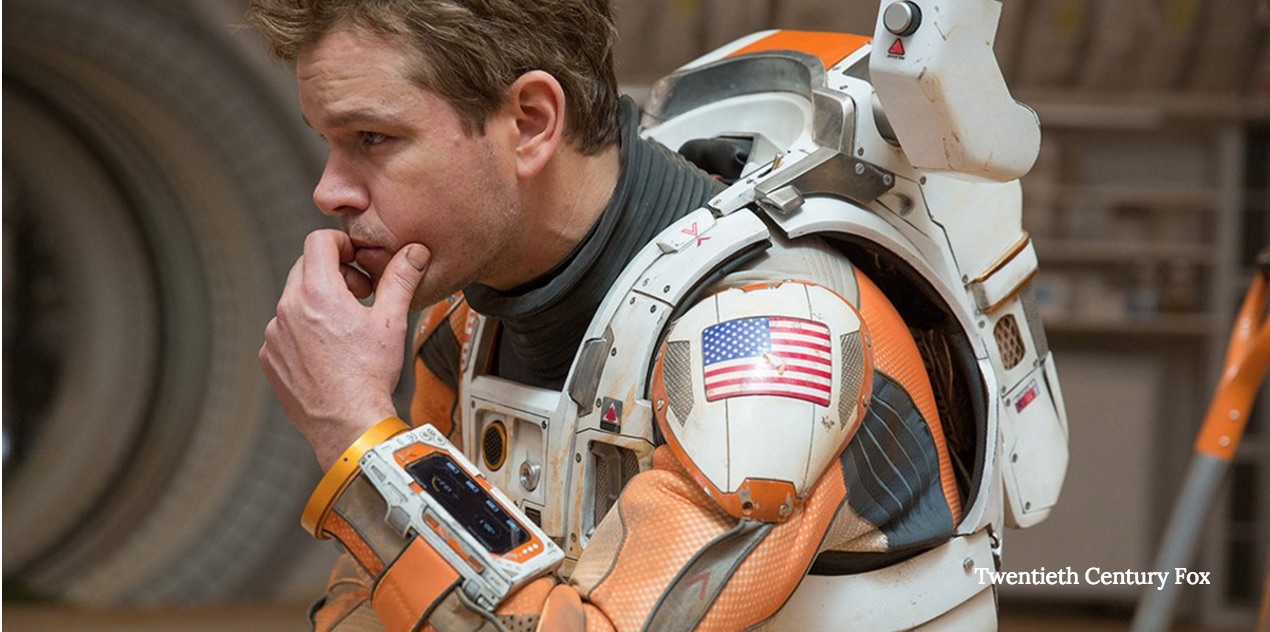
If intelligent aliens actually do live around Tabby's star, astronomers are determined to find them.
The Breakthrough Listen initiative, which will spend $100 million over the next 10 years to hunt for signals possibly produced by alien civilizations, is set to begin studying Tabby's star with the 330-foot-wide (100 meters) Green Bank Telescope in West Virginia, project team members announced Tuesday (Oct. 25).
"The Green Bank Telescope is the largest fully steerable radio telescope on the planet, and it's the largest, most sensitive telescope that's capable of looking at Tabby's star given its position in the sky," Breakthrough Listen co-director Andrew Siemion, who also directs the Berkeley SETI (Search for Extraterrestrial Intelligence) Research Center at the University of California, Berkeley, said in a statement.
"We've deployed a fantastic new SETI instrument that connects to that telescope, that can look at many gigahertz of bandwidth simultaneously and many, many billions of different radio channels all at the same time so we can explore the radio spectrum very, very quickly," Siemion added.
Image
Full Story
Brought to you by: @EverythingScience
If intelligent aliens actually do live around Tabby's star, astronomers are determined to find them.
The Breakthrough Listen initiative, which will spend $100 million over the next 10 years to hunt for signals possibly produced by alien civilizations, is set to begin studying Tabby's star with the 330-foot-wide (100 meters) Green Bank Telescope in West Virginia, project team members announced Tuesday (Oct. 25).
"The Green Bank Telescope is the largest fully steerable radio telescope on the planet, and it's the largest, most sensitive telescope that's capable of looking at Tabby's star given its position in the sky," Breakthrough Listen co-director Andrew Siemion, who also directs the Berkeley SETI (Search for Extraterrestrial Intelligence) Research Center at the University of California, Berkeley, said in a statement.
"We've deployed a fantastic new SETI instrument that connects to that telescope, that can look at many gigahertz of bandwidth simultaneously and many, many billions of different radio channels all at the same time so we can explore the radio spectrum very, very quickly," Siemion added.
Image
Full Story
Brought to you by: @EverythingScience

Consciousness could be a side effect of 'entropy', say researchers
It's impressive enough that our human brains are made up of the same 'star stuff' that forms the Universe, but new research suggests that this might not be the only thing the two have in common.
Just like the Universe, our brains might be programmed to maximise disorder - similar to the principle of entropy - and our consciousness could simply be a side effect.
The quest to understand human consciousness - our ability to be aware of ourselves and our surroundings - has been going on for centuries. Although consciousness is a crucial part of being human, researchers still don't truly understand where it comes from, and why we have it.
But a new study, led by researchers from France and Canada, puts forward a new possibility: what if consciousness arises naturally as a result of our brains maximising their information content? In other words, what if consciousness is a side effect of our brain moving towards a state of entropy?
Entropy is basically the term used to describe the progression of a system from order to disorder. Picture an egg: when it's all perfectly separated into yolk and white, it has low entropy, but when you scramble it, it has high entropy - it's the most disordered it can be.
This is what many physicists believe is happening to our Universe. After the Big Bang, the Universe has gradually been moving from a state of low entropy to high entropy, and because the second law of thermodynamics states that entropy can only increase in a system, it could explain why the arrow of time only ever moves forwards.
So researchers decided to apply the same thinking to the connections in our brains, and investigate whether they show any patterns in the way they choose to order themselves while we're conscious.
Image
Full Story
Brought to you by @EverythingScience
It's impressive enough that our human brains are made up of the same 'star stuff' that forms the Universe, but new research suggests that this might not be the only thing the two have in common.
Just like the Universe, our brains might be programmed to maximise disorder - similar to the principle of entropy - and our consciousness could simply be a side effect.
The quest to understand human consciousness - our ability to be aware of ourselves and our surroundings - has been going on for centuries. Although consciousness is a crucial part of being human, researchers still don't truly understand where it comes from, and why we have it.
But a new study, led by researchers from France and Canada, puts forward a new possibility: what if consciousness arises naturally as a result of our brains maximising their information content? In other words, what if consciousness is a side effect of our brain moving towards a state of entropy?
Entropy is basically the term used to describe the progression of a system from order to disorder. Picture an egg: when it's all perfectly separated into yolk and white, it has low entropy, but when you scramble it, it has high entropy - it's the most disordered it can be.
This is what many physicists believe is happening to our Universe. After the Big Bang, the Universe has gradually been moving from a state of low entropy to high entropy, and because the second law of thermodynamics states that entropy can only increase in a system, it could explain why the arrow of time only ever moves forwards.
So researchers decided to apply the same thinking to the connections in our brains, and investigate whether they show any patterns in the way they choose to order themselves while we're conscious.
Image
Full Story
Brought to you by @EverythingScience
ExoMars '96 Percent' Successful Despite Lander Crash: ESA
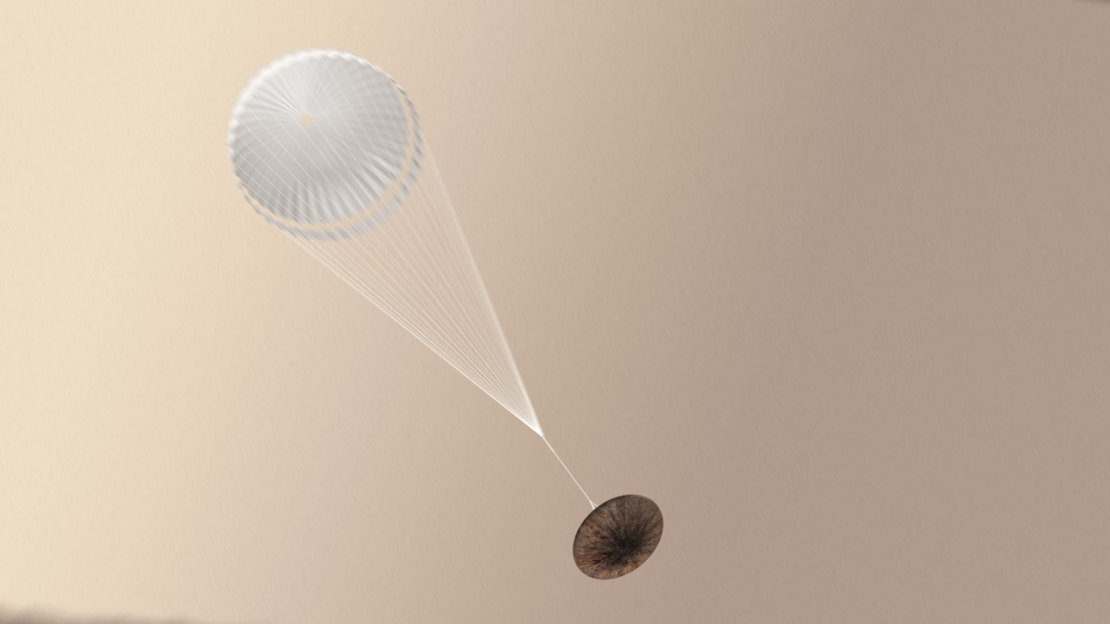
The ExoMars 2016 mission gets a solid "A" thus far despite the failure of its Schiaparelli lander to touch down softly on the Red Planet, European Space Agency (ESA) officials said.
Schiaparelli stopped communicating with its handlers less than a minute before its planned touchdown Wednesday morning (Oct. 21). While ExoMars team members are still analyzing the lander's data, early indications suggest that Schiaparelli fired its thrusters for an insufficient amount of time toward the end of the descent and slammed into the Martian surface hard — an interpretation bolstered by photos of the apparent crash site taken by NASA's Mars Reconnaissance Orbiter.
But ESA is accentuating the positive, and there definitely was good news on Wednesday as well. For example, the mission's Trace Gas Orbiter (TGO) began circling Mars that morning after acing a make-or-break, 139-minute-long engine burn.
"The importance of TGO and EDM can be described as 80 percent versus 20 percent, respectively. Since we obtained at least 80 percent of the data during the descent, the overall success rate can be calculated as follows: 80+20x0.8 = 96 percent. All in all, a very positive result," ESA Director General Jan Woerner wrote in a blog post today (Oct. 21).
Image
Full Story
Brought to you by @EverythingScience
The ExoMars 2016 mission gets a solid "A" thus far despite the failure of its Schiaparelli lander to touch down softly on the Red Planet, European Space Agency (ESA) officials said.
Schiaparelli stopped communicating with its handlers less than a minute before its planned touchdown Wednesday morning (Oct. 21). While ExoMars team members are still analyzing the lander's data, early indications suggest that Schiaparelli fired its thrusters for an insufficient amount of time toward the end of the descent and slammed into the Martian surface hard — an interpretation bolstered by photos of the apparent crash site taken by NASA's Mars Reconnaissance Orbiter.
But ESA is accentuating the positive, and there definitely was good news on Wednesday as well. For example, the mission's Trace Gas Orbiter (TGO) began circling Mars that morning after acing a make-or-break, 139-minute-long engine burn.
"The importance of TGO and EDM can be described as 80 percent versus 20 percent, respectively. Since we obtained at least 80 percent of the data during the descent, the overall success rate can be calculated as follows: 80+20x0.8 = 96 percent. All in all, a very positive result," ESA Director General Jan Woerner wrote in a blog post today (Oct. 21).
Image
Full Story
Brought to you by @EverythingScience
Physics tweak solves five of the biggest problems in one go!
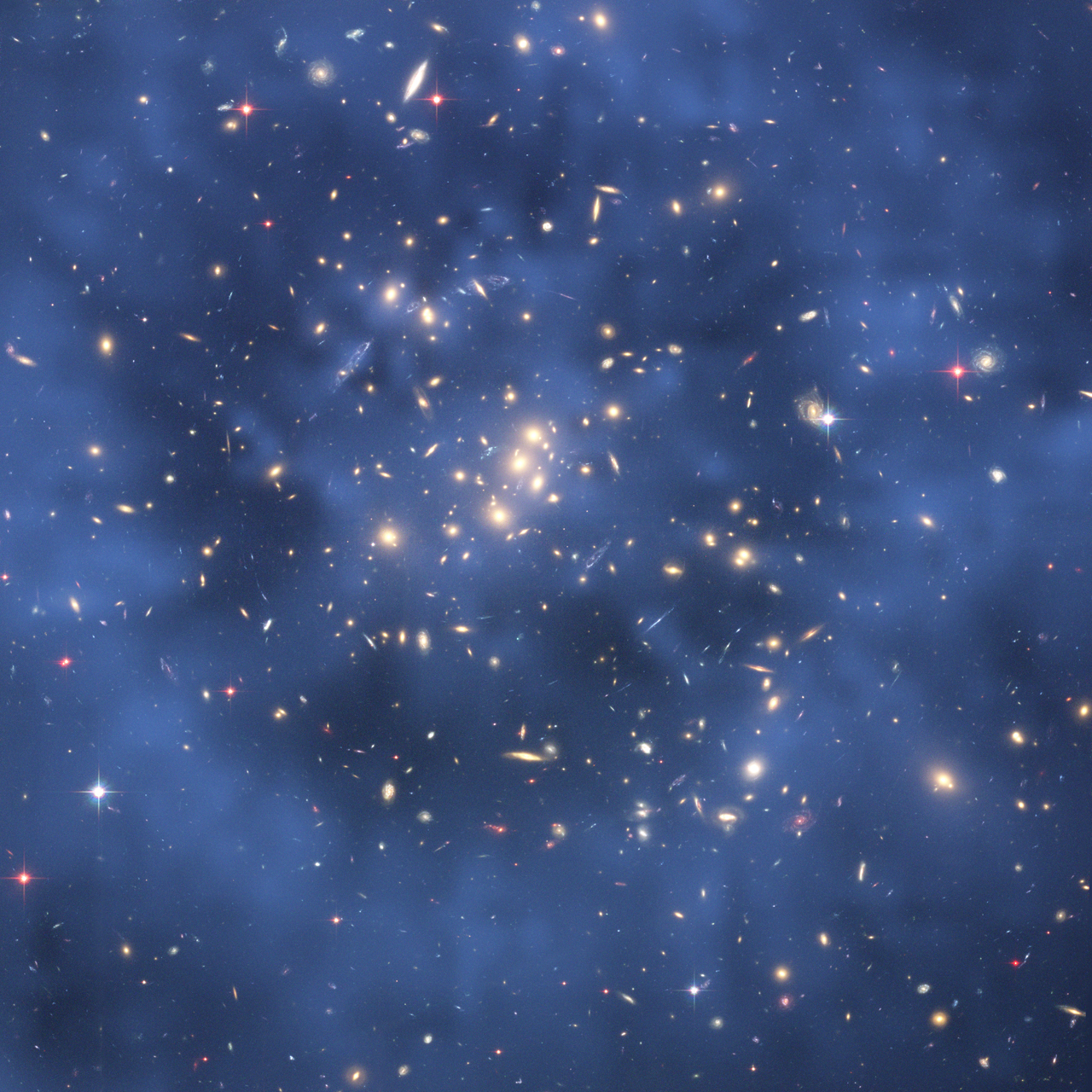
"Dubbed SMASH, the model is based on the standard model of particle physics, but has a few bits tacked on. The standard model is a collection of particles and forces that describes the building blocks of the universe. Although it has passed every test thrown at it, it can’t explain some phenomena.
For example, we don’t understand dark matter, the mysterious substance that makes up 84 per cent of the universe’s mass. Nor why there is more matter than antimatter. Nor why the universe grew so rapidly in its youth during a period known as inflation. The list continues.
So something is still missing from the standard model. “Presumably we need some new particles,” says Mikhail Shaposhnikov at the Swiss Federal Institute of Technology in Lausanne. “The question is, how many new particles do we need?”
REX for @Fizikx and @EverythingScience
"Dubbed SMASH, the model is based on the standard model of particle physics, but has a few bits tacked on. The standard model is a collection of particles and forces that describes the building blocks of the universe. Although it has passed every test thrown at it, it can’t explain some phenomena.
For example, we don’t understand dark matter, the mysterious substance that makes up 84 per cent of the universe’s mass. Nor why there is more matter than antimatter. Nor why the universe grew so rapidly in its youth during a period known as inflation. The list continues.
So something is still missing from the standard model. “Presumably we need some new particles,” says Mikhail Shaposhnikov at the Swiss Federal Institute of Technology in Lausanne. “The question is, how many new particles do we need?”
REX for @Fizikx and @EverythingScience
Archaeologists have found the first ever fossilised dinosaur brain, and it's surprisingly complex
Dinosaurs have a fearsome reputation for their hunting abilities but less so when it comes to their intelligence. This is partly due to the fact that many species have long been thought to have had relatively small brains, their heads full of protective tissue that supposedly left little room for grey matter.
But the recent discovery of the first recorded fossilised brain tissue could help challenge that image.
The fossilised brain was found by a collector on a beach near Bexhill in Sussex, England. It preserves brain tissue of a large herbivorous dinosaur similar to Iguanodon, one of the first dinosaur species to be identified.
Found among rocks laid down during the early Cretaceous Period around 133 million years ago, the fossil is an endocast, formed as layers of sediment gradually filled up the skull.
Image
Full Story
Brought to you by @EverythingScience
Dinosaurs have a fearsome reputation for their hunting abilities but less so when it comes to their intelligence. This is partly due to the fact that many species have long been thought to have had relatively small brains, their heads full of protective tissue that supposedly left little room for grey matter.
But the recent discovery of the first recorded fossilised brain tissue could help challenge that image.
The fossilised brain was found by a collector on a beach near Bexhill in Sussex, England. It preserves brain tissue of a large herbivorous dinosaur similar to Iguanodon, one of the first dinosaur species to be identified.
Found among rocks laid down during the early Cretaceous Period around 133 million years ago, the fossil is an endocast, formed as layers of sediment gradually filled up the skull.
Image
Full Story
Brought to you by @EverythingScience

EverythingScience
Archaeologists have found the first ever fossilised dinosaur brain, and it's surprisingly complex Dinosaurs have a fearsome reputation for their hunting abilities but less so when it comes to their intelligence. This is partly due to the fact that many species…
This media is not supported in your browser
VIEW IN TELEGRAM
Google AI invents its own cryptographic algorithm; no one knows how it works
Neural networks seem good at devising crypto methods; less good at codebreaking.
Google Brain has created two artificial intelligences that evolved their own cryptographic algorithm to protect their messages from a third AI, which was trying to evolve its own method to crack the AI-generated crypto. The study was a success: the first two AIs learnt how to communicate securely from scratch.
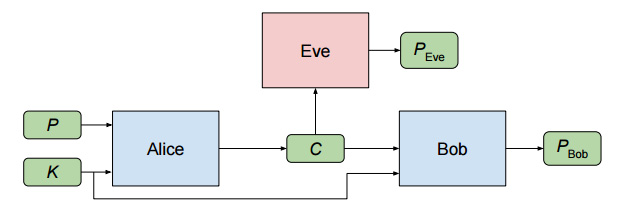
The Google Brain team (which is based out in Mountain View and is separate from Deep Mind in London) started with three fairly vanilla neural networks called Alice, Bob, and Eve. Each neural network was given a very specific goal: Alice had to send a secure message to Bob; Bob had to try and decrypt the message; and Eve had to try and eavesdrop on the message and try to decrypt it. Alice and Bob have one advantage over Eve: they start with a shared secret key (i.e. this is symmetric encryption).
Importantly, the AIs were not told how to encrypt stuff, or what crypto techniques to use: they were just given a loss function (a failure condition), and then they got on with it. In Eve's case, the loss function was very simple: the distance, measured in correct and incorrect bits, between Alice's original input plaintext and its guess. For Alice and Bob the loss function was a bit more complex: if Bob's guess (again measured in bits) was too far from the original input plaintext, it was a loss; for Alice, if Eve's guesses are better than random guessing, it's a loss. And thus an adversarial generative network (GAN) was created.
The results were... a mixed bag. Some runs were a complete flop, with Bob never able to reconstruct Alice's messages. Most of the time, Alice and Bob did manage to evolve a system where they could communicate with very few errors. In some tests, Eve showed an improvement over random guessing, but Alice and Bob then usually responded by improving their cryptography technique until Eve had no chance (see graph).
Image
Full Story
Brought to you by @EverythingScience
(Pictured below)The setup of the crypto system. P = input plaintext, K = shared key, C = encrypted text, and PEve and PBob are the computed plaintext outputs.
Neural networks seem good at devising crypto methods; less good at codebreaking.
Google Brain has created two artificial intelligences that evolved their own cryptographic algorithm to protect their messages from a third AI, which was trying to evolve its own method to crack the AI-generated crypto. The study was a success: the first two AIs learnt how to communicate securely from scratch.
The Google Brain team (which is based out in Mountain View and is separate from Deep Mind in London) started with three fairly vanilla neural networks called Alice, Bob, and Eve. Each neural network was given a very specific goal: Alice had to send a secure message to Bob; Bob had to try and decrypt the message; and Eve had to try and eavesdrop on the message and try to decrypt it. Alice and Bob have one advantage over Eve: they start with a shared secret key (i.e. this is symmetric encryption).
Importantly, the AIs were not told how to encrypt stuff, or what crypto techniques to use: they were just given a loss function (a failure condition), and then they got on with it. In Eve's case, the loss function was very simple: the distance, measured in correct and incorrect bits, between Alice's original input plaintext and its guess. For Alice and Bob the loss function was a bit more complex: if Bob's guess (again measured in bits) was too far from the original input plaintext, it was a loss; for Alice, if Eve's guesses are better than random guessing, it's a loss. And thus an adversarial generative network (GAN) was created.
The results were... a mixed bag. Some runs were a complete flop, with Bob never able to reconstruct Alice's messages. Most of the time, Alice and Bob did manage to evolve a system where they could communicate with very few errors. In some tests, Eve showed an improvement over random guessing, but Alice and Bob then usually responded by improving their cryptography technique until Eve had no chance (see graph).
Image
Full Story
Brought to you by @EverythingScience
(Pictured below)The setup of the crypto system. P = input plaintext, K = shared key, C = encrypted text, and PEve and PBob are the computed plaintext outputs.
Gut instinct drives battery boost
Scientists have designed a new prototype battery that mimics the structure of the human intestines.
In humans, villi are used to absorb the products of digestion and increase the surface area across which this process can take place.
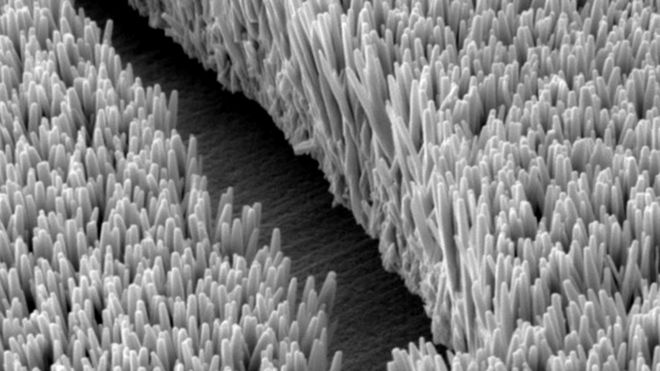
In the new lithium-sulphur battery, a layer of material with a villi-like structure, made from tiny zinc oxide wires, is placed on the surface of one of the battery's electrodes.
This can trap fragments of the active material when they break off, keeping them accessible for ongoing reactions and allowing the material to be reused.
"It's a tiny thing, this layer, but it's important," said study co-author Dr Paul Coxon from the University of Cambridge's department of materials science and metallurgy.
"This gets us a long way through the bottleneck which is preventing the development of better batteries."
The researchers say that, if hurdles to commercial development can be overcome, lithium-sulphur batteries could have five times the energy density of the lithium-ion batteries used in smartphones and other electronics.
But as lithium-sulphur batteries discharge, sulphur molecules transform into chain-like structures known as poly-sulphides.
As the devices undergo several charge-discharge cycles, bits of the poly-sulphide go into the battery's electrolyte (the electrically-conducting solution), so that over time the battery loses active material.
"This is the first time a chemically functional layer with a well-organised nano-architecture has been proposed to trap and reuse the dissolved active materials during battery charging and discharging," said lead author Teng Zhao, a PhD student from Cambridge.
"By taking our inspiration from the natural world, we were able to come up with a solution that we hope will accelerate the development of next-generation batteries."
The device is currently a proof of principle; commercially-available lithium-sulphur batteries are still some years away.
Image
Full Story
Brought to you by @EverythingScience
Scientists have designed a new prototype battery that mimics the structure of the human intestines.
In humans, villi are used to absorb the products of digestion and increase the surface area across which this process can take place.
In the new lithium-sulphur battery, a layer of material with a villi-like structure, made from tiny zinc oxide wires, is placed on the surface of one of the battery's electrodes.
This can trap fragments of the active material when they break off, keeping them accessible for ongoing reactions and allowing the material to be reused.
"It's a tiny thing, this layer, but it's important," said study co-author Dr Paul Coxon from the University of Cambridge's department of materials science and metallurgy.
"This gets us a long way through the bottleneck which is preventing the development of better batteries."
The researchers say that, if hurdles to commercial development can be overcome, lithium-sulphur batteries could have five times the energy density of the lithium-ion batteries used in smartphones and other electronics.
But as lithium-sulphur batteries discharge, sulphur molecules transform into chain-like structures known as poly-sulphides.
As the devices undergo several charge-discharge cycles, bits of the poly-sulphide go into the battery's electrolyte (the electrically-conducting solution), so that over time the battery loses active material.
"This is the first time a chemically functional layer with a well-organised nano-architecture has been proposed to trap and reuse the dissolved active materials during battery charging and discharging," said lead author Teng Zhao, a PhD student from Cambridge.
"By taking our inspiration from the natural world, we were able to come up with a solution that we hope will accelerate the development of next-generation batteries."
The device is currently a proof of principle; commercially-available lithium-sulphur batteries are still some years away.
Image
Full Story
Brought to you by @EverythingScience
Elon Musk unveils Solar Roof and showcases plans for Solar City and Tesla
Elon Musk announces that Tesla will build and sell its own line of solar panels with integrated batteries. Coupled with the also unveiled PowerWall 2, it will allow residential homeowners to replace their entire roof with solar panels, making it much simpler for homes to be entirely powered by solar power.
Check out the full video shared below
REX for @Fizikx and @EverythingScience
Elon Musk announces that Tesla will build and sell its own line of solar panels with integrated batteries. Coupled with the also unveiled PowerWall 2, it will allow residential homeowners to replace their entire roof with solar panels, making it much simpler for homes to be entirely powered by solar power.
Check out the full video shared below
REX for @Fizikx and @EverythingScience
Tesla shows off solar roof tiles
Roof tiles with built-in solar panels have been unveiled by Tesla chief executive Elon Musk.
The tiles, made from glass, are intended to be a more attractive way to add solar panels to homes, compared with currently-used solar technology.
The launch took place in Universal Studios, Los Angeles, on what used to be the set for the television show Desperate Housewives.
It comes with Tesla due to take over struggling energy firm Solar City.
Some of the electric carmaker's investors have expressed concern over the takeover, suggesting it is a Tesla-funded bail-out of a company Mr Musk has a vested interest in as its biggest shareholder.
No price was given for the tiles, which come in a variety of colours and styles, though Mr Musk did say it would be cheaper than fitting a traditional roof and then adding solar on top.
Image
Full Story
Brought to you by @EverythingScience
Roof tiles with built-in solar panels have been unveiled by Tesla chief executive Elon Musk.
The tiles, made from glass, are intended to be a more attractive way to add solar panels to homes, compared with currently-used solar technology.
The launch took place in Universal Studios, Los Angeles, on what used to be the set for the television show Desperate Housewives.
It comes with Tesla due to take over struggling energy firm Solar City.
Some of the electric carmaker's investors have expressed concern over the takeover, suggesting it is a Tesla-funded bail-out of a company Mr Musk has a vested interest in as its biggest shareholder.
No price was given for the tiles, which come in a variety of colours and styles, though Mr Musk did say it would be cheaper than fitting a traditional roof and then adding solar on top.
Image
Full Story
Brought to you by @EverythingScience

What would a parallel universe even look like?
They could be bumping into us right now.
If you consider that the Milky Way galaxy has a radius of 100,000 light-years (1 light-year is 9.5 trillion km), and it’s estimated that there are 100 to 200 billion galaxies in the Universe, we’re living in an unfathomably gigantic place.
But what if this was just a fraction of what’s truly out there? What if our Universe is just one of many, and they’re all bouncing off of each other like mind-numbingly gargantuan marbles, each with their own weird laws of physics?
Welcome to the multiverse, where our Universe could be just one of the infinite numbers of universes that were spawned by the Big Bang.
Video
Full Story
Brought to you by @EverythingScience
They could be bumping into us right now.
If you consider that the Milky Way galaxy has a radius of 100,000 light-years (1 light-year is 9.5 trillion km), and it’s estimated that there are 100 to 200 billion galaxies in the Universe, we’re living in an unfathomably gigantic place.
But what if this was just a fraction of what’s truly out there? What if our Universe is just one of many, and they’re all bouncing off of each other like mind-numbingly gargantuan marbles, each with their own weird laws of physics?
Welcome to the multiverse, where our Universe could be just one of the infinite numbers of universes that were spawned by the Big Bang.
Video
Full Story
Brought to you by @EverythingScience
YouTube
What Would A Parallel Universe Even Be Like?
Our universe might seem huge, but what if this isn't the only universe? Let's explore the idea of a multiverse.
Watch More: Are We Alone In The Universe? ►►►► https://www.youtube.com/watch?v=2mf3d3FhxRo
Support Life Noggin on Patreon: https://www.p…
Watch More: Are We Alone In The Universe? ►►►► https://www.youtube.com/watch?v=2mf3d3FhxRo
Support Life Noggin on Patreon: https://www.p…
We might finally know the weird reason Earth experiences an ice age every 100,000 years
Until now, that is.
Earth is in a pretty unique state of climate change at the moment, but for the past 1 million years, almost like clockwork, our planet has moved in and out of an ice age every 100,000 years.
The only problem is, researchers have never really been able to figure out why. In fact, they've been so puzzled by the mysterious phenomenon, they've labelled it the '100,000 year problem'. But now a new study might finally have the solution.
New research suggests that our oceans might regularly suck more CO2 out of the atmosphere every 100,000 years, allowing the planet to get cold enough to trigger an ice age.
The '100,000 year problem' stems from the fact that around 1 million years ago, Earth started experiencing ice ages - vast ice sheets covering North America, Europe, and Asia - every 100,000 years.
Before this point, which is known the mid-Pleistocene transition, our planet's ice ages used to occur at intervals of every 40,000 years, which made a lot more sense to scientists.
That's because Earth's angular tilt also wobbles in a 40,000 year cycle, which means every 40,000 years, the planet experiences colder than usual summer months because of the way it's tilted towards the Sun.
Image
Full Story
Brought to you by @EverythingScience
Until now, that is.
Earth is in a pretty unique state of climate change at the moment, but for the past 1 million years, almost like clockwork, our planet has moved in and out of an ice age every 100,000 years.
The only problem is, researchers have never really been able to figure out why. In fact, they've been so puzzled by the mysterious phenomenon, they've labelled it the '100,000 year problem'. But now a new study might finally have the solution.
New research suggests that our oceans might regularly suck more CO2 out of the atmosphere every 100,000 years, allowing the planet to get cold enough to trigger an ice age.
The '100,000 year problem' stems from the fact that around 1 million years ago, Earth started experiencing ice ages - vast ice sheets covering North America, Europe, and Asia - every 100,000 years.
Before this point, which is known the mid-Pleistocene transition, our planet's ice ages used to occur at intervals of every 40,000 years, which made a lot more sense to scientists.
That's because Earth's angular tilt also wobbles in a 40,000 year cycle, which means every 40,000 years, the planet experiences colder than usual summer months because of the way it's tilted towards the Sun.
Image
Full Story
Brought to you by @EverythingScience

Most of the Great Barrier Reef above this line is now dead
The worst case scenario has happened.
It's been six months since Australia's Great Barrier Reef experienced its worst coral bleaching event on record in March, when more than 93 percent of the reef turned white due to unseasonably warm ocean temperatures.
Researchers have now gone back to assess the long-term damage to see how well the reefs have bounced back, and it's not good news. The survey has shown that most of the corals above Port Douglas - which is around a third of the Great Barrier Reef - are now dead.
Image
Full Story
Brought to you by @EverythingScience
The worst case scenario has happened.
It's been six months since Australia's Great Barrier Reef experienced its worst coral bleaching event on record in March, when more than 93 percent of the reef turned white due to unseasonably warm ocean temperatures.
Researchers have now gone back to assess the long-term damage to see how well the reefs have bounced back, and it's not good news. The survey has shown that most of the corals above Port Douglas - which is around a third of the Great Barrier Reef - are now dead.
Image
Full Story
Brought to you by @EverythingScience

The oldest mummies in the world are turning into black slime
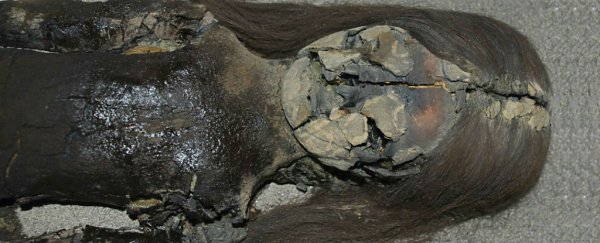
A collection of mummified human remains found in northern Chile has been turning into black slime due to rising humidity levels, and Chilean researchers are at a loss for how to stop it.
More than 100 of these mummies - which are at least 7,000 years old - have started to turn gelatinous, and local officials have applied to the United Nations' cultural agency, UNESCO, to have them recognised as a world heritage site.
Of course, getting approval won’t save the mummies on its own, but the researchers hope that increased attention from the international community will help them find solutions to the black goo.
The goo is thought to be the result of colonies of bacteria thriving in the mummified skin.
Image
Full Story
Brought to you by @EverythingScience
A collection of mummified human remains found in northern Chile has been turning into black slime due to rising humidity levels, and Chilean researchers are at a loss for how to stop it.
More than 100 of these mummies - which are at least 7,000 years old - have started to turn gelatinous, and local officials have applied to the United Nations' cultural agency, UNESCO, to have them recognised as a world heritage site.
Of course, getting approval won’t save the mummies on its own, but the researchers hope that increased attention from the international community will help them find solutions to the black goo.
The goo is thought to be the result of colonies of bacteria thriving in the mummified skin.
Image
Full Story
Brought to you by @EverythingScience
Americans say they're more afraid of clowns than climate change
Seriously, guys?
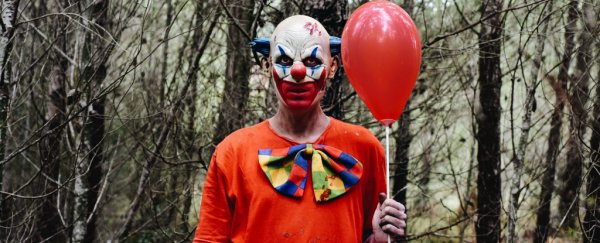
The US is in the middle of a so-called 'clown attack' epidemic right now, and a new survey by the good folks at Vox has just revealed that it's not just media hype - people are actually really, really freaked out about it.
In fact, the poll showed that Americans admit to being more scared of clowns than they are of climate change, terrorism, and even death.
That's despite the fact that we currently just lived through the 12th hottest month on record in a row - an entire year of record-breaking temperatures - and our melting glaciers are now ticking time bombs threatening to wash entire villages away.
But, we get it, clowns are creepy. Since August, there have been more than 100 'suspicious' clown sightings reported across the US, with many of those not leading to arrests. But apparently just the sight of these clowns is enough to terrify people.
Image
Full Story
Brought to you by @EverythingScience
Seriously, guys?
The US is in the middle of a so-called 'clown attack' epidemic right now, and a new survey by the good folks at Vox has just revealed that it's not just media hype - people are actually really, really freaked out about it.
In fact, the poll showed that Americans admit to being more scared of clowns than they are of climate change, terrorism, and even death.
That's despite the fact that we currently just lived through the 12th hottest month on record in a row - an entire year of record-breaking temperatures - and our melting glaciers are now ticking time bombs threatening to wash entire villages away.
But, we get it, clowns are creepy. Since August, there have been more than 100 'suspicious' clown sightings reported across the US, with many of those not leading to arrests. But apparently just the sight of these clowns is enough to terrify people.
Image
Full Story
Brought to you by @EverythingScience
Scientists have built a Nightmare Machine to generate the scariest images ever
We’re supposed to be building robots and AI for the good of humankind, but scientists at MIT have pretty much been doing the opposite - they’ve built a new kind of AI with the sole purpose of generating the most frightening images ever.
Just in time for Halloween, the aptly named Nightmare Machine uses an algorithm that 'learns' what humans find scary, sinister, or just downright unnerving, and generates images based on what it thinks will freak us out the most.
"There have been a rising number of intellectuals, including Elon Musk and Stephen Hawking, raising alarms about the potential threat of superintelligent AI on humanity," one of the team, Pinar Yanardag Delul, told Digital Trends.
"In the spirit of Halloween and following the traditional MIT hack culture, we wanted to playfully commemorate humanity’s fear of AI, which is a growing theme in popular culture."
Image
Full Story
Brought to you by @EverythingScience
We’re supposed to be building robots and AI for the good of humankind, but scientists at MIT have pretty much been doing the opposite - they’ve built a new kind of AI with the sole purpose of generating the most frightening images ever.
Just in time for Halloween, the aptly named Nightmare Machine uses an algorithm that 'learns' what humans find scary, sinister, or just downright unnerving, and generates images based on what it thinks will freak us out the most.
"There have been a rising number of intellectuals, including Elon Musk and Stephen Hawking, raising alarms about the potential threat of superintelligent AI on humanity," one of the team, Pinar Yanardag Delul, told Digital Trends.
"In the spirit of Halloween and following the traditional MIT hack culture, we wanted to playfully commemorate humanity’s fear of AI, which is a growing theme in popular culture."
Image
Full Story
Brought to you by @EverythingScience

What Is Dark Matter? Prime Candidate Gets Profiled
The search for elusive dark matter may have just gotten a big boost.
Scientists have calculated the predicted mass of the axion, a hypothetical particle that some astronomers think may be the main constituent of dark matter. The new finding should greatly aid the hunt for axions, and could therefore help solve the longstanding dark-matter mystery, study team members said.
"The results we are presenting will probably lead to a race to discover these particles," study co-author Zoltan Fodor, of Eötvös University in Budapest, Hungary, said in a statement.
Dark matter apparently neither absorbs nor emits light, which explains its name. Though astronomers can't observe dark matter directly, they strongly suspect that the stuff exists based on its gravitational effects. For example, there is not nearly enough "normal" matter within galaxies to explain their rapid rotation, astronomers say.
Image
Full Story
Brought to you by @EverythingScience
The search for elusive dark matter may have just gotten a big boost.
Scientists have calculated the predicted mass of the axion, a hypothetical particle that some astronomers think may be the main constituent of dark matter. The new finding should greatly aid the hunt for axions, and could therefore help solve the longstanding dark-matter mystery, study team members said.
"The results we are presenting will probably lead to a race to discover these particles," study co-author Zoltan Fodor, of Eötvös University in Budapest, Hungary, said in a statement.
Dark matter apparently neither absorbs nor emits light, which explains its name. Though astronomers can't observe dark matter directly, they strongly suspect that the stuff exists based on its gravitational effects. For example, there is not nearly enough "normal" matter within galaxies to explain their rapid rotation, astronomers say.
Image
Full Story
Brought to you by @EverythingScience