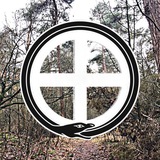
In Slavic traditions, the symbol (gromoviti znaci) is often seen in this shape and is the mark of the god Perun. Perun was, among other things, the god of thunder (his name is related to the Slavic words for ‘thunder’) and the most important deity of the Slavs.
The thundermark was often put on houses and other buildings to protect them from lightning.
The thundermark was often put on houses and other buildings to protect them from lightning.
In the Low Countries, the same symbol survives as the donderbezem (thunder broom) and serves a very similar purpose. The mark is believed to protect houses from lightning, and more generally, bad luck. It is seen mostly on old farms and medieval buildings, but is still being used today as decoration.
It is said to be a symbol of Donder (Donar/Þorr, etc.), whose name is the origin of the Dutch word for thunder. The shape is possibly derived from the Hagal rune.
It is said to be a symbol of Donder (Donar/Þorr, etc.), whose name is the origin of the Dutch word for thunder. The shape is possibly derived from the Hagal rune.
Shigir Idol
The Shigir Idol is a wooden sculpture, found in a bog in the Urals. What remains of it now is a 2.8 meter idol, but it may have been 5.8 meter tall. The sculpture was made right after the end of the last Ice Age and was made from larch.
The Shigir sculpture definitely had a religious function. The carvings show another 6 humanoid faces below the head of the figure, perhaps depicting deities or forest spirits. Near the idol, decorated antlers dating back to the same period were also found, possibly part of a ritual.
The Shigir Idol is the oldest known wood carving, but definitely not the only European wooden cult figurine found. All around Europe, from ancient Greece to Scandinavia, wooden idols were often made to depict deities and became important religious sites.
The Shigir Idol is a wooden sculpture, found in a bog in the Urals. What remains of it now is a 2.8 meter idol, but it may have been 5.8 meter tall. The sculpture was made right after the end of the last Ice Age and was made from larch.
The Shigir sculpture definitely had a religious function. The carvings show another 6 humanoid faces below the head of the figure, perhaps depicting deities or forest spirits. Near the idol, decorated antlers dating back to the same period were also found, possibly part of a ritual.
The Shigir Idol is the oldest known wood carving, but definitely not the only European wooden cult figurine found. All around Europe, from ancient Greece to Scandinavia, wooden idols were often made to depict deities and became important religious sites.
Carnyx
The Carnyx is a Celtic Iron Age war horn, recognized by its bell shaped like a boar’s head or other animals’ heads. It was used by the Celts to strike fear into the hearts of their opponents during battles.
Etymologically, the name is connected to the same root as that of the Celtic god Cernunnos, meaning ‘horn’ or ‘antler.’
The Carnyx is a Celtic Iron Age war horn, recognized by its bell shaped like a boar’s head or other animals’ heads. It was used by the Celts to strike fear into the hearts of their opponents during battles.
Etymologically, the name is connected to the same root as that of the Celtic god Cernunnos, meaning ‘horn’ or ‘antler.’
Svetovid
Svetovid is a Slavic deity who was primarily worshipped on the island of Rügen by the Rujani tribe.
The temple at Jaromarsburg (used into the 12th century) contained a statue of Svetovid holding a drinking horn filled with mead.
He has four heads, representing both the four compass points and the four seasons.
Svetovid is a Slavic deity who was primarily worshipped on the island of Rügen by the Rujani tribe.
The temple at Jaromarsburg (used into the 12th century) contained a statue of Svetovid holding a drinking horn filled with mead.
He has four heads, representing both the four compass points and the four seasons.
Though primarily being worshipped on Rügen, veneration of Svetovid was not limited to the island. In fact, he has names in many Slavic languages and idols were found in places outside of Rügen. The image above is of a small wooden statue of Svetovid intended for home worship, found in Pomerania, Poland.
Willemstad Figurine
The Willemstad Figurine is a small wooden idol, found in the Netherlands between the roots of an oak tree. It must have been placed there on purpose by the people who used it 6500 years ago.
While it is difficult to know exactly what this idol was used for by the hunter-gatherers of that period, it is known that idols were used by them at burial sites to establish contact with the realm of spirits.
The Willemstad Figurine is a small wooden idol, found in the Netherlands between the roots of an oak tree. It must have been placed there on purpose by the people who used it 6500 years ago.
While it is difficult to know exactly what this idol was used for by the hunter-gatherers of that period, it is known that idols were used by them at burial sites to establish contact with the realm of spirits.
Bergakker Inscription
The Bergakker Inscription is a runic inscription found on a 5th century scabbard. It is the oldest known attestation of the Old Dutch language and proof that the Franks did in fact use the runic alphabet (Elder Futhark).
While the exact meaning of the inscription is unknown, the word ann (ᚨᚾᚾ) is the earliest known Dutch word and means ‘give’ (Dutch: ‘(ik) gun’).
The Bergakker Inscription is a runic inscription found on a 5th century scabbard. It is the oldest known attestation of the Old Dutch language and proof that the Franks did in fact use the runic alphabet (Elder Futhark).
While the exact meaning of the inscription is unknown, the word ann (ᚨᚾᚾ) is the earliest known Dutch word and means ‘give’ (Dutch: ‘(ik) gun’).
Bronze Lur
The bronze lur is a Germanic Bronze Age instrument, used both as a ceremonial instrument and as a war horn.
Several rock paintings in Scandinavia depict people playing the instrument. Lurs have been discovered in Germany, Denmark, Sweden, Norway and Latvia.
The bronze lur is a Germanic Bronze Age instrument, used both as a ceremonial instrument and as a war horn.
Several rock paintings in Scandinavia depict people playing the instrument. Lurs have been discovered in Germany, Denmark, Sweden, Norway and Latvia.