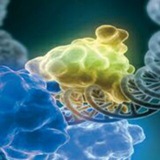
☑️تامین نوکلئوتید های تیمین دار
🔅منشا نوکلئوتید تیمین دار dCMP و یا dUMP می باشد .
#Nucleic_acid_metabolism
#Thimidylate
@Essential_Biochemistry
🔅منشا نوکلئوتید تیمین دار dCMP و یا dUMP می باشد .
#Nucleic_acid_metabolism
#Thimidylate
@Essential_Biochemistry
☑️تبدیل dCMP به ⬅️ dUMP
🔅با حذف گروه آمین از سیتوزین باز یوراسیل را خواهیم داشت (واکنش دآمیناز )
🔅توسط آنزیم dCMP دآمیناز
❗️مولکول های dCTP و dTTP تنظیم کننده های واکنش هستند .
#Nucleic_acid_metabolism
#Thimidylate
@Essential_Biochemistry
🔅با حذف گروه آمین از سیتوزین باز یوراسیل را خواهیم داشت (واکنش دآمیناز )
🔅توسط آنزیم dCMP دآمیناز
❗️مولکول های dCTP و dTTP تنظیم کننده های واکنش هستند .
#Nucleic_acid_metabolism
#Thimidylate
@Essential_Biochemistry
☑️تبدیل dUMP به ⬅️ dTMP
🔅برای تبدیل یوراسیل به تیمین به گروه متیل نیاز است .
🔅دهنده تک کربن (گروه متیل) نیز THF است .
🔅ترکیب THF نیز توسط آنزیم ( سرین هیدروکسی متیل ترنسفراز ) گروه متیل را از سرین میگیرد .
🔅سرین نیز طی این واکنش به گلایسین تبدیل می شود .
❗️بنابراین منبع اصلی گروه متیل ، سرین می باشد و THF فقط یک ناقل است .
❗️ترکیب DHF نیز فرم اکسید شده THF است که با دریافت (احیا شدن ) توسط NADPH به THF تبدیل می شود .
#Nucleic_acid_metabolism
#Thimidylate
@Essential_Biochemistry
🔅برای تبدیل یوراسیل به تیمین به گروه متیل نیاز است .
🔅دهنده تک کربن (گروه متیل) نیز THF است .
🔅ترکیب THF نیز توسط آنزیم ( سرین هیدروکسی متیل ترنسفراز ) گروه متیل را از سرین میگیرد .
🔅سرین نیز طی این واکنش به گلایسین تبدیل می شود .
❗️بنابراین منبع اصلی گروه متیل ، سرین می باشد و THF فقط یک ناقل است .
❗️ترکیب DHF نیز فرم اکسید شده THF است که با دریافت (احیا شدن ) توسط NADPH به THF تبدیل می شود .
#Nucleic_acid_metabolism
#Thimidylate
@Essential_Biochemistry
⚜⚜⚜⚜⚜⚜⚜⚜⚜⚜⚜⚜⚜
🔰🔰🔰🔰🔰🔰🔰🔰🔰🔰🔰🔰🔰
📘Biochemistry is the study of the chemical processes and substances that occur within living organisms. It's a fascinating field that encompasses a wide range of topics, from the structure and function of biomolecules to the biochemical basis of disease.
📗At its core, biochemistry is based on the principles of chemistry and biology. It seeks to understand how biological molecules interact with each other and the environment, and how these interactions give rise to the complex processes that make life possible.
📕The four main classes of biomolecules that form the building blocks of life are carbohydrates, lipids, proteins, and nucleic acids. Each of these biomolecules plays a critical role in the structure, function, and metabolism of living systems.
📒Biochemistry also investigates the mechanisms of enzyme catalysis, the flow of energy and matter through metabolic pathways, and the regulation of biochemical processes within cells. It provides insights into the molecular basis of genetic information storage, replication, and expression.
🗂In this episode of channel, we'll explore the fascinating world of biochemistry, from the basic principles to the latest research breakthroughs. We'll cover topics such as biomolecules, metabolism, signal transduction, molecular biology, and many others. Our goal is to provide you with a deeper understanding of the chemical basis of life and the mechanisms that govern biological systems.
💎We can provide you with Python and R programming codes, please contact us if needed.
@Callbio
♦️Thank you for joining us on this exciting journey into the world of biochemistry!
#New-Episode
#Principles
#En
@Essential_Biochemistry
🔰🔰🔰🔰🔰🔰🔰🔰🔰🔰🔰🔰🔰
📘Biochemistry is the study of the chemical processes and substances that occur within living organisms. It's a fascinating field that encompasses a wide range of topics, from the structure and function of biomolecules to the biochemical basis of disease.
📗At its core, biochemistry is based on the principles of chemistry and biology. It seeks to understand how biological molecules interact with each other and the environment, and how these interactions give rise to the complex processes that make life possible.
📕The four main classes of biomolecules that form the building blocks of life are carbohydrates, lipids, proteins, and nucleic acids. Each of these biomolecules plays a critical role in the structure, function, and metabolism of living systems.
📒Biochemistry also investigates the mechanisms of enzyme catalysis, the flow of energy and matter through metabolic pathways, and the regulation of biochemical processes within cells. It provides insights into the molecular basis of genetic information storage, replication, and expression.
🗂In this episode of channel, we'll explore the fascinating world of biochemistry, from the basic principles to the latest research breakthroughs. We'll cover topics such as biomolecules, metabolism, signal transduction, molecular biology, and many others. Our goal is to provide you with a deeper understanding of the chemical basis of life and the mechanisms that govern biological systems.
💎We can provide you with Python and R programming codes, please contact us if needed.
@Callbio
♦️Thank you for joining us on this exciting journey into the world of biochemistry!
#New-Episode
#Principles
#En
@Essential_Biochemistry
1⃣
#Biomolecules are molecules that are essential for life and are found in all living organisms. They are the building blocks of cells and play crucial roles in the structure, function, and metabolism of living systems. There are four main types of biomolecules: #carbohydrates, #lipids, #proteins, and #nucleic_acids.
@Essential_Biochemistry
#Biomolecules are molecules that are essential for life and are found in all living organisms. They are the building blocks of cells and play crucial roles in the structure, function, and metabolism of living systems. There are four main types of biomolecules: #carbohydrates, #lipids, #proteins, and #nucleic_acids.
@Essential_Biochemistry
2⃣
#Carbohydrates are molecules made up of simple sugars, such as glucose, fructose, and galactose. They are used as a source of energy and as structural components in cells, such as in the cell walls of plants.
#Lipids are molecules that are insoluble in water and include fats, oils, and cholesterol. They are used as a source of energy, as structural components of cell membranes, and as signaling molecules.
#Proteins are large molecules made up of chains of amino acids. They have a wide range of functions in the body, including catalyzing chemical reactions, transporting molecules, and providing structural support.
#Nucleic_acids, such as DNA and RNA, are molecules that store and transmit genetic information. They are made up of nucleotides, which consist of a sugar, a phosphate group, and a nitrogenous base.
@Essential_Biochemistry
#Carbohydrates are molecules made up of simple sugars, such as glucose, fructose, and galactose. They are used as a source of energy and as structural components in cells, such as in the cell walls of plants.
#Lipids are molecules that are insoluble in water and include fats, oils, and cholesterol. They are used as a source of energy, as structural components of cell membranes, and as signaling molecules.
#Proteins are large molecules made up of chains of amino acids. They have a wide range of functions in the body, including catalyzing chemical reactions, transporting molecules, and providing structural support.
#Nucleic_acids, such as DNA and RNA, are molecules that store and transmit genetic information. They are made up of nucleotides, which consist of a sugar, a phosphate group, and a nitrogenous base.
@Essential_Biochemistry
3⃣
Together, these #biomolecules make up the molecular machinery of cells and allow living organisms to carry out essential functions such as metabolism, growth, and reproduction. The study of biomolecules is an important aspect of biochemistry, as it helps us understand the chemical basis of life and the mechanisms underlying biological processes.
@Essential_Biochemistry
Together, these #biomolecules make up the molecular machinery of cells and allow living organisms to carry out essential functions such as metabolism, growth, and reproduction. The study of biomolecules is an important aspect of biochemistry, as it helps us understand the chemical basis of life and the mechanisms underlying biological processes.
@Essential_Biochemistry
Biochemistry pinned «⚜⚜⚜⚜⚜⚜⚜⚜⚜⚜⚜⚜⚜ 🔰🔰🔰🔰🔰🔰🔰🔰🔰🔰🔰🔰🔰 📘Biochemistry is the study of the chemical processes and substances that occur within living organisms. It's a fascinating field that encompasses a wide range of topics, from the structure and function of biomolecules to the biochemical…»
4⃣
Here are some of the main topics related to #carbohydrates in biochemistry:
🔸Structure and classification of carbohydrates:
Carbohydrates are classified based on their chemical structure, including monosaccharides (simple sugars), disaccharides (two linked monosaccharides), and polysaccharides (long chains of monosaccharides).
🔸Functions of carbohydrates:
Carbohydrates have various functions in living organisms, including providing energy, serving as structural components, and acting as signaling molecules.
🔸Carbohydrate metabolism:
Carbohydrate metabolism involves the breakdown of carbohydrates to release energy through cellular respiration. This process involves several enzymes and metabolic pathways, such as glycolysis, the citric acid cycle, and oxidative phosphorylation.
🔸Glycobiology:
Glycobiology is the study of the structure, biosynthesis, and functions of carbohydrates in living organisms. It includes topics such as glycosylation (the addition of carbohydrate molecules to proteins and lipids) and carbohydrate-protein interactions.
🔸Carbohydrate-based therapies:
Carbohydrates are also important in drug discovery and development, with several carbohydrate-based drugs and therapies currently in use or in development, such as antibiotics, antiviral agents, and anticancer drugs.
@Essential_Biochemistry
Here are some of the main topics related to #carbohydrates in biochemistry:
🔸Structure and classification of carbohydrates:
Carbohydrates are classified based on their chemical structure, including monosaccharides (simple sugars), disaccharides (two linked monosaccharides), and polysaccharides (long chains of monosaccharides).
🔸Functions of carbohydrates:
Carbohydrates have various functions in living organisms, including providing energy, serving as structural components, and acting as signaling molecules.
🔸Carbohydrate metabolism:
Carbohydrate metabolism involves the breakdown of carbohydrates to release energy through cellular respiration. This process involves several enzymes and metabolic pathways, such as glycolysis, the citric acid cycle, and oxidative phosphorylation.
🔸Glycobiology:
Glycobiology is the study of the structure, biosynthesis, and functions of carbohydrates in living organisms. It includes topics such as glycosylation (the addition of carbohydrate molecules to proteins and lipids) and carbohydrate-protein interactions.
🔸Carbohydrate-based therapies:
Carbohydrates are also important in drug discovery and development, with several carbohydrate-based drugs and therapies currently in use or in development, such as antibiotics, antiviral agents, and anticancer drugs.
@Essential_Biochemistry
5⃣
🔸️#Monosaccharides are the simplest form of carbohydrates, also known as simple sugars. They are composed of a single sugar unit and are the building blocks for more complex carbohydrates.
🔹️Monosaccharides are classified based on the number of carbon atoms they contain, with the most common being trioses (three carbon atoms), tetroses (four carbon atoms), pentoses (five carbon atoms), and hexoses (six carbon atoms).
🔸️The most common monosaccharide is glucose, which is a hexose sugar and is used as a primary source of energy by cells. Other examples of monosaccharides include fructose (found in fruits), galactose (found in milk), and ribose and deoxyribose (found in nucleotides, which are the building blocks of DNA and RNA).
🔹️Monosaccharides have a characteristic structure consisting of a chain of carbon atoms with hydroxyl groups (-OH) attached to each carbon atom, except one, which has an oxygen atom attached to it to form a carbonyl group (-C=O). Depending on the position of the carbonyl group, a monosaccharide can be either an aldose (if the carbonyl group is at the end of the chain) or a ketose (if the carbonyl group is in the middle of the chain).
🔸️Monosaccharides can form glycosidic bonds with other monosaccharides, forming disaccharides and polysaccharides. For example, glucose and fructose can form a glycosidic bond to form the disaccharide sucrose, which is commonly known as table sugar.
🔘In summary, monosaccharides are the simplest form of carbohydrates, consisting of a single sugar unit. They have a characteristic structure and can form glycosidic bonds with other monosaccharides to form more complex carbohydrates.
@Essential_Biochemistry
🔸️#Monosaccharides are the simplest form of carbohydrates, also known as simple sugars. They are composed of a single sugar unit and are the building blocks for more complex carbohydrates.
🔹️Monosaccharides are classified based on the number of carbon atoms they contain, with the most common being trioses (three carbon atoms), tetroses (four carbon atoms), pentoses (five carbon atoms), and hexoses (six carbon atoms).
🔸️The most common monosaccharide is glucose, which is a hexose sugar and is used as a primary source of energy by cells. Other examples of monosaccharides include fructose (found in fruits), galactose (found in milk), and ribose and deoxyribose (found in nucleotides, which are the building blocks of DNA and RNA).
🔹️Monosaccharides have a characteristic structure consisting of a chain of carbon atoms with hydroxyl groups (-OH) attached to each carbon atom, except one, which has an oxygen atom attached to it to form a carbonyl group (-C=O). Depending on the position of the carbonyl group, a monosaccharide can be either an aldose (if the carbonyl group is at the end of the chain) or a ketose (if the carbonyl group is in the middle of the chain).
🔸️Monosaccharides can form glycosidic bonds with other monosaccharides, forming disaccharides and polysaccharides. For example, glucose and fructose can form a glycosidic bond to form the disaccharide sucrose, which is commonly known as table sugar.
🔘In summary, monosaccharides are the simplest form of carbohydrates, consisting of a single sugar unit. They have a characteristic structure and can form glycosidic bonds with other monosaccharides to form more complex carbohydrates.
@Essential_Biochemistry
6⃣
🔸#Disaccharides are formed by the condensation of two monosaccharide molecules, with the elimination of a molecule of water. The resulting bond between the two monosaccharides is known as a glycosidic bond. The specific type of glycosidic bond and the two monosaccharides involved determine the type of disaccharide formed.
🔹Sucrose is a disaccharide composed of one glucose molecule and one fructose molecule, joined by an α-1,2 glycosidic bond. It is commonly found in sugar cane, sugar beets, and many fruits and vegetables. Sucrose is hydrolyzed in the small intestine by the enzyme sucrase, producing glucose and fructose, which are then absorbed into the bloodstream.
🔸Lactose is a disaccharide composed of one glucose molecule and one galactose molecule, joined by a β-1,4 glycosidic bond. It is the primary sugar found in milk and dairy products. Lactose is hydrolyzed in the small intestine by the enzyme lactase, producing glucose and galactose, which are then absorbed into the bloodstream.
🔹Maltose is a disaccharide composed of two glucose molecules, joined by an α-1,4 glycosidic bond. It is formed during the digestion of starch and is found in beer and malted beverages. Maltose is hydrolyzed in the small intestine by the enzyme maltase, producing two molecules of glucose, which are then absorbed into the bloodstream.
🔸Disaccharides are an important source of energy for the body, and are broken down into their constituent monosaccharides by digestive enzymes in the small intestine. Excessive consumption of disaccharides, particularly sucrose and high-fructose corn syrup, has been linked to obesity and other health problems, and it is generally recommended to consume them in moderation as part of a balanced diet.
@Essential_Biochemistry
🔸#Disaccharides are formed by the condensation of two monosaccharide molecules, with the elimination of a molecule of water. The resulting bond between the two monosaccharides is known as a glycosidic bond. The specific type of glycosidic bond and the two monosaccharides involved determine the type of disaccharide formed.
🔹Sucrose is a disaccharide composed of one glucose molecule and one fructose molecule, joined by an α-1,2 glycosidic bond. It is commonly found in sugar cane, sugar beets, and many fruits and vegetables. Sucrose is hydrolyzed in the small intestine by the enzyme sucrase, producing glucose and fructose, which are then absorbed into the bloodstream.
🔸Lactose is a disaccharide composed of one glucose molecule and one galactose molecule, joined by a β-1,4 glycosidic bond. It is the primary sugar found in milk and dairy products. Lactose is hydrolyzed in the small intestine by the enzyme lactase, producing glucose and galactose, which are then absorbed into the bloodstream.
🔹Maltose is a disaccharide composed of two glucose molecules, joined by an α-1,4 glycosidic bond. It is formed during the digestion of starch and is found in beer and malted beverages. Maltose is hydrolyzed in the small intestine by the enzyme maltase, producing two molecules of glucose, which are then absorbed into the bloodstream.
🔸Disaccharides are an important source of energy for the body, and are broken down into their constituent monosaccharides by digestive enzymes in the small intestine. Excessive consumption of disaccharides, particularly sucrose and high-fructose corn syrup, has been linked to obesity and other health problems, and it is generally recommended to consume them in moderation as part of a balanced diet.
@Essential_Biochemistry
🔸 Definition:
#Oligosaccharides are carbohydrates composed of 3 to 10 monosaccharide units linked together by glycosidic bonds. They are more complex than monosaccharides and disaccharides but simpler than polysaccharides.
🔹Structure:
🟠Monosaccharide Units: The building blocks of oligosaccharides can be various monosaccharides such as glucose, fructose, galactose, etc.
🟡Glycosidic Bonds: These are covalent bonds that connect the monosaccharide units. The nature of these bonds (α or β) affects the properties and digestibility of the oligosaccharides.
🔸 Types of Oligosaccharides:
🔴Trisaccharides: Composed of three monosaccharide units (e.g., raffinose, which is found in beans and whole grains).
🟢Tetrasaccharides: Composed of four monosaccharide units (e.g., stachyose, found in legumes).
🔵Higher Oligosaccharides: Composed of 5 to 10 monosaccharide units (e.g., fructooligosaccharides, found in many plants).
🔹 Sources:
🟣Dietary Sources: Found naturally in plants, especially in legumes (beans, lentils), whole grains, vegetables (onions, garlic), and some fruits.
🟢Commercial Uses: Added to food products as prebiotics, sweeteners, or for improving texture.
🔶Functions and Benefits:
🟣Prebiotics: Oligosaccharides serve as food for beneficial gut bacteria, promoting a healthy gut microbiome. They help in the growth of probiotics such as Bifidobacteria and Lactobacilli.
🔵Digestive Health: By supporting healthy gut bacteria, oligosaccharides can improve digestion and reduce the risk of gastrointestinal issues.
🟣Immune System Support: The promotion of a healthy gut flora can enhance the immune system.
🔴Caloric Value: They provide fewer calories compared to simple sugars, making them a useful ingredient in low-calorie diets.
⚪️Blood Sugar Regulation: Oligosaccharides have a lower glycemic index, which helps in managing blood sugar levels.
🔹 Metabolism:
🔴Fermentation in the Gut: Unlike simple sugars, oligosaccharides are not fully digested in the small intestine. They reach the colon, where they are fermented by gut bacteria, producing short-chain fatty acids and gases.
🟠Short-Chain Fatty Acids (SCFAs): These are beneficial for colon health and provide additional energy.
@Essential_Biochemistry
#Oligosaccharides are carbohydrates composed of 3 to 10 monosaccharide units linked together by glycosidic bonds. They are more complex than monosaccharides and disaccharides but simpler than polysaccharides.
🔹Structure:
🟠Monosaccharide Units: The building blocks of oligosaccharides can be various monosaccharides such as glucose, fructose, galactose, etc.
🟡Glycosidic Bonds: These are covalent bonds that connect the monosaccharide units. The nature of these bonds (α or β) affects the properties and digestibility of the oligosaccharides.
🔸 Types of Oligosaccharides:
🔴Trisaccharides: Composed of three monosaccharide units (e.g., raffinose, which is found in beans and whole grains).
🟢Tetrasaccharides: Composed of four monosaccharide units (e.g., stachyose, found in legumes).
🔵Higher Oligosaccharides: Composed of 5 to 10 monosaccharide units (e.g., fructooligosaccharides, found in many plants).
🔹 Sources:
🟣Dietary Sources: Found naturally in plants, especially in legumes (beans, lentils), whole grains, vegetables (onions, garlic), and some fruits.
🟢Commercial Uses: Added to food products as prebiotics, sweeteners, or for improving texture.
🔶Functions and Benefits:
🟣Prebiotics: Oligosaccharides serve as food for beneficial gut bacteria, promoting a healthy gut microbiome. They help in the growth of probiotics such as Bifidobacteria and Lactobacilli.
🔵Digestive Health: By supporting healthy gut bacteria, oligosaccharides can improve digestion and reduce the risk of gastrointestinal issues.
🟣Immune System Support: The promotion of a healthy gut flora can enhance the immune system.
🔴Caloric Value: They provide fewer calories compared to simple sugars, making them a useful ingredient in low-calorie diets.
⚪️Blood Sugar Regulation: Oligosaccharides have a lower glycemic index, which helps in managing blood sugar levels.
🔹 Metabolism:
🔴Fermentation in the Gut: Unlike simple sugars, oligosaccharides are not fully digested in the small intestine. They reach the colon, where they are fermented by gut bacteria, producing short-chain fatty acids and gases.
🟠Short-Chain Fatty Acids (SCFAs): These are beneficial for colon health and provide additional energy.
@Essential_Biochemistry
#Oligosaccharides
🔶 Health Implications:
Digestive Tolerance: Some people may experience gas, bloating, or discomfort due to the fermentation process. Gradual introduction into the diet can help mitigate these effects.
Potential Benefits: Regular consumption of oligosaccharides can improve gut health, enhance mineral absorption (such as calcium and magnesium), and support overall metabolic health.
🔹 Common Examples of Oligosaccharides:
Raffinose: Found in beans, cabbage, brussels sprouts, broccoli, asparagus, whole grains, and some seeds.
Stachyose: Found in beans and other legumes.
Fructooligosaccharides (FOS): Found in many vegetables and fruits, such as onions, bananas, and garlic. Often used as a sweetener and prebiotic in food products.
Galactooligosaccharides (GOS): Found in dairy products and are often added to infant formula for their prebiotic benefits.
🔸Research and Applications:
Probiotic Formulations: Oligosaccharides are often included in probiotic supplements to enhance their efficacy.
Functional Foods: Increasingly used in the food industry to create functional foods that promote health and wellness.
Nutraceuticals: Due to their health benefits, oligosaccharides are incorporated into various nutraceutical products.
@Essential_Biochemistry
🔶 Health Implications:
Digestive Tolerance: Some people may experience gas, bloating, or discomfort due to the fermentation process. Gradual introduction into the diet can help mitigate these effects.
Potential Benefits: Regular consumption of oligosaccharides can improve gut health, enhance mineral absorption (such as calcium and magnesium), and support overall metabolic health.
🔹 Common Examples of Oligosaccharides:
Raffinose: Found in beans, cabbage, brussels sprouts, broccoli, asparagus, whole grains, and some seeds.
Stachyose: Found in beans and other legumes.
Fructooligosaccharides (FOS): Found in many vegetables and fruits, such as onions, bananas, and garlic. Often used as a sweetener and prebiotic in food products.
Galactooligosaccharides (GOS): Found in dairy products and are often added to infant formula for their prebiotic benefits.
🔸Research and Applications:
Probiotic Formulations: Oligosaccharides are often included in probiotic supplements to enhance their efficacy.
Functional Foods: Increasingly used in the food industry to create functional foods that promote health and wellness.
Nutraceuticals: Due to their health benefits, oligosaccharides are incorporated into various nutraceutical products.
@Essential_Biochemistry
👍1
Which glycosidic bond type primarily influences the digestibility of oligosaccharides?
Anonymous Quiz
42%
Alpha-glycosidic bonds
51%
Beta-glycosidic bonds
5%
Gamma-glycosidic bonds
2%
Delta-glycosidic bonds
What is the primary function of oligosaccharides in the human diet?
Anonymous Quiz
19%
Providing immediate energy
26%
Serving as a structural component in cells
46%
Acting as prebiotics to support gut health
9%
Regulating blood pressure
How many monosaccharide units typically make up oligosaccharides?
Anonymous Quiz
6%
1-2
66%
3-10
22%
11-20
5%
21-30
Did you know? 😉👇
#Oligosaccharides are often used as a secret ingredient in the production of certain low-calorie sweeteners and sugar-free products. Because they are not fully digestible by humans, they provide sweetness with fewer calories compared to regular sugar, making them popular in diet and health-conscious foods. Additionally, their ability to promote the growth of beneficial gut bacteria adds a bonus health benefit, turning these tiny carbohydrate chains into powerful functional ingredients in our diets!
@Essential_Biochemistry
#Oligosaccharides are often used as a secret ingredient in the production of certain low-calorie sweeteners and sugar-free products. Because they are not fully digestible by humans, they provide sweetness with fewer calories compared to regular sugar, making them popular in diet and health-conscious foods. Additionally, their ability to promote the growth of beneficial gut bacteria adds a bonus health benefit, turning these tiny carbohydrate chains into powerful functional ingredients in our diets!
@Essential_Biochemistry
👍3
1️⃣Definition:
#Polysaccharides are large, complex carbohydrates composed of long chains of monosaccharide units linked together by glycosidic bonds. They can consist of hundreds to thousands of monosaccharides.
2️⃣Structure:
🔵Monosaccharide Units: Typically glucose, but other monosaccharides can also be part of polysaccharides.
🔴Glycosidic Bonds: The type of bond (α or β) and the branching patterns (linear or branched) determine the properties and functions of polysaccharides.
3️⃣Types of Polysaccharides:
🔴Storage Polysaccharides:
Starch: A storage form of energy in plants, composed of amylose (linear) and amylopectin (branched).
Glycogen: A storage form of energy in animals, highly branched, and stored in the liver and muscles.
🔵Structural Polysaccharides:
Cellulose: A major component of plant cell walls, providing structural support. It consists of β-glucose units, forming straight chains that create strong fibers.
Chitin: Found in the exoskeletons of arthropods (like insects and crustaceans) and the cell walls of fungi. It consists of N-acetylglucosamine units.
4️⃣ Functions:
🔸Energy Storage:
Starch: Provides a reserve of glucose in plants, which can be broken down during periods of low photosynthetic activity.
Glycogen: Provides a quick source of glucose for energy in animals, especially during high-energy demands.
Structural Support:
Cellulose: Gives rigidity and strength to plant cell walls, enabling plants to stand upright and grow tall.
Chitin: Provides protection and structural integrity to arthropods and fungi.
5️⃣Metabolism:
Starch Digestion: Begins in the mouth with salivary amylase, continues in the small intestine with pancreatic amylase, and results in glucose absorption.
Glycogen Metabolism: Glycogen is broken down into glucose-1-phosphate by glycogen phosphorylase and then converted to glucose-6-phosphate for energy production.
Cellulose Digestion: Humans lack the enzyme cellulase needed to break down cellulose, so it passes through the digestive system as fiber, aiding in digestion and regularity.
6️⃣ Dietary Sources:
Starch: Found in foods like potatoes, rice, wheat, corn, and other cereals.
Glycogen: Not typically consumed directly, as it is rapidly broken down in animals after slaughter.
Cellulose: Present in all plant-based foods, especially in high-fiber foods like vegetables, fruits, whole grains, and legumes.
7️⃣Health Implications:
Dietary Fiber: Cellulose and other non-digestible polysaccharides are important for maintaining digestive health, preventing constipation, and regulating blood sugar levels.
Energy Regulation: Starch and glycogen play crucial roles in energy storage and release, important for maintaining blood sugar levels and energy balance.
8️⃣Industrial and Commercial Uses:
Cellulose: Used in the production of paper, textiles, and as a food additive (e.g., thickener, stabilizer).
Starch: Used in food processing, as a thickener, stabilizer, and in biodegradable materials.
Chitin and Chitosan: Used in biomedical applications, water purification, and as food additives.
@Essential_Biochemistry
#Polysaccharides are large, complex carbohydrates composed of long chains of monosaccharide units linked together by glycosidic bonds. They can consist of hundreds to thousands of monosaccharides.
2️⃣Structure:
🔵Monosaccharide Units: Typically glucose, but other monosaccharides can also be part of polysaccharides.
🔴Glycosidic Bonds: The type of bond (α or β) and the branching patterns (linear or branched) determine the properties and functions of polysaccharides.
3️⃣Types of Polysaccharides:
🔴Storage Polysaccharides:
Starch: A storage form of energy in plants, composed of amylose (linear) and amylopectin (branched).
Glycogen: A storage form of energy in animals, highly branched, and stored in the liver and muscles.
🔵Structural Polysaccharides:
Cellulose: A major component of plant cell walls, providing structural support. It consists of β-glucose units, forming straight chains that create strong fibers.
Chitin: Found in the exoskeletons of arthropods (like insects and crustaceans) and the cell walls of fungi. It consists of N-acetylglucosamine units.
4️⃣ Functions:
🔸Energy Storage:
Starch: Provides a reserve of glucose in plants, which can be broken down during periods of low photosynthetic activity.
Glycogen: Provides a quick source of glucose for energy in animals, especially during high-energy demands.
Structural Support:
Cellulose: Gives rigidity and strength to plant cell walls, enabling plants to stand upright and grow tall.
Chitin: Provides protection and structural integrity to arthropods and fungi.
5️⃣Metabolism:
Starch Digestion: Begins in the mouth with salivary amylase, continues in the small intestine with pancreatic amylase, and results in glucose absorption.
Glycogen Metabolism: Glycogen is broken down into glucose-1-phosphate by glycogen phosphorylase and then converted to glucose-6-phosphate for energy production.
Cellulose Digestion: Humans lack the enzyme cellulase needed to break down cellulose, so it passes through the digestive system as fiber, aiding in digestion and regularity.
6️⃣ Dietary Sources:
Starch: Found in foods like potatoes, rice, wheat, corn, and other cereals.
Glycogen: Not typically consumed directly, as it is rapidly broken down in animals after slaughter.
Cellulose: Present in all plant-based foods, especially in high-fiber foods like vegetables, fruits, whole grains, and legumes.
7️⃣Health Implications:
Dietary Fiber: Cellulose and other non-digestible polysaccharides are important for maintaining digestive health, preventing constipation, and regulating blood sugar levels.
Energy Regulation: Starch and glycogen play crucial roles in energy storage and release, important for maintaining blood sugar levels and energy balance.
8️⃣Industrial and Commercial Uses:
Cellulose: Used in the production of paper, textiles, and as a food additive (e.g., thickener, stabilizer).
Starch: Used in food processing, as a thickener, stabilizer, and in biodegradable materials.
Chitin and Chitosan: Used in biomedical applications, water purification, and as food additives.
@Essential_Biochemistry
👍3
Interesting Facts:
🔻🔻🔻
Cellulose is the most abundant organic compound on Earth.
Humans can't digest cellulose, but it's crucial for digestive health as dietary fiber.
Glycogen can be rapidly mobilized to meet sudden energy needs in animals, making it an essential energy reserve.
@Essential_Biochemistry
🔻🔻🔻
Cellulose is the most abundant organic compound on Earth.
Humans can't digest cellulose, but it's crucial for digestive health as dietary fiber.
Glycogen can be rapidly mobilized to meet sudden energy needs in animals, making it an essential energy reserve.
@Essential_Biochemistry
👍3