*Underground Utilities Piping* #Piping
Pipes laid below ground for water, fire, drainage, gas, power.
*Types*: HDPE, DI, PVC, RCC.
*Key*: Depth min 1m, bedding sand, slope, warning tape, cathodic protection.
*Checks*: No crossing clash, leak test, soil load.
Pipes laid below ground for water, fire, drainage, gas, power.
*Types*: HDPE, DI, PVC, RCC.
*Key*: Depth min 1m, bedding sand, slope, warning tape, cathodic protection.
*Checks*: No crossing clash, leak test, soil load.
❤2👏1
This media is not supported in the widget
VIEW IN TELEGRAM
❤1
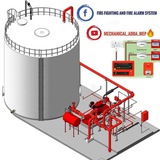
Fire-fighting and Fire Alarm system 👷🏻🧰
1790961160823.pdf
Cooling Towers: The Engineering Behind Efficient Heat Rejection
I am pleased to share this technical reference on Cooling Towers - Basic Calculations.
Cooling towers are essential utility systems in many chemical, petrochemical, and oil and gas facilities. Their main function is to reject low-grade heat from circulating cooling water to the atmosphere, allowing process equipment and heat exchangers to operate within the required temperature range.
❤1
Fire-fighting and Fire Alarm system 👷🏻🧰
1790968183601.pdf
Accurate temperature measurement in a refinery is critical for safety, product quality, and process efficiency, controlling operations from low-temperature cryogenic systems to ultra-high-heat cracking furnaces.
Core Temperature Measurement Devices
Thermocouples
Generate a voltage proportional to temperature using two dissimilar metal wires. They handle extreme ranges from -196°C up to 1750°C in high-heat applications like furnaces and reactors.
Core Temperature Measurement Devices
Thermocouples
Generate a voltage proportional to temperature using two dissimilar metal wires. They handle extreme ranges from -196°C up to 1750°C in high-heat applications like furnaces and reactors.
PSV and PRV may both protect systems from overpressure, but their operating principles and applications are different.
*PSV (Pressure Safety Valve)//
Commonly used for gases, vapors and steam with rapid "POP" action.
*PRV (Pressure Relief Valve)//
Primarily used for liquids with gradual, modulating operation.
Understanding the difference helps in selecting the right valve for safe and reliable process operation.
#PSV
❤2
What's a Heat Number? Why Is It Important?
A Technical Overview for Engineers, Inspectors & QA/QC Professionals
Every pipe, fitting, flange, plate, or pressure vessel component has a unique identity.
That identity is called the Heat Number.
What is a Heat Number?
A Heat Number (also known as a Heat Code or Cast Number) is a unique identification assigned to a specific batch of metal produced during a single melting process.
❤2
FIRE PIPING - AUTOMATIC AIR VENT
An Automatic Air Vent is installed at high points of fire-water piping to automatically release trapped air and non-condensable gases, helping maintain reliable fire-protection system performance.
Key Features & Functions
Removes trapped air from high points
Prevents air pockets in fire piping
Reduces corrosion risk associated with trapped oxygen
Improves hydraulic performance and water flow
Helps reduce water-hammer effects
Supports reliable sprinkler-system operation
Float-operated automatic air release
Isolation valve allows maintenance without draining the complete system
UL/FM-listed vent arrangement where specified
Discharge can be routed to a safe location when required
Important: Installation should follow the applicable NFPA 13 requirements, approved system design, and manufacturer's instructions.
#FireProtection #FirePiping #AutomaticAirVent #FireSprinkler #NFPA13 #FireSafety #FireHydrant
❤1
Fire Extinguisher Pressure Gauge - Know Before You Need It!
The pressure gauge indicates whether a stored-pressure fire extinguisher is properly pressurized and ready for use.
use. Green Zone: Normal pressure - generally ready for
Red Zone: Low pressure extinguisher may not operate correctly; requires inspection/service.
Yellow Zone: High pressure - may indicate over-pressurization; get it checked by a qualified technician.
Main Functions
Indicates internal pressure
Helps confirm extinguisher readiness
Provides an early warning of pressure loss
Helps identify abnormal/high pressure
Supports routine inspection and maintenance
! Important: Gauge zones and acceptable pressure ranges vary by extinguisher type/model. Always follow the manufacturer's marking and maintenance requirements.
#FireExtinguisher #Pressure Gauge #FireSafety
#FireProtection #FireFighting #SafetyEngineering
❤3
This media is not supported in the widget
VIEW IN TELEGRAM
This media is not supported in the widget
VIEW IN TELEGRAM
❤1