This media is not supported in the widget
VIEW IN TELEGRAM
❤2
What Would You Check First?
A leaking flange was reported during operation.
You have limited time before the unit meeting, and the team is waiting for your recommendation.
What is the FIRST thing you would verify?
A) Bolt condition / tightening
B) Gasket condition
C) Flange alignment
D) Process pressure & temperature
E) Piping stress / external load
❤2👍2
This media is not supported in the widget
VIEW IN TELEGRAM
*Underground Utilities Piping* #Piping
Pipes laid below ground for water, fire, drainage, gas, power.
*Types*: HDPE, DI, PVC, RCC.
*Key*: Depth min 1m, bedding sand, slope, warning tape, cathodic protection.
*Checks*: No crossing clash, leak test, soil load.
Pipes laid below ground for water, fire, drainage, gas, power.
*Types*: HDPE, DI, PVC, RCC.
*Key*: Depth min 1m, bedding sand, slope, warning tape, cathodic protection.
*Checks*: No crossing clash, leak test, soil load.
❤2👏1
This media is not supported in the widget
VIEW IN TELEGRAM
❤1
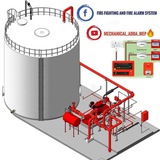
Fire-fighting and Fire Alarm system 👷🏻🧰
1790961160823.pdf
Cooling Towers: The Engineering Behind Efficient Heat Rejection
I am pleased to share this technical reference on Cooling Towers - Basic Calculations.
Cooling towers are essential utility systems in many chemical, petrochemical, and oil and gas facilities. Their main function is to reject low-grade heat from circulating cooling water to the atmosphere, allowing process equipment and heat exchangers to operate within the required temperature range.
❤1
Fire-fighting and Fire Alarm system 👷🏻🧰
1790968183601.pdf
Accurate temperature measurement in a refinery is critical for safety, product quality, and process efficiency, controlling operations from low-temperature cryogenic systems to ultra-high-heat cracking furnaces.
Core Temperature Measurement Devices
Thermocouples
Generate a voltage proportional to temperature using two dissimilar metal wires. They handle extreme ranges from -196°C up to 1750°C in high-heat applications like furnaces and reactors.
Core Temperature Measurement Devices
Thermocouples
Generate a voltage proportional to temperature using two dissimilar metal wires. They handle extreme ranges from -196°C up to 1750°C in high-heat applications like furnaces and reactors.
PSV and PRV may both protect systems from overpressure, but their operating principles and applications are different.
*PSV (Pressure Safety Valve)//
Commonly used for gases, vapors and steam with rapid "POP" action.
*PRV (Pressure Relief Valve)//
Primarily used for liquids with gradual, modulating operation.
Understanding the difference helps in selecting the right valve for safe and reliable process operation.
#PSV
❤2
What's a Heat Number? Why Is It Important?
A Technical Overview for Engineers, Inspectors & QA/QC Professionals
Every pipe, fitting, flange, plate, or pressure vessel component has a unique identity.
That identity is called the Heat Number.
What is a Heat Number?
A Heat Number (also known as a Heat Code or Cast Number) is a unique identification assigned to a specific batch of metal produced during a single melting process.
❤2
FIRE PIPING - AUTOMATIC AIR VENT
An Automatic Air Vent is installed at high points of fire-water piping to automatically release trapped air and non-condensable gases, helping maintain reliable fire-protection system performance.
Key Features & Functions
Removes trapped air from high points
Prevents air pockets in fire piping
Reduces corrosion risk associated with trapped oxygen
Improves hydraulic performance and water flow
Helps reduce water-hammer effects
Supports reliable sprinkler-system operation
Float-operated automatic air release
Isolation valve allows maintenance without draining the complete system
UL/FM-listed vent arrangement where specified
Discharge can be routed to a safe location when required
Important: Installation should follow the applicable NFPA 13 requirements, approved system design, and manufacturer's instructions.
#FireProtection #FirePiping #AutomaticAirVent #FireSprinkler #NFPA13 #FireSafety #FireHydrant
❤1
Fire Extinguisher Pressure Gauge - Know Before You Need It!
The pressure gauge indicates whether a stored-pressure fire extinguisher is properly pressurized and ready for use.
use. Green Zone: Normal pressure - generally ready for
Red Zone: Low pressure extinguisher may not operate correctly; requires inspection/service.
Yellow Zone: High pressure - may indicate over-pressurization; get it checked by a qualified technician.
Main Functions
Indicates internal pressure
Helps confirm extinguisher readiness
Provides an early warning of pressure loss
Helps identify abnormal/high pressure
Supports routine inspection and maintenance
! Important: Gauge zones and acceptable pressure ranges vary by extinguisher type/model. Always follow the manufacturer's marking and maintenance requirements.
#FireExtinguisher #Pressure Gauge #FireSafety
#FireProtection #FireFighting #SafetyEngineering
❤3
This media is not supported in the widget
VIEW IN TELEGRAM