
How did Marathons originate?
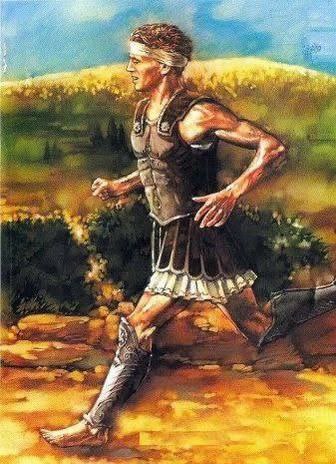
The modern marathon has it’s origin story in ancient Greece. A messenger named Philippides was tasked with bringing news of the Battle of Marathon to Athens, approximately 25 miles away. Once he reached the Acropolis and gave them the news that the Greeks had won, he died.
Fast forward to the 1896 Olympic games in Athens, and they decided to have a race retracing Philippides steps. So they organized a 25 mile race from Marathon to Athens and called it the “Marathon”
From there the distance fluctuated a bit between 24.85 miles and 26.56 miles as it was determined by the course set out by the organizers. But in 1908 during the London Olympics, they were going to have a 25 mile race, but the organizers decided to change the route to run past the Royal Box so they ended up with 26.2. After that there was still some fluctuation, until 1921 when the standard was set based upon the 1908 Olympic marathon distance.
The modern marathon has it’s origin story in ancient Greece. A messenger named Philippides was tasked with bringing news of the Battle of Marathon to Athens, approximately 25 miles away. Once he reached the Acropolis and gave them the news that the Greeks had won, he died.
Fast forward to the 1896 Olympic games in Athens, and they decided to have a race retracing Philippides steps. So they organized a 25 mile race from Marathon to Athens and called it the “Marathon”
From there the distance fluctuated a bit between 24.85 miles and 26.56 miles as it was determined by the course set out by the organizers. But in 1908 during the London Olympics, they were going to have a 25 mile race, but the organizers decided to change the route to run past the Royal Box so they ended up with 26.2. After that there was still some fluctuation, until 1921 when the standard was set based upon the 1908 Olympic marathon distance.
👍89😱14❤13🔥4🤩2
How does a Defibrillator work?
As the name suggests, the defibrillator is a device that stops fibrillation – the condition where the heart starts to beat erratically, usually during cardiac arrest.
There are several types of defibrillators, biphasic, monophasic and automated external defibrillators (AEDs). They can also be automatic internal defibrillators, with or without a pacemaker (AICD).
Cardiac arrest occurs when the electrical rhythm in a person’s heart causes it to stop beating at a normal rhythm. This results in an irregular beat called arrhythmia which prevents the heart from moving oxygenated blood around the body properly.
When blood flow to the brain and other vital organs are stopped the person will suddenly collapse and become unresponsive. You won’t be able to feel their pulse or detect breathing. A person in cardiac arrest will have minutes to survive and using a defibrillator is the only way to help them recover and get their heart beating at a normal rhythm (sinus rhythm) again.
A defibrillator works by de-polarising the cardiac muscle with a short electrical shock. This allows the cells in the heart to recharge at the same time, reestablishing the sinus rhythm in the process.
As the name suggests, the defibrillator is a device that stops fibrillation – the condition where the heart starts to beat erratically, usually during cardiac arrest.
There are several types of defibrillators, biphasic, monophasic and automated external defibrillators (AEDs). They can also be automatic internal defibrillators, with or without a pacemaker (AICD).
Cardiac arrest occurs when the electrical rhythm in a person’s heart causes it to stop beating at a normal rhythm. This results in an irregular beat called arrhythmia which prevents the heart from moving oxygenated blood around the body properly.
When blood flow to the brain and other vital organs are stopped the person will suddenly collapse and become unresponsive. You won’t be able to feel their pulse or detect breathing. A person in cardiac arrest will have minutes to survive and using a defibrillator is the only way to help them recover and get their heart beating at a normal rhythm (sinus rhythm) again.
A defibrillator works by de-polarising the cardiac muscle with a short electrical shock. This allows the cells in the heart to recharge at the same time, reestablishing the sinus rhythm in the process.

👍78❤17👏8🔥7😱4
What is the concept behind Leap Year?
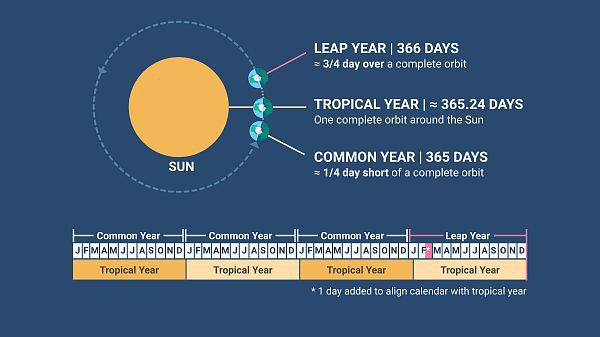
The solar year is not exactly 365 days. It is 365.24219 days. That means it is almost a quarter of a day longer than our standard 365 day calendar. Over time, that adds up. After four years, the calendar would be off by almost a full day. After 120 years, the calendar would be off by a month. Since one of the primary uses of a calendar is to help people know when to plant their crops, that ever increasing error is problematic. That’s why we have leap years - to correct for that error.
Julius Caesar, in 45 B.C., implemented the practice of adding a leap day to the calendar every four years. In the short term, this addressed the problem, but our story doesn’t end here.
The solar year is 365.24219 days long, not the 365.25 days that the leap year concept was built to address. The difference between those two numbers equates to about eleven minutes per year or a full day every 128 years. By the time of Pope Gregory in 1582, this error had built up considerably. Gregory reformatted the calendar, removing ten days from one year to get back in sync and then redefining the use of leap years to add the following rule: centennial years (e.g. 1800, 1900, 2000) are not to be leap years unless they are evenly divisible by 400.
That correction is based upon a solar year length of 365.2425 days. That’s much better, but still slightly different than 365.24219 and that difference of 0.00031 days means that after about three thousand years, the Gregorian calendar will be off by a day.
The solar year is not exactly 365 days. It is 365.24219 days. That means it is almost a quarter of a day longer than our standard 365 day calendar. Over time, that adds up. After four years, the calendar would be off by almost a full day. After 120 years, the calendar would be off by a month. Since one of the primary uses of a calendar is to help people know when to plant their crops, that ever increasing error is problematic. That’s why we have leap years - to correct for that error.
Julius Caesar, in 45 B.C., implemented the practice of adding a leap day to the calendar every four years. In the short term, this addressed the problem, but our story doesn’t end here.
The solar year is 365.24219 days long, not the 365.25 days that the leap year concept was built to address. The difference between those two numbers equates to about eleven minutes per year or a full day every 128 years. By the time of Pope Gregory in 1582, this error had built up considerably. Gregory reformatted the calendar, removing ten days from one year to get back in sync and then redefining the use of leap years to add the following rule: centennial years (e.g. 1800, 1900, 2000) are not to be leap years unless they are evenly divisible by 400.
That correction is based upon a solar year length of 365.2425 days. That’s much better, but still slightly different than 365.24219 and that difference of 0.00031 days means that after about three thousand years, the Gregorian calendar will be off by a day.
👍107🔥22👏13🤩8❤6😱6
How are Pearls formed?
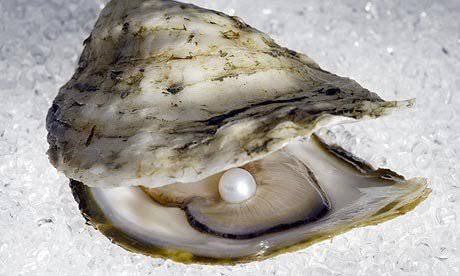
Natural pearls are made in oyster shells. The oyster sits on the bottom of the sea and keeps its shell shut, but occasionally a grain or two of sand sifts in. When that happens the oyster finds it irritating. It squirts out some stuff (like the stuff that makes its shell) to surround the sand and make it less irritating. The tiny grain of sand gets bigger and bigger in size as the stuff surrounds it and hardens. Eventually it gets to be quite a good sized “thing”. That “thing” is a pearl. The pearl can be pulled out of the shell and drilled.
In cultured pearls, people help the process along. They actually inject the sand into the oysters in pearl farms, and check to be sure the pearl is growing. When it is the appropriate size it is harvested and drilled.
Freshwater pearls are shaped liked grains of sand, but salt water pearls and cultured pearls are round.
Natural pearls are made in oyster shells. The oyster sits on the bottom of the sea and keeps its shell shut, but occasionally a grain or two of sand sifts in. When that happens the oyster finds it irritating. It squirts out some stuff (like the stuff that makes its shell) to surround the sand and make it less irritating. The tiny grain of sand gets bigger and bigger in size as the stuff surrounds it and hardens. Eventually it gets to be quite a good sized “thing”. That “thing” is a pearl. The pearl can be pulled out of the shell and drilled.
In cultured pearls, people help the process along. They actually inject the sand into the oysters in pearl farms, and check to be sure the pearl is growing. When it is the appropriate size it is harvested and drilled.
Freshwater pearls are shaped liked grains of sand, but salt water pearls and cultured pearls are round.
👍111❤19😱12🤩6🔥5
What is a Constellation?
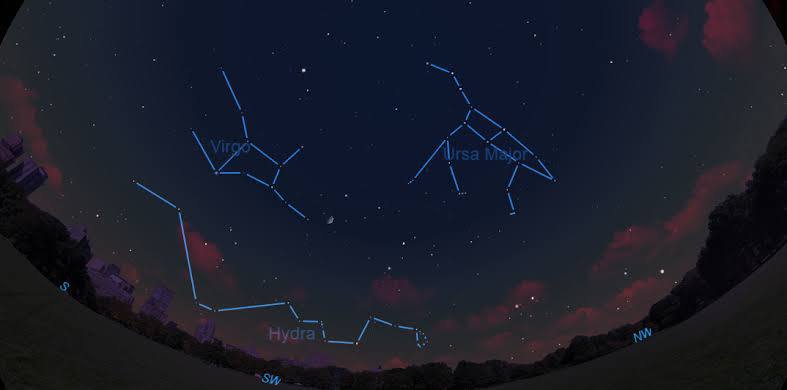
A constellation is a group of stars that make an imaginary shape in the night sky. They are usually named after mythological characters, people, animals and objects. In different parts of the world, people have made up different shapes out of the same groups of bright stars. It is like a game of connecting the dots. In the past creating imaginary images out of stars became useful for navigating at night and for keeping track of the seasons. Because all the stars are at different distances, the constellations would look totally different to inhabitants of another planet orbiting another star.
The International Astronomical Union, in 1922, decided it was important to standardize and ratify the modern constellations to facilitate new cataloging and end centuries of confusion and controversy. They established official boundaries for each constellation, carving up the sky into sections. There is no part of the Earth's sky which does not belong to a constellation.
There are officially 88 constellations, 48 of which are ancient Greek in origin, the majority of those comprised largely of rehashed ancient Babylonian, Egyptian, and Assyrian stories. The writings of Ptolemy usually provided the official record of these shapes and tales, along with names for the brightest stars, almost all of which are Arabic.
The remaining constellations are “modern,” having been written down between the 16th and 18th centuries by various astronomers, especially those exploring the skies of the Southern hemisphere for the first time. Having been recorded during an age of scientific revolution, these new constellations include a great many research instruments: Microscopium, Telescopium, Antlia the air-pump, Fornax the chemical furnace, Pixis the compass, Horologium the clock, etc.
The northern skies are more “dense” in stories, with roughly 55 of the 88 constellations visible without moving south of the equator.
A constellation is a group of stars that make an imaginary shape in the night sky. They are usually named after mythological characters, people, animals and objects. In different parts of the world, people have made up different shapes out of the same groups of bright stars. It is like a game of connecting the dots. In the past creating imaginary images out of stars became useful for navigating at night and for keeping track of the seasons. Because all the stars are at different distances, the constellations would look totally different to inhabitants of another planet orbiting another star.
The International Astronomical Union, in 1922, decided it was important to standardize and ratify the modern constellations to facilitate new cataloging and end centuries of confusion and controversy. They established official boundaries for each constellation, carving up the sky into sections. There is no part of the Earth's sky which does not belong to a constellation.
There are officially 88 constellations, 48 of which are ancient Greek in origin, the majority of those comprised largely of rehashed ancient Babylonian, Egyptian, and Assyrian stories. The writings of Ptolemy usually provided the official record of these shapes and tales, along with names for the brightest stars, almost all of which are Arabic.
The remaining constellations are “modern,” having been written down between the 16th and 18th centuries by various astronomers, especially those exploring the skies of the Southern hemisphere for the first time. Having been recorded during an age of scientific revolution, these new constellations include a great many research instruments: Microscopium, Telescopium, Antlia the air-pump, Fornax the chemical furnace, Pixis the compass, Horologium the clock, etc.
The northern skies are more “dense” in stories, with roughly 55 of the 88 constellations visible without moving south of the equator.
👍90❤14👏7🤩5🔥4
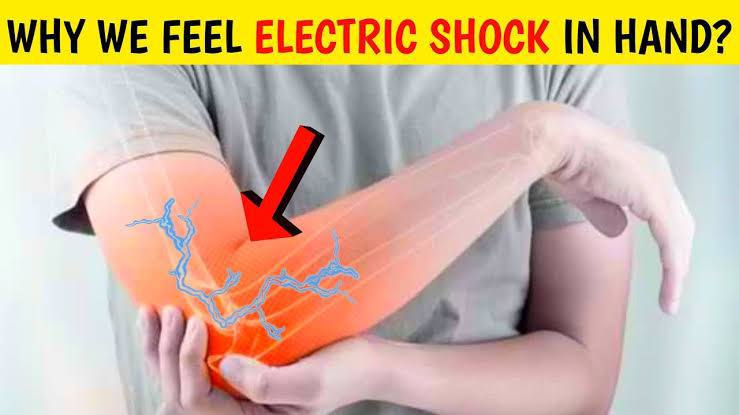
Why does banging your Elbow give you an Electric Shock?
The spot where it occurs is called the funny bone. The funny “bone” is actually a long vine of a nerve called the Ulnar Nerve.
Between the humerus and the forearm there exists a void, what is called the cubital tunnel, where the nerve is the most vulnerable as at the elbow the nerve is less protected by muscle,fat and skin and can be easily bumped.
When you hit your funny bone against something, the unprotected nerve is pressed against the bone. It is the squeezed or irritated ulnar nerve that spouts the waves of pain, emitting the “electric shock”. The waves terrorize the regions innervated by the nerve: the forearm, the pinkie and half of the ring finger.
A pinched nerve can start in several places throughout your body, but usually in the joints. When a pinched nerve is in your elbow, it can leave your arm and hand feeling sore, numb, or weak.
Pain and tingling sensations to shoot down your forearm. People often describe this sensation as an electric shock like pain typical of an irritated nerve. Usually, it quickly resolves, but it can also cause more persistent symptoms in some people.
The spot where it occurs is called the funny bone. The funny “bone” is actually a long vine of a nerve called the Ulnar Nerve.
Between the humerus and the forearm there exists a void, what is called the cubital tunnel, where the nerve is the most vulnerable as at the elbow the nerve is less protected by muscle,fat and skin and can be easily bumped.
When you hit your funny bone against something, the unprotected nerve is pressed against the bone. It is the squeezed or irritated ulnar nerve that spouts the waves of pain, emitting the “electric shock”. The waves terrorize the regions innervated by the nerve: the forearm, the pinkie and half of the ring finger.
A pinched nerve can start in several places throughout your body, but usually in the joints. When a pinched nerve is in your elbow, it can leave your arm and hand feeling sore, numb, or weak.
Pain and tingling sensations to shoot down your forearm. People often describe this sensation as an electric shock like pain typical of an irritated nerve. Usually, it quickly resolves, but it can also cause more persistent symptoms in some people.
👍119❤22🤩10😱8🔥7👏4
How does Airbag work in automobiles?
When a car hits something, it starts to decelerate (lose speed) very rapidly.
An accelerometer (electronic chip that measures acceleration or force) detects the change of speed.
If the deceleration is great enough, the accelerometer triggers the airbag circuit. Normal braking doesn't generate enough force to do this.
The airbag circuit passes an electric current through a heating element (a bit like one of the wires in a toaster).
The heating element ignites a chemical explosive. Older airbags used sodium azide as their explosive; newer ones use different chemicals.
As the explosive burns, it generates a massive amount of harmless gas (typically either nitrogen or argon) that floods into a nylon bag packed behind the steering wheel.
As the bag expands, it blows the plastic cover off the steering wheel and inflates in front of the driver. The bag is coated with a chalky substance such as talcum powder to help it unwrap smoothly.
The driver (moving forward because of the impact) pushes against the bag. This makes the bag deflate as the gas it contains escapes through small holes around its edges. By the time the car stops, the bag should have completely deflated.
When a car hits something, it starts to decelerate (lose speed) very rapidly.
An accelerometer (electronic chip that measures acceleration or force) detects the change of speed.
If the deceleration is great enough, the accelerometer triggers the airbag circuit. Normal braking doesn't generate enough force to do this.
The airbag circuit passes an electric current through a heating element (a bit like one of the wires in a toaster).
The heating element ignites a chemical explosive. Older airbags used sodium azide as their explosive; newer ones use different chemicals.
As the explosive burns, it generates a massive amount of harmless gas (typically either nitrogen or argon) that floods into a nylon bag packed behind the steering wheel.
As the bag expands, it blows the plastic cover off the steering wheel and inflates in front of the driver. The bag is coated with a chalky substance such as talcum powder to help it unwrap smoothly.
The driver (moving forward because of the impact) pushes against the bag. This makes the bag deflate as the gas it contains escapes through small holes around its edges. By the time the car stops, the bag should have completely deflated.
👍119❤12🔥8👏7🤩1
What causes Red Eyes in Photos?
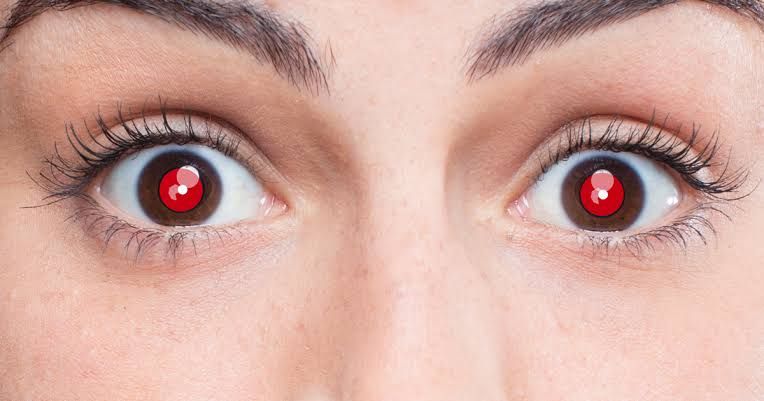
The Red-eye effect in photography is the common appearance of red pupils in color photographs of eyes. It occurs when using a photographic flash very close to the camera lens (as with most compact cameras), in ambient low light. The effect appears in the eyes of humans, and of animals that have tapetum lucidum.
The tapetum lucidum is a biologic reflector system that is a common feature in the eyes of vertebrates. It normally functions to provide the light-sensitive retinal cells with a second opportunity for photon-photoreceptor stimulation, thereby enhancing visual sensitivity at low light levels.
The Red-eye effect in photography is the common appearance of red pupils in color photographs of eyes. It occurs when using a photographic flash very close to the camera lens (as with most compact cameras), in ambient low light. The effect appears in the eyes of humans, and of animals that have tapetum lucidum.
The tapetum lucidum is a biologic reflector system that is a common feature in the eyes of vertebrates. It normally functions to provide the light-sensitive retinal cells with a second opportunity for photon-photoreceptor stimulation, thereby enhancing visual sensitivity at low light levels.
👍91😱14❤11🔥8👏4
Why is the Medical symbol a snake on a stick?
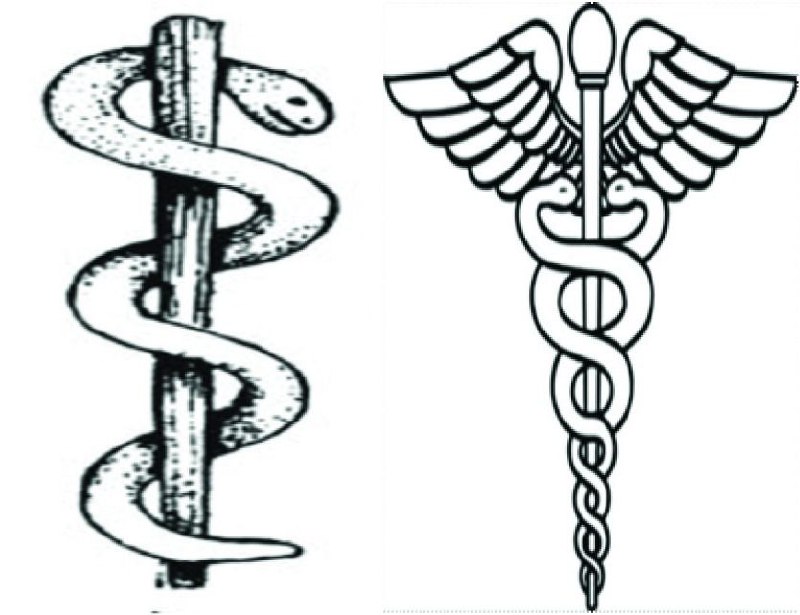
The snake and staff are known as the "Rod of Asclepius". Asclepius is the Greek god of Medicine and Healing, hence the symbolism. Snakes then symbolized rejuvenation. Many mistakenly think that the Caduceus (a short staff with two snakes and a winged top) is the symbol of medicine, or call the Asclepius staff a caduceus. The Caduceus is the symbol or Hermes (Roman = Mercury) the messenger and symbolizes travel, commerce, etc. While this may not be all of it, some of the confusion traces back to around 1920 when the US Army mistakenly used the Caduceus for their medical personnel.
The snake and staff are known as the "Rod of Asclepius". Asclepius is the Greek god of Medicine and Healing, hence the symbolism. Snakes then symbolized rejuvenation. Many mistakenly think that the Caduceus (a short staff with two snakes and a winged top) is the symbol of medicine, or call the Asclepius staff a caduceus. The Caduceus is the symbol or Hermes (Roman = Mercury) the messenger and symbolizes travel, commerce, etc. While this may not be all of it, some of the confusion traces back to around 1920 when the US Army mistakenly used the Caduceus for their medical personnel.
👍155❤26😱22🔥14👏7
What is Tempered Glass?
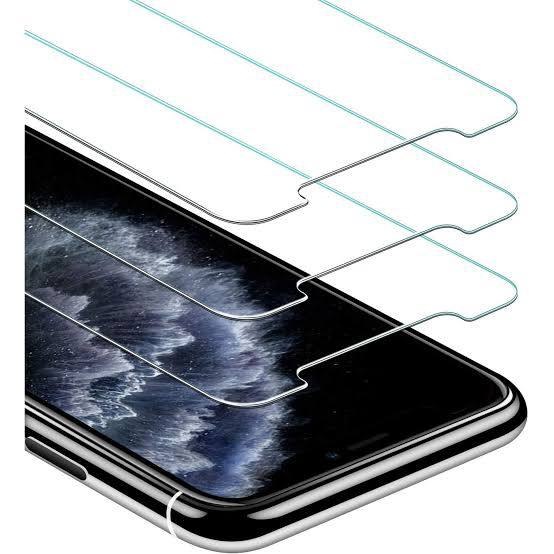
Tempered glass is not harder or softer, easier to scratch, break, or more porous than annealed, but it is tougher. Tempered glass is designed to use in areas where there is a high risk of contact, temperature changes, high temperatures, and breakage.You will often find tempered glass in architectural situations like windows, glass railing, wall cladding, shelving, doors, and showers.
Unlike annealed glass or what we know as “ordinary” glass, tempered glass does not break into large jagged shards that can cause serious injuries. Instead, it breaks into smaller granular pieces that are less likely to cause harm. This is why tempered glass is used in passenger vehicle windows, refrigerator trays, shower enclosures, microwave ovens, and other things we use on a regular basis.Tempered glass is also much stronger than annealed glass. It undergoes a complex manufacturing process that toughens it both physically and thermally.
To prepare glass for the tempering process, it must first be cut to the desired size. The glass is then examined for imperfections that could cause breakage at any step during tempering. An abrasive such as sand paper takes sharp edges off the glass, which is subsequently washed. Next, the glass begins a heat treatment process in which it travels through a tempering oven, either in a batch or continuous feed. The oven heats the glass to a temperature of more than 600 degrees Celsius. (The industry standard is 620 degrees Celsius.) The glass then undergoes a high-pressure cooling procedure called "quenching." During this process, which lasts just seconds, high-pressure air blasts the surface of the glass from an array of nozzles in varying positions. Quenching cools the outer surfaces of the glass much more quickly than the center. As the center of the glass cools, it tries to pull back from the outer surfaces. As a result, the center remains in tension, and the outer surfaces go into compression, which gives tempered glass its strength.
Another approach to making tempered glass is chemical tempering, in which various chemicals exchange ions on the surface of the glass in order to create compression. Glass in tension breaks about five times more easily than it does in compression. Annealed glass will break at 6,000 pounds per square inch (psi). Tempered glass, according to federal specifications, must have a surface compression of 10,000 psi or more; it generally breaks at approximately 24,000 psi.
Tempered glass is not harder or softer, easier to scratch, break, or more porous than annealed, but it is tougher. Tempered glass is designed to use in areas where there is a high risk of contact, temperature changes, high temperatures, and breakage.You will often find tempered glass in architectural situations like windows, glass railing, wall cladding, shelving, doors, and showers.
Unlike annealed glass or what we know as “ordinary” glass, tempered glass does not break into large jagged shards that can cause serious injuries. Instead, it breaks into smaller granular pieces that are less likely to cause harm. This is why tempered glass is used in passenger vehicle windows, refrigerator trays, shower enclosures, microwave ovens, and other things we use on a regular basis.Tempered glass is also much stronger than annealed glass. It undergoes a complex manufacturing process that toughens it both physically and thermally.
To prepare glass for the tempering process, it must first be cut to the desired size. The glass is then examined for imperfections that could cause breakage at any step during tempering. An abrasive such as sand paper takes sharp edges off the glass, which is subsequently washed. Next, the glass begins a heat treatment process in which it travels through a tempering oven, either in a batch or continuous feed. The oven heats the glass to a temperature of more than 600 degrees Celsius. (The industry standard is 620 degrees Celsius.) The glass then undergoes a high-pressure cooling procedure called "quenching." During this process, which lasts just seconds, high-pressure air blasts the surface of the glass from an array of nozzles in varying positions. Quenching cools the outer surfaces of the glass much more quickly than the center. As the center of the glass cools, it tries to pull back from the outer surfaces. As a result, the center remains in tension, and the outer surfaces go into compression, which gives tempered glass its strength.
Another approach to making tempered glass is chemical tempering, in which various chemicals exchange ions on the surface of the glass in order to create compression. Glass in tension breaks about five times more easily than it does in compression. Annealed glass will break at 6,000 pounds per square inch (psi). Tempered glass, according to federal specifications, must have a surface compression of 10,000 psi or more; it generally breaks at approximately 24,000 psi.
👍119❤11🔥10👏10🤩3😱1
How exactly does the Sun provide us with Vitamin D?
It is a myth that sunlight provides us vitamin D or vitamin D is present in sunlight.
The fact is vitamin D is synthesized in plants, animals and humans in presence of sunlight.
There are two types of vitamin D - vitamin D2 (Ergocalciferol) present in plants including ergot and mushrooms and vitamin D3 (Cholecalciferol) in animals.
Vitamin D2 (Ergocalciferol) and vitamin D3 (Cholecalciferol) are synthesised in presence of ultraviolet light (UV) of sunlight as given below.
In plants, the ergo-calciferol (vitamin D2) is derived from UV irradiation of ergosterol (a kind of sterol present in plants).
In animals and humans, when skin is exposed to sunlight, chole-calciferol (vitamin D3) is produced in skin by UV irradiation of 7-dehydro-cholesterol (a kind of cholesterol present in animals and humans).
Sunlight triggers the first of three chemical reactions that converts an inactive compound in the skin into active vitamin D. Ultraviolet B rays from the sun convert a natural vitamin D precursor present in your skin, 7-dehydrocholesterol, into vitamin D3. This travels to the liver where the addition of oxygen and hydrogen to vitamin D3 changes it into 25-hydroxyvitamin D. Doctors test for this intermediate and still inactive form of vitamin D in blood to determine your vitamin D status. Final activation of 25-hydroxyvitamin D takes place in the kidneys, where more oxygen and hydrogen molecules attach to 25-hydroxyvitamin D and convert it into its active form known as 1,25 dihydroxyvitamin D, or calcitriol.
It is a myth that sunlight provides us vitamin D or vitamin D is present in sunlight.
The fact is vitamin D is synthesized in plants, animals and humans in presence of sunlight.
There are two types of vitamin D - vitamin D2 (Ergocalciferol) present in plants including ergot and mushrooms and vitamin D3 (Cholecalciferol) in animals.
Vitamin D2 (Ergocalciferol) and vitamin D3 (Cholecalciferol) are synthesised in presence of ultraviolet light (UV) of sunlight as given below.
In plants, the ergo-calciferol (vitamin D2) is derived from UV irradiation of ergosterol (a kind of sterol present in plants).
In animals and humans, when skin is exposed to sunlight, chole-calciferol (vitamin D3) is produced in skin by UV irradiation of 7-dehydro-cholesterol (a kind of cholesterol present in animals and humans).
Sunlight triggers the first of three chemical reactions that converts an inactive compound in the skin into active vitamin D. Ultraviolet B rays from the sun convert a natural vitamin D precursor present in your skin, 7-dehydrocholesterol, into vitamin D3. This travels to the liver where the addition of oxygen and hydrogen to vitamin D3 changes it into 25-hydroxyvitamin D. Doctors test for this intermediate and still inactive form of vitamin D in blood to determine your vitamin D status. Final activation of 25-hydroxyvitamin D takes place in the kidneys, where more oxygen and hydrogen molecules attach to 25-hydroxyvitamin D and convert it into its active form known as 1,25 dihydroxyvitamin D, or calcitriol.

👍135❤23🔥17🤩15👏9😱5
Please open Telegram to view this post
VIEW IN TELEGRAM
❤203👍43🔥38👏24🤩20😱1
Why do Pilots wear headphones?
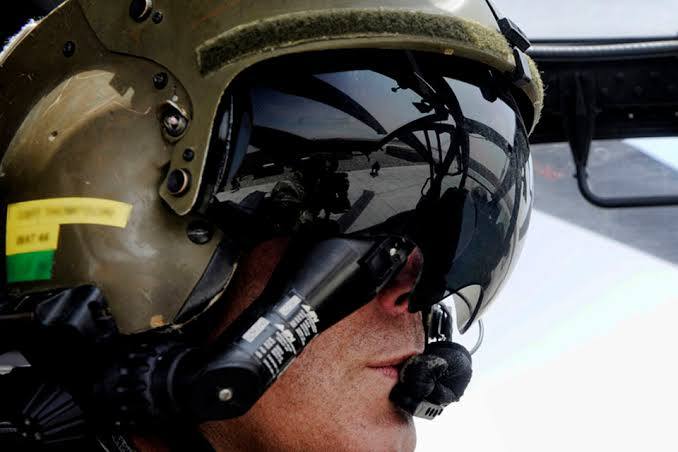
Aviation headsets fall into two broad categories: passive noise reduction and active noise reduction (ANR). The passive noise reduction headsets rely on a good seal around the ear and a strong clamping force.
ANR headsets must be powered to work properly but all ANR headsets still function without power as passive noise reducing headsets. Power for an ANR headset can come from a battery box or from aircraft power but not interchangeably. Aircraft power requires panel installation of a plug specific to the headset brand (a single connector provides power, headphone and microphone connections). The cable from the headset has 2 plugs (for airplanes) or one plug (for helicopters). These two plug styles are equivalent electronically, with the helicopter cable having an extra conductor in order to include the microphone and headphones in the same plug. The two-plug variant has one plug for the headphones and one of the microphone. These differ from gaming headsets in that the headphone plug is 0.25" (the kind a nice stereo receiver uses) and the microphone plug is 0.206". This difference in sizes is to avoid mixing up which plug goes in which jack.
The headset is connected to the airplanes audio panel. Audio panels vary in complexity but their basic job is to provide an intercom for communication between occupants of the airplane and access to the com radio for communication with ATC. The audio panel is also able to monitor (listen) the navigation radios certain types of beacons. In transport aircraft the audio panel is also tied into the passenger address system and the flight attendant's phones in the cabin.
The headsets can be operated in a hot mic setup or the mic can be explicitly turned on and off. The hot mic is the usual method and the audio panel provides a squelch control so you aren't broadcasting the cockpit noise when not talking. The ATC transmissions are via a push-to-talk (PTT) switch.
Aviation headsets fall into two broad categories: passive noise reduction and active noise reduction (ANR). The passive noise reduction headsets rely on a good seal around the ear and a strong clamping force.
ANR headsets must be powered to work properly but all ANR headsets still function without power as passive noise reducing headsets. Power for an ANR headset can come from a battery box or from aircraft power but not interchangeably. Aircraft power requires panel installation of a plug specific to the headset brand (a single connector provides power, headphone and microphone connections). The cable from the headset has 2 plugs (for airplanes) or one plug (for helicopters). These two plug styles are equivalent electronically, with the helicopter cable having an extra conductor in order to include the microphone and headphones in the same plug. The two-plug variant has one plug for the headphones and one of the microphone. These differ from gaming headsets in that the headphone plug is 0.25" (the kind a nice stereo receiver uses) and the microphone plug is 0.206". This difference in sizes is to avoid mixing up which plug goes in which jack.
The headset is connected to the airplanes audio panel. Audio panels vary in complexity but their basic job is to provide an intercom for communication between occupants of the airplane and access to the com radio for communication with ATC. The audio panel is also able to monitor (listen) the navigation radios certain types of beacons. In transport aircraft the audio panel is also tied into the passenger address system and the flight attendant's phones in the cabin.
The headsets can be operated in a hot mic setup or the mic can be explicitly turned on and off. The hot mic is the usual method and the audio panel provides a squelch control so you aren't broadcasting the cockpit noise when not talking. The ATC transmissions are via a push-to-talk (PTT) switch.
👍101❤10🔥7🤩7👏5
Why is Salt used to melt ice on the Roads in Winter?
Ice forms when the temperature of water reaches 32 degrees Fahrenheit (0 degrees Celsius), and that includes ice on roadways. Road salt works by lowering the freezing point of water via a process called freezing point depression. The freezing point of the water is lowered once the salt is added, so it the salt makes it more difficult for water to freeze. A 10-percent salt solution freezes at 20 degrees Fahrenheit (-6 Celsius), and a 20-percent solution freezes at 2 degrees Fahrenheit (-16 Celsius).
The key is, there has to be at least a tiny bit of water on the road for freezing point depression to work. That's why you often see trucks pre-treat roads with a brine solution (a mixture of salt and water) when ice and snow is forecast. If the roads are dry and the DOT simply puts down road salt, it likely won't make much of a difference. But pre-treating with a brine solution can help ice from ever forming, and will help reduce the amount of road salt trucks will need to spread to de-ice later.
Ice forms when the temperature of water reaches 32 degrees Fahrenheit (0 degrees Celsius), and that includes ice on roadways. Road salt works by lowering the freezing point of water via a process called freezing point depression. The freezing point of the water is lowered once the salt is added, so it the salt makes it more difficult for water to freeze. A 10-percent salt solution freezes at 20 degrees Fahrenheit (-6 Celsius), and a 20-percent solution freezes at 2 degrees Fahrenheit (-16 Celsius).
The key is, there has to be at least a tiny bit of water on the road for freezing point depression to work. That's why you often see trucks pre-treat roads with a brine solution (a mixture of salt and water) when ice and snow is forecast. If the roads are dry and the DOT simply puts down road salt, it likely won't make much of a difference. But pre-treating with a brine solution can help ice from ever forming, and will help reduce the amount of road salt trucks will need to spread to de-ice later.

👍124❤13🔥10😱9🤩6👏1
Why sometimes Water freezes instantly with just a shake?
The basic idea is this: when water freezes it forms ice, which is a nice regular crystalline structure. However, ice-crystals need a nucleation site, which is a point where the crystal can start to form, before they can actually start to form. In normal situations, water usually has some impurities which can serve as such nucleation sites, around which the crystal starts to grow and ice starts to form.
However, if you use very pure water, there are no such "natural" nucleation points and so there is a chance that the water molecules want to form ice, but can't quite get around to it. As a result, the liquids are trapped in a "metastable" state well below their freezing point, but such a state has a precarious stability that can easily be disturbed. Shaking the bottle is one way to disturb this stability, as it gives a couple of the water molecules the chance to align in just to right way to start the crystallisation process, and once it's done, it is energetically favourable for the system to form ice, so all the other water molecules hop on as well. As a result, you would usually see the crystal "growing" in one direction until all the water becomes ice.
The basic idea is this: when water freezes it forms ice, which is a nice regular crystalline structure. However, ice-crystals need a nucleation site, which is a point where the crystal can start to form, before they can actually start to form. In normal situations, water usually has some impurities which can serve as such nucleation sites, around which the crystal starts to grow and ice starts to form.
However, if you use very pure water, there are no such "natural" nucleation points and so there is a chance that the water molecules want to form ice, but can't quite get around to it. As a result, the liquids are trapped in a "metastable" state well below their freezing point, but such a state has a precarious stability that can easily be disturbed. Shaking the bottle is one way to disturb this stability, as it gives a couple of the water molecules the chance to align in just to right way to start the crystallisation process, and once it's done, it is energetically favourable for the system to form ice, so all the other water molecules hop on as well. As a result, you would usually see the crystal "growing" in one direction until all the water becomes ice.
👍86🔥16❤13🤩10👏5
How Do Antiperspirants Work?
Antiperspirants are actually a subgroup of deodorants. While deodorants do not impact one’s perspiratory process, antiperspirants actively prevent sweat glands from releasing sweat, in addition to counteracting body odor with their own fragrance. Commercial antiperspirants mostly consist of compounds like aluminium chlorohydrate and aluminum-zirconium tetrachlorohydrex gly as their active ingredients.
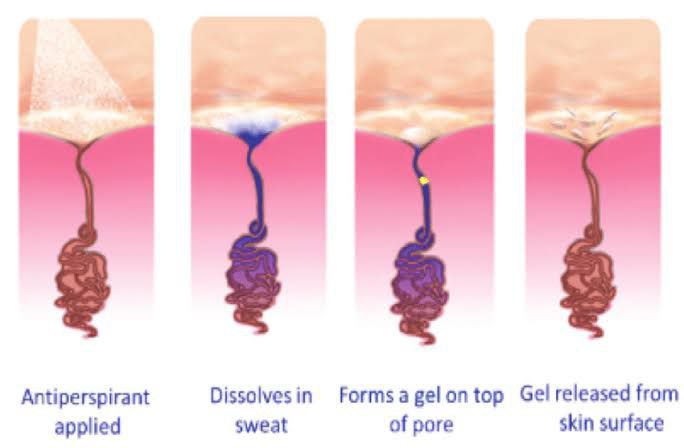
These aluminum-based compounds react with the sweat directly; more specifically, they affect the electrolytes present in the sweat to form a gel plug in the duct of the sweat gland. This stops the glands from secreting sweat over the ‘target’ area. These gel plugs are removed naturally over a period of time through skin peeling.
In a nutshell, antiperspirants basically prevent sweat glands from releasing any sweat, which automatically takes care of the smelly underarm problem. Additionally, they contain some sweet-smelling constituents that give a fragrant boost to the body.
Antiperspirants are actually a subgroup of deodorants. While deodorants do not impact one’s perspiratory process, antiperspirants actively prevent sweat glands from releasing sweat, in addition to counteracting body odor with their own fragrance. Commercial antiperspirants mostly consist of compounds like aluminium chlorohydrate and aluminum-zirconium tetrachlorohydrex gly as their active ingredients.
These aluminum-based compounds react with the sweat directly; more specifically, they affect the electrolytes present in the sweat to form a gel plug in the duct of the sweat gland. This stops the glands from secreting sweat over the ‘target’ area. These gel plugs are removed naturally over a period of time through skin peeling.
In a nutshell, antiperspirants basically prevent sweat glands from releasing any sweat, which automatically takes care of the smelly underarm problem. Additionally, they contain some sweet-smelling constituents that give a fragrant boost to the body.
👍76❤9🔥5👏5🤩5
Why there is no wind on Equator?
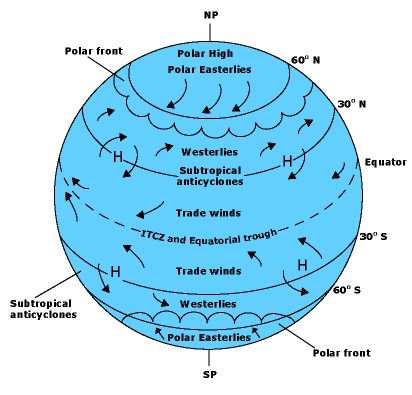
There can be periods of no wind. It’s called the doldrums or Inter-Tropical Convergence Zone.
“The doldrums is a colloquial expression derived from historical maritime usage, which refers to those parts of the Atlantic Ocean and the Pacific Ocean affected by a low-pressure area around the equator where the prevailing winds are calm. The doldrums are also noted for calm periods when the winds disappear altogether, trapping sailing ships for periods of days or weeks.”
What happens is that, at the equator, the hot air rises straight up. “Because the air circulates in an upward direction, there is often little surface wind in the ITCZ. That is why sailors well know that the area can becalm sailing ships for weeks. And that’s why they call it the doldrums.”
There can be periods of no wind. It’s called the doldrums or Inter-Tropical Convergence Zone.
“The doldrums is a colloquial expression derived from historical maritime usage, which refers to those parts of the Atlantic Ocean and the Pacific Ocean affected by a low-pressure area around the equator where the prevailing winds are calm. The doldrums are also noted for calm periods when the winds disappear altogether, trapping sailing ships for periods of days or weeks.”
What happens is that, at the equator, the hot air rises straight up. “Because the air circulates in an upward direction, there is often little surface wind in the ITCZ. That is why sailors well know that the area can becalm sailing ships for weeks. And that’s why they call it the doldrums.”
👍72👏10🔥7❤6😱6
What happens if Aircraft Engines fail in Mid-Air?
Engine failure results in the loss of thrust, which is required for aircraft to maintain altitude or climb further. However, engine failure does not necessarily culminate into the complete loss of aircraft control. Aggressive use of flight controls, namely rudders and ailerons, can steer the flight to safety.
Aircraft compensate for a loss of thrust by losing altitude. They have a thrust-to-drag ratio of 10:1, which means they can fly 10 miles forward for every 1 mile lost in altitude. Cruising altitudes of 35,000 ft (~6 miles) give aircraft a distance of 60 miles to find a suitable place to conduct an emergency landing. Engine failure is easier to deal with at higher altitudes than at lower altitudes, such as when taking off.
Pilots faced with engine failure must conduct forced landings on the most favorable surface available to them. Here’s an interesting catch, this surface need not only be land. Airplanes can be ditched, i.e., landed on water or ice, without compromising passenger safety.
Similar to crumple zones in cars, aircraft have expendable parts in their structure to dissipate the force of landing in inclement terrain. These include the wings, landing gear, and even the bottom part of the fuselage.
Engine failure results in the loss of thrust, which is required for aircraft to maintain altitude or climb further. However, engine failure does not necessarily culminate into the complete loss of aircraft control. Aggressive use of flight controls, namely rudders and ailerons, can steer the flight to safety.
Aircraft compensate for a loss of thrust by losing altitude. They have a thrust-to-drag ratio of 10:1, which means they can fly 10 miles forward for every 1 mile lost in altitude. Cruising altitudes of 35,000 ft (~6 miles) give aircraft a distance of 60 miles to find a suitable place to conduct an emergency landing. Engine failure is easier to deal with at higher altitudes than at lower altitudes, such as when taking off.
Pilots faced with engine failure must conduct forced landings on the most favorable surface available to them. Here’s an interesting catch, this surface need not only be land. Airplanes can be ditched, i.e., landed on water or ice, without compromising passenger safety.
Similar to crumple zones in cars, aircraft have expendable parts in their structure to dissipate the force of landing in inclement terrain. These include the wings, landing gear, and even the bottom part of the fuselage.

👍112❤15🔥10👏8😱8🤩1
Why do you get Boogers in your Eyes?
The scientific name for eye boogers is rheum.
Rheum is made up of mucus, skin cells, oils and dust. The rheum that comes from the eyes and forms eye boogers is called gound, which you may know as eye sand, eye gunk, sleep dust, sleep sand, sleep in your eyes. When you're awake, gound doesn't cause any problems.
Your eyes produce mucus throughout the day, but a continuous thin film of tears bathes your eyes when you blink, flushing out the rheum before it hardens in your eyes.
When you're asleep and not blinking, eye discharge collects and crusts in the corners of your eyes and sometimes along the lash line, hence the term "sleep in your eyes."
Eye discharge is a common symptom of conjunctivitis.
In addition to conjunctivitis, there are many eye infections that cause abnormal eye discharge. These include: eye herpes (a recurrent viral eye infection), fungal keratitis (a rare but serious inflammation of the cornea) and Acanthamoeba keratitis (a potentially blinding parasitic infection typically caused by poor contact lens hygiene or swimming while wearing contacts).
The scientific name for eye boogers is rheum.
Rheum is made up of mucus, skin cells, oils and dust. The rheum that comes from the eyes and forms eye boogers is called gound, which you may know as eye sand, eye gunk, sleep dust, sleep sand, sleep in your eyes. When you're awake, gound doesn't cause any problems.
Your eyes produce mucus throughout the day, but a continuous thin film of tears bathes your eyes when you blink, flushing out the rheum before it hardens in your eyes.
When you're asleep and not blinking, eye discharge collects and crusts in the corners of your eyes and sometimes along the lash line, hence the term "sleep in your eyes."
Eye discharge is a common symptom of conjunctivitis.
In addition to conjunctivitis, there are many eye infections that cause abnormal eye discharge. These include: eye herpes (a recurrent viral eye infection), fungal keratitis (a rare but serious inflammation of the cornea) and Acanthamoeba keratitis (a potentially blinding parasitic infection typically caused by poor contact lens hygiene or swimming while wearing contacts).

👍117❤16👏16😱7🔥4🤩1
What is an Earthquake and what causes them to happen?
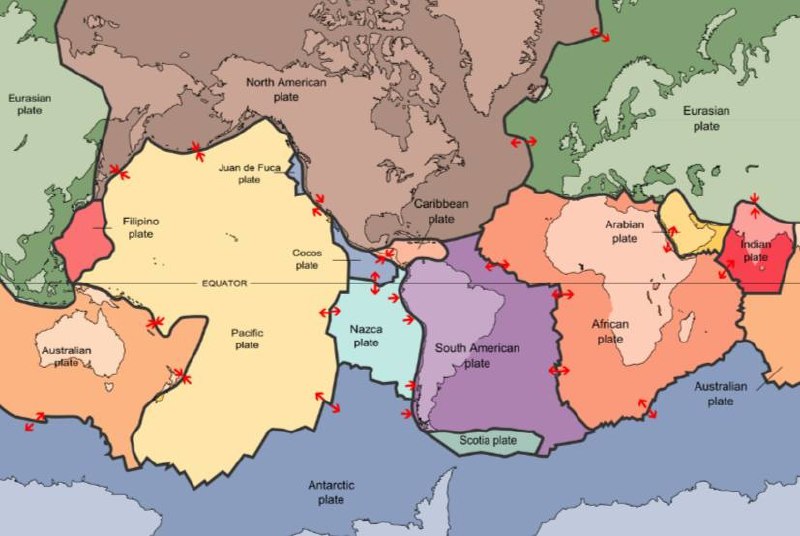
Earthquakes are caused by the movement of tectonic plates. The Earth's crust is made up of several large plates that float on the molten rock of the mantle. When two plates grind against each other, tremendous pressure can build up. Eventually, that pressure is released in the form of an earthquake. The point where the plates meet is called a fault line, and the movement of the plates along the fault line is what causes the ground to shake during an earthquake.
In addition to plate tectonics, earthquakes can also be caused by human activity such as the injection of fluids into the ground, the extraction of oil and gas, or the building of large dams. These activities can change the stress and pressure on the Earth's crust, leading to the movement of faults and the generation of earthquakes.
Another type of earthquake is volcano-tectonic earthquake. Those are caused by the movement of magma, fluids and gases in the subsurface of a volcano. They are typically associated with volcanic activity and can be a precursor to an eruption.
Earthquakes can also be caused by underground nuclear explosions, or even meteorite impacts. However, these types of earthquakes are extremely rare.
In summary, the main cause of earthquakes is the movement of tectonic plates, but other causes include human activity, volcanic activity, nuclear explosions, and meteorite impacts.
Earthquakes are caused by the movement of tectonic plates. The Earth's crust is made up of several large plates that float on the molten rock of the mantle. When two plates grind against each other, tremendous pressure can build up. Eventually, that pressure is released in the form of an earthquake. The point where the plates meet is called a fault line, and the movement of the plates along the fault line is what causes the ground to shake during an earthquake.
In addition to plate tectonics, earthquakes can also be caused by human activity such as the injection of fluids into the ground, the extraction of oil and gas, or the building of large dams. These activities can change the stress and pressure on the Earth's crust, leading to the movement of faults and the generation of earthquakes.
Another type of earthquake is volcano-tectonic earthquake. Those are caused by the movement of magma, fluids and gases in the subsurface of a volcano. They are typically associated with volcanic activity and can be a precursor to an eruption.
Earthquakes can also be caused by underground nuclear explosions, or even meteorite impacts. However, these types of earthquakes are extremely rare.
In summary, the main cause of earthquakes is the movement of tectonic plates, but other causes include human activity, volcanic activity, nuclear explosions, and meteorite impacts.
👍105❤23👏10😱7🤩2🔥1
How are Seedless fruits produced?
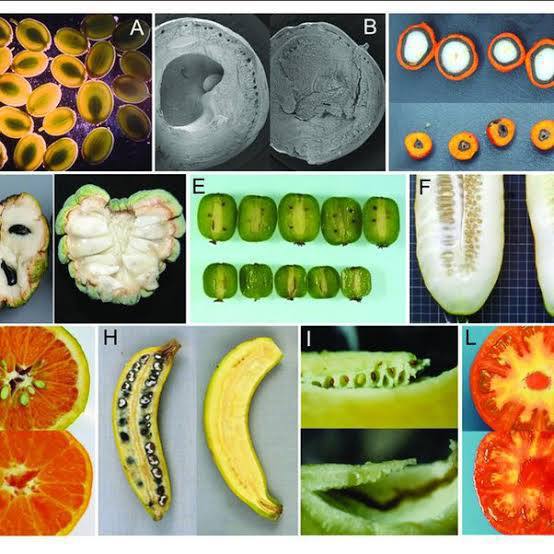
Normally, a fruit forms after pollination of a flowering plant when the female ovary is fertilized by male pollen. Fertilization causes seed development. The fruit is actually the ovary that swells around the seed. Natural genetic mutations may cause fruit to develop in some plants without fertilization and therefore without producing seeds. This characteristic, development of fruit without fertilization, is called parthenocarpy.
Today’s seedless fruits and vegetables started with this natural mutation, followed by human recognition that seedlessness was an attractive trait. Then humans found ways to propogate that plant to preserve that characteristic.
Seedlessness has several attractive features. Seedless oranges, grapes and watermelons are less messy and more enjoyable to eat. Eliminating cucumber seeds eases digestion issues for many people. And seedlessness lengthens shelf life since seeds tend to encourage the fruits’ deterioration to hasten their dispersal into the world.
There are several mechanisms depending on the type of fruit. Pineapple, for example, always forms fruit but only forms seeds if pollinated. More interesting are plants like watermelon and banana that are sterile because they contain the wrong number of chromosomes.
"Normal" organisms contain 2 copies of each chromosome (diploid) but many plants naturally double up their chromosome count to become tetraploid. This affects the gene expression somewhat but generally doesn't affect reproductive ability. However if you have 3 copies of each chromoshome (triploid) the plant can be sterile. In Cavendish bananas (the main variety sold today) this happened by natural mutation over 500 years ago, and every banana tree of this type produced since then is essentially a clone created by planting a cutting.
In the modern era, we have artificially bred triploid versions of some fruits such as watermelons and oranges to make them sterile and seedless. This was done by chemically inducing tetraploidy in the plant to produce a viable 4x-chromosome version (which is fairly easy), and then crossing that with a diploid 2x-chromosome version. The resulting offspring have 3 copies of each chromosome and are sterile. This can be repeated as often as needed to produce a new generation of the plant, but obviously spreading the plant via cuttings or grafting is simpler and easier.
Normally, a fruit forms after pollination of a flowering plant when the female ovary is fertilized by male pollen. Fertilization causes seed development. The fruit is actually the ovary that swells around the seed. Natural genetic mutations may cause fruit to develop in some plants without fertilization and therefore without producing seeds. This characteristic, development of fruit without fertilization, is called parthenocarpy.
Today’s seedless fruits and vegetables started with this natural mutation, followed by human recognition that seedlessness was an attractive trait. Then humans found ways to propogate that plant to preserve that characteristic.
Seedlessness has several attractive features. Seedless oranges, grapes and watermelons are less messy and more enjoyable to eat. Eliminating cucumber seeds eases digestion issues for many people. And seedlessness lengthens shelf life since seeds tend to encourage the fruits’ deterioration to hasten their dispersal into the world.
There are several mechanisms depending on the type of fruit. Pineapple, for example, always forms fruit but only forms seeds if pollinated. More interesting are plants like watermelon and banana that are sterile because they contain the wrong number of chromosomes.
"Normal" organisms contain 2 copies of each chromosome (diploid) but many plants naturally double up their chromosome count to become tetraploid. This affects the gene expression somewhat but generally doesn't affect reproductive ability. However if you have 3 copies of each chromoshome (triploid) the plant can be sterile. In Cavendish bananas (the main variety sold today) this happened by natural mutation over 500 years ago, and every banana tree of this type produced since then is essentially a clone created by planting a cutting.
In the modern era, we have artificially bred triploid versions of some fruits such as watermelons and oranges to make them sterile and seedless. This was done by chemically inducing tetraploidy in the plant to produce a viable 4x-chromosome version (which is fairly easy), and then crossing that with a diploid 2x-chromosome version. The resulting offspring have 3 copies of each chromosome and are sterile. This can be repeated as often as needed to produce a new generation of the plant, but obviously spreading the plant via cuttings or grafting is simpler and easier.
👍72❤14😱12🔥10🤩4