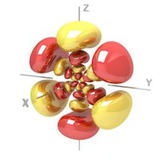
Hosted by the Institute for Advanced Computational Science at Stony Brook University, this two-week hybrid workshop provides hands-on training in computational chemistry methods that can directly support and enhance experimental research. Participants will gain practical experience with molecular modeling, spectroscopy, machine learning for molecular property prediction, and high-performance computing workflows. No prior experience in programming or computational chemistry is required.
July 27 - August 7, 2026
Hybrid (In-person + Virtual)
Open to undergraduate students, graduate students, postdoctoral researchers, and experimental scientists interested in expanding their computational toolkit.
Details and registration information are available in the announcement. Information contact: arshad.mehmood@stonybrook.edu
July 27 - August 7, 2026
Hybrid (In-person + Virtual)
Open to undergraduate students, graduate students, postdoctoral researchers, and experimental scientists interested in expanding their computational toolkit.
Details and registration information are available in the announcement. Information contact: arshad.mehmood@stonybrook.edu
❤3
PhD opportunity (University of Southampton): Simulations of sodium-ion battery materials
We invite applications for a fully funded (open only to home students (UK nationals and settled status) PhD project at the University of Southampton on simulations for optimising sodium-ion battery performance via atomistic, AI, and continuum modelling.
This project, funded by the prestigious Faraday Institution (FI) https://www.faraday.ac.uk/, will be associated with the FI battery multiscale modelling (MSM) project and will develop and apply advanced atomistic simulations to investigate sodium-ion battery materials, focusing on hard carbon (HC) anodes. This project will be of particular interest to students in computational chemistry, molecular modelling, electronic structure theory, and materials.
Full details and application instructions:
Simulations for the new generation of batteries: optimising sodium-ion battery performance via atomistic, AI, and continuum modelling | University of Southampton
https://lnkd.in/e5Szme9Q
The project will be supervised by Professor Chris‑Kriton Skylaris, and an industrial co-supervisor, and will also involve participation to the Faraday Institution PhD Training Programme.
https://www.linkedin.com/posts/chris-kriton-skylaris-4b4097322_simulations-for-the-new-generation-of-batteries-share-7472678091346300928-uof8/?utm_source=share&utm_medium=member_desktop&rcm=ACoAADByb54BZAu0zfSJLooSdNdx0bXFCOsvoA0
We invite applications for a fully funded (open only to home students (UK nationals and settled status) PhD project at the University of Southampton on simulations for optimising sodium-ion battery performance via atomistic, AI, and continuum modelling.
This project, funded by the prestigious Faraday Institution (FI) https://www.faraday.ac.uk/, will be associated with the FI battery multiscale modelling (MSM) project and will develop and apply advanced atomistic simulations to investigate sodium-ion battery materials, focusing on hard carbon (HC) anodes. This project will be of particular interest to students in computational chemistry, molecular modelling, electronic structure theory, and materials.
Full details and application instructions:
Simulations for the new generation of batteries: optimising sodium-ion battery performance via atomistic, AI, and continuum modelling | University of Southampton
https://lnkd.in/e5Szme9Q
The project will be supervised by Professor Chris‑Kriton Skylaris, and an industrial co-supervisor, and will also involve participation to the Faraday Institution PhD Training Programme.
https://www.linkedin.com/posts/chris-kriton-skylaris-4b4097322_simulations-for-the-new-generation-of-batteries-share-7472678091346300928-uof8/?utm_source=share&utm_medium=member_desktop&rcm=ACoAADByb54BZAu0zfSJLooSdNdx0bXFCOsvoA0
The Faraday Institution
The Faraday Institution - Powering Britain’s Battery Revolution
❤3
🚀 OpenQP: open-source quantum chemistry with MRSF-TDDFT
A useful tool to keep on the radar: Open Quantum Platform (OpenQP), an open-source quantum chemistry package focused on excited states, spin-flip methods, photochemistry, and nonadiabatic dynamics.
🔬 Why it matters
OpenQP includes HF/DFT, TDHF/TDDFT, SF-TDDFT, MRSF-TDDFT, analytic gradients, vibrational analysis, NACs, SOCs, MECI/MECP searches, OpenMP/MPI parallelization, and a Python interface.
🧪 Particularly relevant for
• Excited-state calculations
• Spin-flip TDDFT and MRSF-TDDFT
• Conical intersections
• Nonadiabatic dynamics
• Photochemistry and photophysics
• Method development in an open-source ecosystem
🔗 GitHub:
https://github.com/Open-Quantum-Platform/openqp
📄 JCTC paper:
https://doi.org/10.1021/acs.jctc.4c01117
🌐 Website:
https://www.openqp.org
#QuantumChemistry #ComputationalChemistry #OpenQP #MRSFTDDFT #TDDFT #SpinFlip #ExcitedStates #Photochemistry #NonadiabaticDynamics #ConicalIntersections #ElectronicStructure #OpenSource #ScientificComputing #HPC
A useful tool to keep on the radar: Open Quantum Platform (OpenQP), an open-source quantum chemistry package focused on excited states, spin-flip methods, photochemistry, and nonadiabatic dynamics.
🔬 Why it matters
OpenQP includes HF/DFT, TDHF/TDDFT, SF-TDDFT, MRSF-TDDFT, analytic gradients, vibrational analysis, NACs, SOCs, MECI/MECP searches, OpenMP/MPI parallelization, and a Python interface.
🧪 Particularly relevant for
• Excited-state calculations
• Spin-flip TDDFT and MRSF-TDDFT
• Conical intersections
• Nonadiabatic dynamics
• Photochemistry and photophysics
• Method development in an open-source ecosystem
🔗 GitHub:
https://github.com/Open-Quantum-Platform/openqp
📄 JCTC paper:
https://doi.org/10.1021/acs.jctc.4c01117
🌐 Website:
https://www.openqp.org
#QuantumChemistry #ComputationalChemistry #OpenQP #MRSFTDDFT #TDDFT #SpinFlip #ExcitedStates #Photochemistry #NonadiabaticDynamics #ConicalIntersections #ElectronicStructure #OpenSource #ScientificComputing #HPC
GitHub
GitHub - Open-Quantum-Platform/openqp: The main repository of Open Quantum Platform (OpenQP) maintained by Choi Group at KNU.
The main repository of Open Quantum Platform (OpenQP) maintained by Choi Group at KNU. - Open-Quantum-Platform/openqp
❤9🔥2🤩1
🚀 OMNI-P2x is now out in Nature Communications
Very interesting development for anyone working with excited states, photochemistry, UV/Vis spectra, and nonadiabatic dynamics.
OMNI-P2x is a universal neural network potential for ground and excited electronic states in small-molecule chemical space. The idea is very attractive: approaching TD-DFT-level excited-state predictions at much lower computational cost, while still allowing fine-tuning for specific systems.
🔬 Why it matters
OMNI-P2x can be used for excited-state simulations, UV/Vis spectroscopy, photodynamics, and the rational design of visible-light-absorbing azobenzene systems.
🧪 Particularly relevant for
• Ground- and excited-state simulations
• UV/Vis spectrum prediction
• Photodynamics applications
• Nonadiabatic molecular dynamics workflows
• Machine-learning potentials for excited states
• Downstream fine-tuning for specific molecular systems
A nice aspect is that the authors are not selling it as magic. The applicability domain is still limited and there is room for improvement, but OMNI-P2x looks like a meaningful step toward making excited-state calculations more accessible and scalable.
🌐 Try OMNI-P2x online
https://aitomistic.xyz
💻 Run locally / integrate into workflows
https://github.com/dralgroup/mlatom
📘 Tutorial
https://aitomistic.com/mlatom/tutorial_omnip2x.html
📄 Paper
Martyka, M.; Tong, X.-Y.; Jankowska, J.; Dral, P. O. et al. OMNI-P2x universal neural network potential for excited-state simulations. Nature Communications 2026, 17, 4949.
https://doi.org/10.1038/s41467-026-71380-5
🔬 Follow-up Chem. Sci. work
https://doi.org/10.1039/D5SC09557C
#QuantumChemistry #ComputationalChemistry #MachineLearning #MLPotentials #OMNIP2x #MLatom #ExcitedStates #TDDFT #Photochemistry #Photodynamics #NonadiabaticDynamics #UVVis #Azobenzene #MolecularSimulation #ScientificComputing
Very interesting development for anyone working with excited states, photochemistry, UV/Vis spectra, and nonadiabatic dynamics.
OMNI-P2x is a universal neural network potential for ground and excited electronic states in small-molecule chemical space. The idea is very attractive: approaching TD-DFT-level excited-state predictions at much lower computational cost, while still allowing fine-tuning for specific systems.
🔬 Why it matters
OMNI-P2x can be used for excited-state simulations, UV/Vis spectroscopy, photodynamics, and the rational design of visible-light-absorbing azobenzene systems.
🧪 Particularly relevant for
• Ground- and excited-state simulations
• UV/Vis spectrum prediction
• Photodynamics applications
• Nonadiabatic molecular dynamics workflows
• Machine-learning potentials for excited states
• Downstream fine-tuning for specific molecular systems
A nice aspect is that the authors are not selling it as magic. The applicability domain is still limited and there is room for improvement, but OMNI-P2x looks like a meaningful step toward making excited-state calculations more accessible and scalable.
🌐 Try OMNI-P2x online
https://aitomistic.xyz
💻 Run locally / integrate into workflows
https://github.com/dralgroup/mlatom
📘 Tutorial
https://aitomistic.com/mlatom/tutorial_omnip2x.html
📄 Paper
Martyka, M.; Tong, X.-Y.; Jankowska, J.; Dral, P. O. et al. OMNI-P2x universal neural network potential for excited-state simulations. Nature Communications 2026, 17, 4949.
https://doi.org/10.1038/s41467-026-71380-5
🔬 Follow-up Chem. Sci. work
https://doi.org/10.1039/D5SC09557C
#QuantumChemistry #ComputationalChemistry #MachineLearning #MLPotentials #OMNIP2x #MLatom #ExcitedStates #TDDFT #Photochemistry #Photodynamics #NonadiabaticDynamics #UVVis #Azobenzene #MolecularSimulation #ScientificComputing
GitHub
GitHub - dralgroup/mlatom: AI-enhanced computational chemistry
AI-enhanced computational chemistry. Contribute to dralgroup/mlatom development by creating an account on GitHub.
❤4🔥3
Why did this journal retract two 1940s papers by Max Planck? - Ars Technica https://share.google/U78PrjBxBZX4Vi4DM
Ars Technica
Why did this journal retract two 1940s papers by Max Planck? [UPDATED]
Clicking on the links now reveals blank pages and empty PDFs. "Intellectually, it’s not acceptable.”...
❤2👍1
Generative AI and Structure-Based Workflow for the De Novo Design and Optimization of DprE1 Inhibitor Candidates
Decaprenylphosphoryl-β-D-ribose 2′-epimerase 1 (DprE1) is a key target for tuberculosis drug discovery. We developed a hybrid generative AI and structure-based workflow to optimize DprE1 inhibitors from TCA1. After nine optimization cycles, the best candidates showed improved predicted drug-like properties, binding affinity, and complex stability. GTD_9.7 and GTD_9.4 emerged as the most promising molecules, highlighting the potential of generative AI to accelerate anti-tuberculosis drug discovery.
https://chemrxiv.org/doi/full/10.26434/chemrxiv.15004861/v2
Decaprenylphosphoryl-β-D-ribose 2′-epimerase 1 (DprE1) is a key target for tuberculosis drug discovery. We developed a hybrid generative AI and structure-based workflow to optimize DprE1 inhibitors from TCA1. After nine optimization cycles, the best candidates showed improved predicted drug-like properties, binding affinity, and complex stability. GTD_9.7 and GTD_9.4 emerged as the most promising molecules, highlighting the potential of generative AI to accelerate anti-tuberculosis drug discovery.
https://chemrxiv.org/doi/full/10.26434/chemrxiv.15004861/v2
❤3
Forwarded from Holly Mitchell
MSSC2026 - Ab initio Modelling in Solid State Chemistry
London (UK), September 14-18, 2026
Directors: S. Casassa - A. Erba - N.M. Harrison - G. Mallia
https://www.imperial.ac.uk/mssc/mssc2026/
The Department of Chemistry and the Thomas Young Centre at Imperial College London and the Theoretical Chemistry Group of the University of Torino, in collaboration with the Computational Materials Science Group of the Science and Technology Facilities Council (STFC), are organising the MSSC2026 Summer School on "Ab initio Modelling in Solid State Chemistry".
The School is designed for Master and Ph.D. students, as well as for post-docs and researchers who have an interest in getting or strengthening a background in Computational Solid State Chemistry, Physics, Materials Science, Surface- and Nano-Science.
The week-long School consists of morning lectures and afternoon hands-on tutorial sessions, where the formal framework and functionalities of the CRYSTAL electronic structure package will be explored (https://www.crystal.unito.it/features.html).
While we strongly encourage in-person participation, we also offer the possibility to attend remotely through streaming of morning lectures and afternoon hands-on tutorials.
Participants will have the opportunity to present their research at a poster session.
Topics covered in the School include:
basics of solid-state physics,
density-functional theory,
electronic structure of materials;
use of local basis sets;
spin-orbit coupling and magnetism;
elasticity;
lattice dynamics, vibrational spectroscopy (IR and Raman) and thermodynamics;
transport properties;
electron density analysis;
parallel computing and response properties.
You can register at:
https://www.imperial.ac.uk/mssc/mssc2026/registration/
Friday 24 July - Deadline for payment of early bird fees.
See the website for further details:
https://www.imperial.ac.uk/mssc/mssc2026/
London (UK), September 14-18, 2026
Directors: S. Casassa - A. Erba - N.M. Harrison - G. Mallia
https://www.imperial.ac.uk/mssc/mssc2026/
The Department of Chemistry and the Thomas Young Centre at Imperial College London and the Theoretical Chemistry Group of the University of Torino, in collaboration with the Computational Materials Science Group of the Science and Technology Facilities Council (STFC), are organising the MSSC2026 Summer School on "Ab initio Modelling in Solid State Chemistry".
The School is designed for Master and Ph.D. students, as well as for post-docs and researchers who have an interest in getting or strengthening a background in Computational Solid State Chemistry, Physics, Materials Science, Surface- and Nano-Science.
The week-long School consists of morning lectures and afternoon hands-on tutorial sessions, where the formal framework and functionalities of the CRYSTAL electronic structure package will be explored (https://www.crystal.unito.it/features.html).
While we strongly encourage in-person participation, we also offer the possibility to attend remotely through streaming of morning lectures and afternoon hands-on tutorials.
Participants will have the opportunity to present their research at a poster session.
Topics covered in the School include:
basics of solid-state physics,
density-functional theory,
electronic structure of materials;
use of local basis sets;
spin-orbit coupling and magnetism;
elasticity;
lattice dynamics, vibrational spectroscopy (IR and Raman) and thermodynamics;
transport properties;
electron density analysis;
parallel computing and response properties.
You can register at:
https://www.imperial.ac.uk/mssc/mssc2026/registration/
Friday 24 July - Deadline for payment of early bird fees.
See the website for further details:
https://www.imperial.ac.uk/mssc/mssc2026/
❤4⚡1
Forwarded from PhDFinder
📢 Ireland – PhD Position in Quantum Chemistry at Trinity College Dublin
🏛 University: Trinity College Dublin
🌍 Country: Ireland
🎓 Fields:
Chemistry, Chemical Engineering, Quantum Chemistry, Computational Science, Materials Science
Are you passionate about advancing sustainable chemistry and eager to harness the power of quantum simulations and machine learning for real-world impact? If you aspire to contribute to greener chemical processes and develop next-generation catalysts, a fully funded PhD position at Trinity College Dublin could be your ideal next step.
The focus of this PhD project is “Data-enhanced Quantum Chemistry for Predictive Catalyst Design.” Catalysts are the backbone of modern chemical manufacturing, enabling efficient production of countless materials and fuels. However, the majority of industrial catalysts rely on precious metals like platinum and rhodium—elements that are not only scarce and expensive but also pose significant environmental challenges due to their extraction and processing.
🔗 Find out more and Apply Now:
⚠️ Android users: If it doesn't open, use "Open in browser"
https://phdfinder.com/2026/06/29/ireland-phd-position-in-quantum-chemistry-at-trinity-college-dublin/
━━━━━━━━━━
🏛 University: Trinity College Dublin
🌍 Country: Ireland
🎓 Fields:
Chemistry, Chemical Engineering, Quantum Chemistry, Computational Science, Materials Science
Are you passionate about advancing sustainable chemistry and eager to harness the power of quantum simulations and machine learning for real-world impact? If you aspire to contribute to greener chemical processes and develop next-generation catalysts, a fully funded PhD position at Trinity College Dublin could be your ideal next step.
The focus of this PhD project is “Data-enhanced Quantum Chemistry for Predictive Catalyst Design.” Catalysts are the backbone of modern chemical manufacturing, enabling efficient production of countless materials and fuels. However, the majority of industrial catalysts rely on precious metals like platinum and rhodium—elements that are not only scarce and expensive but also pose significant environmental challenges due to their extraction and processing.
🔗 Find out more and Apply Now:
⚠️ Android users: If it doesn't open, use "Open in browser"
https://phdfinder.com/2026/06/29/ireland-phd-position-in-quantum-chemistry-at-trinity-college-dublin/
━━━━━━━━━━
PhDFinder
PhDFinder | Fully Funded PhD, Postdoc & Master Opportunities Worldwide
PhDFinder is a global academic platform that connects students, researchers, and professionals with fully funded PhD, Master's, and Postdoctoral opportunities across all academic fields.
❤2
Please open Telegram to view this post
VIEW IN TELEGRAM
❤6
Springer Nature un-retracts Planck papers, citing “human error” – Retraction Watch https://share.google/LjHEIGydQI3eTYj8e
Retraction Watch
Springer Nature un-retracts Planck papers, citing “human error”
Max Planck Today the Retraction Watch list of Nobelists who have retracted papers bids Verabschiedung to Max Planck. After days of scrutiny, Springer Nature has restored two papers by Planck, who w…
👌4
🚀 CP2K v2026.2 released
Main new features:
• DFT+U, Löwdin analysis and Harris functional with k-points
• k-point symmetry reduction and wavefunction extrapolation
• ACE acceleration for HFX/ADMM
• Broadened DOS/PDOS with k-point projections
• Brownian-chain molecular dynamics for path integrals
• Fixed-volume cell optimization
• Improved NEB output and CIF/EXTXYZ structure export
• CUDA-accelerated Hartree–Fock exchange via libGint
• New LibFCI active-space solver
• openPMD output support
Release notes and downloads:
https://github.com/cp2k/cp2k/releases/tag/v2026.2
Main new features:
• DFT+U, Löwdin analysis and Harris functional with k-points
• k-point symmetry reduction and wavefunction extrapolation
• ACE acceleration for HFX/ADMM
• Broadened DOS/PDOS with k-point projections
• Brownian-chain molecular dynamics for path integrals
• Fixed-volume cell optimization
• Improved NEB output and CIF/EXTXYZ structure export
• CUDA-accelerated Hartree–Fock exchange via libGint
• New LibFCI active-space solver
• openPMD output support
Release notes and downloads:
https://github.com/cp2k/cp2k/releases/tag/v2026.2
GitHub
Release CP2K v2026.2 · cp2k/cp2k
doi:10.5281/zenodo.21373708
New Features
DFT+U with k-points for Mulliken methods (#4855)
Energy Correction Harris functional with k-points (#5031)
Lowdin population analysis for k-points (#5045)
...
New Features
DFT+U with k-points for Mulliken methods (#4855)
Energy Correction Harris functional with k-points (#5031)
Lowdin population analysis for k-points (#5045)
...
❤6
OpenClatura: an open-source structure-to-name tool
OpenClatura is a new open-source Python package for generating systematic chemical names from SMILES.
Developed by Adrian Mirza, Kevin Maik Jablonka, and Rostislav at LAMA Lab, it aims to provide an open and inspectable alternative to structure-to-name tools such as ChemDraw’s naming functionality.
OpenClatura uses a rule-based approach, exposes intermediate naming decisions, and supports optional OPSIN round-trip checks.
The project is currently in beta, and feedback is very welcome, especially on:
• installation or compatibility issues
• difficult or unusual molecules
• unexpected names or failed cases
• possible applications and integrations
Install from PyPI:
Try it from the command line:
GitHub and documentation:
https://github.com/lamalab-org/openclatura
Issues:
https://github.com/lamalab-org/openclatura/issues
Even a quick installation check or one difficult test molecule would help.
OpenClatura is a new open-source Python package for generating systematic chemical names from SMILES.
Developed by Adrian Mirza, Kevin Maik Jablonka, and Rostislav at LAMA Lab, it aims to provide an open and inspectable alternative to structure-to-name tools such as ChemDraw’s naming functionality.
OpenClatura uses a rule-based approach, exposes intermediate naming decisions, and supports optional OPSIN round-trip checks.
The project is currently in beta, and feedback is very welcome, especially on:
• installation or compatibility issues
• difficult or unusual molecules
• unexpected names or failed cases
• possible applications and integrations
Install from PyPI:
pip install openclaturaTry it from the command line:
openclatura name "CC(=O)Nc1ccccc1"GitHub and documentation:
https://github.com/lamalab-org/openclatura
Issues:
https://github.com/lamalab-org/openclatura/issues
Even a quick installation check or one difficult test molecule would help.
GitHub
GitHub - lamalab-org/openclatura
Contribute to lamalab-org/openclatura development by creating an account on GitHub.
❤10😍2