open access
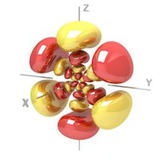
Chemical bonding concepts emerge naturally from maximally entangled atomic orbitals
Maximally entangled atomic orbitals provide a quantitative orbital-entanglement route to identify Lewis, multicenter, and aromatic bonding patterns beyond conventional localized-orbital pictures.
https://www.nature.com/articles/s41467-026-73527-w
Chemical bonding concepts emerge naturally from maximally entangled atomic orbitals
Maximally entangled atomic orbitals provide a quantitative orbital-entanglement route to identify Lewis, multicenter, and aromatic bonding patterns beyond conventional localized-orbital pictures.
https://www.nature.com/articles/s41467-026-73527-w
Nature
Chemical bonding concepts emerge naturally from maximally entangled atomic orbitals
Nature Communications - Chemical bonding explains how atoms bind together, but it remains hard to define in universal terms. Here, the authors use quantum entanglement to uncover and quantify bonds...
🔥8
In linear-response time-dependent density functional theory (LR-TDDFT), what is the Tamm-Dancoff approximation (TDA) actually doing to the excitation problem?
Anonymous Quiz
47%
It drops the de-excitation amplitudes Y and solves only AX = ωX
14%
It replaces the exchange-correlation kernel with exact Hartree-Fock exchange
28%
It converts all excited states into pure single-determinant wavefunctions
4%
It removes charge-transfer error by restoring the derivative discontinuity
7%
It adds frequency dependence to recover double-excitation character
🤯5❤1
Forwarded from Petroleum Apply Channel
We are pleased to announce the launch of 𝐌𝐒𝐒𝐄 2026, 𝐌𝐨𝐥𝐞𝐜𝐮𝐥𝐚𝐫 𝐒𝐢𝐦𝐮𝐥𝐚𝐭𝐢𝐨𝐧𝐬 𝐟𝐨𝐫 𝐒𝐮𝐛𝐬𝐮𝐫𝐟𝐚𝐜𝐞 𝐄𝐧𝐠𝐢𝐧𝐞𝐞𝐫𝐢𝐧𝐠, the first international summer school dedicated specifically to this emerging field.
The 𝐨𝐧𝐥𝐢𝐧𝐞 event will be hosted by the The The University of Manchester from 1–4 September 2026.
This four-day program is designed for graduate students, early-career researchers, and professionals interested in molecular simulations and their applications in subsurface engineering and energy systems.
We will cover topics including:
• 𝘍𝘶𝘯𝘥𝘢𝘮𝘦𝘯𝘵𝘢𝘭𝘴 𝘰𝘧 𝘮𝘰𝘭𝘦𝘤𝘶𝘭𝘢𝘳 𝘴𝘪𝘮𝘶𝘭𝘢𝘵𝘪𝘰𝘯𝘴
• 𝘗𝘳𝘪𝘯𝘤𝘪𝘱𝘭𝘦𝘴 𝘰𝘧 𝘧𝘭𝘶𝘪𝘥-𝘳𝘰𝘤𝘬 𝘪𝘯𝘵𝘦𝘳𝘢𝘤𝘵𝘪𝘰𝘯𝘴, 𝘪𝘯𝘵𝘦𝘳𝘧𝘢𝘤𝘪𝘢𝘭 𝘱𝘩𝘦𝘯𝘰𝘮𝘦𝘯𝘢, 𝘢𝘯𝘥 𝘵𝘳𝘢𝘯𝘴𝘱𝘰𝘳𝘵 𝘱𝘳𝘰𝘱𝘦𝘳𝘵𝘪𝘦𝘴 𝘪𝘯 𝘱𝘰𝘳𝘰𝘶𝘴 𝘮𝘦𝘥𝘪𝘢
• 𝘉𝘦𝘴𝘵 𝘱𝘳𝘢𝘤𝘵𝘪𝘤𝘦𝘴 𝘧𝘰𝘳 𝘴𝘦𝘵𝘵𝘪𝘯𝘨 𝘶𝘱, 𝘳𝘶𝘯𝘯𝘪𝘯𝘨, 𝘢𝘯𝘥 𝘷𝘢𝘭𝘪𝘥𝘢𝘵𝘪𝘯𝘨 𝘮𝘰𝘭𝘦𝘤𝘶𝘭𝘢𝘳 𝘴𝘪𝘮𝘶𝘭𝘢𝘵𝘪𝘰𝘯𝘴
• 𝘈𝘱𝘱𝘭𝘪𝘤𝘢𝘵𝘪𝘰𝘯𝘴 𝘵𝘰 𝘴𝘶𝘣𝘴𝘶𝘳𝘧𝘢𝘤𝘦 𝘨𝘢𝘴 𝘴𝘵𝘰𝘳𝘢𝘨𝘦 𝘢𝘯𝘥 𝘦𝘯𝘦𝘳𝘨𝘺 𝘴𝘺𝘴𝘵𝘦𝘮𝘴
There is an outstanding line-up of world-renowned scientists who will present their lectures followed by tutorial sessions, and hands-on training activities.
Submit your applications: 🌐 https://www.msse-hub.com/
The 𝐨𝐧𝐥𝐢𝐧𝐞 event will be hosted by the The The University of Manchester from 1–4 September 2026.
This four-day program is designed for graduate students, early-career researchers, and professionals interested in molecular simulations and their applications in subsurface engineering and energy systems.
We will cover topics including:
• 𝘍𝘶𝘯𝘥𝘢𝘮𝘦𝘯𝘵𝘢𝘭𝘴 𝘰𝘧 𝘮𝘰𝘭𝘦𝘤𝘶𝘭𝘢𝘳 𝘴𝘪𝘮𝘶𝘭𝘢𝘵𝘪𝘰𝘯𝘴
• 𝘗𝘳𝘪𝘯𝘤𝘪𝘱𝘭𝘦𝘴 𝘰𝘧 𝘧𝘭𝘶𝘪𝘥-𝘳𝘰𝘤𝘬 𝘪𝘯𝘵𝘦𝘳𝘢𝘤𝘵𝘪𝘰𝘯𝘴, 𝘪𝘯𝘵𝘦𝘳𝘧𝘢𝘤𝘪𝘢𝘭 𝘱𝘩𝘦𝘯𝘰𝘮𝘦𝘯𝘢, 𝘢𝘯𝘥 𝘵𝘳𝘢𝘯𝘴𝘱𝘰𝘳𝘵 𝘱𝘳𝘰𝘱𝘦𝘳𝘵𝘪𝘦𝘴 𝘪𝘯 𝘱𝘰𝘳𝘰𝘶𝘴 𝘮𝘦𝘥𝘪𝘢
• 𝘉𝘦𝘴𝘵 𝘱𝘳𝘢𝘤𝘵𝘪𝘤𝘦𝘴 𝘧𝘰𝘳 𝘴𝘦𝘵𝘵𝘪𝘯𝘨 𝘶𝘱, 𝘳𝘶𝘯𝘯𝘪𝘯𝘨, 𝘢𝘯𝘥 𝘷𝘢𝘭𝘪𝘥𝘢𝘵𝘪𝘯𝘨 𝘮𝘰𝘭𝘦𝘤𝘶𝘭𝘢𝘳 𝘴𝘪𝘮𝘶𝘭𝘢𝘵𝘪𝘰𝘯𝘴
• 𝘈𝘱𝘱𝘭𝘪𝘤𝘢𝘵𝘪𝘰𝘯𝘴 𝘵𝘰 𝘴𝘶𝘣𝘴𝘶𝘳𝘧𝘢𝘤𝘦 𝘨𝘢𝘴 𝘴𝘵𝘰𝘳𝘢𝘨𝘦 𝘢𝘯𝘥 𝘦𝘯𝘦𝘳𝘨𝘺 𝘴𝘺𝘴𝘵𝘦𝘮𝘴
There is an outstanding line-up of world-renowned scientists who will present their lectures followed by tutorial sessions, and hands-on training activities.
Submit your applications: 🌐 https://www.msse-hub.com/
❤9
2026_298.pdf
4 MB
Leveraging the Potential of Machine-Learning Interatomic Potentials for QM/MM Simulations
❤9
Elk version 11.0.2 released
elk-11.0.2
-further improved the Wannier90 interface; individual angular momentum
values can be specified for each species (rather than just the maximum)
-updated the Wannier90 examples; thanks to Markus Meinert, Wenhan Chen,
LN and Sebastian Kalhoefer for all the testing
-Wannier90 parameter generation now parallelised with OpenMP; thanks to
Wenhan Chen
-added complicated magnetic FeGe Wannier90 example
-Sebastian Kalhoefer and LN added tesseral tensor moments
-removed the logical variables 'tm3vdl'
-added 'tm3type'; this is 0 for real tensor moments corresponding to
Hermitian Gamma matrices, 1 for complex van der Laan tensor moments and
2 for real tesseral tensor moments
-improved the GGA potential used in the atomic code; this results in a
better starting density when 'xctsp' is set to a GGA functional
-changed the ULR density calculation back to double-precision
-fixed a problem with the TD 'step' vector potential
-Inho Lee fixed an issue with the documentation for 'genafieldt'
-fixed an issue which sometimes made CPU timings negative
-several improvements and optimisations
-added more documentation
https://sourceforge.net/projects/elk/
elk-11.0.2
-further improved the Wannier90 interface; individual angular momentum
values can be specified for each species (rather than just the maximum)
-updated the Wannier90 examples; thanks to Markus Meinert, Wenhan Chen,
LN and Sebastian Kalhoefer for all the testing
-Wannier90 parameter generation now parallelised with OpenMP; thanks to
Wenhan Chen
-added complicated magnetic FeGe Wannier90 example
-Sebastian Kalhoefer and LN added tesseral tensor moments
-removed the logical variables 'tm3vdl'
-added 'tm3type'; this is 0 for real tensor moments corresponding to
Hermitian Gamma matrices, 1 for complex van der Laan tensor moments and
2 for real tesseral tensor moments
-improved the GGA potential used in the atomic code; this results in a
better starting density when 'xctsp' is set to a GGA functional
-changed the ULR density calculation back to double-precision
-fixed a problem with the TD 'step' vector potential
-Inho Lee fixed an issue with the documentation for 'genafieldt'
-fixed an issue which sometimes made CPU timings negative
-several improvements and optimisations
-added more documentation
https://sourceforge.net/projects/elk/
SourceForge
Elk
Download Elk for free. An all-electron full-potential linearised augmented-planewave (FP-LAPW) code. Designed to be as developer friendly as possible so that new developments in the field of density functional theory (DFT) can be added quickly and reliably.
❤1
🚀 Call for Applications : AI Research Internship at the University of Toronto
Are you a PhD student in Latin America passionate about AI for Science?
The Matter Lab at the University of Toronto is offering a limited number of funded research internships (3–6 months) for outstanding PhD students in chemistry, materials science, physics, computer science, engineering, mathematics, and related fields.
🌎 Open to PhD students currently enrolled at Latin American institutions.
Research areas include:
🔹 AI for molecular and materials discovery
🔹 Scientific machine learning
🔹 Computational chemistry and physics
🔹 Autonomous and agentic AI systems
🔹 Accelerating scientific discovery using AI
Interns will contribute to El Agente, an emerging AI-for-Science platform, and work closely with researchers from the University of Toronto's Matter Lab and Acceleration Consortium.
📍 Toronto, Canada
⏳ Duration: 3–6 months
📅 Application Deadline: June 12, 2026
Apply by email:
📧 varinia@elagente.ca
📧 aspuru.exec@utoronto.ca
More information:
🌐 https://lnkd.in/d9w_n2H6
Are you a PhD student in Latin America passionate about AI for Science?
The Matter Lab at the University of Toronto is offering a limited number of funded research internships (3–6 months) for outstanding PhD students in chemistry, materials science, physics, computer science, engineering, mathematics, and related fields.
🌎 Open to PhD students currently enrolled at Latin American institutions.
Research areas include:
🔹 AI for molecular and materials discovery
🔹 Scientific machine learning
🔹 Computational chemistry and physics
🔹 Autonomous and agentic AI systems
🔹 Accelerating scientific discovery using AI
Interns will contribute to El Agente, an emerging AI-for-Science platform, and work closely with researchers from the University of Toronto's Matter Lab and Acceleration Consortium.
📍 Toronto, Canada
⏳ Duration: 3–6 months
📅 Application Deadline: June 12, 2026
Apply by email:
📧 varinia@elagente.ca
📧 aspuru.exec@utoronto.ca
More information:
🌐 https://lnkd.in/d9w_n2H6
lnkd.in
LinkedIn
This link will take you to a page that’s not on LinkedIn
🙏5❤2
Fully Funded PhD in Computational Chemistry in the Nicolaus Copernicus University in Torun Poland!
Nicolaus Copernicus University
We offer projects on
💡ML-NAMD: Combine machine learning and quantum chemistry to simulate long-timescale excited-state molecular dynamics for real molecular systems.
💡POL-NAMD: Relaxation dynamics of polaritons under strong light-matter coupling
Supervisors: Dr. SAIKAT MUKHERJEE | Dr. hab. Anna Kaczmarek-Kędziera | Dr. hab. Piotr Żuchowski
Requirements:
• MSc in chemistry/physics
• Strong background in theoretical and computational chemistry
• Python/Fortran skills are a plus
Positions are available in both doctoral schools:
👉🏻 Academia Copernicana interdisciplinary doctoral school
👉🏻 Doctoral school of exact and natural sciences
Online application: 29 June - 3 July
https://www.linkedin.com/posts/saikat-mukherjee-641b7a1a_fully-funded-phd-in-computational-chemistry-share-7468998819981225984-WIVj/?utm_source=share&utm_medium=member_desktop&rcm=ACoAADByb54BZAu0zfSJLooSdNdx0bXFCOsvoA0
Nicolaus Copernicus University
We offer projects on
💡ML-NAMD: Combine machine learning and quantum chemistry to simulate long-timescale excited-state molecular dynamics for real molecular systems.
💡POL-NAMD: Relaxation dynamics of polaritons under strong light-matter coupling
Supervisors: Dr. SAIKAT MUKHERJEE | Dr. hab. Anna Kaczmarek-Kędziera | Dr. hab. Piotr Żuchowski
Requirements:
• MSc in chemistry/physics
• Strong background in theoretical and computational chemistry
• Python/Fortran skills are a plus
Positions are available in both doctoral schools:
👉🏻 Academia Copernicana interdisciplinary doctoral school
👉🏻 Doctoral school of exact and natural sciences
Online application: 29 June - 3 July
https://www.linkedin.com/posts/saikat-mukherjee-641b7a1a_fully-funded-phd-in-computational-chemistry-share-7468998819981225984-WIVj/?utm_source=share&utm_medium=member_desktop&rcm=ACoAADByb54BZAu0zfSJLooSdNdx0bXFCOsvoA0
LinkedIn
Fully Funded PhD in Computational Chemistry in the Nicolaus Copernicus University in Torun Poland!
Nicolaus Copernicus University…
Nicolaus Copernicus University…
Fully Funded PhD in Computational Chemistry in the Nicolaus Copernicus University in Torun Poland!
Nicolaus Copernicus University
We offer projects on
💡ML-NAMD: Combine machine learning and quantum chemistry to simulate long-timescale excited-state molecular…
Nicolaus Copernicus University
We offer projects on
💡ML-NAMD: Combine machine learning and quantum chemistry to simulate long-timescale excited-state molecular…
❤5
Simulating NMR Spectra using ORCA.
By Alexander A. Auer @ MPI KoFo
https://www.youtube.com/watch?v=DjHDKmQJ8Qs
By Alexander A. Auer @ MPI KoFo
https://www.youtube.com/watch?v=DjHDKmQJ8Qs
YouTube
Simulating NMR Spectra Using ORCA
Alexander Auer's talk at the VWS
❤13
A recent paper in the Journal of Computational Chemistry introduces a new framework for describing and analyzing turnstile-like ligand motions and other polytopal rearrangements in molecular systems.
To accompany the publication, the authors have released:
🧩 PyMOL plugin for visualizing generalized turnstile rotations
https://github.com/smutao/gTA-plugin
⚙️ Workflow scripts (xTB/ORCA interface) for relaxed scans and transition-state searches
https://github.com/smutao/gTA-workflow
The approach has been demonstrated on several representative systems, including SF₄, IF₇, [Co(en)₃]³⁺, and selected Bi/Ni complexes.
📖 Paper: Generalized Turnstile Rotation: Formulation, Visualization, Workflow Implementation, and Application for Modeling Polytopal Rearrangements. Journal of Computational Chemistry 2026, 47, e70432.
DOI: https://doi.org/10.1002/jcc.70432
To accompany the publication, the authors have released:
🧩 PyMOL plugin for visualizing generalized turnstile rotations
https://github.com/smutao/gTA-plugin
⚙️ Workflow scripts (xTB/ORCA interface) for relaxed scans and transition-state searches
https://github.com/smutao/gTA-workflow
The approach has been demonstrated on several representative systems, including SF₄, IF₇, [Co(en)₃]³⁺, and selected Bi/Ni complexes.
📖 Paper: Generalized Turnstile Rotation: Formulation, Visualization, Workflow Implementation, and Application for Modeling Polytopal Rearrangements. Journal of Computational Chemistry 2026, 47, e70432.
DOI: https://doi.org/10.1002/jcc.70432
❤6
🔬 Registration is open for Computational Chemistry for Experimental Chemists (14–18 Sept 2026, Toruń, Poland). Visit ccec.umk.pl. Learn computational chemistry fundamentals, thermochemistry, molecular spectra, and workflow design. ⏳ Deadline: 15 July 2026
❤7
Hosted by the Institute for Advanced Computational Science at Stony Brook University, this two-week hybrid workshop provides hands-on training in computational chemistry methods that can directly support and enhance experimental research. Participants will gain practical experience with molecular modeling, spectroscopy, machine learning for molecular property prediction, and high-performance computing workflows. No prior experience in programming or computational chemistry is required.
July 27 - August 7, 2026
Hybrid (In-person + Virtual)
Open to undergraduate students, graduate students, postdoctoral researchers, and experimental scientists interested in expanding their computational toolkit.
Details and registration information are available in the announcement. Information contact: arshad.mehmood@stonybrook.edu
July 27 - August 7, 2026
Hybrid (In-person + Virtual)
Open to undergraduate students, graduate students, postdoctoral researchers, and experimental scientists interested in expanding their computational toolkit.
Details and registration information are available in the announcement. Information contact: arshad.mehmood@stonybrook.edu
❤3
PhD opportunity (University of Southampton): Simulations of sodium-ion battery materials
We invite applications for a fully funded (open only to home students (UK nationals and settled status) PhD project at the University of Southampton on simulations for optimising sodium-ion battery performance via atomistic, AI, and continuum modelling.
This project, funded by the prestigious Faraday Institution (FI) https://www.faraday.ac.uk/, will be associated with the FI battery multiscale modelling (MSM) project and will develop and apply advanced atomistic simulations to investigate sodium-ion battery materials, focusing on hard carbon (HC) anodes. This project will be of particular interest to students in computational chemistry, molecular modelling, electronic structure theory, and materials.
Full details and application instructions:
Simulations for the new generation of batteries: optimising sodium-ion battery performance via atomistic, AI, and continuum modelling | University of Southampton
https://lnkd.in/e5Szme9Q
The project will be supervised by Professor Chris‑Kriton Skylaris, and an industrial co-supervisor, and will also involve participation to the Faraday Institution PhD Training Programme.
https://www.linkedin.com/posts/chris-kriton-skylaris-4b4097322_simulations-for-the-new-generation-of-batteries-share-7472678091346300928-uof8/?utm_source=share&utm_medium=member_desktop&rcm=ACoAADByb54BZAu0zfSJLooSdNdx0bXFCOsvoA0
We invite applications for a fully funded (open only to home students (UK nationals and settled status) PhD project at the University of Southampton on simulations for optimising sodium-ion battery performance via atomistic, AI, and continuum modelling.
This project, funded by the prestigious Faraday Institution (FI) https://www.faraday.ac.uk/, will be associated with the FI battery multiscale modelling (MSM) project and will develop and apply advanced atomistic simulations to investigate sodium-ion battery materials, focusing on hard carbon (HC) anodes. This project will be of particular interest to students in computational chemistry, molecular modelling, electronic structure theory, and materials.
Full details and application instructions:
Simulations for the new generation of batteries: optimising sodium-ion battery performance via atomistic, AI, and continuum modelling | University of Southampton
https://lnkd.in/e5Szme9Q
The project will be supervised by Professor Chris‑Kriton Skylaris, and an industrial co-supervisor, and will also involve participation to the Faraday Institution PhD Training Programme.
https://www.linkedin.com/posts/chris-kriton-skylaris-4b4097322_simulations-for-the-new-generation-of-batteries-share-7472678091346300928-uof8/?utm_source=share&utm_medium=member_desktop&rcm=ACoAADByb54BZAu0zfSJLooSdNdx0bXFCOsvoA0
The Faraday Institution
The Faraday Institution - Powering Britain’s Battery Revolution
❤3
🚀 OpenQP: open-source quantum chemistry with MRSF-TDDFT
A useful tool to keep on the radar: Open Quantum Platform (OpenQP), an open-source quantum chemistry package focused on excited states, spin-flip methods, photochemistry, and nonadiabatic dynamics.
🔬 Why it matters
OpenQP includes HF/DFT, TDHF/TDDFT, SF-TDDFT, MRSF-TDDFT, analytic gradients, vibrational analysis, NACs, SOCs, MECI/MECP searches, OpenMP/MPI parallelization, and a Python interface.
🧪 Particularly relevant for
• Excited-state calculations
• Spin-flip TDDFT and MRSF-TDDFT
• Conical intersections
• Nonadiabatic dynamics
• Photochemistry and photophysics
• Method development in an open-source ecosystem
🔗 GitHub:
https://github.com/Open-Quantum-Platform/openqp
📄 JCTC paper:
https://doi.org/10.1021/acs.jctc.4c01117
🌐 Website:
https://www.openqp.org
#QuantumChemistry #ComputationalChemistry #OpenQP #MRSFTDDFT #TDDFT #SpinFlip #ExcitedStates #Photochemistry #NonadiabaticDynamics #ConicalIntersections #ElectronicStructure #OpenSource #ScientificComputing #HPC
A useful tool to keep on the radar: Open Quantum Platform (OpenQP), an open-source quantum chemistry package focused on excited states, spin-flip methods, photochemistry, and nonadiabatic dynamics.
🔬 Why it matters
OpenQP includes HF/DFT, TDHF/TDDFT, SF-TDDFT, MRSF-TDDFT, analytic gradients, vibrational analysis, NACs, SOCs, MECI/MECP searches, OpenMP/MPI parallelization, and a Python interface.
🧪 Particularly relevant for
• Excited-state calculations
• Spin-flip TDDFT and MRSF-TDDFT
• Conical intersections
• Nonadiabatic dynamics
• Photochemistry and photophysics
• Method development in an open-source ecosystem
🔗 GitHub:
https://github.com/Open-Quantum-Platform/openqp
📄 JCTC paper:
https://doi.org/10.1021/acs.jctc.4c01117
🌐 Website:
https://www.openqp.org
#QuantumChemistry #ComputationalChemistry #OpenQP #MRSFTDDFT #TDDFT #SpinFlip #ExcitedStates #Photochemistry #NonadiabaticDynamics #ConicalIntersections #ElectronicStructure #OpenSource #ScientificComputing #HPC
GitHub
GitHub - Open-Quantum-Platform/openqp: The main repository of Open Quantum Platform (OpenQP) maintained by Choi Group at KNU.
The main repository of Open Quantum Platform (OpenQP) maintained by Choi Group at KNU. - Open-Quantum-Platform/openqp
❤9🔥2🤩1
🚀 OMNI-P2x is now out in Nature Communications
Very interesting development for anyone working with excited states, photochemistry, UV/Vis spectra, and nonadiabatic dynamics.
OMNI-P2x is a universal neural network potential for ground and excited electronic states in small-molecule chemical space. The idea is very attractive: approaching TD-DFT-level excited-state predictions at much lower computational cost, while still allowing fine-tuning for specific systems.
🔬 Why it matters
OMNI-P2x can be used for excited-state simulations, UV/Vis spectroscopy, photodynamics, and the rational design of visible-light-absorbing azobenzene systems.
🧪 Particularly relevant for
• Ground- and excited-state simulations
• UV/Vis spectrum prediction
• Photodynamics applications
• Nonadiabatic molecular dynamics workflows
• Machine-learning potentials for excited states
• Downstream fine-tuning for specific molecular systems
A nice aspect is that the authors are not selling it as magic. The applicability domain is still limited and there is room for improvement, but OMNI-P2x looks like a meaningful step toward making excited-state calculations more accessible and scalable.
🌐 Try OMNI-P2x online
https://aitomistic.xyz
💻 Run locally / integrate into workflows
https://github.com/dralgroup/mlatom
📘 Tutorial
https://aitomistic.com/mlatom/tutorial_omnip2x.html
📄 Paper
Martyka, M.; Tong, X.-Y.; Jankowska, J.; Dral, P. O. et al. OMNI-P2x universal neural network potential for excited-state simulations. Nature Communications 2026, 17, 4949.
https://doi.org/10.1038/s41467-026-71380-5
🔬 Follow-up Chem. Sci. work
https://doi.org/10.1039/D5SC09557C
#QuantumChemistry #ComputationalChemistry #MachineLearning #MLPotentials #OMNIP2x #MLatom #ExcitedStates #TDDFT #Photochemistry #Photodynamics #NonadiabaticDynamics #UVVis #Azobenzene #MolecularSimulation #ScientificComputing
Very interesting development for anyone working with excited states, photochemistry, UV/Vis spectra, and nonadiabatic dynamics.
OMNI-P2x is a universal neural network potential for ground and excited electronic states in small-molecule chemical space. The idea is very attractive: approaching TD-DFT-level excited-state predictions at much lower computational cost, while still allowing fine-tuning for specific systems.
🔬 Why it matters
OMNI-P2x can be used for excited-state simulations, UV/Vis spectroscopy, photodynamics, and the rational design of visible-light-absorbing azobenzene systems.
🧪 Particularly relevant for
• Ground- and excited-state simulations
• UV/Vis spectrum prediction
• Photodynamics applications
• Nonadiabatic molecular dynamics workflows
• Machine-learning potentials for excited states
• Downstream fine-tuning for specific molecular systems
A nice aspect is that the authors are not selling it as magic. The applicability domain is still limited and there is room for improvement, but OMNI-P2x looks like a meaningful step toward making excited-state calculations more accessible and scalable.
🌐 Try OMNI-P2x online
https://aitomistic.xyz
💻 Run locally / integrate into workflows
https://github.com/dralgroup/mlatom
📘 Tutorial
https://aitomistic.com/mlatom/tutorial_omnip2x.html
📄 Paper
Martyka, M.; Tong, X.-Y.; Jankowska, J.; Dral, P. O. et al. OMNI-P2x universal neural network potential for excited-state simulations. Nature Communications 2026, 17, 4949.
https://doi.org/10.1038/s41467-026-71380-5
🔬 Follow-up Chem. Sci. work
https://doi.org/10.1039/D5SC09557C
#QuantumChemistry #ComputationalChemistry #MachineLearning #MLPotentials #OMNIP2x #MLatom #ExcitedStates #TDDFT #Photochemistry #Photodynamics #NonadiabaticDynamics #UVVis #Azobenzene #MolecularSimulation #ScientificComputing
GitHub
GitHub - dralgroup/mlatom: AI-enhanced computational chemistry
AI-enhanced computational chemistry. Contribute to dralgroup/mlatom development by creating an account on GitHub.
❤4🔥3
Why did this journal retract two 1940s papers by Max Planck? - Ars Technica https://share.google/U78PrjBxBZX4Vi4DM
Ars Technica
Why did this journal retract two 1940s papers by Max Planck? [UPDATED]
Clicking on the links now reveals blank pages and empty PDFs. "Intellectually, it’s not acceptable.”...
❤2👍1
Generative AI and Structure-Based Workflow for the De Novo Design and Optimization of DprE1 Inhibitor Candidates
Decaprenylphosphoryl-β-D-ribose 2′-epimerase 1 (DprE1) is a key target for tuberculosis drug discovery. We developed a hybrid generative AI and structure-based workflow to optimize DprE1 inhibitors from TCA1. After nine optimization cycles, the best candidates showed improved predicted drug-like properties, binding affinity, and complex stability. GTD_9.7 and GTD_9.4 emerged as the most promising molecules, highlighting the potential of generative AI to accelerate anti-tuberculosis drug discovery.
https://chemrxiv.org/doi/full/10.26434/chemrxiv.15004861/v2
Decaprenylphosphoryl-β-D-ribose 2′-epimerase 1 (DprE1) is a key target for tuberculosis drug discovery. We developed a hybrid generative AI and structure-based workflow to optimize DprE1 inhibitors from TCA1. After nine optimization cycles, the best candidates showed improved predicted drug-like properties, binding affinity, and complex stability. GTD_9.7 and GTD_9.4 emerged as the most promising molecules, highlighting the potential of generative AI to accelerate anti-tuberculosis drug discovery.
https://chemrxiv.org/doi/full/10.26434/chemrxiv.15004861/v2
❤3