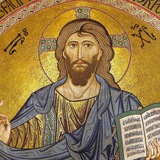
Jesus was a Jew
"If the Gospels tell us anything of certainty, it’s that Jesus was a Jew. In fact, he was a Jew from birth, because both his father Joseph and his mother Mary were Jews.
Joseph, we read, was “of the house of David” (Luke 1:27), and the Gospel of Matthew opens with a lengthy genealogy leading to him from Abraham. Mary was a woman “born under the law [of Judaism]” (Gal 4:4), and she was a blood relative of Elizabeth, of the tribe of Levi (Luke 1:5, 36). Both parents attended Passover every year (Luke 2:41) and both “performed everything according to the [Jewish] law of the Lord” (Luke 2:39).
Jesus himself is repeatedly called ‘Rabbi’ (Mark 9:5; 11:21; 14:45; Matt 26:25; John 1:38, 49; 3:2; 4:31). He celebrated Passover (John 2:13). The Gospel of Matthew opens with these words: “The book of the genealogy of Jesus Christ, son of David, son of Abraham.” We read in Hebrews that “it is evident that our Lord was descended from Judah” (7:14). He regularly attended the local synagogue (Luke 4:16). Jesus himself told the people that he came “to fulfill the [Jewish] law and the [Jewish] prophets” (Matt 5:17) and called on his followers to “keep the [10] commandments” (Matt 19:17).
He even claimed to be the Messiah, the Jewish savior (John 4:26). And of course everyone thought of him as “king of the Jews” (Matt 2:2; John 19:3). This much, then, is clear: Jesus, Joseph, and the Virgin Mary were all Jews."
-----
From: The Jesus Hoax by David Skrbina.
@ChristianityExposed
"If the Gospels tell us anything of certainty, it’s that Jesus was a Jew. In fact, he was a Jew from birth, because both his father Joseph and his mother Mary were Jews.
Joseph, we read, was “of the house of David” (Luke 1:27), and the Gospel of Matthew opens with a lengthy genealogy leading to him from Abraham. Mary was a woman “born under the law [of Judaism]” (Gal 4:4), and she was a blood relative of Elizabeth, of the tribe of Levi (Luke 1:5, 36). Both parents attended Passover every year (Luke 2:41) and both “performed everything according to the [Jewish] law of the Lord” (Luke 2:39).
Jesus himself is repeatedly called ‘Rabbi’ (Mark 9:5; 11:21; 14:45; Matt 26:25; John 1:38, 49; 3:2; 4:31). He celebrated Passover (John 2:13). The Gospel of Matthew opens with these words: “The book of the genealogy of Jesus Christ, son of David, son of Abraham.” We read in Hebrews that “it is evident that our Lord was descended from Judah” (7:14). He regularly attended the local synagogue (Luke 4:16). Jesus himself told the people that he came “to fulfill the [Jewish] law and the [Jewish] prophets” (Matt 5:17) and called on his followers to “keep the [10] commandments” (Matt 19:17).
He even claimed to be the Messiah, the Jewish savior (John 4:26). And of course everyone thought of him as “king of the Jews” (Matt 2:2; John 19:3). This much, then, is clear: Jesus, Joseph, and the Virgin Mary were all Jews."
-----
From: The Jesus Hoax by David Skrbina.
@ChristianityExposed
"I must note a central fact of the entire religion: The Bible is an entirely Jewish document. Front to back, cover to cover, A to Z, Old Testament and New—the Bible is an entirely Jewish document. The morality, the theology, the social attitudes, the worldview… all thoroughly Jewish. The Old Testament obviously so; it was written by Jews, about Jews, and for Jews. The same holds with the New Testament, although with a slight twist: it was written by Jews, about Jews, but for non-Jews."
-----
From “The Jesus Hoax: How St. Paul's Cabal Fooled the World for Two Thousand Years” by David Skrbina.
t.me/ChristianityExposed
-----
From “The Jesus Hoax: How St. Paul's Cabal Fooled the World for Two Thousand Years” by David Skrbina.
t.me/ChristianityExposed
Rabbi Jesus
Mark 9:5 Peter said to Jesus, “Rabbi, it is good for us to be here. Let us put up three shelters—one for you, one for Moses and one for Elijah.”
Mark 11:21 Peter remembered and said to Jesus, “Rabbi, look! The fig tree you cursed has withered!”
Mark 14:45 Going at once to Jesus, Judas said, “Rabbi!” and kissed him.
Matt 26:25 Then Judas, the one who would betray him, said, “Surely you don’t mean me, Rabbi?” Jesus answered, “You have said so.”
John 1:38 Turning around, Jesus saw them following and asked, “What do you want?” They said, “Rabbi”, “where are you staying?”
John 1:49 Then Nathanael declared, “Rabbi, you are the Son of God; you are the king of Israel.”
John 3:2 He came to Jesus at night and said, “Rabbi, we know that you are a teacher who has come from God. For no one could perform the signs you are doing if God were not with him.”
John 4:31 Meanwhile his disciples urged him, “Rabbi, eat something.”
@ChristianityExposed
Mark 9:5 Peter said to Jesus, “Rabbi, it is good for us to be here. Let us put up three shelters—one for you, one for Moses and one for Elijah.”
Mark 11:21 Peter remembered and said to Jesus, “Rabbi, look! The fig tree you cursed has withered!”
Mark 14:45 Going at once to Jesus, Judas said, “Rabbi!” and kissed him.
Matt 26:25 Then Judas, the one who would betray him, said, “Surely you don’t mean me, Rabbi?” Jesus answered, “You have said so.”
John 1:38 Turning around, Jesus saw them following and asked, “What do you want?” They said, “Rabbi”, “where are you staying?”
John 1:49 Then Nathanael declared, “Rabbi, you are the Son of God; you are the king of Israel.”
John 3:2 He came to Jesus at night and said, “Rabbi, we know that you are a teacher who has come from God. For no one could perform the signs you are doing if God were not with him.”
John 4:31 Meanwhile his disciples urged him, “Rabbi, eat something.”
@ChristianityExposed
The Psychological Ploy
"But it’s in the Gospel of John that we read one of the bluntest statements of truth, wherein Jesus says, “You [Gentiles] worship what you do not know; we worship what we know, for salvation is of the Jews” (4:22). We know what we are doing, say the Jews. You Gentile Christians don’t even know what you’re worshipping—which in fact is us and our God. But that’s okay. Just leave everything to us; “salvation is of the Jews.”
Paul and his [Jewish] cabal deliberately lied to the masses, with no concern for their true well-being, simply to undermine Roman rule. This little group tempted innocent people with a promise of heaven, and frightened them with the threat of hell. This psychological ploy was part of a long-term plan to weaken and, in a sense, morally corrupt the masses by drawing them away from the potent and successful Greco-Roman worldview and more toward an oriental, Judaic view. It turned believers into weak and subservient sheep, ones whose lives are oriented around the manufactured sayings of a marginal rabbi and of prayer to Jehovah, the invisible God of the Jews.
As we know, it took some time but the new Christian religion did spread, eventually permeating the Roman world. In the year 315, the emperor himself, Constantine, converted to Christianity. In 380, Emperor Theodosius declared it the official state religion. And just 15 years later, in 395, the empire fractured and the classic (western) half utterly collapsed. In the ensuing vacuum, Christianity rose to power—and in Rome itself, of all places. The victory was complete, some 350 years after Paul’s grand vision came to him in a flash, “brighter than the sun.”
And when people—lots of people—still believe it after two thousand years, it cannot but degrade society, weighing us down, blocking us from attaining that which we are capable of, that which was only hinted at in the greatness of Athens and Rome. And all for the salvation of the Jews."
-----
From: The Jesus Hoax by David Skrbina.
@ChristianityExposed
"But it’s in the Gospel of John that we read one of the bluntest statements of truth, wherein Jesus says, “You [Gentiles] worship what you do not know; we worship what we know, for salvation is of the Jews” (4:22). We know what we are doing, say the Jews. You Gentile Christians don’t even know what you’re worshipping—which in fact is us and our God. But that’s okay. Just leave everything to us; “salvation is of the Jews.”
Paul and his [Jewish] cabal deliberately lied to the masses, with no concern for their true well-being, simply to undermine Roman rule. This little group tempted innocent people with a promise of heaven, and frightened them with the threat of hell. This psychological ploy was part of a long-term plan to weaken and, in a sense, morally corrupt the masses by drawing them away from the potent and successful Greco-Roman worldview and more toward an oriental, Judaic view. It turned believers into weak and subservient sheep, ones whose lives are oriented around the manufactured sayings of a marginal rabbi and of prayer to Jehovah, the invisible God of the Jews.
As we know, it took some time but the new Christian religion did spread, eventually permeating the Roman world. In the year 315, the emperor himself, Constantine, converted to Christianity. In 380, Emperor Theodosius declared it the official state religion. And just 15 years later, in 395, the empire fractured and the classic (western) half utterly collapsed. In the ensuing vacuum, Christianity rose to power—and in Rome itself, of all places. The victory was complete, some 350 years after Paul’s grand vision came to him in a flash, “brighter than the sun.”
And when people—lots of people—still believe it after two thousand years, it cannot but degrade society, weighing us down, blocking us from attaining that which we are capable of, that which was only hinted at in the greatness of Athens and Rome. And all for the salvation of the Jews."
-----
From: The Jesus Hoax by David Skrbina.
@ChristianityExposed
Jesus Christ Never Existed
Extraordinary claims require extraordinary justification. At a minimum, they require some justification. At a bare minimum, they require any justification. In the case of Jesus, unfortunately, we have no justification. In other words, we have no evidence for anything like these miracles occurring at all, let alone by a Jesus of Nazareth. In fact we have no evidence that an historical Jesus even existed, until decades after his death. We have no bodies, no tombs, no physical remains, no letters, no engravings—nothing that counts as evidence. We have no evidence.
The oldest existing Bible dates from the year 350; as we move backward in time from there, our confidence in the actual text diminishes significantly—some parts being much more uncertain than others. Expert consensus is that the four Gospels date to the years 70 to 95 AD, and Paul’s letters to 50 to 70 AD.
Paul, the Gospel authors, Jesus, Joseph, the Virgin Mary, and all twelve apostles were Jews. Many Jews had been in active and passive resistance to Rome from virtually the beginning of the takeover in 63 BC. Between the years zero and 93 AD we have absolutely no independent, corroborating evidence for such things as the Bethlehem star, any of Jesus’ 36 miracles, any of the apostles’ miracles, or any of the Christian-specific events depicted in the New Testament. Josephus’ brief reference in 93 is the first independent confirmation of the mere existence of a Christian movement, followed by Tacitus and Pliny around the year 115.
During Jesus’ entire lifetime, from, say 3 BC to 30 AD, not one person—not a Christian, not a Jew, not a Roman, not a Greek—wrote anything about the miracles, what Jesus said, or what his followers did. No one wrote anything. It’s as if nothing extraordinary happened at all.
-----
From: The Jesus Hoax by David Skrbina.
@ChristianityExposed
Extraordinary claims require extraordinary justification. At a minimum, they require some justification. At a bare minimum, they require any justification. In the case of Jesus, unfortunately, we have no justification. In other words, we have no evidence for anything like these miracles occurring at all, let alone by a Jesus of Nazareth. In fact we have no evidence that an historical Jesus even existed, until decades after his death. We have no bodies, no tombs, no physical remains, no letters, no engravings—nothing that counts as evidence. We have no evidence.
The oldest existing Bible dates from the year 350; as we move backward in time from there, our confidence in the actual text diminishes significantly—some parts being much more uncertain than others. Expert consensus is that the four Gospels date to the years 70 to 95 AD, and Paul’s letters to 50 to 70 AD.
Paul, the Gospel authors, Jesus, Joseph, the Virgin Mary, and all twelve apostles were Jews. Many Jews had been in active and passive resistance to Rome from virtually the beginning of the takeover in 63 BC. Between the years zero and 93 AD we have absolutely no independent, corroborating evidence for such things as the Bethlehem star, any of Jesus’ 36 miracles, any of the apostles’ miracles, or any of the Christian-specific events depicted in the New Testament. Josephus’ brief reference in 93 is the first independent confirmation of the mere existence of a Christian movement, followed by Tacitus and Pliny around the year 115.
During Jesus’ entire lifetime, from, say 3 BC to 30 AD, not one person—not a Christian, not a Jew, not a Roman, not a Greek—wrote anything about the miracles, what Jesus said, or what his followers did. No one wrote anything. It’s as if nothing extraordinary happened at all.
-----
From: The Jesus Hoax by David Skrbina.
@ChristianityExposed
Revelation 3:9
"Behold, I will make them of the synagogue of Satan, which say they are Jews, and are not, but do lie; behold, I will make them to come and worship before thy feet, and to know that I have loved thee."
Christians will often quote this verse to "prove" the anti-Semitic nature of Christianity, not understanding that all Apostles were Jews themselves, including John, the author of the Book of Revelation.
When Jesus takes the Twelve Apostles to Jerusalem, he predicts that he himself will be turned over "to the Gentiles" (Matt 20:19), that is, to the non-Jews; Jesus would not speak this way unless his disciples were all Jews. Furthermore, they frequently called him "Rabbi", a term that only Jews would use.
David Skrbina wrote:
"But what about the final Gospel, John? This appears to be the most anti-Jewish—some would say, anti-Semitic—of the four. This could not possibly have been written by a Jew, true? Not quite. We need to observe an important point here. The nascent Christian movement, occurring entirely within the Jewish community, found substantial internal dissent. Orthodox Jews did not believe that their Messiah had come in the form of this "Jesus", and they strongly resisted any claims to the contrary. In a sense, they wanted to "kill" the Jesus story (we can see where this is leading!). Paul and his small band of Jewish Christians thus had to combat the anti-Christian sentiments of the majority of Jews, particularly the Jewish elite of the day. John, then, reads much more naturally as an account of intra-Jewish squabbling rather than as a Gentile attacking the Jews."
@ChristianityExposed
"Behold, I will make them of the synagogue of Satan, which say they are Jews, and are not, but do lie; behold, I will make them to come and worship before thy feet, and to know that I have loved thee."
Christians will often quote this verse to "prove" the anti-Semitic nature of Christianity, not understanding that all Apostles were Jews themselves, including John, the author of the Book of Revelation.
When Jesus takes the Twelve Apostles to Jerusalem, he predicts that he himself will be turned over "to the Gentiles" (Matt 20:19), that is, to the non-Jews; Jesus would not speak this way unless his disciples were all Jews. Furthermore, they frequently called him "Rabbi", a term that only Jews would use.
David Skrbina wrote:
"But what about the final Gospel, John? This appears to be the most anti-Jewish—some would say, anti-Semitic—of the four. This could not possibly have been written by a Jew, true? Not quite. We need to observe an important point here. The nascent Christian movement, occurring entirely within the Jewish community, found substantial internal dissent. Orthodox Jews did not believe that their Messiah had come in the form of this "Jesus", and they strongly resisted any claims to the contrary. In a sense, they wanted to "kill" the Jesus story (we can see where this is leading!). Paul and his small band of Jewish Christians thus had to combat the anti-Christian sentiments of the majority of Jews, particularly the Jewish elite of the day. John, then, reads much more naturally as an account of intra-Jewish squabbling rather than as a Gentile attacking the Jews."
@ChristianityExposed
The Jewish miracle man never existed, nor will he ever exist. He is not coming to save you, nor will any other messianic figure. They want you to "trust the plan". They want you to be passive. They want you to be weak. They know very well that the only thing necessary for the triumph of evil is for good men to do nothing. The greatest act of good is to fight the greatest evil. Be active, be strong, and victory shall be ours.
@ChristianityExposed
@ChristianityExposed
The Myth Of Moses
Upon Moses' birth, it is said that he was placed in a reed basket and set adrift in a river in order to avoid infanticide. He was later rescued by a daughter of royalty and raised by her as a prince.
This baby in a basket story was lifted directly from the myth of Sargon of Akkad of around 2250 B.C. Sargon was born, placed in a reed basket in order to avoid infanticide, and set adrift in a river. He was in turn rescued and raised by Akki, a royal mid-wife.
Furthermore, Moses is known as the Law-Giver, the giver of the Ten Commandments, the Mosaic Law. However, the idea of a law being passed from God to a prophet on a mountain is also a very old motif. Moses is just a law giver in a long line of law givers in mythological history.
In India, Manou was the great law giver. In Crete, Minos ascended Mount Dicta, where Zeus gave him the sacred laws. While in Egypt there was Mises, who carried stone tablets and upon them the laws of god were written.
Manou. Minos. Mises. Moses.
-----
From "Zeitgeist: The Movie".
@ChristianityExposed
Upon Moses' birth, it is said that he was placed in a reed basket and set adrift in a river in order to avoid infanticide. He was later rescued by a daughter of royalty and raised by her as a prince.
This baby in a basket story was lifted directly from the myth of Sargon of Akkad of around 2250 B.C. Sargon was born, placed in a reed basket in order to avoid infanticide, and set adrift in a river. He was in turn rescued and raised by Akki, a royal mid-wife.
Furthermore, Moses is known as the Law-Giver, the giver of the Ten Commandments, the Mosaic Law. However, the idea of a law being passed from God to a prophet on a mountain is also a very old motif. Moses is just a law giver in a long line of law givers in mythological history.
In India, Manou was the great law giver. In Crete, Minos ascended Mount Dicta, where Zeus gave him the sacred laws. While in Egypt there was Mises, who carried stone tablets and upon them the laws of god were written.
Manou. Minos. Mises. Moses.
-----
From "Zeitgeist: The Movie".
@ChristianityExposed
Jesus In The Talmud
Some claim that the various Talmuds provide evidence for Jesus, albeit from hostile witnesses. However, the account of various figures called Jesus in the Jewish scriptures is a convoluted mess, as Frank Zindler’s “The Jesus the Jews Never Knew” amply demonstrates, and the references to Jesus that some Christians claim to find don’t appear until much later.
The name of our familiar Jesus of Nazareth (Yeshua ’ ha-Notzri in Hebrew) never appears until the last layers of Jewish Rabbinic literature in the 6th or 7th century. Or is it our Jesus?
He is confused with earlier figures of Jesus Pandira (mid 1st century B.C.E.) and Jesus ben Stada (2nd century C.E.), has connections with the government and is criticized for strange behavior like burning his food in public.
When he is excommunicated for practicing magic and leading Israel astray, a herald spends forty days searching for witnesses to testify on his behalf, but none can be found. So he is hanged on the eve of Passover, along with his five disciples Mathai, Naqai, Nezer, Buni, and Todah.
It’s hard to imagine how much of this Christian apologists would want us to accept as reliable information about their Jesus, or how the Jewish accounts can be called corroboration when they can’t even place their various Jesuses in the right century.
-----
From "Nailed: Ten Christian Myths That Show Jesus Never Existed at All" by David Fitzgerald.
@ChristianityExposed
Some claim that the various Talmuds provide evidence for Jesus, albeit from hostile witnesses. However, the account of various figures called Jesus in the Jewish scriptures is a convoluted mess, as Frank Zindler’s “The Jesus the Jews Never Knew” amply demonstrates, and the references to Jesus that some Christians claim to find don’t appear until much later.
The name of our familiar Jesus of Nazareth (Yeshua ’ ha-Notzri in Hebrew) never appears until the last layers of Jewish Rabbinic literature in the 6th or 7th century. Or is it our Jesus?
He is confused with earlier figures of Jesus Pandira (mid 1st century B.C.E.) and Jesus ben Stada (2nd century C.E.), has connections with the government and is criticized for strange behavior like burning his food in public.
When he is excommunicated for practicing magic and leading Israel astray, a herald spends forty days searching for witnesses to testify on his behalf, but none can be found. So he is hanged on the eve of Passover, along with his five disciples Mathai, Naqai, Nezer, Buni, and Todah.
It’s hard to imagine how much of this Christian apologists would want us to accept as reliable information about their Jesus, or how the Jewish accounts can be called corroboration when they can’t even place their various Jesuses in the right century.
-----
From "Nailed: Ten Christian Myths That Show Jesus Never Existed at All" by David Fitzgerald.
@ChristianityExposed
Rothschild & Waterloo
The greatest scam of the 19th century you've never heard of. Though the Rothschilds deny these claims, some interesting events followed shortly after. Such as their loans to the Holy See.
From the Wiki page:
"In the aftermath of the Napoleonic Wars, there was a return to the politics of throne and altar in Europe. Around this time, the Rothschild family of Jewish bankers from Frankfurt had arisen to a position of prominence as bankers. [...] In 1832 the Rothschilds’ agreement to provide a loan to the Holy See for £400,000 (equivalent to £3.8 billion in 2020) came into force."
The full newspapers can be found on:
britishnewspaperarchive.co.uk
@ChristianityExposed
The greatest scam of the 19th century you've never heard of. Though the Rothschilds deny these claims, some interesting events followed shortly after. Such as their loans to the Holy See.
From the Wiki page:
"In the aftermath of the Napoleonic Wars, there was a return to the politics of throne and altar in Europe. Around this time, the Rothschild family of Jewish bankers from Frankfurt had arisen to a position of prominence as bankers. [...] In 1832 the Rothschilds’ agreement to provide a loan to the Holy See for £400,000 (equivalent to £3.8 billion in 2020) came into force."
The full newspapers can be found on:
britishnewspaperarchive.co.uk
@ChristianityExposed
Philo of Alexandria (c. 20 BCE - c. 50 CE)
Writer, political commentator and esteemed Jewish statesman. He wrote a great deal on other Jewish sects of the time, such as the Essenes and the Therapeutae, but nothing on Jesus, or on Christianity either, even though his home of Alexandria was supposedly one of the early cradles of Christianity.
Philo was in just the right time and place to be a brilliant historical witness to Jesus. He lived before, during and after the alleged time of Christ, and he had strong connections to Jerusalem. He didn’t just spend time in Jerusalem - his family was intimately connected with the royal house of Judea.
So when Jesus’ fame and new philosophy spread all across Judea and beyond, when Jesus had his triumphant procession into the Holy City, drove the moneychangers from the temple, was crucified, resurrected and ascended to Heaven, when Jerusalem experienced two major earthquakes, supernatural darkness, and all the dead holy people emerged from their graves and made their way through Jerusalem - Philo was on the scene through all of that. In fact, he could have quite literally been on the scene for all of that.
Philo would have loved to have been able to speak firsthand with these great Jewish saints he wrote so much about. But apparently neither their return from the dead nor any of those other miracles made much of an impression on either him - or anyone else in Jerusalem - because he never makes the slightest mention of any of these events.
-----
From "Nailed: Ten Christian Myths That Show Jesus Never Existed at All" by David Fitzgerald.
@ChristianityExposed
Writer, political commentator and esteemed Jewish statesman. He wrote a great deal on other Jewish sects of the time, such as the Essenes and the Therapeutae, but nothing on Jesus, or on Christianity either, even though his home of Alexandria was supposedly one of the early cradles of Christianity.
Philo was in just the right time and place to be a brilliant historical witness to Jesus. He lived before, during and after the alleged time of Christ, and he had strong connections to Jerusalem. He didn’t just spend time in Jerusalem - his family was intimately connected with the royal house of Judea.
So when Jesus’ fame and new philosophy spread all across Judea and beyond, when Jesus had his triumphant procession into the Holy City, drove the moneychangers from the temple, was crucified, resurrected and ascended to Heaven, when Jerusalem experienced two major earthquakes, supernatural darkness, and all the dead holy people emerged from their graves and made their way through Jerusalem - Philo was on the scene through all of that. In fact, he could have quite literally been on the scene for all of that.
Philo would have loved to have been able to speak firsthand with these great Jewish saints he wrote so much about. But apparently neither their return from the dead nor any of those other miracles made much of an impression on either him - or anyone else in Jerusalem - because he never makes the slightest mention of any of these events.
-----
From "Nailed: Ten Christian Myths That Show Jesus Never Existed at All" by David Fitzgerald.
@ChristianityExposed
Tacitus Does Not Prove Jesus' Historicity
Tacitus was born in the year 56 to an aristocratic family. Between 98 and 105 AD he wrote four books, including the highly important work Histories. As it happens, not one of them so much as mentions Jesus or the Christians. But his final work, Annals, which dates circa 115 AD, does include two sentences on them. In section 44 of Book 15 we read the following:
"Consequently, to get rid of the report, Nero fastened the guilt and inflicted the most exquisite tortures on a class hated for their abominations, called Christians by the populace. Christus, from whom the name had its origin, suffered the extreme penalty during the reign of Tiberius at the hands of one of our procurators, Pontius Pilatus, and a most mischievous superstition, thus checked for the moment, again broke out not only in Judaea, the first source of the evil, but even in Rome, where all things hideous and shameful from every part of the world find their centre and become popular."
Nero, it seems, was anxious to blame someone for the Great Roman Fire of 64 AD. Apparently he placed it on a “hated” group, the Christians, “a most mischievous superstition”. The passage is likely authentic but yet odd in that we have no other reference to Christians in Rome at the time of Nero, or of Nero actually blaming them for anything.
Perhaps Tacitus is recording what he heard or read elsewhere, and was unable to actually confirm. But this is not relevant here. What matters is the stunning fact that it took until the year 115—80 years after the crucifixion, nearly 120 years after the miracle birth—for the first Roman to document the Christians. And even then, he grants them all of two sentences.
-----
From “The Jesus Hoax: How St. Paul's Cabal Fooled the World for Two Thousand Years” by David Skrbina.
@ChristianityExposed
Tacitus was born in the year 56 to an aristocratic family. Between 98 and 105 AD he wrote four books, including the highly important work Histories. As it happens, not one of them so much as mentions Jesus or the Christians. But his final work, Annals, which dates circa 115 AD, does include two sentences on them. In section 44 of Book 15 we read the following:
"Consequently, to get rid of the report, Nero fastened the guilt and inflicted the most exquisite tortures on a class hated for their abominations, called Christians by the populace. Christus, from whom the name had its origin, suffered the extreme penalty during the reign of Tiberius at the hands of one of our procurators, Pontius Pilatus, and a most mischievous superstition, thus checked for the moment, again broke out not only in Judaea, the first source of the evil, but even in Rome, where all things hideous and shameful from every part of the world find their centre and become popular."
Nero, it seems, was anxious to blame someone for the Great Roman Fire of 64 AD. Apparently he placed it on a “hated” group, the Christians, “a most mischievous superstition”. The passage is likely authentic but yet odd in that we have no other reference to Christians in Rome at the time of Nero, or of Nero actually blaming them for anything.
Perhaps Tacitus is recording what he heard or read elsewhere, and was unable to actually confirm. But this is not relevant here. What matters is the stunning fact that it took until the year 115—80 years after the crucifixion, nearly 120 years after the miracle birth—for the first Roman to document the Christians. And even then, he grants them all of two sentences.
-----
From “The Jesus Hoax: How St. Paul's Cabal Fooled the World for Two Thousand Years” by David Skrbina.
@ChristianityExposed
An Infectious Disease
Christianity, which in the Middle Ages spread like an infectious disease throughout the Roman empire, never succeeded in extinguishing the native pantheist religion of heathen Germany.
This earlier pre-Christian religion saw the earth as a place of the Gods. Its mysteries and symbols were referable to a worship of nature; in every element men adored some marvelous being, every tree revealed a deity, all the phenomena of the universe were informed by divinity. Christianity reversed this view; nature, ceasing to bear die impress of the divine, became diabolized.
Christianity, in the form of the Roman Church, turned these earthly pagan Gods into devils and repudiated all that was of the earth, so that flesh and body, which were once celebrated, are now annihilated. Not the earth, but heaven, is the home of God who rules from above through his earthly representatives, the priests.
Characterized by a deistic denial of the divinity of nature and the corresponding spiritualist negation of the body, Christianity is hostile to human nature on two scores: it provides the basis for political despotism insofar as it grants a special authority on what is right and just to a few who are said to be nearer the divine, and it represses the healthy expression of the body and the sensuous admiration of beauty. Priests are then a ready ally of political authority, while all people are alienated from their original nature.
-----
From "Religion and Philosophy in Germany" by Heinrich Heine.
@ChristianityExposed
Christianity, which in the Middle Ages spread like an infectious disease throughout the Roman empire, never succeeded in extinguishing the native pantheist religion of heathen Germany.
This earlier pre-Christian religion saw the earth as a place of the Gods. Its mysteries and symbols were referable to a worship of nature; in every element men adored some marvelous being, every tree revealed a deity, all the phenomena of the universe were informed by divinity. Christianity reversed this view; nature, ceasing to bear die impress of the divine, became diabolized.
Christianity, in the form of the Roman Church, turned these earthly pagan Gods into devils and repudiated all that was of the earth, so that flesh and body, which were once celebrated, are now annihilated. Not the earth, but heaven, is the home of God who rules from above through his earthly representatives, the priests.
Characterized by a deistic denial of the divinity of nature and the corresponding spiritualist negation of the body, Christianity is hostile to human nature on two scores: it provides the basis for political despotism insofar as it grants a special authority on what is right and just to a few who are said to be nearer the divine, and it represses the healthy expression of the body and the sensuous admiration of beauty. Priests are then a ready ally of political authority, while all people are alienated from their original nature.
-----
From "Religion and Philosophy in Germany" by Heinrich Heine.
@ChristianityExposed