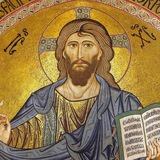
The early Christian community of Jerusalem was led by a Council of Elders, and considered itself part of the wider Jewish community. This collegiate system of government in Jerusalem is seen in Acts 11:30 and 15:22. Eusebius of Caesarea provides the names of an unbroken succession of thirty-six Bishops of Jerusalem up to the year 324. The first fifteen of these bishops were of Jewish origin (from James the Just through Judas).
-----
Full article here.
@ChristianityExposed
-----
Full article here.
@ChristianityExposed
This media is not supported in your browser
VIEW IN TELEGRAM
Wherever Christianity goes, Zionism follows. To those who claim this isn't "real Christianity," Genesis 15:18 explicitly states that "the Lord made a covenant with Abram and said, 'To your descendants [the Jews] I give this land, from the Wadi of Egypt to the great river, the Euphrates,'" and that "[he] will bless those who bless [them], and whoever curses [them] [he] will curse" (Genesis 12:3)—making Christianity inherently Zionist.
@ChristianityExposed
@ChristianityExposed
Media is too big
VIEW IN TELEGRAM
Christ Is King?
Nick Fuentes (confronted by Adam Green) does not seem to understand that the promotion of a religion that worships a Jewish rabbi and the God of Israel—and therefore his chosen people by proxy—will not lead to any legitimate opposition to Jewish influence in his nation.
If that isn't bad enough already, the overwhelming support for Israel—rather than their own homelands—the vast majority of Christians have will only continue to grow the more people convert to Christianity.
"Christ is King," they chant while omitting the most important part of what these verses state—being "of the Jews." As John 4:22 states: "You [Gentiles] worship what you do not know; we worship what we do know, for salvation is from the Jews."
@ChristianityExposed
Nick Fuentes (confronted by Adam Green) does not seem to understand that the promotion of a religion that worships a Jewish rabbi and the God of Israel—and therefore his chosen people by proxy—will not lead to any legitimate opposition to Jewish influence in his nation.
If that isn't bad enough already, the overwhelming support for Israel—rather than their own homelands—the vast majority of Christians have will only continue to grow the more people convert to Christianity.
"Christ is King," they chant while omitting the most important part of what these verses state—being "of the Jews." As John 4:22 states: "You [Gentiles] worship what you do not know; we worship what we do know, for salvation is from the Jews."
@ChristianityExposed
This media is not supported in your browser
VIEW IN TELEGRAM
This media is not supported in your browser
VIEW IN TELEGRAM
This media is not supported in your browser
VIEW IN TELEGRAM
This media is not supported in your browser
VIEW IN TELEGRAM
This media is not supported in your browser
VIEW IN TELEGRAM
Christians are rejoicing in the fact that Abrahamists are self-fulfilling the Bible prophecies, hoping that the battle of Armageddon will break out—which will yet again result in countless deaths—simply so that their fictional Jesus will return.
@ChristianityExposed
@ChristianityExposed
"They were pleased to do it, and indeed they owe it to them. For if the Gentiles have shared in the Jews’ spiritual blessings, they owe it to the Jews to share with them their material blessings." — Romans 15:27
Full report here.
@ChristianityExposed
Full report here.
@ChristianityExposed
The Jews' Anointed One
Pliny the Younger, in the early second century (112), reported that "Christians were singing a hymn to Christ as to a god." Notice how late this reference is; and notice the absence of the name "Jesus."
The passage, if accurate, could have referred to any of the other self-proclaimed "Christs" (messiahs) followed by Jews who thought they had found their anointed one.
Pliny's account is not history, since he is only relaying what other people believed. No one doubts that Christianity was in existence by this time.
Offering this as proof would be the equivalent of quoting modern Mormons about their beliefs in the historical existence of the Angel Moroni or the miracles of Joseph Smith—doubtless useful for documenting the religious beliefs, but not the actual facts.
-----
Full article here.
@ChristianityExposed
Pliny the Younger, in the early second century (112), reported that "Christians were singing a hymn to Christ as to a god." Notice how late this reference is; and notice the absence of the name "Jesus."
The passage, if accurate, could have referred to any of the other self-proclaimed "Christs" (messiahs) followed by Jews who thought they had found their anointed one.
Pliny's account is not history, since he is only relaying what other people believed. No one doubts that Christianity was in existence by this time.
Offering this as proof would be the equivalent of quoting modern Mormons about their beliefs in the historical existence of the Angel Moroni or the miracles of Joseph Smith—doubtless useful for documenting the religious beliefs, but not the actual facts.
-----
Full article here.
@ChristianityExposed
Support for Israel is significantly lower among younger generations in the United States, and it just so happens that their percentage of Christians is as well.
According to General Daniel R. Hokanson—if this leaked email is legitimate—"there is growing anti-Semitism among the enlisted [US] troops who are openly stating they're against Israel and not willing to put their lives on the line for them," and "if Hezbollah or other players enter the war, Israel won't be able to defend themselves."
@ChristianityExposed
According to General Daniel R. Hokanson—if this leaked email is legitimate—"there is growing anti-Semitism among the enlisted [US] troops who are openly stating they're against Israel and not willing to put their lives on the line for them," and "if Hezbollah or other players enter the war, Israel won't be able to defend themselves."
@ChristianityExposed
Vladimir The Traitor
Yet another example of top-to-bottom Christian imposition is that of Vladimir the Great (c. 958 – 15 July 1015)—who was later canonized by the Eastern Orthodox Church as Saint Vladimir for being the person most responsible for the Christianization of Russia—who imposed Christianity on the Kievan Rus as a means to solidify his rule and to gain favors from the Byzantine Empire after marrying the Emperor's daughter.
This included the destruction of sacred Pagan sites and the desecration of idols—as commanded in Deuteronomy 7:5. Temples that had stood as embodiments of ancestral traditions were repurposed for Christian worship, resulting in the erasure of their ethnic heritage and in the implementation of a foreign belief system through coercion and a complete disregard for his folk.
@ChristianityExposed
Yet another example of top-to-bottom Christian imposition is that of Vladimir the Great (c. 958 – 15 July 1015)—who was later canonized by the Eastern Orthodox Church as Saint Vladimir for being the person most responsible for the Christianization of Russia—who imposed Christianity on the Kievan Rus as a means to solidify his rule and to gain favors from the Byzantine Empire after marrying the Emperor's daughter.
This included the destruction of sacred Pagan sites and the desecration of idols—as commanded in Deuteronomy 7:5. Temples that had stood as embodiments of ancestral traditions were repurposed for Christian worship, resulting in the erasure of their ethnic heritage and in the implementation of a foreign belief system through coercion and a complete disregard for his folk.
@ChristianityExposed
Media is too big
VIEW IN TELEGRAM
The fraud that was Joseph Smith, the founder of Mormonism and the Latter Day Saint movement.
Full debate here.
@ChristianityExposed
Full debate here.
@ChristianityExposed
Hostile "Testimonies"
Christian apologists will often bring up this infographic in defense of Jesus' historicity. However, some of these sources are extremely problematic and none of the writers were even alive during Jesus' purported lifetime and could therefore not have been eyewitnesses.
The earliest source on the list is Josephus' Testimonium Flavianum, written in 93 CE. Not only was he born after Jesus' supposed death and was the book written decades after the alleged crucifixion, the passages referring to Jesus are well-known forgeries.
The works of Pliny the Younger, Tacitus, and Suetonius were written in c. 112 CE, 116 CE, 121 CE resp., and only confirm the presence of a small Christian community in the Roman Empire during that period, which has never been a subject of dispute.
Even later came Phlegon's and Celsus' works in c. 140 CE and c. 178 CE resp., and the Talmud—which does not even refer to Jesus Christ—was not completed until c. 500 CE.
The date of Bar-Serapion's letter is unknown, but is estimated to be written between 73 CE and 300 CE and does not mention Jesus by name—only some "wise king" of the Jews in a rather strange paragraph about Athens suffering from a famine after Socrates' death, which never happened.
And Thallus, a Pagan chronologer of unknown date who allegedly was a 1st century witness to the gospel tradition of a "darkness" at Jesus' death, was a completely unknown figure until Christian apologetic sources first mentioned him in the late 2nd century—and it only gets worse from there.
There are absolutely zero genuine contemporary extrabiblical sources. If we had to resort to "testimonies" this poor for any other historical figure, Christians too would acknowledge the extreme unlikelihood of that person ever having existed, let alone if such extraordinary claims were made about them.
@ChristianityExposed
Christian apologists will often bring up this infographic in defense of Jesus' historicity. However, some of these sources are extremely problematic and none of the writers were even alive during Jesus' purported lifetime and could therefore not have been eyewitnesses.
The earliest source on the list is Josephus' Testimonium Flavianum, written in 93 CE. Not only was he born after Jesus' supposed death and was the book written decades after the alleged crucifixion, the passages referring to Jesus are well-known forgeries.
The works of Pliny the Younger, Tacitus, and Suetonius were written in c. 112 CE, 116 CE, 121 CE resp., and only confirm the presence of a small Christian community in the Roman Empire during that period, which has never been a subject of dispute.
Even later came Phlegon's and Celsus' works in c. 140 CE and c. 178 CE resp., and the Talmud—which does not even refer to Jesus Christ—was not completed until c. 500 CE.
The date of Bar-Serapion's letter is unknown, but is estimated to be written between 73 CE and 300 CE and does not mention Jesus by name—only some "wise king" of the Jews in a rather strange paragraph about Athens suffering from a famine after Socrates' death, which never happened.
And Thallus, a Pagan chronologer of unknown date who allegedly was a 1st century witness to the gospel tradition of a "darkness" at Jesus' death, was a completely unknown figure until Christian apologetic sources first mentioned him in the late 2nd century—and it only gets worse from there.
There are absolutely zero genuine contemporary extrabiblical sources. If we had to resort to "testimonies" this poor for any other historical figure, Christians too would acknowledge the extreme unlikelihood of that person ever having existed, let alone if such extraordinary claims were made about them.
@ChristianityExposed
christiantoday.com.au
The Jesus of History
Time Magazine did a story about the ‘Most Significant Person in History’ and concluded after a very comprehensive and detailed research program that Jesus was that person. The results appeared in their December 10th, 2013 edition.
Media is too big
VIEW IN TELEGRAM
https://t.me/survivethejive/5600
There is indeed an occult element to this. One of the Mitzvahs (commandments) of Disney's CEO's religion is "to remember and destroy Amalek," as stated in Deuteronomy 25:17 and commanded in Exodus 17:14.
And who is Amalek, you ask? That would be the European race, as both these rabbis and the prime minister of Israel have no issue admitting.
Not only have they "pulled down [our] idols, cast aside [our] racial inheritance, and substituted for them [their] God and [their] traditions" through Christianity, their end goal is to "utterly wipe out the memory of Amalek from under heaven."
Needless to say, that includes distorting our ancestral beliefs and history to such an extent that, eventually, no one will remember it. Fortunately, however, people are getting quite sick of it—even in Asia.
@ChristianityExposed
There is indeed an occult element to this. One of the Mitzvahs (commandments) of Disney's CEO's religion is "to remember and destroy Amalek," as stated in Deuteronomy 25:17 and commanded in Exodus 17:14.
And who is Amalek, you ask? That would be the European race, as both these rabbis and the prime minister of Israel have no issue admitting.
Not only have they "pulled down [our] idols, cast aside [our] racial inheritance, and substituted for them [their] God and [their] traditions" through Christianity, their end goal is to "utterly wipe out the memory of Amalek from under heaven."
Needless to say, that includes distorting our ancestral beliefs and history to such an extent that, eventually, no one will remember it. Fortunately, however, people are getting quite sick of it—even in Asia.
@ChristianityExposed
https://t.me/realblaircottrell/4584
It's false to claim that Christianity is not "Judeo" simply because Jews at times express dislike towards it. Nor does it oppose Judaism, as many seem to suggest.
The foundation of Christianity is very much Judeo, not European, and therefore Judeo-Christianity most definitely is appropriate terminology.
The main reason why (mostly Orthodox) Jews take issue with Christianity is due to them not believing that Jesus is their Moshiach (Messiah)—a concept completely foreign to Europeans at the time Christianity was founded—and therefore consider it to be an heretical sect.
We find the same sort of unrequited love between Mormons and Christians. However, that does not negate the fact that Mormonism was indeed founded upon Christianity.
Also, they dislike Pagans—those of the ethnic faith—way more than they dislike Christians.
@ChristianityExposed
It's false to claim that Christianity is not "Judeo" simply because Jews at times express dislike towards it. Nor does it oppose Judaism, as many seem to suggest.
The foundation of Christianity is very much Judeo, not European, and therefore Judeo-Christianity most definitely is appropriate terminology.
The main reason why (mostly Orthodox) Jews take issue with Christianity is due to them not believing that Jesus is their Moshiach (Messiah)—a concept completely foreign to Europeans at the time Christianity was founded—and therefore consider it to be an heretical sect.
We find the same sort of unrequited love between Mormons and Christians. However, that does not negate the fact that Mormonism was indeed founded upon Christianity.
Also, they dislike Pagans—those of the ethnic faith—way more than they dislike Christians.
@ChristianityExposed
This media is not supported in your browser
VIEW IN TELEGRAM
Jewish theologian Dr. Dmitry Radyshevsky praising Christianity for bringing the non-Jewish nations to the God of Israel, while condemning and strawmanning Paganism by correlating it with "whatever Hitler believed in."
@ChristianityExposed
@ChristianityExposed
The Very Last Word In The Bible
Amen, the very last word in the Bible, could well have begun as a Pagan word. Yet Christians, Jews and Muslims end their prayers, Scripture readings, and hymns by saying Amen as an expression of concurrence.
From old Egyptian texts we can see that people regarded the sun as the emblem of the Creator. They called the sun Ra, and all other gods and goddesses were forms of the Creator. One of these gods was Amen; a secret, hidden and mysterious god named variously Amen, Amon, Amun, Ammon and Amounra.
So Amen was originally the name of a Pagan god, who was considered a form of god the Creator. But he was certainly not considered the same One and Only God who Abrahamic religions worship now.
-----
Full article here.
@ChristianityExposed
Amen, the very last word in the Bible, could well have begun as a Pagan word. Yet Christians, Jews and Muslims end their prayers, Scripture readings, and hymns by saying Amen as an expression of concurrence.
From old Egyptian texts we can see that people regarded the sun as the emblem of the Creator. They called the sun Ra, and all other gods and goddesses were forms of the Creator. One of these gods was Amen; a secret, hidden and mysterious god named variously Amen, Amon, Amun, Ammon and Amounra.
So Amen was originally the name of a Pagan god, who was considered a form of god the Creator. But he was certainly not considered the same One and Only God who Abrahamic religions worship now.
-----
Full article here.
@ChristianityExposed
The Importance Of Pre-Christian Customs
Halloween is rooted in an annual Celtic pagan festival called Samhain that was then appropriated by the early Catholic Church some 1,200 years ago.
The importance of pre-Christian customs to people’s lives apparently wasn’t lost upon the early Catholic Church. Pope Gregory I, also known as St. Gregory the Great, who headed the Church from A.D. 590 to 604, advised a missionary going to England that instead of trying to do away with the religious customs of non-Christian peoples, they simply should convert them to a Christian religious purpose.
The old beliefs associated with Samhain never died out entirely. The powerful symbolism of the traveling dead was too strong to be satisfied with the new, more abstract Catholic feast honoring saints.
Instead, the first night of Samhain, October 31, became All Hallows Day Evening, the night before the saints were venerated. That name eventually morphed into Halloween.
-----
Full article here.
@ChristianityExposed
Halloween is rooted in an annual Celtic pagan festival called Samhain that was then appropriated by the early Catholic Church some 1,200 years ago.
The importance of pre-Christian customs to people’s lives apparently wasn’t lost upon the early Catholic Church. Pope Gregory I, also known as St. Gregory the Great, who headed the Church from A.D. 590 to 604, advised a missionary going to England that instead of trying to do away with the religious customs of non-Christian peoples, they simply should convert them to a Christian religious purpose.
The old beliefs associated with Samhain never died out entirely. The powerful symbolism of the traveling dead was too strong to be satisfied with the new, more abstract Catholic feast honoring saints.
Instead, the first night of Samhain, October 31, became All Hallows Day Evening, the night before the saints were venerated. That name eventually morphed into Halloween.
-----
Full article here.
@ChristianityExposed