
🚀 Starlex's $200k challange is NOW in action!
✅ Here's what you have to do to enter:
1. Visit the Starlex Marketplace and get your NFT
2. Participate in our Daily Challenges and earn prizes by making risk-free market predictions
3. Join our free Masterclasses and become a professional trader
4. Receive a trading account with up to $200k in funds
🚀 Starlex is the first completely risk-free trade and earn platform with zero capital!
ℹ️ Visit our Guide to learn more and get started NOW!
👇Get more information on their Telegram community👇
https://t.me/+Ekmq7z6AU8BlMDRk
While the banks were closed, Bitcoin reached 5,000 days online.
Bitcoin celebrates a milestone of 5,000 days online on Sept. 12, 2022, as miners continue to solve valid blocks on average every 10 minutes.
The world's largest cryptocurrency reached a milestone on Monday, Sept. 12 — Bitcoin (BTC) celebrated 5,000 days of uptime. The network has functioned almost without a hiccup for 13.69 years.
In Bitcoin speak, the blockchain has been online, confirming a valid block of transactions every 10 minutes, on average, for 753,782 blocks (5,000 days). Plus, 3,464 days have passed since the last downtime incident.
The first Bitcoin block was mined by Satoshi Nakamoto on Jan. 3, 2009. Bitcoin spent 99.9% of the year online, confirming valid blocks on average every 10 minutes until what is known as the Value Overflow Incident. The incident refers to the creation of a “strange block,” block 74,638, which resulted in the creation of billions more Bitcoin. Five hours later, during block 74,691, the blockchain was soft-forked, and nodes reached consensus.
In 2013, Bitcoin software split, and the chain forked into two. The blockchain was down for 6 hours and 20 minutes causing a price drop of more than 23%, hitting lows of $37. Combining the downtime of the Bitcoin network between 2010 and 2013 creates roughly 0.01% of the total time.
Bitcoin influencers (Bitfluencers?) were quick to honor the occasion with celebratory boating accidents, events in which Bitcoiners lose their private keys. Others expressed their gratitude for the anonymous creator of the protocol:
Popular cryptocurrencies such as Solana (SOL) or Ether (ETH) cannot currently compete with the uptime nor decentralization for which Bitcoin is known. Solana regularly experiences outages, labeled a "curse" to the network by its cofounder, while Ethereum’s creation was the result of a hard fork.
Vitalik Buterin, Ethereum’s cofounder, boasted in 2020 that “You can be net profitable with as little as 60% uptime.” Nonetheless, Bitcoin is still some way from reaching Nakamoto’s promise of a peer-to-peer cash system that removes third parties: Scaling payments on layer-2 are an uphill battle.
#1xBit #Bitcoin #Slots
🚀In the usual fashion, 1xBit is out with another tournament that will dazzle you with all the goodies and winnings on offer. Crypto City opens its doors to everyone! Enjoy a month-long tournament with the best tables at your service🚀
🎁Prizes are handed out to those who play at Pragmatic Play and SA Gaming tables. There is a range of promotional prizes waiting to be won in this tournament - a 300 mBTC fund is set aside to award lucky winners for this tournament. The tournament begins on September 13, 2022, and ends on October 13, 2022🎁
🔥1xBit has imbibed a culture of frequently supplying its users with a range of new tournaments and promotions that they can enjoy. Join 1xBit today - every new user can take advantage of the generous Welcome Bonus up to 7 BTC for the first four deposits💰
✨Get ready to be ushered into a city where crypto prizes are handed out! Just play and earn points✨
Blockchain venture capital funding fell to a 12-month low in August.
The crypto market downturn continues to impact private funding, but one fund is bullish about the future of Web3.
Data from Cointelegraph Research reveals that in August 2022, the blockchain industry saw $1.36 billion of venture capital invested in the blockchain industry — a 12-month low and the fourth consecutive month-on-month decline in capital inflows. August’s inflows represent a 31.3% drop from July’s $1.98 billion, and the 101 deals closed in August had an average capital investment of $14.3 million — a 10.1% decline from July. The data was drawn from the Cointelegraph Research Terminal’s Venture Capital Database, which contains comprehensive information on deals, mergers and acquisition activity, investors, crypto companies, and funds.
August’s three most popular investment categories were Web3, infrastructure and nonfungible tokens (NFTs), drawing more than $1.16 billion, or 85.4%, of the total capital. Some of the biggest deals include the following: Web3 game developer Limit Break raised $200 million. Barca Studios, FC Barcelona’s Web3 arm, raised $100 million from Chiliz, the owner of blockchain-based fan rewards platform Socios. Ready Player Me, a platform that allows people to create metaverse avatars, raised $56 million in a Series B funding round led by Andreessen Horowitz. Inworld AI, a developer platform for creating AI-driven virtual characters, raised $50 million in a Series A round led by Section 32 and Intel Capital.
Venture capital firms have been raising funds too. Web3 and crypto-focused venture capital firm CoinFund launched a new $300 million fund to back early-stage startups, emphasizing its bullish belief that Web3 will “continue to progress through all market cycles.” Orange DAO raised $80 million from the Algorand Foundation and Near and looks set to continue growing as an investment-focused decentralized autonomous organization backing crypto startups. Meanwhile, Shima Capital launched a $200 million debut capital fund to support emerging digital asset companies.
Moscow Exchange drafting bill on digital financial assets and securities trading.
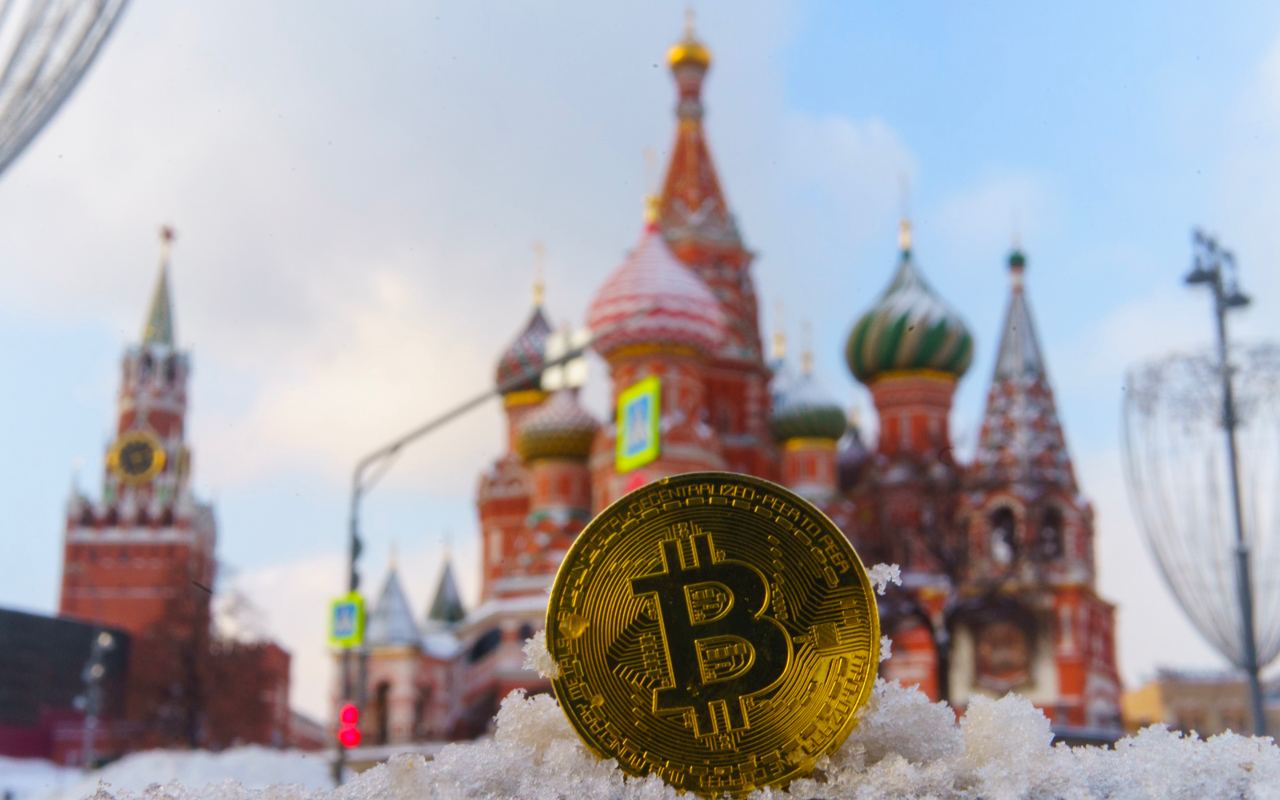
Russia's stock exchange expects to become a registered digital asset exchange and begin trading both digital financial assets and digital asset-based securities.
The Moscow Exchange (MOEX) is drafting a bill to allow trading in digital financial assets (DFAs) and securities based on them, according to a report in the Russian press. The stock exchange is writing the bill on the behalf of the Russian Central Bank, which does not have the power to introduce legislation, Vedomosti newspaper reported on Thursday.
Speaking at a banking conference, MOEX supervisory board chair Sergei Shvetsov said the bill in preparation foresees trading in both DFAs and DFA certificates that would trade like securities. “The exchange and its subsidiaries will apply to the regulator and I hope that they will receive the status of exchange operators” to trade in DFAs, Shvetsov said. He added:
“We want the market to make its own choice between blockchain accounting and depositary accounting, and if the law is passed, Russian depositories will be able to hold DFAs in their accounts on the blockchain — as soon as the client needs the underlying asset, they redeem the certificate and receive the asset in their account on the blockchain.”
Lack of familiarity is an impediment to distributed ledger technology in Russia, according to Shvetsov. “When you don’t know who to call and who to sue, many people don’t want to participate,” he said, but “It’s a blank sheet that we can draw whatever we want on, according to the needs of the economy and investors.”
Shvetsov said that the bill is currently under review by the Russian Central Bank. State Duma finance committee chair and head of the Russian Banking Association Anatoly Aksakov suggested in July that MOEX become a crypto exchange, following the examples of the Toronto Stock Exchange and the Deutsche Boerse.
A MOEX spokesman said in August that the exchange expects to be permitted to trade DFAs. “It’s in the interests of our clients,” MOEX International managing director of strategy Artem Zheleznov said.
This media is not supported in your browser
VIEW IN TELEGRAM
We all love collecting unique NFTs with a positive purpose!🔥💯
✨Reforesta is a forestry design & conservation initiative with 13 years experience in sustainable teak and eucalyptus tree production.
✨Reforesta is minting 7777 unique “Totem Guards” NFTs to raise money to reforest the Amazon Forest with Teak and Eucalyptus trees! 🌲
❤️They need your support.
Help restore the lungs of the Earth by purchasing one of their NFTs!
✅ Website: reforestaperu.com.pe
✅ Discord: discord.gg/JubWfQ4vKu
✅ Twitter: https://twitter.com/reforesta_offic
Affyn will become the NUMBER 1 blockchain metaverse in the entire industry. Can’t wait for their upcoming BIG UNVEILS in 2 Days!
TELEGRAM:
https://t.me/affynofficial/
TELEGRAM:
https://t.me/affynofficial/
Telegram
Affyn Official
Announcement: https://t.me/affynannouncement
Web site: www.Affyn.com
Twitter: https://twitter.com/affynofficial
Web site: www.Affyn.com
Twitter: https://twitter.com/affynofficial
#1xBit #Crypto #Polygon
🔥1xBit has added a new cryptocurrency to its incredible portfolio of supported crypto assets. Now you can use Polygon on the platform🔥
✨Polygon is a decentralized platform for Web3 applications and dApps meant to better some of Ethereum’s most significant shortcomings. It improves scalability, user-friendliness, and Ethereum’s high transaction fees✨
🚀Thanks to 1xBit and Polygon, gambling with cryptocurrency is faster and easier than ever🚀
💰It’s the perfect time to create your 1xBit account - a generous Welcome Bonus of up to 7 BTC for the first 4 deposits awaits all new players. Besides Polygon, 1xBit supports over 40 other popular crypto assets💰
Take gambling to the next level with Polygon on 1xBit!
MetaMask adopts custodial features for NFT-hungry institutional investors.
The MetaMask Institutional wallet added Cobo NFT management to its growing list of custodial services for institutional investors.
Institutional investment is pouring into the crypto world, notably the nonfungible token (NFT) scene. In a reaction to the influx, MetaMask Institutional announced another addition to its custodial services offerings for institutional-level clients.
MetaMask’s partnership with NFT management and storage service Cobo aims to create a “one-stop platform” for large corporations dealing with digital assets.
Although MetaMask is a non-custodial wallet at its average user level, the institutional branch of the wallet has been adopting custodial partnerships in various countries around the world.
Tavia Wong, the director of marketing and business development for Cobo, told Cointelegraph that not only does custodianship provide asset protection, but for institutions specifically, custodianship becomes useful on an administrative level.
“Because of the high levels of users and different clearance levels, institutions require additional features to avoid internal failures and the consequences of negligence."
While wallets like MetaMask have been deemed not as “user friendly” in the past, this addition to custodial offerings prioritizes usability for big investors.
The new integration allows institutional clients to designate roles the company alongside internal collaboration tools. According to Wong, this enables user limits on buying, trading and selling as permitted by the administrator.
“With multisig access, it ensures that no single entity will be able to control all assets, removing any single point of failure."
Nonetheless, the debate between noncustodial and custodial wallets still rages on.
With many in the space touting the slogan “not your keys; not your coins,” noncustodial wallets are often looked to for more security and financial autonomy.
However, as mainstream users without atechnical backgrounds continue to enter the space, custodial wallets often offer a more user-friendly environment. Some users even refute the aforementioned slogan in favor of greater accessibility for easy adoption:

Latin Grammy Awards signs 3-year contract for award show NFTs.
The Latin Grammy Awards is stepping into Web3 through its first NFT collection in collaboration with the OneOf Web3 music platform.
This year’s 64th Latin Grammy Awards will have its first-ever nonfungible token collection after the Latin Recording Academy signed a three-year contract for award show-related NFTs.
The aforementioned partnership is between the Latin Recording Academy, which is behind the Latin Grammys, and OneOf, a Web3 music platform. Each collection, which will lead up to that year’s award show, will include drops highlighting Latin music.
According to Manuel Abud, CEO of the Latin Recording Academy, this is a new form of musical innovation and a way for fans to “own a piece of the Latin GRAMMYs”:
“The Latin Recording Academy is committed to exploring innovative, new ways to celebrate excellence in Latin music and to connect music to other art forms in our culture, including visual and digital arts.”
The Latin Grammy Awards NFTs will drop throughout October in the lead-up to the award show on Nov. 18.
This comes after OneOf’s partnership with the Grammy Awards, in which it also planned a three-year NFT release plan. The first collection was released coinciding with the 64th Grammys, for which Binance was the official crypto exchange partner.
The Grammys is not the first major award show with Web3 integrations. Earlier this year, the MTV Video Music Awards announced its newest award category of “Best Metaverse Performance.”
Additionally, music industry giants have been rapidly adopting Web3 technologies to upgrade their businesses. Sony Music filed a trademark application for NFT-authenticated music on Aug. 30.
Musicians have been utilizing the technology to release NFT singles or to improve music rights and licensing. Moreover, NFTs officially became recognized as a chart-eligible format, with musicians such as Muse taking advantage of the development.

BNB Chain Resumes Operations After $100M in Crypto Was Drained by ‘Potential Exploit’
In response to what it termed a “possible exploit,” BNB Chain has been back in action as of 07:00 Coordinated Universal Time (UTC) following a forced halt on Thursday due to on-chain data showing it might have targeted hundreds of millions in cryptocurrency.
Read more 👉 https://www.thecryptoupdates.com/bnb-chain-resumes-operations-after-100m-in-crypto-was-drained-by-potential-exploit/
India's Central Bank Plans to Launch Digital Rupee CBDC.
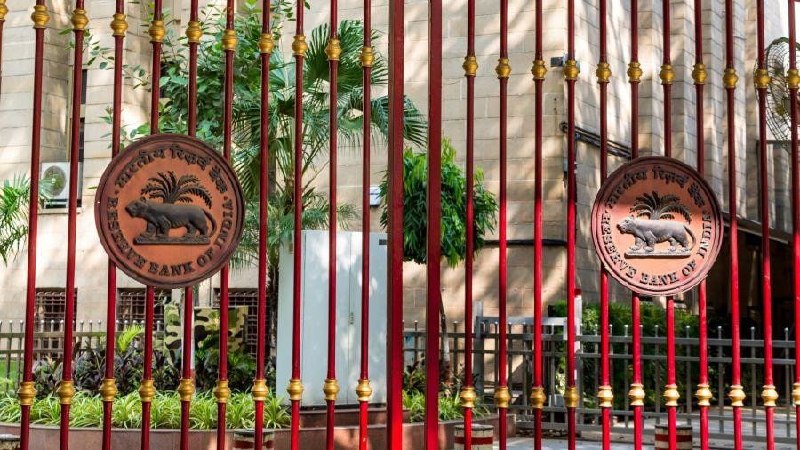
The Reserve Bank of India (RBI) will soon launch pilot tests for its upcoming digital rupee in a bid to increase awareness around its Central Bank Digital Currency (CBDC).
The country's central bank announced the news on Friday, detailing that the digital rupee will be available for specific use cases during the pilot. In a statement, the RBI said the pilot program will help create awareness around the planned features of the digital rupee.
“It explains the objectives, choices, benefits, and risks of issuing a CBDC in India. The note also seeks to explain the Reserve Bank’s approach towards the introduction of the CBDC,” the central bank reportedly said.
The RBI has also released a concept note for the digital rupee, which talks about key aspects of the CBDC, including its technology and design, potential use cases of the digital rupee, issuance mechanisms, and more. In addition, it explores how the introduction of a CBDC would impact the banking system, monetary policy, financial stability, and privacy issues.
“As the extent and scope of such pilot launches expand, RBI will continue to communicate about the specific features and benefits of e₹, from time to time,” the RBI said.
The country's Finance Minister Nirmala Sitharaman had previously announced the launch of the digital rupee in her 2022-23 budget speech earlier this year. The announcement marked another clear indication that the Indian government is determined to launch a CBDC.
💎 Bestarz is an NFT play-to-earn fantasy football platform based on the real-world results, in which players create a team, collect unique player cards, and participate in weekly matches concurrent to weekly football events. 💎
✅ STARZ is a BEP-20 governance token in the BESTARZ universe.Users of applications on the BESTARZ platform can receive STARZ tokens as special rewards. Pre-sale will start soon.🔥💰🚀
✅ Join their community to get more information👇👇
https://t.me/bestarzio
✅ Visit their website to learn more and get started NOW! 🪩
Crypto and digital bank MinePlex secures $100M in funding from GEM.
The funding will be used in new banking technologies, including a collaboration with Mastercard and Visa for crypto transactions.
In another round of investments in the crypto space, Singapore-based crypto bank MinePlex has secured $100 million from digital asset investment firm GEM Digital Limited (GEM), aimed at closing the gap between digital assets and traditional banking.
According to an Oct. 11 announcement, MinePlex will use the funding to develop new banking technologies, including a collaboration with Mastercard and Visa for transactions accepting Tether (USDT), Bitcoin, Ether and TRON.
Bringing digital assets and traditional banking services together is MinePlex’s big bet.
The platform offers fiat and crypto assets services within the same application, enabling transactions such as bill payments as well as purchases in crypto assets.
Introducing CrossFi, MinePlex’s co-founder and CEO, Aleksandr Mamasidikov, explained to Cointelegraph:
“We created CrossFi, a new technology that runs on the LPoS (Liquid Proof of Stake) consensus algorithm and MinePlex’s innovative blockchain, which provides such advantages as simplicity, operating speed, and low fees.”
According to MinePlex, its native MinePlex (PLEX) token will also be listed on new exchanges as part of the fundraising efforts.
The company also intends to open new offices in South Africa, Australia, India and Brazil, adding to its already established offices in Barcelona, Dubai, Uruguay and Singapore. The company claims to have processed more than five million cards across 50 banks in Russia, Europe and Asia.
GEM is a $3.4 billion alternative investment group that has been a source of capital for other startups in the crypto space.
In September, ParallelChain Lab secured $50 million in funds from GEM following the launch of its mainnet and native token listing, XPLL, while Sports Metaverse startup LootMogul secured a $200 million investment commitment from Gem Global Yield.
In June, the private equity fund closed a $200 million investment in the cryptocurrency exchange Unizen to expand the firm’s business and its ecosystem.
💎 Fashion TV and FTVIO released their official Token called STYL and it gained over +150% before getting listed in Gate.io 💎
✅ You can buy STYL on pancakeswap and uniswap 🔥💰🚀
✅ Join our community to get more information👇👇
https://t.me/stylike_io_official
✅ The coin is officially listed in CMC and Coingecko 📈📊
✅ Visit our website to learn more and get started NOW! 🪩
✅ You can buy STYL on pancakeswap and uniswap 🔥💰🚀
✅ Join our community to get more information👇👇
https://t.me/stylike_io_official
✅ The coin is officially listed in CMC and Coingecko 📈📊
✅ Visit our website to learn more and get started NOW! 🪩
pancakeswap.finance
🥞 PancakeSwap - Everyone's Favorite DEX
Trade, earn, and own crypto on the all-in-one multichain DEX
Metaverse trading volume plummeted 80%, but hype hasn’t decreased.
A DappRadar report found that while trading volumes have taken a sharp hit during Q3, the average number of NFT sales for these 10 projects only decreased by 11.55%.
Third-quarter trading volume for the top 10 metaverse projects may have fallen 80% compared to the second quarter, but analytics firm DappRadar suggests that interest in virtual worlds still remains.
The metaverse sector has been hit with a fair amount of negative press as of late, particularly around suggested low user activity across certain platforms, such as Decentraland and Meta — reports which they have refuted.
DappRadar noted in an Oct. 20 report that while trading volumes have taken a sharp hit during Q3, the average number of NFT sales for these 10 projects only decreased by 11.55% compared to Q2.
DappRadar explains that lower trading volumes could merely reflect decreasing asset prices and not necessarily lack of interest, noting that:
“We consider this a bullish sign because it shows that the hype for these types of projects hasn’t decreased. Instead, the fall of cryptocurrency prices has affected the projects’ overall trading volume instead of a lack of interest.”
A caveat to these sentiments, however, is that eight of the top 10 metaverse projects saw significant decreases in their nonfungible token (NFT) sales counts during Q3, with Yuga Labs’ Otherside seeing a 74% decrease for the quarter.
The positive action was primarily driven by The Sandbox and former Minecraft-based platform NFT Worlds V2, which saw NFT sale count increases of 190% and 79% apiece.
DappRadar attributed this to the hype surrounding The Sandbox’s Alpha Season 3, which offers a host of new gaming experiences and collectibles. While NFT Worlds V2 being booted off of Minecraft may have been seen as a “buying opportunity” as the value of its NFTs dropped by 90% in Q3.
Meanwhile, DappRadar’s report indicated that the floor prices for NFT land plots had decreased by 75% on average, which may have been one of the reasons why trading volumes had decreased by so much.
While the value of any piece of real estate, virtual or otherwise, is subject to swings, “Metaverse real estate is currently very depreciated,” DappRadar stated, adding that the declining prices are in accordance with the broader bear market of the crypto sector.

Congratulations 🎉
STARS presale is live🚀🚀
💎 Bestarz is an NFT play-to-earn fantasy football platform based on the real-world results. STARS is a BEP-20 governance token in the BESTARZ universe 💎
✅ KYC
✅ Audit
✅ CECs & DECs listing soon
Presale link on the Pinksale launchpad👇
https://www.pinksale.finance/launchpad/0xFB4C66d1907Af054dc57fa01C236d07ce433E92d?chain=BSC
Join their Telegram community for more info👇
https://t.me/bestarzio
Craig Wright Defeated in Lawsuit Against Hodlonaut.
Australian computer scientist and self-proclaimed Satoshi Nakamoto, Craig Wright, has been defeated in a defamation case in Norway against the popular Bitcoin (BTC) influencer Hodlonaut.
The win for Hodlonaut came after a seven-day trial in Oslo, Norway in September. The trial came about after Hodlonaut sued Wright in Norway in an attempt to avoid another lawsuit that was brought against him in the UK by Wright.
Central to the case was whether Hodlonaut, an outspoken critic of Wright and his Bitcoin SV (BSV) cryptocurrency, was justified in calling Wright a liar and a fraud in 2019.
According to a transcript of the ruling, “the prevailing opinion in the media” has been, and still is, that “Wright is unlikely to be Satoshi Nakamoto.”
As such, Hodlonaut’s tweets where he called Wright a fraud were justifiable, the judge concluded:
“Against this background, the court believes that [Hodlonaut] had sufficient factual grounds to claim that Craig Wright is not Satoshi Nakamoto in March 2019 […] Wright has come out with a controversial claim, and must withstand criticism from dissenters.”
“In a situation where [Wright] has not succeeded in, nor does he wish to, provide cryptographic evidence that can support his claim to be Satoshi Nakamoto, the court believes that he must accept that there is a debate as to whether he is who he says he is,” the ruling said.
In conclusion, Hodlonaut was acquitted of all claims for compensation, and is not liable for damages related to the claims he made on Twitter three years ago. Instead, Wright has been ordered to compensate Hodlonaut for his legal fees worth around $380,000.
Craig Wright’s attorneys told CoinDesk on Thursday that he would appeal the ruling, noting that “anonymous online bullying and harassment risks having a chilling effect” on public debate.

Google still promoting crypto phishing sites warns Binance boss.
In a tweet this week, CZ warned that when searching for CoinMarketCap on Google, phishing sites with an “ad” tag were showing up in front of the actual website.
Binance CEO Changpeng Zhao (CZ) has warned that Google search results are still promoting crypto phishing and scamming websites.
Despite Google’s strict policies on crypto marketing for its ads service, scammers have still been slipping through the cracks over the past few years. At times, scam websites have even been displayed higher than legitimate crypto and blockchain projects.
In an Oct. 27 tweet, CZ warned that when searching CoinMarketCap on Google, phishing sites with an “ad” tag were showing up in front of the actual website.
“This affects users adding smart contract addresses to MetaMask using these phishing sites. We are trying to contact Google for this, and in the meantime alerting users about this through social channels,” he said.
Google displays phishing sites when users search CMC. This affects users adding smart contract addresses to MetaMask using these phishing sites. We are trying to contact Google for this, and in the meantime alerting users about this through social channels.
CoinMarketCap is one of the most commonly used crypto data aggregators on the market and was acquired by Binance for an undisclosed fee back in April 2020. Given its popularity, a lot of traffic could be directed toward these scam ads.
In some cases, phishing websites can be hard to spot, as they generally use copycat URLs to trick people that aren’t paying attention into clicking. For example, one of the websites CZ highlighted was spelled “coinomarketcaap.”
In April this year, blockchain security firm SlowMist uncovered a Terra-related phishing scam in which bad actors were using Google Ads to run copycat websites utilizing Achor Protocol and Astroport branding.
According to SlowMist, the promoted websites ranked ahead of the actual sites people were searching for and went on to swipe around $4.31 million worth of Luna Classic (LUNC) from 52 addresses between April 12 and April 21.

Trade Leaf announces Learn to Earn Challenge!
Trade Leaf are giving out $150 (USDT) in total, $25 per 6 winners
🤓 What do you have to do?
Subscribe to their Twitter and make your own tweet with correct answers to questions below. Make sure to add following hashtags: #TradeLeaf and #LearnToEarn
👇👇👇
1. What is Trade Leaf?
2. Who are core participants of the Trade Leaf ecosystem?
3. What are the main technologies that Trade Leaf use?
We wish you good luck 🍀
Twitter | Telegram | LinkedIn | Medium
Argo Blockchain is at risk of closing if it fails further financing.
Argo Blockchain has been selling its Bitcoin holdings earlier this year to cut debt to Michael Novogratz’s crypto investment firm Galaxy Digital.
The London Stock Exchange-listed cryptocurrency firm Argo Blockchain has warned that it’s at risk of ceasing operations due to a lack of financing.
The crypto mining company Argo Blockchain continues to explore new financing opportunities after failing to raise major capital from a strategic investor, according to an announcement on Oct. 31.
Argo has been seeking to raise about 24 million British pounds ($27 million) via subscription for ordinary shares. “The company no longer believes that this subscription will be consummated under the previously announced terms,” Argo said in a statement.
While Argo is exploring other financing options, there can be no assurance that it will sign any definitive agreements or consummate any deals. The firm will continue to work to reach sufficient capital for at least the next 12 months from the day of the announcement, Argo noted.
Argo will have to cut or event halt operations in case it fails to raise capital during this period, the firm noted, stating:
“Should Argo be unsuccessful in completing any further financing, Argo would become cash flow negative in the near term and would need to curtail or cease operations.”
Amid the lack of financing, Argo has been taking measures to preserve cash and optimize liquidity. The company sold 3,843 brand-new Bitmain S19J Pro miners for $5.6 million, which was the last batch of the original Bitmain order scheduled for installation in October 2022. Argo’s total hash rate capacity remained at 2.5 exahashes per second.
Previously, Argo has also been actively selling its mined Bitcoin holdings in order to cut debt to Michael Novogratz’s crypto investment firm Galaxy Digital. In July, Argo sold another 887 BTC after previously getting rid of 637 BTC in June 2022. In doing so, Argo became one of many crypto mining firms that opted to sell self-mined BTC amid the bear market of 2022, including Bitfarms, Core Scientific and Riot Blockchain.
