Ethereum Won't Hide From Quantum Computers Behind PoS Shield.
Quantum computing has long been regarded as Bitcoin (BTC)’s ‘bogeyman.’ The popular fear is that, as secure as Bitcoin and other proof-of-work cryptoassets are in terms of standard cryptography, quantum computers could provide additional means of breaking them.
One other popular assumption is that, because they don’t use PoW, proof-of-stake cryptoassets such as Cardano (ADA), Polkadot (DOT), and Tron (TRX) (and eventually, Ethereum (ETH)) aren’t as vulnerable to quantum computing attacks as networks like Bitcoin, Bitcoin Cash (BCH) and Litecoin (LTC). However, according to a variety of computer scientists and crypto experts, it’s not the consensus mechanism of a coin which creates the biggest risk in terms of quantum computers, but rather the signature system.
In other words, given that the vast majority of PoS cryptoassets also use (non-quantum) cryptographic signature systems to sign individual transactions, they’re nearly as vulnerable to quantum hacks as their PoW rivals. That said, the advent of sufficiently powerful quantum computers is still some way off, while their emergence is likely to incentivize a widespread shift to post-quantum cryptography.
It’s the first mechanism that affects PoW more than PoS, with Bitcoin and other proof-of-work coins theoretically vulnerable to a quantum computer-driven 51% attack.
That said, Marek Narożniak — a physics PhD student at New York University who has worked with Prof. Tim Byrne on research into quantum computing — explains that talk of a 51% attack perpetrated by quantum computers still remains theoretical.
“If someone has a sufficiently large quantum computer and wishes to perform a 51% attack — consisting of outperforming remaining miners and producing invalid blocks — it would have to be a really massive quantum machine. The reason for that is that Bitcoin's proof-of-work is based on a hashing function for which there is no known efficient quantum algorithm that can reverse it,”.
But while Bitcoin’s weakness compared to PoS cryptoassets is still pretty hypothetical, quantum computing poses another threat that concerns PoS and PoW in equal measure.
“Even if consensus requires no cryptographic ‘work’ in the case of PoS it still does rely on cryptography which is currently mainly based on elliptic curves which are vulnerable to quantum algorithms. An attacker with sufficiently powerful quantum computers could break other validators signatures and still mess with the consensus,” said Narożniak.
This is a concern echoed by other commentators. In an analysis published by Deloitte, Bram Bosch wrote that around four million bitcoins are stored in addresses that use p2pk and p2pkh scripting, which is vulnerable to attacks via quantum computers.

This media is not supported in your browser
VIEW IN TELEGRAM
🔥HAPI @hapiHF will be one of the main partners of The BIGGEST Solana Hackathon YET. With Dona Mara as one of the main judges 🔥
🎉This incredible news mean that HAPI will be one of the invited guests on Solana Hackathon with Dyma Budorin and Dona Mara as main judges.
👉Further solidifying and consolidating our relationships with Solana
----------------------------------------------------
💰 TOTAL PRIZE POOL (Including grants): 1 000 000$
🟥 And special Prize from the Dona himself: 25 000$
✈️ GLOBAL PARTICIPATION: Yes. Hackathon will take place online
🗓 DATE: 15 May - 7 June 2021 (3 weeks in total)
-----------------------------------------------------
🔸What is Hackathon Solana Season?
The basic principles of Solana Hackathon are development of Solana ecosystem via facilitation of ideas and technological advancements on Solana blockchain.
------------------------------------------------------
📓 To know more about The Biggest Solana Hackathon yet visit solana.com/hackathon
Someone Paid USD 1.7M In Litecoin For Tom Brady Football Card.
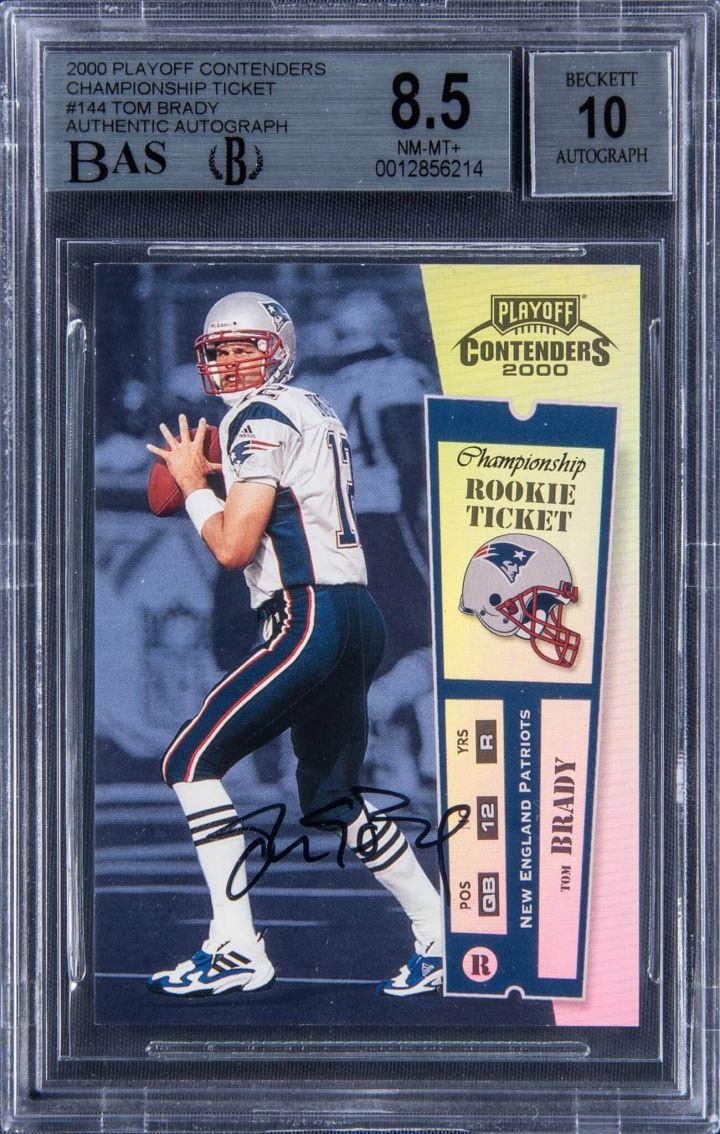
In what is called one of the largest "hard asset" transactions to be paid entirely in cryptocurrency, an unknown buyer purchased an autographed Tom Brady football card for about USD 1.68m worth of litecoin (LTC) at an auction hosted by Goldin Auctions.
The auction house says this marks the most expensive item to be paid in crypto since the company began to accept this form of payment last month.
“The hobby is undergoing incredible growth unlike anything I have seen in my 40+ years in the industry,” Ken Goldin, Founder of Goldin Auctions, told Sports Collectors Daily.
“What’s amazing to see is that the same thing is playing out with crypto. Trading cards and crypto are now two of the most rapidly growing alternative asset classes and we know there is a lot of overlap between the communities. We believe this may be one of the most expensive hard assets ever paid for in crypto,” he was quoted as saying.
Tyler Winklevoss, CEO and co-founder of Gemini, said that the 2000 Playoff Contenders card featuring Tom Brady, who was at that time a rookie drafted by the New England Patriots where he would spend a total of 20 seasons, was sold in partnership with his crypto exchange.
The card is “known as the "Holy Grail" of the collecting industry,” Winklevoss said.
This said, the item is not the most expensive card of this type to be bought at an auction. Earlier this month, a similar card autographed by the American athlete was sold for more than USD 2.25m at an auction hosted by Lelands Auctions. Both cards had a card grade of 8.5 out of 10, but the card auctioned by Lelands had a slightly lower autograph grade of 9 out of 10, compared with 10 out of 10 for the card purchased with litecoin.
At 09:58 UTC, LTC, ranked 10th by market capitalization, trades at USD 258 and is up by 2% in a day. The price is down by almost 1% in a week, trimming its monthly gains to 33%.
🤝 Currency.com announces a partnership with TradingView
Regulated tokenized asset exchange Currency.com has signed a partnership with TradingView, one of the world’s largest trading communities. Now Currency.com users can access TradingView charts directly from their dashboard, allowing them to analyze the market conditions faster and take more informed decisions.
Moreover, Currency.com customers will be able to share their ideas and strategies with other traders in real time, while TradingView users will be able to trade on Currency.com with minimal spreads and low fees.
Currency.com supports over 2,000 tokenized assets that you can buy, sell, and trade with a leverage up to x100, including:
- Tokenized shares
- Tokenized indices
- Tokenized ETFs
- Tokenized commodities
- Tokenized currencies
- Major cryptocurrencies.
Register and trade on Currency.com!
Are Wall Street Giants Playing the 'Make-Bitcoin-Cheaper' Game Again?
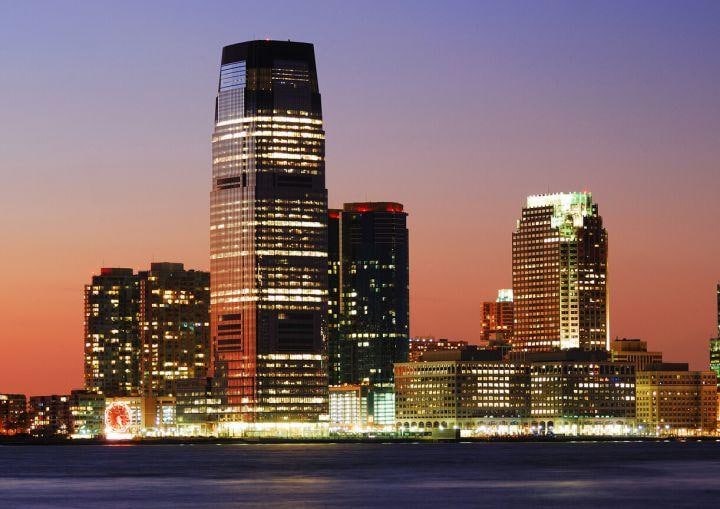
It seems that the Wall Street actors may be playing the same game seen in January - bashing bitcoin (BTC) when it looks relatively weak, while and/or before doing their own BTC-related move. We saw this from JPMorgan and Guggenheim Partners earlier, and now it's Goldman Sachs.
This week, US-based investment giant Goldman Sachs said that the competition from other cryptoassets, energy use, and lack of use cases are among the concerns surrounding bitcoin's long-term store of value demand.
It is too early for bitcoin to compete with gold for safe-haven demand, said the bank, but the two can co-exist, as Reuters reported. It added that the extensive energy use made it vulnerable to losing its store of value demand to a "better-designed" contender.
"While Bitcoin benefits from greater liquidity, it suffers from lack of real use and weak environmental, social, governance (ESG) scoring, due to its high energy consumption," the banks is quoted as saying. "The only way this record-sized and fast approaching supply crunch can be solved is via a surge in price to new record highs."
Furthermore, in the same note, Jeffrey Currie, Goldman's head of commodities research, said, per Kitco, that BTC "gave ground to other cryptocurrencies such as ether and altcoins. This, in our view, underscores the fact that competition among cryptocurrencies for the status of dominant long-term store of value is still on and adds an additional source of risk to holding bitcoin."
Just a month ago, it was reported that Goldman Sachs aims to offer its first investment vehicles for bitcoin and other unspecified digital assets to clients of its private wealth management group in the second quarter of this year. Some of the clients were reportedly considering BTC to be a hedge against inflation.
The bank also offers a crypto trading desk and is dealing BTC futures and non-deliverable forwards for their clients.
Furthermore, earlier in March, Goldman said it saw rising demand for BTC not only among institutional investors, but also in the private wealth management industry.
The company has delivered several relatively favorable views on crypto over the years. In late November 2017, Currie said that BTC was a commodity with many similarities to gold, and that the volatility that concerned investors stemmed mainly from its lack of liquidity. "I don’t see why there is all this hostility to it," Currie told Bloomberg back then. BTC is "not much different than gold." He added though that the "real innovation" is in the ledger, not in BTC itself.
In January this year, Currie stated that bitcoin was showing signs of maturity, but that the level of institutional investment in it was still very small - more is needed for it to stabilize. BTC had a market value of above USD 600bn at the time and over USD 1trn today. "That can give you some long-run equilibrium," Currie told CNBC. But the level of volatility and uncertainty in the market "makes it very difficult to forecast it."
CryptEx is throwing $350,000 ☄️ into Staking on May, 10
What is CryptEx?
CryptEx is a B2B set of security services for Binance Smart Chain projects. CryptEx charges customers, and 50% of the fees go to its holders.
How to earn 50% of the fees?
All you have to do is stake CRX from your wallet, and every time a client pays for CryptEx services, the stakers get 50% out of this payment. All the rewards are paid in 💰BNB
Ask any question in the official CryptEx telegram chat 👉 @cryptexlocker
What about $100,000?
Since February 20, CryptEx provided services to 52 projects, charging them a total of over $100 000. However, staking has been released only on May 2.
After May 10, CryptEx will distribute 50% out of earned income between all CRX stakers. APY SHOULD BE ON FIRE 🔥.
Also, CRX Stakers are getting 1 000 000 DROPS (more than $250,000)during the airdrop. The snapshot will be recorded after May 10, at a random time.
Tiсker: $CRX
Max Supply: 100,000 CRX
Current Price: $36.88
FD MCap: $3,687,867
Network: Binance Smart Chain
Where to buy: 1Inch, ApeSwap, PancakeSwap V1
Join the chat: 🔥 @cryptexlocker
cryptexlock.me
CryptEx | Liquidity Lock and Team Tokens Vesting for PancakeSwap, ApeSwap and others
Liquidity provider tokens lock. Team tokens vesting. Binance Smart Chain, Avalanche, Fantom, Polyon. PancakeSwap, ApeSwap, Pangolinswap.
🤑 How to earn $5,000 in a week? Take part in Currency.com's trading competition!
Follow several steps to join:
- Sign up to Currency.com
- Verify your account
- Trade with leverage
- Reach the highest P&L
- Become one of the TOP-3 participants and get your award
Traders with the highest P&L for leveraged-operations will become winners. The three leading traders will get:
🔸 1st place – $5,000
🔸 2nd place – $3,000
🔸 3rd place – $2,000
Join the competition and become the next winner! Read more: https://currency.com/cxmaygamecis
Drops ($DOP) have opened the Whitelist for their IDO on Polkastarter.
IDO Drops on Polkastarter will take place on the 21st of May. In order to participate you will need to hold at least 250 POLS on ERC20 or BEP20.
🔹 Hardcap at IDO: $200,000 (333,333 DOP)
🔹 Price at IDO: $0.60
🔹 Max allocation: $210
Previously Drops announced that they closed a private round raising $1m from such investors as Axia8 Ventures, Bitscale Capital, Blocksync, AU21, X21, D64 Ventures, Genblock and Drops Ventures. Also, their strategic partners include Polkastarter, Quantstamp, 0xb1, Kyros Ventures, Zokyo, PetRock Capital and BlockStar Technologies, as well as a number of high caliber angel investors.
Drops is a platform, which will bring a much needed DeFi-style infrastructure to the NFT market, providing such products as NFT trustless loans, NFT staking, liquid NFTs, and NFT vaults.
Find out more about Drops: https://t.me/drops_nft
Follow on Twitter: @dropsnft

NYDFS taps former DOJ attorney as deputy virtual currency chief.
The former Department of Justice trial attorney has been with the New York State Department of Financial Services for eight years.
Debra Brookes’ new role with the New York State Department of Financial Services may suggest more of a focus on regulation through enforcement.
An attorney who has been working at New York’s Department of Financial Services, or NYDFS, since 2013, Brookes has served in key roles in the department’s Enforcement Division, Financial Frauds and Consumer Protection Division, and Consumer Protection and Financial Enforcement Division before becoming deputy virtual currency chief for its Research and Innovation Division in March. Prior to that, she worked as a trial attorney with the U.S. Department of Justice for five years, leading and participating in “complex white-collar investigations.”
Though the former DOJ attorney’s views on crypto have not been widely reported, she did contribute to a NYDFS report over the July 2020 hack on Twitter, which resulted in many high-profile accounts sending tweets fraudulently promising followers that they would double Bitcoin (BTC) payments sent to a specific address. That report concluded that “cryptocurrency companies had robust programs around cybersecurity, fraud-prevention, and anti-money laundering programs.”
With regulatory authority over many crypto exchanges and firms, the NYDFS has approved Goldman Sachs-backed crypto custodian BitGo to operate as an independent custodian in New York. The regulator has also granted BitLicenses — virtual currency licenses which allow firms to do business with customers and companies based in the state — to both global crypto payments processor BitPay and institutional cryptocurrency exchange Bakkt.
Brookes works under Jon Blattmachr, who has been the NYDFS' virtual currency chief since October 2020.
LAUNCHED LESS THAN 24 HRS AGO, UNDER 500K MCAP
Welcome to Grill.Farm on #BSC!
The fingerlicious Chicken $GRILL is here to both satisfy your cravings for a community-centered, trusted and fair token, as well as rile up your appetite for some succulent and decadent chicken meat 🍗
📈 Charts:
1️⃣ https://poocoin.app/tokens/0x7853401a1095dd0b04edb92366233c37fb511e89
2️⃣ https://www.dextools.io/app/pancakeswap/pair-explorer/0xac7ffc46af6503fe0ce490eb7fa14733673bbfb2
✅ Contract: https://bscscan.com/address/0x7853401a1095dd0b04edb92366233c37fb511e89
🔒 Liquidity LOCKED
🗺 Check our roadmap:
https://grilled-chicken-token.medium.com/what-is-grilled-chicken-token-addf2a07aba2
🔗 Links:
Website: http://grill.farm/
Telegram: https://t.me/Grill_Farm
Announcements: https://t.me/GrillFarm
Discord: SOON
Twitter: https://twitter.com/Grill_Farm
Instagram: https://instagram.com/Grill_Farm
'Crypto regulatory crackdown is starting' but it’ll be OK, says Avanti CEO.
Caitlin Long has stated she is optimistic about the crypto regulations that are taking shape in the United States as the focus is on taxation and compliance.
'Crypto regulatory crackdown is starting' but it’ll be OK, says Avanti CEO.
The founder and CEO of Avanti Financial, Caitlin Long says the “U.S. crypto regulatory crackdown” has begun, but emphasized it’s not a “Bitcoin ban.”
She said she was optimistic that the forthcoming regulations would simply bring crypto laws into line with standard financial rules around taxes and compliance.
There has been a renewed focus on regulations in recent weeks, with the brutal crypto market crash leaving left Washington fumbling for a response.
Avanti's CEO provided a chronology of nine news stories, public statements and announcements covering the IRS, the Office of the Comptroller of the Currency, FinCen, and the Secretary of the Treasury, among others, from May 5 to May 21, concluding the new regulations comprise a "compliance crackdown."
“It may not yet be over, but the pattern is pretty clear: it's a compliance crackdown for sure, but path for ‘responsible innovation’ in US does seem to remain open.”
Long highlighted a May 20 Department of the Treasury report that called for exchanges and custodians to report crypto transactions larger than $10,000.
“Leveraging this information — rather than introducing new requirements for taxpayers — is a proven way to improve compliance,” the report read.
Long also pointed out the Federal Reserve is taking aim at the stablecoin industry as well with the Fed chair Jerome Powell putting out a statement yesterday.
“As stablecoins’ use increases, so must our attention to the appropriate regulatory and oversight framework,” he said. He then remarked:
“This includes paying attention to private-sector payments innovators who are currently not within the traditional regulatory arrangements applied to banks, investment firms, and other financial intermediaries.”
Long characterized this as a “warning shot” saying that its “consistent w/ the theme-comply w/ laws & don't take shortcuts (i.e., get fully regulated as a bank & pay the full regulatory freight).”
In the statement Powell also revealed that the governing body is moving ahead with plans to research how to implement a U.S. central bank currency, or CBDC. The Fed chair noted the “key focus is on whether and how a CBDC could improve on an already safe, effective, dynamic, and efficient U.S. domestic payments system.”
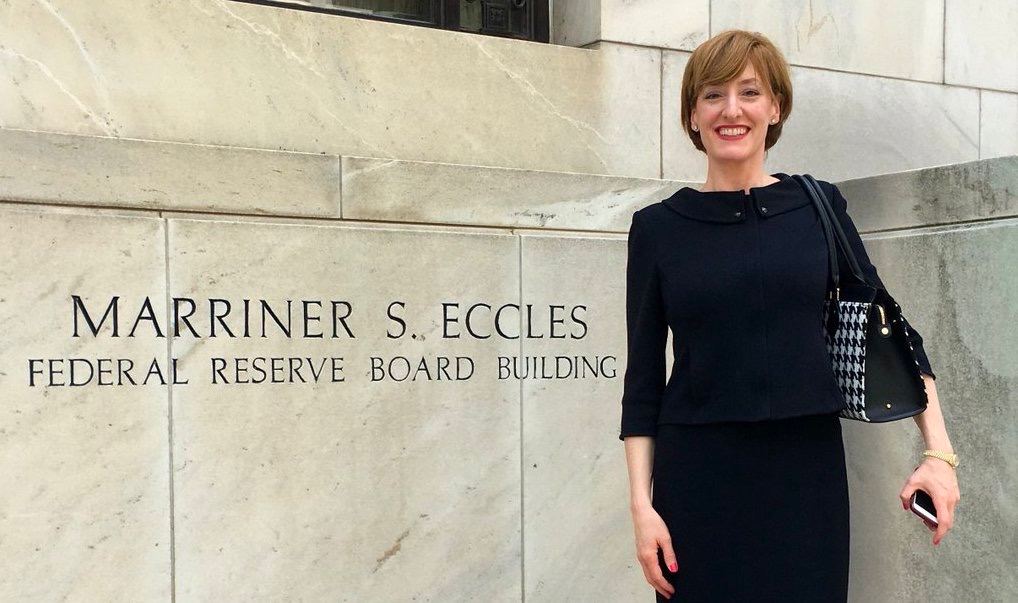
Hacken Foundation launched a new disruptive cyber security project - one stop compliance protocol for DeFI- PureFi🔰
💎 PureFi performs a ML analysis and protects ALL honest DeFi market players from dirty money via NFT/Verifiable Credentials.
💎 Verifiable Credentials serves a purpose of a full-fledged KYC/AML verification and proves the origin of funds without disclosure other data (ZK-SNARK)
PureFi is HOT & profitable⤵️
🚀 $UFI token ➡️ DAOMaker, Uniswap 🔜
🚀 70% of PureFi service fees ➡️ used for burning $UFI tokens
🚀 $UFI token ➡️ available to HackenAI App yieldfarming
Excited? Join for an early access now ✅ #hacken $HAI $UFI #purefi
Domino's Pizza franchises in the Netherlands will offer workers Bitcoin salary.
Any employee who earns more than minimum wage will have the option for the excess salary to be paid in crypto.
Domino's Pizza franchises in the Netherlands will offer workers Bitcoin salary.
A franchisee of many Domino’s Pizza locations in the Netherlands announced today that its workers would have the choice of being paid in Bitcoin.
According to Immensus Holding, the franchisee behind 16 Domino's Pizza locations out of the more than 270 in the Netherlands, its employees will be able to choose between being paid in euros or Bitcoin (BTC) for all salary above the country’s minimum wage. BTC Direct, a Netherlands-based crypto firm with a fiat-to-crypto onramp, will handle the payments for any of the company’s more than 1000 employees who choose to participate.
"We are a modern company, and we work with a lot of young employees,” said Immensus co-owner Jonathan Gurevich. “We hear them talking about Bitcoin and we want to offer the opportunity to own cryptocurrency.”
Dutch law requires that companies pay minimum wage for employees in euros. The minimum monthly wage in the country depends on age and hours worked, but generally workers aged 15-18 could expect to earn more working at the pizza chain than required by local law, meaning they could potentially pocket a little Bitcoin monthly.
Immensus’ announcement it would offer BTC payments coincides with the 11th anniversary of the first successfully documented commercial transaction of cryptocurrency for two Papa John’s pizzas, an event now known as Bitcoin Pizza Day. However, it also comes the same week the price of Bitcoin and many cryptocurrencies experienced double digit percentage drops, with BTC almost dipping under $30,000.
"A monthly Bitcoin salary can be compared to dollar cost averaging into Bitcoin," said BTC Direct's Jerrymie Marcus. "So all the benefits are the same, you don't have to time the market, and in the long run you cancel out short and mid term volatility. This actually benefits the employee, they save value automatically in an ever-increasing asset."
In 2010, Laszlo Hanyecz’s purchase of those pizzas cost him 10,000 BTC — worth hundreds of millions of dollars now. However, even some Bitcoin bulls and pizza lovers are seemingly hesitant to use BTC as a medium of exchange.
On Tuesday, Anthony ‘Pomp’ Pompliano, known for his educational podcasts on crypto, announced he was launching a pizza company aimed at supporting small business and the Human Rights Foundation's Bitcoin Development Fund. However, customers at the Bitcoin Pizza venture can only use crypto cards for payment. Pomp later explained his reasons for not accepting BTC:
"We don't want people giving up their Bitcoin for pizza, but rather we are working to raise money in the form of depreciating fiat dollars to help fund Bitcoin development.”

Vitalik argues that proof-of-stake is a 'solution' to Ethereum’s environmental woes.
The stakes are high for the chain to transition, as those that don't risk getting 'left behind.'
At a conference yesterday, Ethereum co-founder and unofficial figurehead Vitalik Buterin argued that Ethereum’s upcoming transition to a proof-of-stake consensus mechanism is a “solution” to the blockchain’s rampant energy consumption that has been incensing critics as of late.
In an interview at the StartmeupHK virtual conference hosted from Hong Kong, Buterin said that while proof of stake is “still in its infancy and less battle-tested” than Ethereum’s current proof-of-work model, it can ultimately reduce the chain’s energy consumption by upwards of 10,000x.
The comments come amid a period of rampant criticism of blockchain technology for its ecological impact — including from some erstwhile supporters. Tesla founder Elon Musk recently undertook an about-face in regards to the car company accepting Bitcoin payments, saying that he could not encourage the use of fossil fuels via Bitcoin mining. In other threads, he also called for Dogecoin to increase its efficiency across several key metrics.
Buterin directly responded to these comments about scalability in a blog post on his website, laying out the problems with trying to scale by simply tweaking the parameters around blocksize.
Earlier in the month, Buterin also argued that Bitcoin’s continued use of proof-of-work means that the chain, which is currently the world’s largest, will eventually get “left behind” as users increasingly demand more energy-efficient and environmentally friendly options — a phenomenon he says makes it “possible” that Ethereum eventually eclipses Bitcoin and the largest digital asset.
Ultimately, Buterin seems to agree with critics regarding the need for blockchains to adopt newer, more efficient models — especially as the chain grows in volume and becomes a widely relied-upon computational network.
"This thing we’re building isn’t just a game anymore. It’s a significant part of a new era.”
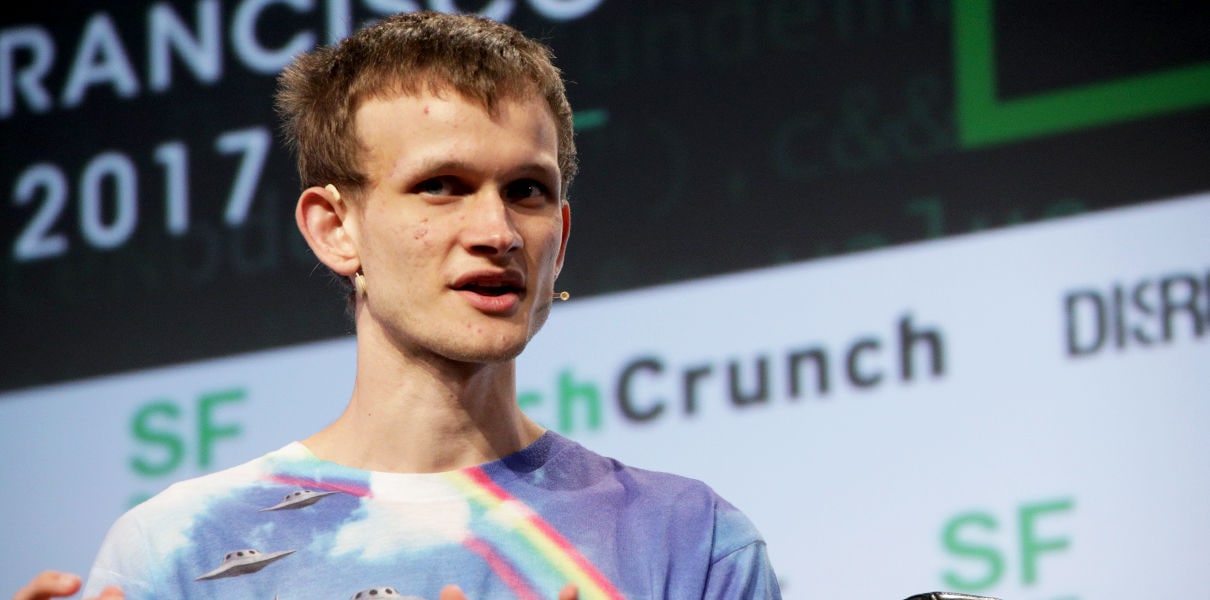
Bitcoin 2021 Miami continues with Tony Hawk, Kevin O’Leary and more.
Saturday’s programming will also feature Bobby Lee, the former CEO of China’s first cryptocurrency exchange.
Bitcoin 2021 Miami continues following Friday's massive opening of the historic event.
The events kick off at 9:00 am Eastern Time (1:00 pm UTC) with opening remarks by a Miami-Dade County commissioner. Cointelegraph will continue posting Bitcoin 2021 updates on Twitter as well as the YouTube channel.
One of the key speakers for day two will be Tony Hawk, an American skateboarding icon and entrepreneur. Hawk made a major move into the cryptocurrency industry earlier this year, releasing an NFT drop via Ethernity Chain in March featuring a tokenized video of his final 540-degree ollie.
The famous skateboarder will deliver a speech on “When A Counterculture Goes Mainstream” at the Nakamoto Stage at 9:45 am ET (1:45 am UTC). Hawk will also have a meet-and-greet session offering attendees the chance to get a limited-edition skateboard deck signed by the legend.
Hawk’s speech will be followed by a panel discussion devoted to cryptocurrency mining — one of the hottest topics in the crypto community. Shark Tank investor Kevin O’Leary will discuss crypto mining by public companies with Marathon CEO Fred Thiel, Riot Blockchain CEO Jason Les, and Frank Holmes, executive chairman of Hive Blockchain Technologies.
Saturday's event will also feature Bobby Lee, the former CEO of China’s first cryptocurrency exchange, BTCC, which was founded back in 2011. Currently the CEO of cryptocurrency hardware wallet Ballet, Lee will participate in the “Onboarding One Billion Bitcoiners” panel at the main stage at 11:40 am ET (3:40 pm UTC). He will later give a speech on the “Freedom of HODLing” on the End of Fiat Stage at 3:00 pm ET (7:00 pm UTC).
Lightning Labs co-founder and CEO Elizabeth Stark will continue the event with a panel discussion titled “Bitcoin For Billions, Not Billionaires” alongside strategic investor Lyn Alden. Other notable Bitcoin 2021 day-two speakers include Bitcoin programmer Jimmy Song, Galaxy Digital CEO Michael Novogratz, Paxos co-founder and CEO Charles Cascarilla, OKCoin CEO Hong Fang, and Google product director Steve Lee.
The last Nakamoto Stage panel called “Evolution Of Exchanges” will start at 3:35 pm ET (7:35 pm UTC) and will feature Avanti CEO Caitlin Long, Alameda Research founder Sam Bankman-Fried, Huobi Global vice president Ciara Sun, and ShapeShift CEO Erik Voorhees.

🤑 How to earn $5,000 in a week? Take part in Currency.com's trading competition!
Follow several steps to join:
- Sign up to Currency.com
- Verify your account
- Trade with leverage
- Reach the highest P&L
- Become one of the TOP-3 participants and get your award
Traders with the highest P&L for leveraged-operations will become winners. The three leading traders will get:
🔸 1st place – $5,000
🔸 2nd place – $3,000
🔸 3rd place – $2,000
Join the competition and become the next winner! Read more
Pantera Capital and Arrington XRP Capital lead $5.8M Unbound Finance raise.
Unbound Capital aims to become the first decentralized cross-chain stablecoin. The private investment round had participation from at least 14 venture funds and over a dozen angel investors from across the blockchain industry.
Cryptocurrency asset managers Pantera Capital and Arrington XRP Capital have co-led a $5.8 million private investment round for Unbound Finance, an up-and-coming DeFi treasury protocol for pooled tokens.
The funds will be used to further develop Unbound Finance’s cross-chain stablecoin platform, including the development of native bridges for instant transfers between its native UNB stablecoin and other synthetic assets, the company announced Wednesday.
Unbound Finance operates a so-called “liquidation-free collateralization platform,” which, as the name suggests, allows users to obtain interest-free loans against collateralized tokens.
Automated market makers are “DeFi's Zero to One Innovation and we are building the aggregator layer to enable greater yields and capital efficiency for our users,” said Tarun Jaswani, CEO and Founder of Unbound Finance.
There are some serious backers behind Unbound Finance’s $5.8 million raise. In addition to Pantera Capital and Michael Arrington’s XRP Capital, the project received direct funding from Hashed, Coin98 Ventures, LedgerPrime, CMS Holdings and many others. Over a dozen angel investors also participated in the raise, including the founders of Angelist, Enjin, Gnosis, Kyber Network, Polygon, Harmony, Polkastarter and others.
Pantera CEO Dan Morehead commented on the impact Unbound Finance could have on the budding DeFi industry:
“Unbound has great potential to play a lead role in the DeFi space by focusing on liquidity pool tokens. We’re excited to support the Unbound team as they build the key tools to capitalize upon this untouched part of the DeFi ecosystem.”
A punishing reversal for digital asset markets over the past six weeks hasn’t prevented venture firms from backing promising projects, especially in the DeFi space. As Cointelegraph reported, crypto- and blockchain-based companies are seeking massive valuations following several highly successful private funding rounds.
Meanwhile, the blockchain development arm behind Solana announced Tuesday that it had raised another $314.15 million from mega investors including Andreessen Horowitz and Polychain Capital.

🥁Hello Crypto enthusiasts🥁
Be among the first Swene liquidity providers to get the liquidity pool tokens at the best price and lock your liquidity forever to get the best yield!💎
🚀 PARTICIPATE NOW 🚀
The Step 1 ends on the 16/06/2021 or until the marketcap reaches $100K.
🚨What is a Liquidity Generation Event & how it works:
The Liquidity Generation Event (LGE) is designed to provide liquidity to our tokens: Swene (SWN) and Stable (STABLE) on the 2 largest AMMs: PancakeSwap V3 & Uniswap V3.
🔖Read the full Medium article
with the explanation of the Liquidity Generation Event.
💥Join our Telegram community!
Swene upcoming products:
SweneSwap - A crosschain AMM.
SweneYield - A yield aggregator.
SweneApp - An all-in-one fintech app.
STABLE - A stable coin pegged to the top five FIAT currencies.
🔗 Links:
LGE: https://event.swene.io
Website: https://swene.io
Blog: https://blog.swene.io
Announcements: https://t.me/sweneapp
Telegram: https://t.me/swenetalks
An NFT of the photo that inspired Dogecoin just sold for $4M.
That picture of a dog staring into the camera in formal posture.. you know, the one that sparked the Doge meme? Someone just sold it for millions in Ether.
Dogecoin has seen significant attention in 2021 in tandem with its dramatic price rise. Capitalizing on this rise in attention, someone sold a non-fungible token (NFT) of the picture on which the Dogecoin (DOGE) cryptocurrency was based.
“The original image that started it all,” read the description of the NFT, sold on veryauction. “This photo of the Shiba Inu ‘Kabosu’ was taken by her owner Atsuko Sato on February 13th, 2010,” the description explains, adding:
“After sharing it to her personal blog alongside the series of other famous images under the title ‘Taking a walk with Kabosu-chan,’ these photos went on to kickstart the Doge meme and have circulated the web ever since — none more iconic than this picture.”
The NFT was minted by a user named kabosumama on May 31, according to the auction site. The first bid landed on June 8 from a user willing to pay 6.5 Ethereum (ETH) for the piece. Bidding escalated from there. The winning bid of 1,696.90 ETH — over $4M at time of publication — was wagered on June 11.
Topping above $0.70 per coin, Dogecoin’s price has risen substantially in 2021. The asset, however, has fallen notably since then, in line with the rest of the crypto market recently, trading at roughly $0.31 as of time of publication.
Elon Musk, the self-proclaimed CEO of Dogecoin, has posted a number of Dogecoin-related tweets in recent months. Jackson Palmer and Billy Markus created the asset in 2013 as a meme-based crypto parody.

🤑 Currency.com has listed 19 new tokens
Regulated Crypto Exchange Currency.com added 19 new tokens to the listing, including 2 USD and DAI stablecoins, as well as 17 popular DeFi tokens and ICO projects: OMG, BAT, ZRX, MATIC, SUSHI, KNC, WBTC, Augur, AAVE, SNX, YFI, UMA, REN, OCEAN, BAND, BNT, ANT.
💲The tokens are available in the “Trading " mode with USD.cx and USDT.
In total, more than 2000 tokenized assets are presented on the crypto exchange for buying, selling and trading with leverage up to 100x, including:
🔸 Topical cryptocurrencies and tokens.
🔸 Tokenized shares
🔸 Tokenized ETF.
🔸 Tokenized bonds.
🔸 Tokenized currencies.
🔸 Tokenized commodities.
🔸 Tokenized stock indices.
Register and trade in popular tokens on Currency.com!
El Salvador minister says it's too early to use Bitcoin for wages.
It’s too soon to talk about Bitcoin-based wages in El Salvador, Minister Rolando Castro stated.
El Salvador's Minister of Labor and Social Welfare has said that the country is not yet ready to adopt Bitcoin (BTC) for salary payments.
In a Wednesday tweet, Rolando Castro denied local reports which claimed that his ministry had begun analyzing the possibility of Bitcoin-based salaries with officials from the Ministry of Finance and the Ministry of Economy on Monday.
Castro stressed that he was just answering a question, stating that it was “too premature to talk about wages.” The official added that he is now focused on finding more and better jobs for El Salvadoreans. “Monetary issues fall under the economic cabinet, and I’m not part of it,” he noted.
The minister's remarks came a week after El Salvador passed President Nayib Bukele's bill making Bitcoin legal tender in the country. Crypto influencers have since flocked to the small Central American nation to meet with Bukele.
As previously reported, El Salvador's 2001 Law of Monetary Integration, which provided a legal basis for replacing the Salvadorean colón with the United States dollar, stipulates that salaries and fees may only be paid in colones or dollars. It’s still unclear whether the approval of Bitcoin as legal tender in El Salvador would expand upon existing law or replace it. President Nayib Bukele's draft of the law states that “tax contributions can be paid in Bitcoin” and “for accounting purposes, the USD will be used as the reference currency.”
