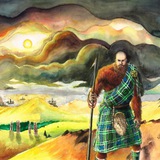
Beowulf is one of the longest surviving and most important stories of Old English legend written in the heroic poetry style that flourished after the settlement of Germanic peoples in Britain from the 5th century.
His character is comparable with the hero Sigurd, a dragon-slayer known to us from other works of Germanic and Old Norse literature such as the Vǫlsunga saga from Iceland.
Art: Beowulf arrives at Heorot
By Yoann-Lossel.
His character is comparable with the hero Sigurd, a dragon-slayer known to us from other works of Germanic and Old Norse literature such as the Vǫlsunga saga from Iceland.
Art: Beowulf arrives at Heorot
By Yoann-Lossel.
❤1
Rübezahl, Lord of the Mountains, appears as a capricious giant, gnome, or mountain spirit.
His stories are purely out of pagan origins, with ties going back to the Wild Hunt and even possibly Wotan.
While Rübezahl is the name by which he is commonly known, it is said he takes it as an insult, as it means ‘turnip counter’.
He much prefers to be known instead as ‘Lord of the Mountains’.
In Germanic legends, if you are a good person, he can be kind, teach you and give you gifts. If someone deceives or has Ill-will towards him, he can be vindictive, vengeful or a trickster.
His stories are purely out of pagan origins, with ties going back to the Wild Hunt and even possibly Wotan.
While Rübezahl is the name by which he is commonly known, it is said he takes it as an insult, as it means ‘turnip counter’.
He much prefers to be known instead as ‘Lord of the Mountains’.
In Germanic legends, if you are a good person, he can be kind, teach you and give you gifts. If someone deceives or has Ill-will towards him, he can be vindictive, vengeful or a trickster.
Jack-O-Lanterns
Grinning pumpkins with a glowing smile start arriving this time of year all around the world. Usually found on a front porch, doorstep or in a windowsill.
They were originally carried by Scottish children, who made them from the largest turnips they could find, upon which faces were carved and candles placed inside.
They were called “bogies” and were carried on Samhain (Halloween) to ward malicious spirits from ruining all of their fun.
This is also where the term “bogeyman” comes from. The Irish used potatoes and turnips, and the English turned to beets which they called “mangel-wurzels”.
Grinning pumpkins with a glowing smile start arriving this time of year all around the world. Usually found on a front porch, doorstep or in a windowsill.
They were originally carried by Scottish children, who made them from the largest turnips they could find, upon which faces were carved and candles placed inside.
They were called “bogies” and were carried on Samhain (Halloween) to ward malicious spirits from ruining all of their fun.
This is also where the term “bogeyman” comes from. The Irish used potatoes and turnips, and the English turned to beets which they called “mangel-wurzels”.
After migrating west to the new country of America, they came across large orange pumpkins and saw the opportunity for creativeness, continuing the tradition.
Early British were already accustomed to apparitions, specters, phantoms, and all sorts of things that go bump in the night, but one such entity scared them witless. The Lantern Men.
Also called “Hob-O’-Lanterns, Jack-O’-Lantern, Will-O’-the-Wisp”, they were commonly called “Corpse Candles” because they were seen as moving lights over marshes, bogs or freshly dug graves.
Was it evil spirits seeking the souls of the recently departed… or the living perhaps?
Or was it children having a little fun, scaring the pants off any passer-by?
Maybe both.
Early British were already accustomed to apparitions, specters, phantoms, and all sorts of things that go bump in the night, but one such entity scared them witless. The Lantern Men.
Also called “Hob-O’-Lanterns, Jack-O’-Lantern, Will-O’-the-Wisp”, they were commonly called “Corpse Candles” because they were seen as moving lights over marshes, bogs or freshly dug graves.
Was it evil spirits seeking the souls of the recently departed… or the living perhaps?
Or was it children having a little fun, scaring the pants off any passer-by?
Maybe both.