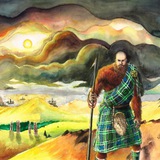
In the Baltic tale of the Forest Father, a telling from Estonia, the Forest-Father can be seen as having characteristics of Tom Bombadil, from J.R.R. Tolkien’s masterpiece “The Lord of the Rings” series.
Interestingly enough, the inspiration for Tom Bombadil’s character came from the Finnish epic, the Kalevala, in which the demigod Väinämöinen takes an important role.
Interestingly enough, the inspiration for Tom Bombadil’s character came from the Finnish epic, the Kalevala, in which the demigod Väinämöinen takes an important role.
Forest Father
The forest-father legend takes place as Reynard the Bear, who quite frequently as he does, gets himself in trouble, after stealing chickens from a farmer’s coop.
The farmer is fed up with his antics, and shoots Reynard at the bear’s den.
On his way home, the farmer spares the lives of birds that are either too young or injured to be considered worthy game, but here’s where things get interesting…
Knowing his land like the back of his hand, he oddly gets lost on the way home. With night soon approaching, he climbs up in the closest tall tree to get his vantage, he cannot see anything but thick and endless forest as far as the eye can see.
Climbing down, he sat on a tree stump to think when an eerie light was flashing from behind a small group of trees, and naturally went to see the origin of the illumination.
The forest-father legend takes place as Reynard the Bear, who quite frequently as he does, gets himself in trouble, after stealing chickens from a farmer’s coop.
The farmer is fed up with his antics, and shoots Reynard at the bear’s den.
On his way home, the farmer spares the lives of birds that are either too young or injured to be considered worthy game, but here’s where things get interesting…
Knowing his land like the back of his hand, he oddly gets lost on the way home. With night soon approaching, he climbs up in the closest tall tree to get his vantage, he cannot see anything but thick and endless forest as far as the eye can see.
Climbing down, he sat on a tree stump to think when an eerie light was flashing from behind a small group of trees, and naturally went to see the origin of the illumination.
A queer looking house stood before him! Long, very long moss was growing on the walls and on the roof of the house! He gazed in bewilderment when the door of the house opened and an aged man, wearing a high hat of birch bark, and a floating beard of tree-moss looked out.
“Do not fear, my Son,” he beckoned to him. “Come in! You have lost your way. Come and be my guest today!”
Frightened, the farmer went into the queer house.
Beside the fire and Old Mother was spinning. Not flax, but bark fibre was on her distaff. On the loom he saw the finest weaving made of birch-bark.
Following the kind invitation, the farmer began to eat; he took apples and some berries and drank from the can. In the can was nothing else but the purest and sweetest birch-sap. When they had finished the evening meal the farmer felt as if he had a heavy supper.
Then bedding for him was spread out on the floor in the corner; he found everything made of birch-bark, but it was soft as down and it was pleasant to rest there.
“Do not fear, my Son,” he beckoned to him. “Come in! You have lost your way. Come and be my guest today!”
Frightened, the farmer went into the queer house.
Beside the fire and Old Mother was spinning. Not flax, but bark fibre was on her distaff. On the loom he saw the finest weaving made of birch-bark.
Following the kind invitation, the farmer began to eat; he took apples and some berries and drank from the can. In the can was nothing else but the purest and sweetest birch-sap. When they had finished the evening meal the farmer felt as if he had a heavy supper.
Then bedding for him was spread out on the floor in the corner; he found everything made of birch-bark, but it was soft as down and it was pleasant to rest there.
Saying these words he put on a coat of birch-bark, on his feet shoes of bark and took his birch-bark hat. Dressed in this strange way he could more easily be taken for a tree than a man.
The farmer thanked his hostess for her hospitality and bade Forest-Mother goodbye. At parting she gave him a box out of birch-bark to take home for his wife.
Then they started to go.
Though his guide appeared to be old, he walked so swiftly that the farmer could not keep up with him even when he was half-running, and begged him several times to walk more slowly.
“That is nothing!” Was the laughing answer. “You should see me when I walk quickly!”
The farmer thanked his hostess for her hospitality and bade Forest-Mother goodbye. At parting she gave him a box out of birch-bark to take home for his wife.
Then they started to go.
Though his guide appeared to be old, he walked so swiftly that the farmer could not keep up with him even when he was half-running, and begged him several times to walk more slowly.
“That is nothing!” Was the laughing answer. “You should see me when I walk quickly!”
When the two men had reached the borders of the forest, the Forest-Father remarked: “From here you may go home alone; now it is impossible to get lost!”
The farmer begged that the friendly Forest-Father would visit his home and be his guest for the rest of the day, but the Forest-Father shook his head and said: “No! Here is the end of my boundary and on the other side of it I have nothing to do! Soon it will be noon and the Old Mother will be waiting for me!”
And the Forest-Father was gone.
The farmer begged that the friendly Forest-Father would visit his home and be his guest for the rest of the day, but the Forest-Father shook his head and said: “No! Here is the end of my boundary and on the other side of it I have nothing to do! Soon it will be noon and the Old Mother will be waiting for me!”
And the Forest-Father was gone.
Forwarded from Hyperborean Radio (The Final Episodes) (T.L.K.)
Some Examples of Traditional Corn Dollies or "Corn Mothers", made out of Wheat or Rye to contain the spirit of the field, From Rye Hounds to Oat Kings, a continuing tradition of Hyperborean Spirituality and Animism.
Tyrfing is the magic sword that Svafrlami extorted from two dwarves, who crafted it with such skill that it would never miss its target but that would also afflict its wielder with three distinct and awful incidents.
Illustrations by Lorenz Frølich and Jenny Nyström
Illustrations by Lorenz Frølich and Jenny Nyström