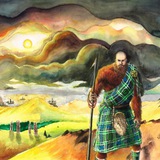
There are advantages to having a manly beard that naked-faced men do not have.
To grow a beard is a natural thing to do, and to cut or shave it off is abnormal. Is it any wonder since the times of our forebears, the beard became an object of anxious concern?
Hyperborean men first cherished the beard for spiritual reasons, and were convinced that as the hair that grew as an extension of his face, it was saturated with his personality. It is for this reason that it had to be carefully guarded from possible assailants.
The beard was and is regarded as the special sign, privilege and ornament of manhood. It should not go unmentioned that the cutting-off of beards was reserved for defeated enemies.
In this treatment of one’s defeated adversary, it was a sign of disgrace, which was plain for all to see.
Continuing to grow your beard was and is regarded, like blood, an expression of vitality.
To grow a beard is a natural thing to do, and to cut or shave it off is abnormal. Is it any wonder since the times of our forebears, the beard became an object of anxious concern?
Hyperborean men first cherished the beard for spiritual reasons, and were convinced that as the hair that grew as an extension of his face, it was saturated with his personality. It is for this reason that it had to be carefully guarded from possible assailants.
The beard was and is regarded as the special sign, privilege and ornament of manhood. It should not go unmentioned that the cutting-off of beards was reserved for defeated enemies.
In this treatment of one’s defeated adversary, it was a sign of disgrace, which was plain for all to see.
Continuing to grow your beard was and is regarded, like blood, an expression of vitality.
The longer the beard, the more vigorous the man. It is therefore that our ancestral men reasoned that a beard was not only an indication of one’s virility, but also its very source, as well as, the seat of a man’s strength.
So what have you? Unless your profession requires that you are clean shaven, you are missing out on embracing a part of true masculinity.
If you are a beardless, I’m not saying you are a lesser man, but you are definitely not living up to your potential.
So what have you? Unless your profession requires that you are clean shaven, you are missing out on embracing a part of true masculinity.
If you are a beardless, I’m not saying you are a lesser man, but you are definitely not living up to your potential.
Much can be said about our women and their place in our lives.
Although I am a man, I do know that truly feminine woman will give us the opportunity to be truly masculine men.
We complement and feed off each other in a way that is difficult to describe, yet it is there in plain sight.
Men are waiting for someone to give their lives more purpose and meaning. The mother to his children, and the perfect companion to share this life with.
The influence of a genuine woman has the power to propel a man to greatness.
A woman’s true power lies in her ability to be the calming voice, the mother’s touch and brings beauty into our lives.
Here’s to you, ladies.
Future post on femininity to come.
Although I am a man, I do know that truly feminine woman will give us the opportunity to be truly masculine men.
We complement and feed off each other in a way that is difficult to describe, yet it is there in plain sight.
Men are waiting for someone to give their lives more purpose and meaning. The mother to his children, and the perfect companion to share this life with.
The influence of a genuine woman has the power to propel a man to greatness.
A woman’s true power lies in her ability to be the calming voice, the mother’s touch and brings beauty into our lives.
Here’s to you, ladies.
Future post on femininity to come.
👍1
La Pierre de Gargantua in Neaufles-Auvergny (Eure) is known as the giant’s whetstone.
After coming across exhausted harvesters he told them to rest, then ran off to fetch his giant scythe, sharpened it on the menhir (pictured) and then cut the entire field in a single sweep.
After coming across exhausted harvesters he told them to rest, then ran off to fetch his giant scythe, sharpened it on the menhir (pictured) and then cut the entire field in a single sweep.
The clyack sheaf was the name given in NE Scotland to the last sheaf gathered.
If the harvest was early, she was also known as the maiden; if the harvest was late, she was called the carline.
The sheaf was cut by the youngest boy or girl present, using a hyeuck (sickle) and gathered by young maidens so that it never touched the ground.
It was then bound across the knees of the master and decorated with ribbons as if a young girl.
Picture: The Birley Bush Steen at Birley Bush Community Garden, Kemnay, Aberdeenshire, showing a clyack sheaf, and the Carline (or Cailleach) both enthroned and gathering firewood. Sculptor: James Winnett
If the harvest was early, she was also known as the maiden; if the harvest was late, she was called the carline.
The sheaf was cut by the youngest boy or girl present, using a hyeuck (sickle) and gathered by young maidens so that it never touched the ground.
It was then bound across the knees of the master and decorated with ribbons as if a young girl.
Picture: The Birley Bush Steen at Birley Bush Community Garden, Kemnay, Aberdeenshire, showing a clyack sheaf, and the Carline (or Cailleach) both enthroned and gathering firewood. Sculptor: James Winnett
Myrddin Wyllt is possibly the most famous Wild Man in Welsh and North British Folklore.
He went mad at the sight of a battle, a legend associated with Suibne Geilt in Ireland and with Lailoken in Scotland.
This Myrddin is alluded to be Merlin, had the gift of prophecy, as well as surrounded by mysterious power.
“Seven score heroes, maddened by battle,
To the forest of Celyddon they fled,
Since I Myrddin, am second only to Talesin,
Let my words be heard as truth”
- excerpt from Dialogue Of Myrddin And Taliesin
He went mad at the sight of a battle, a legend associated with Suibne Geilt in Ireland and with Lailoken in Scotland.
This Myrddin is alluded to be Merlin, had the gift of prophecy, as well as surrounded by mysterious power.
“Seven score heroes, maddened by battle,
To the forest of Celyddon they fled,
Since I Myrddin, am second only to Talesin,
Let my words be heard as truth”
- excerpt from Dialogue Of Myrddin And Taliesin
Forwarded from BC Neanderthal Mindset
Hail good folk! What content would you like to see more of until the end of the year?
Final Results
52%
Myths and Folklore
9%
Creatures and Beasties
2%
Art and Artists
5%
Musings and commentary
32%
History and culture
0%
Something else entirely
In the Baltic tale of the Forest Father, a telling from Estonia, the Forest-Father can be seen as having characteristics of Tom Bombadil, from J.R.R. Tolkien’s masterpiece “The Lord of the Rings” series.
Interestingly enough, the inspiration for Tom Bombadil’s character came from the Finnish epic, the Kalevala, in which the demigod Väinämöinen takes an important role.
Interestingly enough, the inspiration for Tom Bombadil’s character came from the Finnish epic, the Kalevala, in which the demigod Väinämöinen takes an important role.
Forest Father
The forest-father legend takes place as Reynard the Bear, who quite frequently as he does, gets himself in trouble, after stealing chickens from a farmer’s coop.
The farmer is fed up with his antics, and shoots Reynard at the bear’s den.
On his way home, the farmer spares the lives of birds that are either too young or injured to be considered worthy game, but here’s where things get interesting…
Knowing his land like the back of his hand, he oddly gets lost on the way home. With night soon approaching, he climbs up in the closest tall tree to get his vantage, he cannot see anything but thick and endless forest as far as the eye can see.
Climbing down, he sat on a tree stump to think when an eerie light was flashing from behind a small group of trees, and naturally went to see the origin of the illumination.
The forest-father legend takes place as Reynard the Bear, who quite frequently as he does, gets himself in trouble, after stealing chickens from a farmer’s coop.
The farmer is fed up with his antics, and shoots Reynard at the bear’s den.
On his way home, the farmer spares the lives of birds that are either too young or injured to be considered worthy game, but here’s where things get interesting…
Knowing his land like the back of his hand, he oddly gets lost on the way home. With night soon approaching, he climbs up in the closest tall tree to get his vantage, he cannot see anything but thick and endless forest as far as the eye can see.
Climbing down, he sat on a tree stump to think when an eerie light was flashing from behind a small group of trees, and naturally went to see the origin of the illumination.
A queer looking house stood before him! Long, very long moss was growing on the walls and on the roof of the house! He gazed in bewilderment when the door of the house opened and an aged man, wearing a high hat of birch bark, and a floating beard of tree-moss looked out.
“Do not fear, my Son,” he beckoned to him. “Come in! You have lost your way. Come and be my guest today!”
Frightened, the farmer went into the queer house.
Beside the fire and Old Mother was spinning. Not flax, but bark fibre was on her distaff. On the loom he saw the finest weaving made of birch-bark.
Following the kind invitation, the farmer began to eat; he took apples and some berries and drank from the can. In the can was nothing else but the purest and sweetest birch-sap. When they had finished the evening meal the farmer felt as if he had a heavy supper.
Then bedding for him was spread out on the floor in the corner; he found everything made of birch-bark, but it was soft as down and it was pleasant to rest there.
“Do not fear, my Son,” he beckoned to him. “Come in! You have lost your way. Come and be my guest today!”
Frightened, the farmer went into the queer house.
Beside the fire and Old Mother was spinning. Not flax, but bark fibre was on her distaff. On the loom he saw the finest weaving made of birch-bark.
Following the kind invitation, the farmer began to eat; he took apples and some berries and drank from the can. In the can was nothing else but the purest and sweetest birch-sap. When they had finished the evening meal the farmer felt as if he had a heavy supper.
Then bedding for him was spread out on the floor in the corner; he found everything made of birch-bark, but it was soft as down and it was pleasant to rest there.
Saying these words he put on a coat of birch-bark, on his feet shoes of bark and took his birch-bark hat. Dressed in this strange way he could more easily be taken for a tree than a man.
The farmer thanked his hostess for her hospitality and bade Forest-Mother goodbye. At parting she gave him a box out of birch-bark to take home for his wife.
Then they started to go.
Though his guide appeared to be old, he walked so swiftly that the farmer could not keep up with him even when he was half-running, and begged him several times to walk more slowly.
“That is nothing!” Was the laughing answer. “You should see me when I walk quickly!”
The farmer thanked his hostess for her hospitality and bade Forest-Mother goodbye. At parting she gave him a box out of birch-bark to take home for his wife.
Then they started to go.
Though his guide appeared to be old, he walked so swiftly that the farmer could not keep up with him even when he was half-running, and begged him several times to walk more slowly.
“That is nothing!” Was the laughing answer. “You should see me when I walk quickly!”