Forwarded from Celtic Folk and Culture
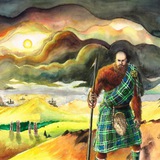
In Celtic and specifically Welsh tradition Bards were individuals trained in the art of storytelling and disseminating tribal wisdom. Among their tasks were to memorize countless tales, prose, poetry and songs. They then retained this information and knowledge and transmitted it via narration to the people.
Bards were highly regarded by the people and were seen as servants of the gods and keepers of spirit, culture and heritage.
One of the most famous Welsh Bards was Taliesin the boy who drank Cerridwen's potion. Taliesin was regarded as one of the greatest Bards and his poems contained prophecies and rich Welsh Lore. His poems also have many references to Cerridwen. The Bardic orders continued into Christian times.
#Taliesin
#Cerridwen
#Bards
Bards were highly regarded by the people and were seen as servants of the gods and keepers of spirit, culture and heritage.
One of the most famous Welsh Bards was Taliesin the boy who drank Cerridwen's potion. Taliesin was regarded as one of the greatest Bards and his poems contained prophecies and rich Welsh Lore. His poems also have many references to Cerridwen. The Bardic orders continued into Christian times.
#Taliesin
#Cerridwen
#Bards
Had a great discussion about masculinity with the Lore Keeper and Celtic god over at https://t.me/hyperboreanradio.
Why it is important to have a healthy outlook on men, our roles in the family setting and how stoicism can make us better men.
It is vital in this age to maintain our place as fathers, role models and husbands/lovers.
When we embrace our masculinity from a heathen perspective, it compliments our ladies in their femininity and allows our children to have the role model they desperately need.
Be a man, dammit!
*note* old meme, but you get the idea
Why it is important to have a healthy outlook on men, our roles in the family setting and how stoicism can make us better men.
It is vital in this age to maintain our place as fathers, role models and husbands/lovers.
When we embrace our masculinity from a heathen perspective, it compliments our ladies in their femininity and allows our children to have the role model they desperately need.
Be a man, dammit!
*note* old meme, but you get the idea
Minerva, so she is called, from the threats of her stern and fierce look, is a Roman goddess of war.
Instead of wearing a dress, she is adorned in armor, wearing a golden head piece, with glittering crests.
A brazen coat of mail covers her breast, she wields a lance in her right hand, and in her left she holds a shield, which is painted the grisly head of Medusa, one of the Gorgons.
The cock is sacred to her, because it is a fighting bird;
as is also the owl, who sees in the dark, painted on her images,
being a symbol of a wise man, who, having dispelled the clouds of ignorance,
sees clearly those things wherein others are blind.
Instead of wearing a dress, she is adorned in armor, wearing a golden head piece, with glittering crests.
A brazen coat of mail covers her breast, she wields a lance in her right hand, and in her left she holds a shield, which is painted the grisly head of Medusa, one of the Gorgons.
The cock is sacred to her, because it is a fighting bird;
as is also the owl, who sees in the dark, painted on her images,
being a symbol of a wise man, who, having dispelled the clouds of ignorance,
sees clearly those things wherein others are blind.
Upon the head of the goddess there is sometimes an olive crown, which is a symbol of peace; either because war is only made that peace may follow; or because she first taught men the use of the olive tree.
Minerva is the inventress of “divers arts”,
especially of spinning; and therefore the distaff is ascribed to her.
By the fable of Minerva, the Roman poets’
Intent was to represent wisdom. That is, knowledge and skill of things joined with discreet and prudent actions; also the understanding of the noble arts; all accomplishments of the mind; the virtues, and especially chastity.
Minerva is the inventress of “divers arts”,
especially of spinning; and therefore the distaff is ascribed to her.
By the fable of Minerva, the Roman poets’
Intent was to represent wisdom. That is, knowledge and skill of things joined with discreet and prudent actions; also the understanding of the noble arts; all accomplishments of the mind; the virtues, and especially chastity.
Forwarded from Hyperborean Radio (The Final Episodes) (T.L.K.)
Frau Gode is a North German goddess, she is often referred to as a "Dog Goddess" due to her symbolism and most notable story. Where a Euhemerized version of her appears with her daughters and a love for the Hunt, she then proclaimed that hunting was better than heaven, and when she did so again she and her daughters were cursed. With her myriad of daughters (over 20) turning into bitches, growing fur, muzzles, and paws. They then flew off with her as they lifted their mother and themselves into the air, some of the daughters even ended up tied to her chariot carrying it up into the sky as part of the Wild Hunt. Frau Gode was often said to "Curse" people by sending the dog spirits into the home of people where they would have to perform certain traditions to "get rid of" the dog. This was likely a ruse to allow themselves to continue pagan customs under the guise of removing a demonic curse.-TLK
Forwarded from Hyperborean Radio (The Final Episodes) (T.L.K.)
The Orkney Isles of Scotland are a magical place. They have an interesting mix of Norse and Gaelic lore. With folklore of fae, Selkies, The Nuckalavee and the well known "Odin Stone" which dates back 3000 years but was likely renamed by Norse settlers. The region even once spoke a unique Germanic language known as "Norn" though that has since faded and they instead speak a Scots Gaelic/English dialect. Orkney is peppered with Standing stones (The Ring of Brodgar), ancient settlements (Skara Brae), and many many burial mounds.-TLK