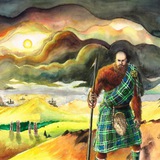
Legend tells us that Merlin sometimes prepared his spells under the shelter of an oak tree to ensure their potency and effectiveness.
The Oak’s mighty presence reassured ancient Hyperboreans that with their gods, their leader, and their warriors, they could prevail against all odds.
As the Tree of the Dagda, the oak offers protection and hospitality without question, although its true rewards are apparent to the honest and brave, as the ancient Celts despised lies and cowardice.
The King of Trees was sacred and attested to numerous European gods, such as Zeus, Jupiter, Thor and Jumala.
Some more rather famous oaks are revered for their special historical or folklorish associations and still stand today.
In Britain the most famous include the:
Brimmon Oak, over 500 years old and located in Wales
the Holm Oak (200 years) in Northern Ireland
Hyperion (Redwood), the tallest living tree coming in at a massive 379 feet tall
The Oak’s mighty presence reassured ancient Hyperboreans that with their gods, their leader, and their warriors, they could prevail against all odds.
As the Tree of the Dagda, the oak offers protection and hospitality without question, although its true rewards are apparent to the honest and brave, as the ancient Celts despised lies and cowardice.
The King of Trees was sacred and attested to numerous European gods, such as Zeus, Jupiter, Thor and Jumala.
Some more rather famous oaks are revered for their special historical or folklorish associations and still stand today.
In Britain the most famous include the:
Brimmon Oak, over 500 years old and located in Wales
the Holm Oak (200 years) in Northern Ireland
Hyperion (Redwood), the tallest living tree coming in at a massive 379 feet tall
Here are a few channels that I draw inspiration from. Always great content, https://t.me/nativeeuropeans, https://t.me/hyperboreanradio, https://t.me/folkwisdom, and https://t.me/HyperboreanReflections are always a great source for folklore, mythology and Hyperborean culture that put out fantastic Heathen material.
https://t.me/AethelwulfArt is one of the most talented heathen artists that I have privy to get to know, and just a great person.
Give them a look. You won’t be disappointed!
https://t.me/AethelwulfArt is one of the most talented heathen artists that I have privy to get to know, and just a great person.
Give them a look. You won’t be disappointed!
Forwarded from Hyperborean Radio (Uncensored) (T.L.K.)
The Orcs are a well known fantasy race, however what many don't know is that the Orcs are loosely based off an Alpine Wild Man deity of the same name. Though some variation of the name including "Orke and Lorke" are also known. He behaves somewhat like a shape-shifting trickster and lord of the forest. There is also a Wild Woman goddess figure in the same area known as Fange. The Orc's name is also the origin of the word "Ogre" which was once depicted far more human like than like that of fantasy trolls. The Orc may be the modern day version of the Wildman Gallo-Roman god Orcus.-TLK
Forwarded from Celta Lusitani Celtiberi Folk
Ilurbeda
She is a goddess of the mountain pass and commerce. The heart of her cult has been found primarily in the Vettones territory of Avila and Salamanca by the Portuguese border, but is also extensively spread throughout the Hispania Lusitania land. She is best known as protector of miners and mountain travellers. What is most odd is that the etymology on her name seems to be of an origin distant from Vettones and Lusitanian territory, and rather more Vasconic (Basque), Iberic and Aquitainian in root origin. This supports more of the Vasconic overlap in Lusitanian religion.
She is a goddess of the mountain pass and commerce. The heart of her cult has been found primarily in the Vettones territory of Avila and Salamanca by the Portuguese border, but is also extensively spread throughout the Hispania Lusitania land. She is best known as protector of miners and mountain travellers. What is most odd is that the etymology on her name seems to be of an origin distant from Vettones and Lusitanian territory, and rather more Vasconic (Basque), Iberic and Aquitainian in root origin. This supports more of the Vasconic overlap in Lusitanian religion.
Forwarded from Wild Folk
Whittlesea Straw Bear
An ancient custom of the fenlands, the Whittlesea Straw Bear is a tradition celebrating the start of the English agricultural year. Each year, one member of the plough work force would be selected, garbed in the finest of the yield and called the Straw Bear.
With great lengths of straw woven and bound around his arms, legs and head, the wearer would struggle to see and move in the costume that weighed over 5 stone.
Together with his ‘Keeper’, the Straw Bear would perform for offerings of money, beer or food. He was paraded through the streets with a concession of bards, dancers and entertainers before the Bear Burning, occurring on the following Sunday.
Over time, the tradition fell into decline until 1909 when it was forbidden and declared a form of cadging. In 1980, the Whittlesea Straw Bear custom was revived by locals where it continues to this day.
An ancient custom of the fenlands, the Whittlesea Straw Bear is a tradition celebrating the start of the English agricultural year. Each year, one member of the plough work force would be selected, garbed in the finest of the yield and called the Straw Bear.
With great lengths of straw woven and bound around his arms, legs and head, the wearer would struggle to see and move in the costume that weighed over 5 stone.
Together with his ‘Keeper’, the Straw Bear would perform for offerings of money, beer or food. He was paraded through the streets with a concession of bards, dancers and entertainers before the Bear Burning, occurring on the following Sunday.
Over time, the tradition fell into decline until 1909 when it was forbidden and declared a form of cadging. In 1980, the Whittlesea Straw Bear custom was revived by locals where it continues to this day.
http://www.alternativefinland.com/alternative-kalevala/
Good article on the need for the Kalevala to be dechristianized, as quite a few of our myths are written down by monks, or people that want to cover up our lore with “gospel”.
Oh, and info on Finnish pre-christian bear cults from the region.
Good article on the need for the Kalevala to be dechristianized, as quite a few of our myths are written down by monks, or people that want to cover up our lore with “gospel”.
Oh, and info on Finnish pre-christian bear cults from the region.
Alternative Finland
An Alternative Kalevala?
Juha Pentikäinen aims to compile an alternative Kalevala in the form of a shamanic epic based on the ancient bear cults of northern europe and asia.
The “bamburci" from the village of Ratevo belongs to a widespread European tradition of impersonating the forces of nature as a means of symbolically killing winter, so the rebirth of the world takes place.
Bamburci from the village of Ratevo in Macedonia, very close to the Bulgarian border.
Vosegus
The god of the Vosges mountains in eastern Gaul which personified the spirit of the mountains and was also a god of hunting who was a protector of the people of the Vosges forest.
Images of a local nature god may represent Vosegus in which some of them portray him wearing a wolf-skin over his shoulders and with his hand on a stag.
He carries a spear, hunting knife, chopper and an open bag containing fruits of the forest such as acorns, nuts and pine cones.
In other portrayals, Vosegus wears a heavy Gallic cloak and carries a piglet under one arm.
The god of the Vosges mountains in eastern Gaul which personified the spirit of the mountains and was also a god of hunting who was a protector of the people of the Vosges forest.
Images of a local nature god may represent Vosegus in which some of them portray him wearing a wolf-skin over his shoulders and with his hand on a stag.
He carries a spear, hunting knife, chopper and an open bag containing fruits of the forest such as acorns, nuts and pine cones.
In other portrayals, Vosegus wears a heavy Gallic cloak and carries a piglet under one arm.
Despite the warnings of his father Daedalus, Icarus flies too close to the sun, leaving his father to grieve.
Art:
Maxfield Parrish (1870-1966); Charles Robinson (1870–1937); Svetlin Vassilev (b.1971, Bulgaria)
Art:
Maxfield Parrish (1870-1966); Charles Robinson (1870–1937); Svetlin Vassilev (b.1971, Bulgaria)