The Hawthorn (Crataegus oxyacantha)is a flowering plant that is native to Europe which has a history and lore all of its own.
It is incredible to find clues that are strewn about European lore with traditions and practices that carry on, even to this day!
In ancient Greece, Athenian brides
used the hawthorn blossoms to
decorate the wedding party and
they themselves carried large
boughs of it to the altar of Hymen, a
Greek god of marriage, feasts,
song and possibly childbirth.
Hawthorn was also believed to
keep evil spirits from crossing
the threshold of the home.
Even its leaves were put
Into cradles of newborn babes for protection from malicious spirits.
It is incredible to find clues that are strewn about European lore with traditions and practices that carry on, even to this day!
In ancient Greece, Athenian brides
used the hawthorn blossoms to
decorate the wedding party and
they themselves carried large
boughs of it to the altar of Hymen, a
Greek god of marriage, feasts,
song and possibly childbirth.
Hawthorn was also believed to
keep evil spirits from crossing
the threshold of the home.
Even its leaves were put
Into cradles of newborn babes for protection from malicious spirits.
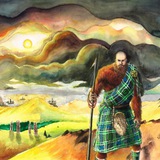
In the Mabinogion, the giant king Yspaddaden Penkawr
means “Giant Hawthorn” and he is
associated by this name with the
Hawthorn plant.
Olwen, his daughter, leaves white
flowering trefoils behind in her graceful steps, which more than likely are Hawthorn flowers.
In Teutonic lore, hawthorn is thought to have symbolized death and was used in funeral pyres.
Even in modern springtime festivals in the British Isles, large Hawthorn boughs are cut and placed outside the home.
They were called May Bushes and decorated with wildflowers. Although it was proper to decorate outside
with hawthorn blossoms, bringing them into the home is believed to bring illness and misfortune (death).
means “Giant Hawthorn” and he is
associated by this name with the
Hawthorn plant.
Olwen, his daughter, leaves white
flowering trefoils behind in her graceful steps, which more than likely are Hawthorn flowers.
In Teutonic lore, hawthorn is thought to have symbolized death and was used in funeral pyres.
Even in modern springtime festivals in the British Isles, large Hawthorn boughs are cut and placed outside the home.
They were called May Bushes and decorated with wildflowers. Although it was proper to decorate outside
with hawthorn blossoms, bringing them into the home is believed to bring illness and misfortune (death).
The faint smell of rotting meat
that strangely permeates from
the plant may have contributed
to the belief of bringing misfortune into the home.
The May Pole is traditionally made of
hawthorn or decorated with hawthorn flowers and
The phrase “by Oak, Ash and Thorn” referred to either Hawthorn
or BlackThorn.
This is an exciting discovery for me,
as I am constantly enamored
with the prevalence and saturation
of the pagan symbolism, lore, and tradition that is hidden under our noses.
that strangely permeates from
the plant may have contributed
to the belief of bringing misfortune into the home.
The May Pole is traditionally made of
hawthorn or decorated with hawthorn flowers and
The phrase “by Oak, Ash and Thorn” referred to either Hawthorn
or BlackThorn.
This is an exciting discovery for me,
as I am constantly enamored
with the prevalence and saturation
of the pagan symbolism, lore, and tradition that is hidden under our noses.
Forwarded from Hyperborean Radio (Uncensored) (T.L.K.)
Why is Friday the 13th considered a day of bad luck? It happened in October of 1307 Pope Clement V ordered the death of the Knights Templar on Friday the 13th on grounds of heresy Leveled against them by the King of France Philip IV. Many of the charges included the accusations of "when professing, the brothers were required to deny Christ, to spit on the Cross, and to place three 'obscene kisses' on the lower spine, the navel and the mouth; they were obliged to indulge in carnal relations with other members of the order, if requested; and finally they wore a small belt which had been consecrated by touching a strange idol, which looked like a human head with a long beard." in addition they were accused of worshipping idols of a cat as well as a head that possessed 3 faces, as well as many other charges. One such charge included the belief that the knightly order had returned to "the old gods", human sacrifice as well as cannibalism.
Forwarded from Hyperborean Radio (Uncensored) (T.L.K.)
While I would love to believe they were executed for being pagan. Many of whom were burned at the stake under the charges of Participating in Witchcraft for returning to our ancient ways and receiving much slander for doing so. The reality of the situation is this, it is far more likely to be that it was due to both the Papacy and the King of France owed the order more money than they could possibly repay. This was also true of many other kingdoms of the time or nearly so and slowly the order was systematically destroyed in every nation of the time under similar accusations for similar reasons. Contrary to popular belief not every knight was executed and many were stripped of wealth, title and property but allowed to live while some were rumored to have escaped persecution altogether with their lives though being forced to leave their property behind.
Forwarded from Hyperborean Radio (Uncensored) (T.L.K.)
In short as a pagan I would indeed consider Friday the 13th a day of great luck as in October of 1307 one of our greatest enemies turned on itself destroying one of its arms of great destruction to our people and ancient ways out of greed, vanity, envy, pride and a wrath brought on by the lust for power to sate their gluttony and stoke their sloth. The church and Christian kings on this day exposed for all with eyes to see that they themselves are possessed by and guilty of all they claim to stand against. A great day indeed was Oct 13th 1307.
Where are you on your journey in the old ways?
Final Results
16%
Interested/curious
9%
Testing the water
24%
Just starting out
33%
Been Heathen for a while now
10%
I’ve been pagan all my life
9%
I am one with the gods
Surtr
Surtr the fire giant, as is mentioned in the epic poem Völuspá, is the leader of the Ægir, the race of titans or giants (Jötunn) that will wage war against the Æsir, the Norse gods.
In the poem Vafþrúðnismál, the Jötunn Vafþrúðnir asks the question to Odin (disguised as "Gagnráðr") "what the plain is called where in battle Surt and the sweet gods will meet".
This is a nod to the twilight of the gods, and an end to an era, Ragnarök.
Odin says that the "ordained field" is Vígríðr, and it stretches "a hundred leagues" in every direction.
When Ragnarök takes place Sutr is fated to do battle with and slay the god Freyr only to be slain by him as well.
He (Surtr) arrives from Muspelheim, the domain of extreme heat and fire,
wielding his weapon of which is
a giant burning sword. With it the world is razed and afterwards
sinks into the ocean.
“Surtr moves from the south
with the scathe of branches:
there shines from his sword
the sun of Gods of the Slain.”
Surtr the fire giant, as is mentioned in the epic poem Völuspá, is the leader of the Ægir, the race of titans or giants (Jötunn) that will wage war against the Æsir, the Norse gods.
In the poem Vafþrúðnismál, the Jötunn Vafþrúðnir asks the question to Odin (disguised as "Gagnráðr") "what the plain is called where in battle Surt and the sweet gods will meet".
This is a nod to the twilight of the gods, and an end to an era, Ragnarök.
Odin says that the "ordained field" is Vígríðr, and it stretches "a hundred leagues" in every direction.
When Ragnarök takes place Sutr is fated to do battle with and slay the god Freyr only to be slain by him as well.
He (Surtr) arrives from Muspelheim, the domain of extreme heat and fire,
wielding his weapon of which is
a giant burning sword. With it the world is razed and afterwards
sinks into the ocean.
“Surtr moves from the south
with the scathe of branches:
there shines from his sword
the sun of Gods of the Slain.”