
Hi analysts! ⭐️
Creating a new product it is a common approach to focus on a user. Who is the target audience? What are their needs? And how we can satisfy these needs? - These are probably the most frequently asked questions when discovering the project. Clayton M. Christensen, Harvard Business Professor, challenged this approach in his book "Competing Against Luck: The Story of Innovation and Customer Choice" and came up with his theory on where to start.
🔶What is JTBD?
Jobs-to-be-Done is a framework which incomposses product vision and its breakdown. As opposed to the well-known user-oriented approach which in business analysis is typically delivered via a User Story format, Jobs-to-be-Done focuses on on the final goal of a user (on a job that has to be done).
🔶How JTBD look like?
The JTBD template is pretty similar to User Story. However instead of who is performing an action, condition is indicated.
So, the template for JTBD is as follows:
When condition, I want desire, so that result.
Example: When commuting, I want to watch short videos, so that to kill time and have fun on the move.
Below the Job Title typically goes acceptance criteria, just the same as with US.
🔶When JTBD is useful
As in JTBD concept context matters rather than a user, it is useful in the cases when the target audience is not clear or is broad. In contrast, User Stories fit well when the audience is identified and is not wanted to become bigger.
🔶How to prioritize JTBD
There are several ways to define which jobs are more critical, and which less. Here are the most commonly used:
🔸Directly ask your audience which jobs from their perspectives are more valuable. On the one hand, straight communication with the customer is a good idea, instead of assumptions you will have a real statement. On the other hand, in case you have several customers to contact, they may have a different opinion on these issues. And prioritization in this way will become even more complicated.
🔸The second way is to figure out how satisfied your customers are with the current solution. The more the dissatisfaction is, the easier it can shift from the old solution to your product.
🔸And one more way is to prioritize the jobs based on the resources that the team has. The easier for the development team to implement the job, the higher its priority.
❓Do you have experience with JTBD?
Creating a new product it is a common approach to focus on a user. Who is the target audience? What are their needs? And how we can satisfy these needs? - These are probably the most frequently asked questions when discovering the project. Clayton M. Christensen, Harvard Business Professor, challenged this approach in his book "Competing Against Luck: The Story of Innovation and Customer Choice" and came up with his theory on where to start.
🔶What is JTBD?
Jobs-to-be-Done is a framework which incomposses product vision and its breakdown. As opposed to the well-known user-oriented approach which in business analysis is typically delivered via a User Story format, Jobs-to-be-Done focuses on on the final goal of a user (on a job that has to be done).
🔶How JTBD look like?
The JTBD template is pretty similar to User Story. However instead of who is performing an action, condition is indicated.
So, the template for JTBD is as follows:
When condition, I want desire, so that result.
Example: When commuting, I want to watch short videos, so that to kill time and have fun on the move.
Below the Job Title typically goes acceptance criteria, just the same as with US.
🔶When JTBD is useful
As in JTBD concept context matters rather than a user, it is useful in the cases when the target audience is not clear or is broad. In contrast, User Stories fit well when the audience is identified and is not wanted to become bigger.
🔶How to prioritize JTBD
There are several ways to define which jobs are more critical, and which less. Here are the most commonly used:
🔸Directly ask your audience which jobs from their perspectives are more valuable. On the one hand, straight communication with the customer is a good idea, instead of assumptions you will have a real statement. On the other hand, in case you have several customers to contact, they may have a different opinion on these issues. And prioritization in this way will become even more complicated.
🔸The second way is to figure out how satisfied your customers are with the current solution. The more the dissatisfaction is, the easier it can shift from the old solution to your product.
🔸And one more way is to prioritize the jobs based on the resources that the team has. The easier for the development team to implement the job, the higher its priority.
❓Do you have experience with JTBD?
👍4❤1🔥1
Come to our meetup – PM Community. Cozy Talks with Andersen – on the 30th of November to master the art of giving and processing feedback.
👇FREE, after registration👇
https://forms.gle/9GNRFYb9hoGd8KYr5
(the number of seats is limited).
⏰30.11.2023 18:30 CET
📍Andersen Office Warsaw: Rondo Daszyńskiego 1, 23 floor
Language: English
The culture of feedback has become prevalent in our society. A person’s work efficiency is assessed on its basis, and this often has a great impact on their career trajectory, performance on projects, self-esteem, and relationships with others. Therefore, it is essential to study this area, learning what hinders us from giving constructive feedback and how to formulate it correctly.
Project Manager Tatsiana Marshyna will talk about the importance of feedback and share what methods can be used to improve the quality of feedback. The meetup will be useful for Project, HR, and Resource Managers, as well as other professionals working with people.
We’re looking forward to seeing you!
👇FREE, after registration👇
https://forms.gle/9GNRFYb9hoGd8KYr5
(the number of seats is limited).
⏰30.11.2023 18:30 CET
📍Andersen Office Warsaw: Rondo Daszyńskiego 1, 23 floor
Language: English
The culture of feedback has become prevalent in our society. A person’s work efficiency is assessed on its basis, and this often has a great impact on their career trajectory, performance on projects, self-esteem, and relationships with others. Therefore, it is essential to study this area, learning what hinders us from giving constructive feedback and how to formulate it correctly.
Project Manager Tatsiana Marshyna will talk about the importance of feedback and share what methods can be used to improve the quality of feedback. The meetup will be useful for Project, HR, and Resource Managers, as well as other professionals working with people.
We’re looking forward to seeing you!
Hi analysts!⭐️
What do you think about the velocity?
In the article author explores the pitfalls of ‘The Illusion of Velocity’ in agile contexts, peeling back the layers of traditional metrics as leadership tools. Moreover, points to the advantages gained from leadership engaging directly with teams.
Understand why servant leadership and practices like the Gemba Walks are crucial for coping with complex, adaptive environments toward actual progress. Moreover, get an idea of how to start flipping outdated hierarchies and embrace the natural rhythm of productivity and innovation.
What do you think about the velocity?
In the article author explores the pitfalls of ‘The Illusion of Velocity’ in agile contexts, peeling back the layers of traditional metrics as leadership tools. Moreover, points to the advantages gained from leadership engaging directly with teams.
Understand why servant leadership and practices like the Gemba Walks are crucial for coping with complex, adaptive environments toward actual progress. Moreover, get an idea of how to start flipping outdated hierarchies and embrace the natural rhythm of productivity and innovation.
Scrum.org
The Illusion of Velocity
In this article, PST Stefan Wolpers explores the pitfalls of 'The Illusion of Velocity' in agile contexts, peeling back the layers of traditional metrics as leadership tools and what to do instead.
Are you curious to find out how a Business Analyst can play a crucial role in establishing and improving project processes? Then join our next meetup – BA Community. Cozy Talks with Andersen – on December 1 to learn about how to create synergy between Business Analysts and Project Managers! 🤝
👇Registration👇
https://forms.gle/y4QdraSZVYGJfUUJ9
(the number of seats is limited).
⏰01.12.2023 18:30 (GMT+4)
📍Andersen Office Batumi – 10 Zhiuli Shartava st., 2nd floor
Language: Russian
Together with Lizaveta Shymanskaya, Business Analyst at Andersen, we’ll discuss:
The roles of a Business Analyst and a Project Manager on a project;
Business Analysts’ assistance during each project phase;
Business Analysts’ contribution to the onboarding process;
Establishment of effective BA, UI/UX, and QA processes;
Creation of a robust delivery process.
Don't miss this chance to get valuable info about the joint efforts of Business Analysts and Project Managers and about how this cooperation can drive project success!
👇Registration👇
https://forms.gle/y4QdraSZVYGJfUUJ9
(the number of seats is limited).
⏰01.12.2023 18:30 (GMT+4)
📍Andersen Office Batumi – 10 Zhiuli Shartava st., 2nd floor
Language: Russian
Together with Lizaveta Shymanskaya, Business Analyst at Andersen, we’ll discuss:
The roles of a Business Analyst and a Project Manager on a project;
Business Analysts’ assistance during each project phase;
Business Analysts’ contribution to the onboarding process;
Establishment of effective BA, UI/UX, and QA processes;
Creation of a robust delivery process.
Don't miss this chance to get valuable info about the joint efforts of Business Analysts and Project Managers and about how this cooperation can drive project success!
👍1
Hi analysts!⭐️
Visuals play an incredibly important role in software development. Written requirements along with the prototypes are great ways to work on the scope of the solution. Learning UX/UI design as a Business Analyst can offer several advantages and enhance your overall skill set.
🔽 Here are some benefits that you will get from learning UX/UI design:
🔸Improved Design-thinking.
It’s a methodology in which you think about the solution using a design concept. Whenever you think about software solutions, think of it from the perspective of the customer. How the end user would see it. Then try to prototype it. This will improve the way you think and analyze as a BA. After adopting this concept to my daily routine, my requirements elicitation skills improved too.
🔸Better stakeholder engagement
Usually, stakeholders prefer functional products over written ideas. No matter how clear and concise the written version of requirements is the idea behind it may not be visible to your audience. Discussion on the design itself will make the collaboration easier and faster.
🔸Improved description of the requirements.
This is one of the most obvious benefits. When you prepare prototypes by yourself, you will easily describe them too. No matter if it’s SRS, Use-case or User story format, the description will be clearer to the team.
What is your thoughts?
Visuals play an incredibly important role in software development. Written requirements along with the prototypes are great ways to work on the scope of the solution. Learning UX/UI design as a Business Analyst can offer several advantages and enhance your overall skill set.
🔸Improved Design-thinking.
It’s a methodology in which you think about the solution using a design concept. Whenever you think about software solutions, think of it from the perspective of the customer. How the end user would see it. Then try to prototype it. This will improve the way you think and analyze as a BA. After adopting this concept to my daily routine, my requirements elicitation skills improved too.
🔸Better stakeholder engagement
Usually, stakeholders prefer functional products over written ideas. No matter how clear and concise the written version of requirements is the idea behind it may not be visible to your audience. Discussion on the design itself will make the collaboration easier and faster.
🔸Improved description of the requirements.
This is one of the most obvious benefits. When you prepare prototypes by yourself, you will easily describe them too. No matter if it’s SRS, Use-case or User story format, the description will be clearer to the team.
What is your thoughts?
Please open Telegram to view this post
VIEW IN TELEGRAM
❤3👍3
Forwarded from ANDERSEN TRAINEE
#course
Hello friends!👋
Andersen invites you to join its free educational online course
“Business Analysis from the scratch”
We offer an excellent opportunity in a short period of time to gain knowledge for free in such popular and in-demand area as Business Analysis and start your professional development in IT.
The best students will be offered to take part in a traineeship with subsequent employment in our company.
The training "Business Analysis from the scratch" consists of:
Theoretical training - online course
Laboratory - theoretical and practical training with subsequent employment at Andersen.
Online course:
📍Start - December 2023
📍2 months, 2 times a week (in the evening)
📍A lecture duration is 2 hours.
📍theory + practice + home assignments
📍The lecturer - Senior Business Analyst
All requirements for candidates, additional information, and the registration form can be found HERE
If you have already BA course completed, try starting with Laboratory you can apply HERE
Hello friends!👋
Andersen invites you to join its free educational online course
“Business Analysis from the scratch”
We offer an excellent opportunity in a short period of time to gain knowledge for free in such popular and in-demand area as Business Analysis and start your professional development in IT.
The best students will be offered to take part in a traineeship with subsequent employment in our company.
The training "Business Analysis from the scratch" consists of:
Theoretical training - online course
Laboratory - theoretical and practical training with subsequent employment at Andersen.
Online course:
📍Start - December 2023
📍2 months, 2 times a week (in the evening)
📍A lecture duration is 2 hours.
📍theory + practice + home assignments
📍The lecturer - Senior Business Analyst
All requirements for candidates, additional information, and the registration form can be found HERE
If you have already BA course completed, try starting with Laboratory you can apply HERE
Forwarded from ANDERSEN TRAINEE
#recruitment
Hello! Andersen invites you to join a traineeship in DECEMBER.
Locations:
Poland
Hungary
Lithuania
Ukraine (Cherkasy, Chernihiv, Odesa, Lviv, Dnipro, Kyiv)
Georgia
Azerbaijan (Baku)
Kazakhstan
Belarus (except Minsk)
Areas:
iOS (except UA, GE, AZ, KZ)
Android
Java
JavaScript (except BY, AZ, KZ)
.NET (except AZ)
PHP (except AZ)
GO (except UA, BY, GE, AZ, KZ)
DevOps (except AZ, KZ)
Ux/Ui Design (except PL, LT)
Graphic Design (except PL, LT)
Business Analysis
Requirements:
📌English — Intermediate and above;
for BA - Upper-Intermediate;
📌Solid theoretical knowledge in the chosen area;
📌Knowledge of what Git is and how to work with it (for dev);
📌Interpersonal skills, motivation, and high speed of learning.
⭐️Guaranteed employment upon successful completion of training.
✉️If you are interested in an internship at the international company Andersen, we kindly ask you to fill in the FORM and follow the directions that will be sent to your email specified in the form.
Hello! Andersen invites you to join a traineeship in DECEMBER.
Locations:
Poland
Hungary
Lithuania
Ukraine (Cherkasy, Chernihiv, Odesa, Lviv, Dnipro, Kyiv)
Georgia
Azerbaijan (Baku)
Kazakhstan
Belarus (except Minsk)
Areas:
iOS (except UA, GE, AZ, KZ)
Android
Java
JavaScript (except BY, AZ, KZ)
.NET (except AZ)
PHP (except AZ)
GO (except UA, BY, GE, AZ, KZ)
DevOps (except AZ, KZ)
Ux/Ui Design (except PL, LT)
Graphic Design (except PL, LT)
Business Analysis
Requirements:
📌English — Intermediate and above;
for BA - Upper-Intermediate;
📌Solid theoretical knowledge in the chosen area;
📌Knowledge of what Git is and how to work with it (for dev);
📌Interpersonal skills, motivation, and high speed of learning.
⭐️Guaranteed employment upon successful completion of training.
✉️If you are interested in an internship at the international company Andersen, we kindly ask you to fill in the FORM and follow the directions that will be sent to your email specified in the form.
For the first time at Andersen! The PM Community is planning a meetup that will be held on December 11, in Warsaw, and… in a cooking show format! As our speakers assure us, we will cook and talk about Scaled Agile. Incidentally, here they are: Agile Project Manager Anton Yadreusky and Project Manager Vladislava Zubareva.
👇Registration👇
https://forms.gle/1YiFCUWusGmgr8ib6
(the number of seats is limited).
⏰11.12.2023 18:30 CET
📍Andersen Office Warsaw: Rondo Daszyńskiego 1, 23 floor
Language: Russian
In order to cook our culinary masterpiece – What Do You Need to Think About as Your Project Grows? – we need experts and interesting ingredient topics:
Examples of reused products in a growing project.
Where does reusability start?
How to manage cross-dependencies and maintain transparency?
Scaled Agile hints.
And, of course, we won’t leave anyone without delicious food! Pizza time is a matter of course. See you on December 11 at 18:30 CET!
👇Registration👇
https://forms.gle/1YiFCUWusGmgr8ib6
(the number of seats is limited).
⏰11.12.2023 18:30 CET
📍Andersen Office Warsaw: Rondo Daszyńskiego 1, 23 floor
Language: Russian
In order to cook our culinary masterpiece – What Do You Need to Think About as Your Project Grows? – we need experts and interesting ingredient topics:
Examples of reused products in a growing project.
Where does reusability start?
How to manage cross-dependencies and maintain transparency?
Scaled Agile hints.
And, of course, we won’t leave anyone without delicious food! Pizza time is a matter of course. See you on December 11 at 18:30 CET!
Forwarded from QA Community
This media is not supported in your browser
VIEW IN TELEGRAM
This is the best app in the world 🤣
😁6
Are you looking to boost your system's performance and resilience? Join us in a deep dive into Quartz, a leading open-source job-scheduling framework, at Cozy Talks with Andersen.
👇Register here👇
https://forms.gle/iAPCoci6iGPkr3CM7
⏰14.12.2023 at 18:30 (GMT+3)
📍Andersen Office Minsk: Royal Plaza, Pobediteley Avenue 7а, 24 floor
Language: RU
We'll find out how Quartz helps Solution Architects:
- Automate and orchestrate critical workflows;
- Optimize resource usage in a system and infrastructure;
- Coordinate tasks to achieve the highest possible efficiency;
- Track task status and rapidly recover from failures.
Quartz offers architects robust tools to design and implement scalable, reliable scheduling solutions. It plays a pivotal role in crafting resilient and efficient systems.
Whether you need to boost throughput, minimize downtime, or scale smoothly, Quartz gives you the power to implement this.
Come to learn how this vital framework allows systems to deliver robust, efficient solutions!
👇Register here👇
https://forms.gle/iAPCoci6iGPkr3CM7
⏰14.12.2023 at 18:30 (GMT+3)
📍Andersen Office Minsk: Royal Plaza, Pobediteley Avenue 7а, 24 floor
Language: RU
We'll find out how Quartz helps Solution Architects:
- Automate and orchestrate critical workflows;
- Optimize resource usage in a system and infrastructure;
- Coordinate tasks to achieve the highest possible efficiency;
- Track task status and rapidly recover from failures.
Quartz offers architects robust tools to design and implement scalable, reliable scheduling solutions. It plays a pivotal role in crafting resilient and efficient systems.
Whether you need to boost throughput, minimize downtime, or scale smoothly, Quartz gives you the power to implement this.
Come to learn how this vital framework allows systems to deliver robust, efficient solutions!
We are happy to invite you to our meetup – BA Community. Cozy Talks with Andersen – which we will hold together with the EASY BA community. The event will focus on two topical issues: “How Detailed Should Requirements Be?” and “Preparing Convincing Requirements Demos.”
👇Registration👇
https://forms.gle/M64CXyV5tFEsvWKy7
(the number of seats is limited).
⏰15.12.2023 18:30 CET
📍Andersen Office Krakow: Aleja Pokoju 18B, building 3, 31-564, 4th floor
Language: English
Sviatlana Varabyova – a Business Analyst and PSPO I certificate holder – will stress the importance of differentiation, outline the methods for determining appropriateness, and discuss its impact on development.
Iryna Hurska – a Senior Business Analyst, BA Team Leader at MobiDev, Founder of the Easy BA blog, and author of the “Business Analysis in IT – Is It Easy?” book – will tell us about the power of narration in BA, creation of convincing narratives as a key skill, effective preparation for impressive demos, requirements improvement to enhance their readability and memorability, as well as will provide us with real-life examples and practical tips.
The meetup is going to be very productive! BA Community, we are looking forward to seeing you!
👇Registration👇
https://forms.gle/M64CXyV5tFEsvWKy7
(the number of seats is limited).
⏰15.12.2023 18:30 CET
📍Andersen Office Krakow: Aleja Pokoju 18B, building 3, 31-564, 4th floor
Language: English
Sviatlana Varabyova – a Business Analyst and PSPO I certificate holder – will stress the importance of differentiation, outline the methods for determining appropriateness, and discuss its impact on development.
Iryna Hurska – a Senior Business Analyst, BA Team Leader at MobiDev, Founder of the Easy BA blog, and author of the “Business Analysis in IT – Is It Easy?” book – will tell us about the power of narration in BA, creation of convincing narratives as a key skill, effective preparation for impressive demos, requirements improvement to enhance their readability and memorability, as well as will provide us with real-life examples and practical tips.
The meetup is going to be very productive! BA Community, we are looking forward to seeing you!
👍2❤1
Hi analysts! ⭐️
Product Management is often considered an area of interest and growth for Business Analysts. In that regard, it make sence to check some of the books, popular in PM circles.
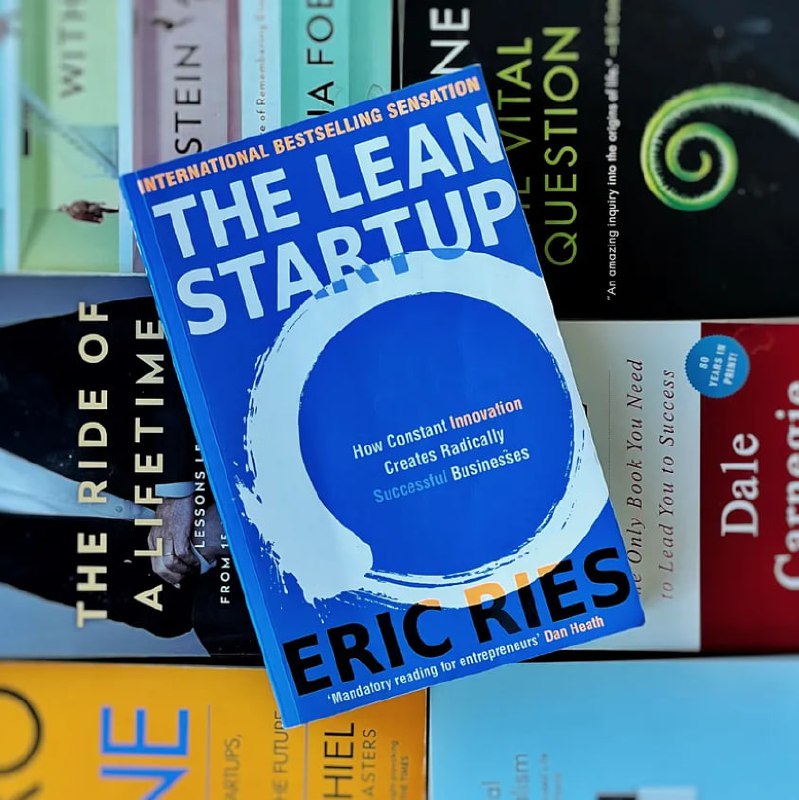
One of these books is “The Lean Startup” by Eric Ries, which describes the methodology of creating business based on innovative solutions development.
One of the key concepts of “The Lean Startup” is called Build-Measure-Learn loop. Important points about developing under this approach are:
🔸Product building should be based on the validated learning, which means testing hypotheses and running experiments to gather knowledge about end users and their problems.
🔸In that context the term MVP is not considered a list of core features for first release (as it often does in software development), but as a minimum scope of work that should be done to test chosen hypothesis.
🔸 To understand, if the hypothesis is proved or refuted, metrics should be chosen precisely so it will be clear if the changes in the metrics were caused by the running experiment or not.
🔸 The result of the experiment is learning, so it’s ok if the hypothesis fails or succeds, as soon as it is obvious why does it happened and this knowledge can be used for future development.
🔸Any features that were delivered in time and on budget but failed from the point of customer adaptation because no validated data gathered and used for them are still considered a waste of time, money and effort.
❓How do you think we as analysts can implement this idea into our everyday work with requirements?
Product Management is often considered an area of interest and growth for Business Analysts. In that regard, it make sence to check some of the books, popular in PM circles.
One of these books is “The Lean Startup” by Eric Ries, which describes the methodology of creating business based on innovative solutions development.
One of the key concepts of “The Lean Startup” is called Build-Measure-Learn loop. Important points about developing under this approach are:
🔸Product building should be based on the validated learning, which means testing hypotheses and running experiments to gather knowledge about end users and their problems.
🔸In that context the term MVP is not considered a list of core features for first release (as it often does in software development), but as a minimum scope of work that should be done to test chosen hypothesis.
🔸 To understand, if the hypothesis is proved or refuted, metrics should be chosen precisely so it will be clear if the changes in the metrics were caused by the running experiment or not.
🔸 The result of the experiment is learning, so it’s ok if the hypothesis fails or succeds, as soon as it is obvious why does it happened and this knowledge can be used for future development.
🔸Any features that were delivered in time and on budget but failed from the point of customer adaptation because no validated data gathered and used for them are still considered a waste of time, money and effort.
❓How do you think we as analysts can implement this idea into our everyday work with requirements?
👍3🔥1
Cozy Talks with Andersen! BA meetup in Krakow. Let's see how it was☝️
❤3