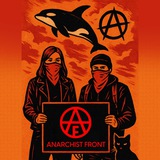
The Instagram account “Everyday Resistance was blocked due to numerous reports by fascists from the Pahlavi faction.
Even before the so-called “transition period,” before coming to power, they had already begun — by their own admission — eliminating their opponents. One example is this very Instagram account. In some cases, we have witnessed physical eliminations as well, and at their gatherings they promote executions and torture, openly speaking about removing opponents — a process that, in fact, has already begun.
Many accounts on Twitter and Instagram have so far been suspended due to false reporting by fascists from the Pahlavi faction.
This is fascism and one-party, individual authoritarianism.
Fascists have never fought for freedom; they only want to replace other fascists at the top of power in order to repress and exploit. They want another segment of society to be oppressed.
For this reason, they eliminate their opponents by any means possible, because they have neither argument nor logic, and all historical documents stand against them.
The media outlet “Everyday Resistance” worked with all its strength to expose documents about the crimes of the Pahlavis and to fight fascism. We have also witnessed members of this fascist faction, at their gatherings and in online spaces, threatening opponents with rape and death.
Many activists opposed to the Pahlavis have been threatened with rape and death through phone calls, messages sent to various online accounts, during gatherings, and in different videos circulated by this fascist faction.
Among them are Narges Mohammadi, Shadi Amin, and several other activists.
We will stand with all our strength against every form of fascism and against all enemies of the people until the very last moment.
Woman, Life, Freedom
Bread, Work, Freedom
Even before the so-called “transition period,” before coming to power, they had already begun — by their own admission — eliminating their opponents. One example is this very Instagram account. In some cases, we have witnessed physical eliminations as well, and at their gatherings they promote executions and torture, openly speaking about removing opponents — a process that, in fact, has already begun.
Many accounts on Twitter and Instagram have so far been suspended due to false reporting by fascists from the Pahlavi faction.
This is fascism and one-party, individual authoritarianism.
Fascists have never fought for freedom; they only want to replace other fascists at the top of power in order to repress and exploit. They want another segment of society to be oppressed.
For this reason, they eliminate their opponents by any means possible, because they have neither argument nor logic, and all historical documents stand against them.
The media outlet “Everyday Resistance” worked with all its strength to expose documents about the crimes of the Pahlavis and to fight fascism. We have also witnessed members of this fascist faction, at their gatherings and in online spaces, threatening opponents with rape and death.
Many activists opposed to the Pahlavis have been threatened with rape and death through phone calls, messages sent to various online accounts, during gatherings, and in different videos circulated by this fascist faction.
Among them are Narges Mohammadi, Shadi Amin, and several other activists.
We will stand with all our strength against every form of fascism and against all enemies of the people until the very last moment.
Woman, Life, Freedom
Bread, Work, Freedom
The Instagram account Everyday Resistance was blocked — before the referendum and the transition. Salutations to all those who reported it and to the supporters of the “Lion and Sun” revolution.
This is one of the last messages published by the Everyday Resistance page.
It was an Instagram page whose activists wrote in criticism of and opposition to both the Islamic Republic and the Pahlavi monarchy.
Today, the Pahlavis hold what they possess: a concentration of economic and symbolic power and, consequently, media power.
With what they have — their media — they chant slogans such as “death to leftists,” and their supporters attack other political and cultural institutions, stealing their right to freedom of expression.
Tomorrow, if they were to control weapons and Iran’s economic system, they would take away the right to life of dissenters and the entirety of social and political freedoms.
This is the relationship between the monarchy, the supporters of the Pahlavis, and freedom.
We are not merely opposed to the enemies of freedom.
We are opposed to such a will.
For our lives, our freedom, and our home, we have fought, we are fighting, and we will continue to fight.
Woman, Life, Freedom
Anarchist Front
This is one of the last messages published by the Everyday Resistance page.
It was an Instagram page whose activists wrote in criticism of and opposition to both the Islamic Republic and the Pahlavi monarchy.
Today, the Pahlavis hold what they possess: a concentration of economic and symbolic power and, consequently, media power.
With what they have — their media — they chant slogans such as “death to leftists,” and their supporters attack other political and cultural institutions, stealing their right to freedom of expression.
Tomorrow, if they were to control weapons and Iran’s economic system, they would take away the right to life of dissenters and the entirety of social and political freedoms.
This is the relationship between the monarchy, the supporters of the Pahlavis, and freedom.
We are not merely opposed to the enemies of freedom.
We are opposed to such a will.
For our lives, our freedom, and our home, we have fought, we are fighting, and we will continue to fight.
Woman, Life, Freedom
Anarchist Front
🔴 Continued Detention of a Student
“Diana Taherabadi,” a 16-year-old student from Karaj, has been detained since January 25 and is currently being held in the juvenile correctional facility section of Kachouei Prison.
Informed sources say that around 8 a.m., officers raided Diana’s family home and took her away.
During her last phone call with her family on February 19, she said she was going to be taken to the Forensic Medicine Organization to obtain a certificate of “mental maturity.”
Diana’s family has succeeded in appointing their lawyer to handle her case.
According to follow-ups by the lawyer, judicial authorities have stated that within the next 20 days, a summons regarding the establishment of a Juvenile Court to address the charges against Diana will be sent to her family.
Dozens of children and teenagers were arrested during the detentions that followed the large-scale killing of protesters in Iran on January 7 and 8, 2026, and are being held in unclear conditions.
Source: IranWire
“Diana Taherabadi,” a 16-year-old student from Karaj, has been detained since January 25 and is currently being held in the juvenile correctional facility section of Kachouei Prison.
Informed sources say that around 8 a.m., officers raided Diana’s family home and took her away.
During her last phone call with her family on February 19, she said she was going to be taken to the Forensic Medicine Organization to obtain a certificate of “mental maturity.”
Diana’s family has succeeded in appointing their lawyer to handle her case.
According to follow-ups by the lawyer, judicial authorities have stated that within the next 20 days, a summons regarding the establishment of a Juvenile Court to address the charges against Diana will be sent to her family.
Dozens of children and teenagers were arrested during the detentions that followed the large-scale killing of protesters in Iran on January 7 and 8, 2026, and are being held in unclear conditions.
Source: IranWire
😨1
A Comprehensive Analysis of the Current and Future Political–Social Situation of Iran from an Anarchist Perspective
Research by Hasse-Nima Golkar
Given the confusion and lack of planning among the various republican and socialist leftist forces inside and outside Iran, can the expansion and intensification of monarchist activities under the leadership of Reza Pahlavi — and the use of coercion and verbal abuse by most of his supporters against any criticism and opposition to the monarchical system — as well as their access to the propaganda machinery of various mainstream Persian-language media, with the assistance — especially — of the current United States government under the leadership of Donald Trump and the alignment of the current Israeli government under the leadership of Benjamin Netanyahu, make the rise to power of Reza Pahlavi possible?
In the hypothetical case of Reza Pahlavi coming to power, despite the opposition of anarchists and the majority of democratic political forces and ethnic communities opposed to monarchy, what possible scenarios could influence Iran’s future political–social situation?
1. Can media concentration, foreign support, and greater cohesion among monarchists increase the chances of Reza Pahlavi gaining power?
a) The role of the main actors, including Donald Trump and Benjamin Netanyahu
If we look purely from the perspective of “discursive and organizational competition,” and consider the relative advantages of the monarchists in the context of the fragmentation of the republican left — whose theoretical and organizational weaknesses are evident — several factors may operate in favor of this authoritarian current:
• Concentrated leadership and a unified message in times of crisis: forces with a specific symbolic figure usually have a faster mobilization capacity than others.
• Access to high-audience media is a tool for producing an “image of power.” This does not necessarily mean a “real social base,” but it can create a “constructed atmosphere.”
• Support or alignment of foreign governments in international politics and “legitimacy” can provide financial resources, platforms, and diplomatic networks. However, in the case of Iran this is a double-edged sword, because the historical sensitivity toward “foreign intervention” is very high and can reduce “domestic legitimacy.”
Even if all of the above come together, real political power in Iran also depends on other factors. Major limitations exist within the transformation of the current power structure; without a split in the armed forces and the bureaucracy, a transfer of power becomes extremely difficult.
b) The social base, especially inside the country
Diaspora media, civil–social organizations, workers’ strikes and other subaltern groups, democratic councils, and local–regional networks are also decisive.
Acceptance among the diverse opposition forces in a transitional period is essential; no single-person current can create stability on its own. Therefore, media concentration and foreign support can increase “discursive weight,” but are not sufficient by themselves for coming to power.
If we assume the hypothetical rise of monarchists under the sole leadership chance of Reza Pahlavi and the opposition of a large part of political–social groups and ethnic communities, at least four possible scenarios can be outlined:
Scenario 1: Centralized transition with high tension
• A strong central government and popular opposition in peripheral ethnic regions
• Possibility of civil disobedience, demands for self-rule, and security instability
Scenario 2: Federal compromise / decentralization
• Redistribution of power to each region
• Recognition of political–social and linguistic–cultural rights
• Reduction of tension and reduction of central power concentration
Scenario 3: Cycle of authoritarianism
• Concentration of power in order to “preserve territorial integrity”
• Restriction of the political–social sphere
• Reproduction of the centralized state model (regardless of the form of government)
Research by Hasse-Nima Golkar
Given the confusion and lack of planning among the various republican and socialist leftist forces inside and outside Iran, can the expansion and intensification of monarchist activities under the leadership of Reza Pahlavi — and the use of coercion and verbal abuse by most of his supporters against any criticism and opposition to the monarchical system — as well as their access to the propaganda machinery of various mainstream Persian-language media, with the assistance — especially — of the current United States government under the leadership of Donald Trump and the alignment of the current Israeli government under the leadership of Benjamin Netanyahu, make the rise to power of Reza Pahlavi possible?
In the hypothetical case of Reza Pahlavi coming to power, despite the opposition of anarchists and the majority of democratic political forces and ethnic communities opposed to monarchy, what possible scenarios could influence Iran’s future political–social situation?
1. Can media concentration, foreign support, and greater cohesion among monarchists increase the chances of Reza Pahlavi gaining power?
a) The role of the main actors, including Donald Trump and Benjamin Netanyahu
If we look purely from the perspective of “discursive and organizational competition,” and consider the relative advantages of the monarchists in the context of the fragmentation of the republican left — whose theoretical and organizational weaknesses are evident — several factors may operate in favor of this authoritarian current:
• Concentrated leadership and a unified message in times of crisis: forces with a specific symbolic figure usually have a faster mobilization capacity than others.
• Access to high-audience media is a tool for producing an “image of power.” This does not necessarily mean a “real social base,” but it can create a “constructed atmosphere.”
• Support or alignment of foreign governments in international politics and “legitimacy” can provide financial resources, platforms, and diplomatic networks. However, in the case of Iran this is a double-edged sword, because the historical sensitivity toward “foreign intervention” is very high and can reduce “domestic legitimacy.”
Even if all of the above come together, real political power in Iran also depends on other factors. Major limitations exist within the transformation of the current power structure; without a split in the armed forces and the bureaucracy, a transfer of power becomes extremely difficult.
b) The social base, especially inside the country
Diaspora media, civil–social organizations, workers’ strikes and other subaltern groups, democratic councils, and local–regional networks are also decisive.
Acceptance among the diverse opposition forces in a transitional period is essential; no single-person current can create stability on its own. Therefore, media concentration and foreign support can increase “discursive weight,” but are not sufficient by themselves for coming to power.
If we assume the hypothetical rise of monarchists under the sole leadership chance of Reza Pahlavi and the opposition of a large part of political–social groups and ethnic communities, at least four possible scenarios can be outlined:
Scenario 1: Centralized transition with high tension
• A strong central government and popular opposition in peripheral ethnic regions
• Possibility of civil disobedience, demands for self-rule, and security instability
Scenario 2: Federal compromise / decentralization
• Redistribution of power to each region
• Recognition of political–social and linguistic–cultural rights
• Reduction of tension and reduction of central power concentration
Scenario 3: Cycle of authoritarianism
• Concentration of power in order to “preserve territorial integrity”
• Restriction of the political–social sphere
• Reproduction of the centralized state model (regardless of the form of government)
Scenario 4: Failure of the power-transfer project
• Collapse of the coalition, fragmentation of power, and a prolonged quasi-revolutionary situation
2. The political–anarchist analysis essentially formulates the issue as follows:
a) The issue is not “who governs,” but why a centralized power structure should exist at all. From this angle, monarchy, a centralized republic, and any ideological state are all forms of hierarchical concentration of power to which anarchism is firmly opposed.
b) Critique of charisma and individual leadership
Anarchism takes a critical and oppositional stance toward a symbolic leader and media politics centered on one person, because it sees this as a reproduction of relations of domination.
c) The ethnic question
The anarchist solution relies on local–regional self-rule (self-organization and self-management), horizontal confederation, and direct democracy without the existence of any “centralized national state” (nation-state).
d) The role of foreign governments
From an anarchist perspective, every state power pursues its own interests, and “liberation from above” with the support of states is a structural contradiction.
3. To examine the “real social base” in today’s Iran, several methodological points must be considered:
Since there is no free political activity, precise measurement — as in “democratic societies”— is impossible, and the data are indirect: protests and strikes, professional networks, past electoral behavior, and cyberspace have fluid and overlapping bases (one individual may simultaneously have several tendencies). With these considerations, a relatively realistic map can be drawn:
a) Forces within the ruling establishment and their social base
The hard core of power includes: the social base of sections of the military and security forces, the state bureaucracy, rent-seeking political–economic networks, and layers of traditional–religious classes whose main demands are: preservation of the existing political structure, stability and security, a state–quasi-state economy, and confrontation with foreign pressure. Although this base has become socially much smaller than in the past, it is organizationally powerful.
b) Government reformists with a weakened social base
Urban middle classes, parts of the bazaar, state employees, and some academics whose demands are reduction of cultural–social repression, better relations with the capitalist world, and economic improvement without system collapse. After 1400 (2021), their social base has sharply declined and entered a crisis of trust.
c) Urban middle classes (plural, laic/secular)
This sector has been the main engine of discursive transformations in the past decade: employees, professionals, cultural activists, students, and parts of the new middle class. Their core demands are individual and social freedoms, separation of religion from the state, connection with the capitalist world, economic stability, and a free lifestyle. Their political orientation is not unipolar and includes secular republicans (the “new left”), constitutionalists, and absolute monarchists. The “new left” was among the very body that played a key role in the “Woman–Life–Freedom” revolutionary uprising.
d) The working class and other wage-earners
A real and very important base, but less represented in the media: industrial workers, contract oil and gas workers, teachers, nurses, drivers, and retirees. Their main demands are wages proportional to inflation, job security, independent organization, an end to rent-seeking privatization, and social services. Their demands were mostly livelihood-trade-union oriented, but in the past decade they have gradually become political. This sector has always had — and will have — a decisive potential in any real transition toward radical change.
e) Urban marginal and subaltern groups
• Collapse of the coalition, fragmentation of power, and a prolonged quasi-revolutionary situation
2. The political–anarchist analysis essentially formulates the issue as follows:
a) The issue is not “who governs,” but why a centralized power structure should exist at all. From this angle, monarchy, a centralized republic, and any ideological state are all forms of hierarchical concentration of power to which anarchism is firmly opposed.
b) Critique of charisma and individual leadership
Anarchism takes a critical and oppositional stance toward a symbolic leader and media politics centered on one person, because it sees this as a reproduction of relations of domination.
c) The ethnic question
The anarchist solution relies on local–regional self-rule (self-organization and self-management), horizontal confederation, and direct democracy without the existence of any “centralized national state” (nation-state).
d) The role of foreign governments
From an anarchist perspective, every state power pursues its own interests, and “liberation from above” with the support of states is a structural contradiction.
3. To examine the “real social base” in today’s Iran, several methodological points must be considered:
Since there is no free political activity, precise measurement — as in “democratic societies”— is impossible, and the data are indirect: protests and strikes, professional networks, past electoral behavior, and cyberspace have fluid and overlapping bases (one individual may simultaneously have several tendencies). With these considerations, a relatively realistic map can be drawn:
a) Forces within the ruling establishment and their social base
The hard core of power includes: the social base of sections of the military and security forces, the state bureaucracy, rent-seeking political–economic networks, and layers of traditional–religious classes whose main demands are: preservation of the existing political structure, stability and security, a state–quasi-state economy, and confrontation with foreign pressure. Although this base has become socially much smaller than in the past, it is organizationally powerful.
b) Government reformists with a weakened social base
Urban middle classes, parts of the bazaar, state employees, and some academics whose demands are reduction of cultural–social repression, better relations with the capitalist world, and economic improvement without system collapse. After 1400 (2021), their social base has sharply declined and entered a crisis of trust.
c) Urban middle classes (plural, laic/secular)
This sector has been the main engine of discursive transformations in the past decade: employees, professionals, cultural activists, students, and parts of the new middle class. Their core demands are individual and social freedoms, separation of religion from the state, connection with the capitalist world, economic stability, and a free lifestyle. Their political orientation is not unipolar and includes secular republicans (the “new left”), constitutionalists, and absolute monarchists. The “new left” was among the very body that played a key role in the “Woman–Life–Freedom” revolutionary uprising.
d) The working class and other wage-earners
A real and very important base, but less represented in the media: industrial workers, contract oil and gas workers, teachers, nurses, drivers, and retirees. Their main demands are wages proportional to inflation, job security, independent organization, an end to rent-seeking privatization, and social services. Their demands were mostly livelihood-trade-union oriented, but in the past decade they have gradually become political. This sector has always had — and will have — a decisive potential in any real transition toward radical change.
e) Urban marginal and subaltern groups
Informal workers, the unemployed, internal migrants, and residents of informal settlements whose demands are survival and livelihood, work, housing, and subsidies. They played a spontaneous and central role in the nationwide protests of 1396 and 1398 (2017 and 2019) without leadership and without a stable political organization.
f) Ethnic regions
Kurdistan, Baluchistan, Khuzestan, Lorestan, Azerbaijan, etc. Their common demands are the removal of structural discrimination, economic development, the right to the mother tongue, participation in power, and local decision-making. Some regions have intertwined identity + livelihood + political demands. Social and political networks in Kurdistan and Baluchistan are stronger and more deeply rooted than in other regions.
4. The social base of monarchists and constitutionalists
Contrary to media images, their real base inside the country is mostly in these layers:
• A section of the urban middle class dissatisfied with the current government
• A section of the older generation with nostalgia for the pre-“Islamic Revolution” period
• A section of youth with an “anti–Islamic Republic” orientation (not necessarily monarchist in the classical sense)
Their main demand, more than “monarchy,” is rapid system change, a secular state, stability, and welfare; their “negative” base is stronger than their “positive” one.
5. Various democratic, socialist left, and anarchist political forces
They have a real social base among labor activists, teachers, students, intellectuals, and part of the women’s movement, with demands such as freedom, equality, social justice, council democracy, a non-rentier economy, and universal welfare. But their main problem lies in political–theoretical weakness, lack of nationwide organization, and historical rupture.
Anarchists are a nascent force in Iran who, unlike others, fight against every form of authority and domination of the “nation-state.” In addition to the above demands, they emphasize democratic council federalism, direct democracy, a cooperative–participatory economy, horizontal self-organization (without any hierarchy), and self-management, and — unlike other political forces — under no circumstances seek to seize state or parliamentary power.
6. Raising several questions and summarizing today’s social map of Iran from an anarcho-syndicalist viewpoint
What has the greatest social weight is not a specific ideology but the shared demands of the majority of society: an end to the current political–economic situation, dignity and individual freedoms, elimination of corruption and rent-seeking, security for the future, normal relations with the capitalist world, and in more specific layers: social justice (working class), decentralization (ethnic regions), secularism (middle class).
In today’s conditions, no political current has a hegemonic social base or an absolute majority; society is fragmented, fluid, and becoming radicalized in its demands. The most important cleavage is not monarchy vs. republic but: top ↔️ bottom, center ↔️ periphery, privileged ↔️ subaltern.
But the questions can be posed as follows:
• In the event of a nationwide crisis, which sector enters the scene first?
• Which force has the greatest chance of becoming “hegemonic”?
• How does the power-seizure scenario form based on social coalitions?
• Is the formation of a council-based alternative in Iran possible?
To answer, we must first consider the logic of the “dynamics of crisis” in Iran: which forces have immediate motivation, the capacity for collective action, and more bearable costs of entry; and then examine the role of chokepoint strikes and the possibility of forming self-governed spaces.
a) The most realistic sequence of entry of social forces:
f) Ethnic regions
Kurdistan, Baluchistan, Khuzestan, Lorestan, Azerbaijan, etc. Their common demands are the removal of structural discrimination, economic development, the right to the mother tongue, participation in power, and local decision-making. Some regions have intertwined identity + livelihood + political demands. Social and political networks in Kurdistan and Baluchistan are stronger and more deeply rooted than in other regions.
4. The social base of monarchists and constitutionalists
Contrary to media images, their real base inside the country is mostly in these layers:
• A section of the urban middle class dissatisfied with the current government
• A section of the older generation with nostalgia for the pre-“Islamic Revolution” period
• A section of youth with an “anti–Islamic Republic” orientation (not necessarily monarchist in the classical sense)
Their main demand, more than “monarchy,” is rapid system change, a secular state, stability, and welfare; their “negative” base is stronger than their “positive” one.
5. Various democratic, socialist left, and anarchist political forces
They have a real social base among labor activists, teachers, students, intellectuals, and part of the women’s movement, with demands such as freedom, equality, social justice, council democracy, a non-rentier economy, and universal welfare. But their main problem lies in political–theoretical weakness, lack of nationwide organization, and historical rupture.
Anarchists are a nascent force in Iran who, unlike others, fight against every form of authority and domination of the “nation-state.” In addition to the above demands, they emphasize democratic council federalism, direct democracy, a cooperative–participatory economy, horizontal self-organization (without any hierarchy), and self-management, and — unlike other political forces — under no circumstances seek to seize state or parliamentary power.
6. Raising several questions and summarizing today’s social map of Iran from an anarcho-syndicalist viewpoint
What has the greatest social weight is not a specific ideology but the shared demands of the majority of society: an end to the current political–economic situation, dignity and individual freedoms, elimination of corruption and rent-seeking, security for the future, normal relations with the capitalist world, and in more specific layers: social justice (working class), decentralization (ethnic regions), secularism (middle class).
In today’s conditions, no political current has a hegemonic social base or an absolute majority; society is fragmented, fluid, and becoming radicalized in its demands. The most important cleavage is not monarchy vs. republic but: top ↔️ bottom, center ↔️ periphery, privileged ↔️ subaltern.
But the questions can be posed as follows:
• In the event of a nationwide crisis, which sector enters the scene first?
• Which force has the greatest chance of becoming “hegemonic”?
• How does the power-seizure scenario form based on social coalitions?
• Is the formation of a council-based alternative in Iran possible?
To answer, we must first consider the logic of the “dynamics of crisis” in Iran: which forces have immediate motivation, the capacity for collective action, and more bearable costs of entry; and then examine the role of chokepoint strikes and the possibility of forming self-governed spaces.
a) The most realistic sequence of entry of social forces:
Urban subalterns and the marginalized, whose main driver is livelihood and survival; with rapid, explosive reaction, low organization, and lower cost of loss because they have little to lose. Their immediate demands are freedom, bread, housing, work, energy, etc. This sector usually ignites the crisis, but alone cannot turn it into structural change.
b) Urban middle strata, especially youth and women
With political–cultural + lifestyle driving force; producing discourse, rapid networking, media capacity, and transforming scattered protests into a broad movement by providing slogans and political horizons such as “Woman–Life–Freedom.” Without their entry, the crisis does not become nationwide.
c) The organized working class and other wage-earners (the decisive point)
Key groups: oil and gas, petrochemicals, electricity, transport, teachers, and retirees. They determine whether the crisis leads to a change of power or not, because they can stop the economy and cut off the state’s financial resources.
d) The role of strikes in determining the balance of power
In Iran, strikes are not merely a trade-union tool; in a political crisis they can become a means of transferring power from above to below.
Chokepoint strikes:
• Oil and gas as the main source of revenue: immediate impact on the state budget (economic stage — financial pressure on the state)
• Electricity: paralysis of administrative and security affairs (psychological stage — collapse of the sense of control)
• Transport (truckers, railways, ports): halting the distribution chain, nationwide psychological effect on the “market,” and a sign of a shift in the balance of power (political stage — split in the power structure)
e) Regions prone to local–regional self-rule
From an anarchist perspective, self-rule forms where three conditions exist: high social solidarity and mutual aid, networks of self-organization and self-management, and relative distance from the center.
• Kurdistan: greater potential due to historical experience, organization, rooted parties and organizations, social solidarity, local management, and council structures.
• Baluchistan: local social networks, authority of indigenous structures, experience of self-reliance; but extremely severe poverty and very high security pressure.
• Khuzestan (under specific conditions): if oil–gas strikes connect with free workers’ councils and local demands, it will play a very decisive role.
• Some neighborhoods in metropolises: in case of the collapse of central control, by forming local committees they can ensure distribution management and neighborhood security.
f) The vital condition for a council transition
The connection of a nationwide strike with workplace and neighborhood councils. Without these three links, local self-rule will not remain stable.
7. Final conclusion
In a nationwide crisis in Iran, the probable sequence of entry of social forces may be as follows: urban subalterns ignite the spark, the middle class nationalizes the movement, and the organized working class — together with other wage-earners as sellers of labor power — determines the fate of the ruling power, because without a nationwide strike the transfer of power is very difficult.
Therefore, the real decisive factor is not only the street as a political factor but also: strikes in the chokepoint sectors of the economy, local self-rule in some regions, in a stable connection with a nationwide network of federalist councils.
b) Urban middle strata, especially youth and women
With political–cultural + lifestyle driving force; producing discourse, rapid networking, media capacity, and transforming scattered protests into a broad movement by providing slogans and political horizons such as “Woman–Life–Freedom.” Without their entry, the crisis does not become nationwide.
c) The organized working class and other wage-earners (the decisive point)
Key groups: oil and gas, petrochemicals, electricity, transport, teachers, and retirees. They determine whether the crisis leads to a change of power or not, because they can stop the economy and cut off the state’s financial resources.
d) The role of strikes in determining the balance of power
In Iran, strikes are not merely a trade-union tool; in a political crisis they can become a means of transferring power from above to below.
Chokepoint strikes:
• Oil and gas as the main source of revenue: immediate impact on the state budget (economic stage — financial pressure on the state)
• Electricity: paralysis of administrative and security affairs (psychological stage — collapse of the sense of control)
• Transport (truckers, railways, ports): halting the distribution chain, nationwide psychological effect on the “market,” and a sign of a shift in the balance of power (political stage — split in the power structure)
e) Regions prone to local–regional self-rule
From an anarchist perspective, self-rule forms where three conditions exist: high social solidarity and mutual aid, networks of self-organization and self-management, and relative distance from the center.
• Kurdistan: greater potential due to historical experience, organization, rooted parties and organizations, social solidarity, local management, and council structures.
• Baluchistan: local social networks, authority of indigenous structures, experience of self-reliance; but extremely severe poverty and very high security pressure.
• Khuzestan (under specific conditions): if oil–gas strikes connect with free workers’ councils and local demands, it will play a very decisive role.
• Some neighborhoods in metropolises: in case of the collapse of central control, by forming local committees they can ensure distribution management and neighborhood security.
f) The vital condition for a council transition
The connection of a nationwide strike with workplace and neighborhood councils. Without these three links, local self-rule will not remain stable.
7. Final conclusion
In a nationwide crisis in Iran, the probable sequence of entry of social forces may be as follows: urban subalterns ignite the spark, the middle class nationalizes the movement, and the organized working class — together with other wage-earners as sellers of labor power — determines the fate of the ruling power, because without a nationwide strike the transfer of power is very difficult.
Therefore, the real decisive factor is not only the street as a political factor but also: strikes in the chokepoint sectors of the economy, local self-rule in some regions, in a stable connection with a nationwide network of federalist councils.
❤1
۲۰۲۶
English Statement
The turban and the crown are two sides of the same coin: Power + despotism = naked fascism
Following the coalition of five active political parties in Iranian Kurdistan on 22 February 2026, Reza Pahlavi, on the “X” network, labeled them as the fabricated “a few separatist groups” and threatened them with a bloody crackdown by the “Iranian army” (read: the Islamic Republic), which is the product of the combined legacy of the two dictatorial regimes of Mohammad Reza Shah and Ruhollah Khomeini.
But Reza Pahlavi should be certain: the brave fighters of Kurdish society and the other ethnic communities of Iran will give him and his associates the same crushing response they gave to Khomeini the executioner.
Supporting the demands of all toilers and the ethnic communities of Iran means defending the right to equality, the right to self-determination, the right to human dignity, and the right of “Woman – Life – Freedom.”
Documentation
Excerpt from a speech by Ruhollah Khomeini in Qom
(26 Mordad 1358 / 17 August 1979):
“Ashidda’u ‘ala al-kuffar, ruhama’u baynahum”
(part of verse 29 of Surah Al-Fath: harsh against the unbelievers and merciful among themselves)
These conspirators are placed in the ranks of the infidels. These conspirators in Kurdistan and elsewhere are in the ranks of the infidels; they must be dealt with harshly. The government must act harshly; the gendarmerie must act harshly; the army must act harshly. If they do not act harshly, we will act harshly toward them.
(Crowd: That is correct! That is correct!)
= = =
Excerpt from Reza Pahlavi’s statement on X
(6 Esfand 1404 / 25 February 2026):
“The territorial integrity of Iran is the red line of our great and united nation. Any individual or group that crosses this red line, or cooperates with those who cross it, will face the decisive response of the aware Iranian nation … With adherence to this fundamental principle, one can expect the Iranian army to fulfill its national-patriotic duty, stand beside the nation, and defend Iran against the Islamic Republic and the separatists.”
Anarchist Front / February 26, 2026.
English Statement
The turban and the crown are two sides of the same coin: Power + despotism = naked fascism
Following the coalition of five active political parties in Iranian Kurdistan on 22 February 2026, Reza Pahlavi, on the “X” network, labeled them as the fabricated “a few separatist groups” and threatened them with a bloody crackdown by the “Iranian army” (read: the Islamic Republic), which is the product of the combined legacy of the two dictatorial regimes of Mohammad Reza Shah and Ruhollah Khomeini.
But Reza Pahlavi should be certain: the brave fighters of Kurdish society and the other ethnic communities of Iran will give him and his associates the same crushing response they gave to Khomeini the executioner.
Supporting the demands of all toilers and the ethnic communities of Iran means defending the right to equality, the right to self-determination, the right to human dignity, and the right of “Woman – Life – Freedom.”
Documentation
Excerpt from a speech by Ruhollah Khomeini in Qom
(26 Mordad 1358 / 17 August 1979):
“Ashidda’u ‘ala al-kuffar, ruhama’u baynahum”
(part of verse 29 of Surah Al-Fath: harsh against the unbelievers and merciful among themselves)
These conspirators are placed in the ranks of the infidels. These conspirators in Kurdistan and elsewhere are in the ranks of the infidels; they must be dealt with harshly. The government must act harshly; the gendarmerie must act harshly; the army must act harshly. If they do not act harshly, we will act harshly toward them.
(Crowd: That is correct! That is correct!)
= = =
Excerpt from Reza Pahlavi’s statement on X
(6 Esfand 1404 / 25 February 2026):
“The territorial integrity of Iran is the red line of our great and united nation. Any individual or group that crosses this red line, or cooperates with those who cross it, will face the decisive response of the aware Iranian nation … With adherence to this fundamental principle, one can expect the Iranian army to fulfill its national-patriotic duty, stand beside the nation, and defend Iran against the Islamic Republic and the separatists.”
Anarchist Front / February 26, 2026.
TENSION BETWEEN THE TALIBAN AND PAKISTAN; A CONFLICT OF TWO SOVEREIGNTIES
The conflict between the Taliban in Afghanistan and the government of Pakistan is neither a simple border dispute nor merely a security crisis; rather, it is a complex struggle between two power structures that have both emerged from regional geopolitical projects. This multilayered confrontation is ambiguous and tainted by intelligence and ideological games; a war that outwardly advances under the slogan of security and national sovereignty, but inwardly is a competition for influence, control, and legitimacy.
The government of Pakistan claims that the Taliban in Afghanistan supports the “Tehrik-i-Taliban Pakistan”, or TTP. “Tehrik” [provocation], has been fighting against the Pakistani state for years. The Taliban in Afghanistan denies this support, yet numerous pieces of evidence indicate the presence, safe havens, and ideological ties between the two movements.
From a political perspective, this relationship is not merely ideological sympathy, but a structural linkage; both draw from a particular interpretation of political Islam and share common roots in the region’s religious schools. What Pakistan today calls a “threat” was in the past part of its own regional policy toolkit. Now, that very cultivated force has turned into a challenge against the structure itself.
The Durand Line is for Pakistan an official and international border; for the Taliban, an “imaginary line.” Relying on an ethnic claim, the Taliban considers this border a divider of the Pashtuns.
Yet behind this claim, the issue is not only ethnicity; it is the expansion of “sovereignty.” The Taliban does not wish to accept a border that, in its view, is a legacy of colonialism, because accepting it would mean consolidating the modern nation-state order — an order that the Taliban itself, in practice, reproduces in another form.
The Taliban’s ideology is not confined to Afghanistan’s geography. Their interpretation of the “Islamic Emirate” carries an inspirational character for aligned movements in the region. From Pakistan’s perspective, the main danger is that the Taliban model may spread into its own territory and destabilize the country’s semi-military–semi-civil order.
In the meantime, a historical contradiction is evident. Pakistan used armed groups for years as instruments of strategic depth, but now it is confronted with a version of the same logic that is no longer controllable.
The expanding relations between the Taliban and India are worrying for Pakistan. Any form of rapprochement between Kabul and New Delhi is perceived by Pakistani strategists as a weakening of Islamabad’s regional position.
The Taliban, once a joint project of certain Pakistani security circles and foreign support within the context of the late Cold War and its aftermath, now seeks to present itself as free from historical dependency and to engage with more diverse actors.
In my view, this conflict is not a war between the peoples of Afghanistan and Pakistan, but a war between two power apparatuses. In airstrikes, explosions, and border clashes, the main victims are ordinary citizens — people who have no share in decision-making and no part in the benefits of power.
Within this framework, even the possibility of “managing tension” to mobilize nationalist sentiments is not far-fetched; for crisis-ridden governments sometimes use an external enemy to strengthen internal cohesion.
Consequently, it can be argued that this conflict is a clash between two narratives of sovereignty.
One is a national-security state that for years has used unscrupulous tools to advance its foreign policy; the other is an ideological emirate that now sees itself as an independent regional actor.
But on both sides of the border, ordinary people are the victims.
In the end, this war is a war of power; not a war of the peoples of Afghanistan and Pakistan. What burns and is destroyed are villages, homes, and the lives of defenseless human beings; and what is preserved are structures of authority.
The conflict between the Taliban in Afghanistan and the government of Pakistan is neither a simple border dispute nor merely a security crisis; rather, it is a complex struggle between two power structures that have both emerged from regional geopolitical projects. This multilayered confrontation is ambiguous and tainted by intelligence and ideological games; a war that outwardly advances under the slogan of security and national sovereignty, but inwardly is a competition for influence, control, and legitimacy.
The government of Pakistan claims that the Taliban in Afghanistan supports the “Tehrik-i-Taliban Pakistan”, or TTP. “Tehrik” [provocation], has been fighting against the Pakistani state for years. The Taliban in Afghanistan denies this support, yet numerous pieces of evidence indicate the presence, safe havens, and ideological ties between the two movements.
From a political perspective, this relationship is not merely ideological sympathy, but a structural linkage; both draw from a particular interpretation of political Islam and share common roots in the region’s religious schools. What Pakistan today calls a “threat” was in the past part of its own regional policy toolkit. Now, that very cultivated force has turned into a challenge against the structure itself.
The Durand Line is for Pakistan an official and international border; for the Taliban, an “imaginary line.” Relying on an ethnic claim, the Taliban considers this border a divider of the Pashtuns.
Yet behind this claim, the issue is not only ethnicity; it is the expansion of “sovereignty.” The Taliban does not wish to accept a border that, in its view, is a legacy of colonialism, because accepting it would mean consolidating the modern nation-state order — an order that the Taliban itself, in practice, reproduces in another form.
The Taliban’s ideology is not confined to Afghanistan’s geography. Their interpretation of the “Islamic Emirate” carries an inspirational character for aligned movements in the region. From Pakistan’s perspective, the main danger is that the Taliban model may spread into its own territory and destabilize the country’s semi-military–semi-civil order.
In the meantime, a historical contradiction is evident. Pakistan used armed groups for years as instruments of strategic depth, but now it is confronted with a version of the same logic that is no longer controllable.
The expanding relations between the Taliban and India are worrying for Pakistan. Any form of rapprochement between Kabul and New Delhi is perceived by Pakistani strategists as a weakening of Islamabad’s regional position.
The Taliban, once a joint project of certain Pakistani security circles and foreign support within the context of the late Cold War and its aftermath, now seeks to present itself as free from historical dependency and to engage with more diverse actors.
In my view, this conflict is not a war between the peoples of Afghanistan and Pakistan, but a war between two power apparatuses. In airstrikes, explosions, and border clashes, the main victims are ordinary citizens — people who have no share in decision-making and no part in the benefits of power.
Within this framework, even the possibility of “managing tension” to mobilize nationalist sentiments is not far-fetched; for crisis-ridden governments sometimes use an external enemy to strengthen internal cohesion.
Consequently, it can be argued that this conflict is a clash between two narratives of sovereignty.
One is a national-security state that for years has used unscrupulous tools to advance its foreign policy; the other is an ideological emirate that now sees itself as an independent regional actor.
But on both sides of the border, ordinary people are the victims.
In the end, this war is a war of power; not a war of the peoples of Afghanistan and Pakistan. What burns and is destroyed are villages, homes, and the lives of defenseless human beings; and what is preserved are structures of authority.
⚠️ Confirmed: Network data show #Iran is now in the midst of a near-total internet blackout with national connectivity at 4% or ordinary levels. The incident comes amid US and Israeli combat operations and matches measures used during last year's war with Israel.
🔴 Attacks by the United States and Israel reported so far
(Source: social media)
* Ministry of Intelligence
* Ministry of Defense
* Commanders’ Office
* Atomic Energy Organization of Iran
* Parchin
* House of the Leader of the Islamic Republic
* Government buildings
* Judiciary buildings
* Tehran
* Lorestan
* Alborz
* Tabriz
* Qom
* Chabahar
* Kermanshah
* Ardabil
* Khorramabad
* Urmia
* Isfahan
* Mehrabad
* Bandar Abbas
[Updates as they come in:
* Kamyaran
* Kharg Island
* Qazvin
* Jask province]
Attack on the Revolutionary Guard headquarters in Kamyaran
Kharg — air base and air defense base of the regime’s army
Qazvin — Revolutionary Guard base
Attacks against several air defense sites in Jask County
(Source: social media)
* Ministry of Intelligence
* Ministry of Defense
* Commanders’ Office
* Atomic Energy Organization of Iran
* Parchin
* House of the Leader of the Islamic Republic
* Government buildings
* Judiciary buildings
* Tehran
* Lorestan
* Alborz
* Tabriz
* Qom
* Chabahar
* Kermanshah
* Ardabil
* Khorramabad
* Urmia
* Isfahan
* Mehrabad
* Bandar Abbas
[Updates as they come in:
* Kamyaran
* Kharg Island
* Qazvin
* Jask province]
Attack on the Revolutionary Guard headquarters in Kamyaran
Kharg — air base and air defense base of the regime’s army
Qazvin — Revolutionary Guard base
Attacks against several air defense sites in Jask County
❤4🤮2🔥1
In Sanandaj the Pasdaran have shot live ammunitions to people who were celebrating Khamenei’s death in the streets.
Analytical Statement on Recent Reports
Following reports by some foreign media and sources regarding the possible killing of the Ali Khamenei Supreme Leader of the “Islamic Republic of Iran” during joint airstrikes against military and security targets, it should be emphasized that, to date, there has been no official confirmation from Iranian authorities or domestic media.
In sensitive and critical situations, adherence to professional principles of information, avoiding hasty judgments, and relying on verified sources are more important than ever. Past experiences have shown that uncertainty and tension can lead to the spread of rumors, psychological warfare, and misleading analyses. Therefore, a responsible approach requires refraining from definitive conclusions until the full details are clarified.
However, if such reports are confirmed, the potential consequences can be examined at three levels: domestic, regional, and international.
1. Domestic Level:
According to the Constitution of the “Islamic Republic of Iran”, in the event of the Supreme Leader’s absence, the Assembly of Experts is tasked with appointing a successor. This process may be accompanied by political activity, intra-structural competition, and a period of uncertainty or tension.
2. Regional Level:
Iran is a key actor in Middle Eastern dynamics. Any change at the top of the power hierarchy could affect bilateral relations with regional countries, alliance structures, and political and security developments.
3. International Level:
The global oil market, nuclear negotiations, and Iran’s relations with world powers may enter a new phase. Short-term fluctuations in financial and energy markets are also possible.
Conclusion
If the report is officially confirmed, likely scenarios include:
• Initiation of the official succession process in Iran
• Potential short-term political tensions domestically
• Increased regional sensitivities and tensions
• Immediate reactions from influential global powers
• Volatility in energy markets and the international economy
Finally, it is emphasized that analyzing current developments requires access to precise and verified information, and any definitive evaluation must be based on official and reliable data.
No Mullah! No Shah!
Woman-Life-Freedom!
Anarchist Front / February 28, 2026.
Following reports by some foreign media and sources regarding the possible killing of the Ali Khamenei Supreme Leader of the “Islamic Republic of Iran” during joint airstrikes against military and security targets, it should be emphasized that, to date, there has been no official confirmation from Iranian authorities or domestic media.
In sensitive and critical situations, adherence to professional principles of information, avoiding hasty judgments, and relying on verified sources are more important than ever. Past experiences have shown that uncertainty and tension can lead to the spread of rumors, psychological warfare, and misleading analyses. Therefore, a responsible approach requires refraining from definitive conclusions until the full details are clarified.
However, if such reports are confirmed, the potential consequences can be examined at three levels: domestic, regional, and international.
1. Domestic Level:
According to the Constitution of the “Islamic Republic of Iran”, in the event of the Supreme Leader’s absence, the Assembly of Experts is tasked with appointing a successor. This process may be accompanied by political activity, intra-structural competition, and a period of uncertainty or tension.
2. Regional Level:
Iran is a key actor in Middle Eastern dynamics. Any change at the top of the power hierarchy could affect bilateral relations with regional countries, alliance structures, and political and security developments.
3. International Level:
The global oil market, nuclear negotiations, and Iran’s relations with world powers may enter a new phase. Short-term fluctuations in financial and energy markets are also possible.
Conclusion
If the report is officially confirmed, likely scenarios include:
• Initiation of the official succession process in Iran
• Potential short-term political tensions domestically
• Increased regional sensitivities and tensions
• Immediate reactions from influential global powers
• Volatility in energy markets and the international economy
Finally, it is emphasized that analyzing current developments requires access to precise and verified information, and any definitive evaluation must be based on official and reliable data.
No Mullah! No Shah!
Woman-Life-Freedom!
Anarchist Front / February 28, 2026.
❤4👍1